



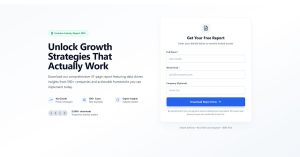
Most lead magnets don’t work. They get downloaded, skimmed for 30 seconds, and forgotten. Meanwhile, your email list fills up with people who will never buy anything. The problem isn’t…
Table of Contents
Every business hits the same wall. Traffic comes in, but sales don’t follow.
The problem isn’t visibility. It’s conversion. Visitors browse and leave without becoming contacts your sales team can actually work with.
Learning how to generate leads for your business changes everything. A steady flow of qualified prospects fills your pipeline, shortens sales cycles, and makes revenue predictable.
This guide covers the complete lead generation process. You’ll learn which channels drive results, how to build lead magnets that convert, and what metrics actually matter.
No fluff. Just actionable strategies that work for B2B and B2C companies alike.
What is Lead Generation
Lead generation is the process of attracting potential customers and capturing their contact information for sales follow-up.
A visitor clicks on your ad, lands on your page, fills out a form, and becomes a lead. That’s it.
The goal is simple: turn strangers into contacts your sales team can nurture toward a purchase.
Every business needs a steady flow of qualified prospects. Without leads, revenue stalls. Growth stops.
Lead generation bridges marketing efforts and actual sales conversations.
How Does Lead Generation Work
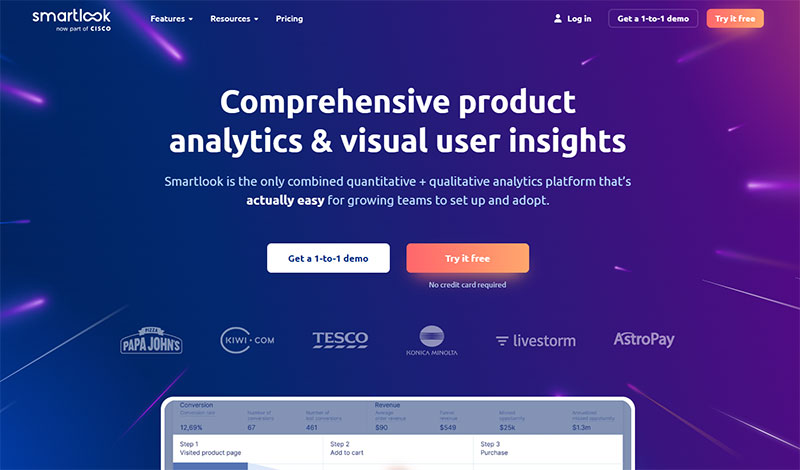
The process follows a predictable path.
Someone discovers your business through content, ads, or referrals. They land on a page with a compelling offer. They exchange their email for something valuable. Now they’re in your CRM.
HubSpot reports that 84% of marketers use on-site form submissions to convert leads. That’s over four out of five marketers relying on forms as their primary capture method.
Your marketing automation kicks in. Drip campaigns nurture them until they’re ready to buy. Research from Sopro analyzing 97 million emails shows 25% of leads come from the first email, while the first and second follow-ups generate 28% and 27% respectively.
Businesses average 1,877 new leads monthly, but only 81% qualify as marketing-ready.
What Happens When a Visitor Becomes a Lead
A visitor submits their information through a lead generation form on your website. That submission triggers an entry in your contact database. HubSpot, Salesforce, or Pipedrive stores their details.
The conversion happened. They moved from anonymous browser to known prospect.
Multi-channel campaigns achieve a 31% lower cost per lead than single-channel outreach, according to Sopro’s State of Prospecting 2025 research.
What Role Does the Sales Funnel Play in Lead Generation
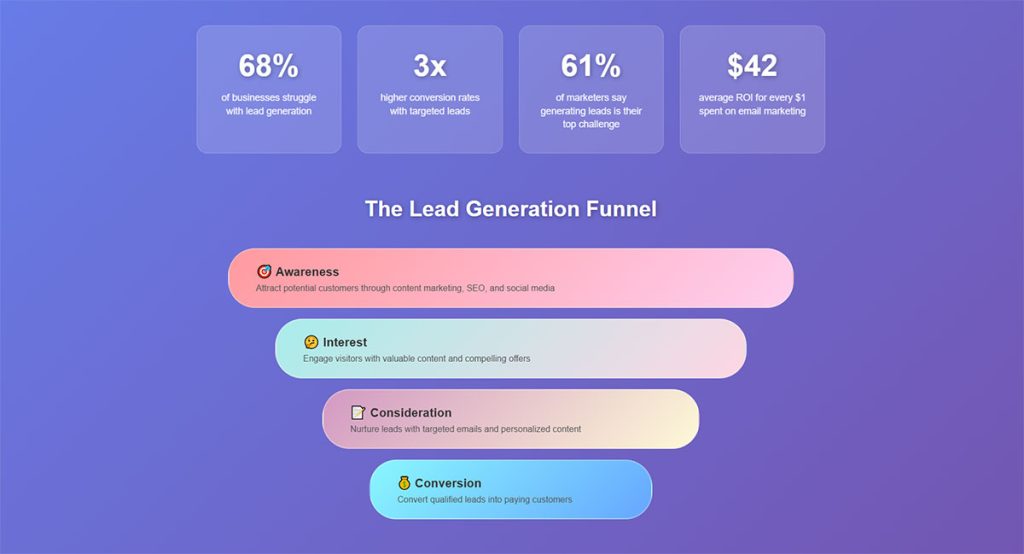
The sales funnel maps every stage from awareness to purchase.
Top of funnel: Strangers discover you through SEO, social media, or Google Ads. Research shows LinkedIn generates high-quality B2B leads, with 40% of B2B marketers listing it as their most effective channel.
Middle of funnel: Prospects evaluate your solution against competitors. Data from DemandGen reveals 61% of database managers plan to increase budgets for collecting higher-quality visitor data.
Bottom of funnel: Qualified leads decide to buy. Only 27% of B2B leads are sales-ready when generated.
Each stage requires different content and lead generation strategies.
How Do Businesses Capture Lead Information
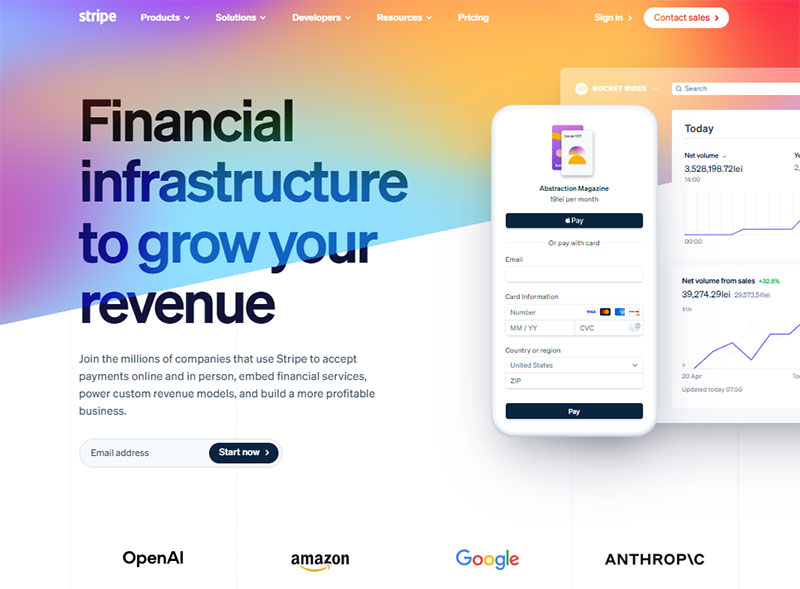
Forms do the heavy lifting. A well-designed website form collects names, emails, phone numbers, and company details.
Average form conversion rates across industries sit at 1.7%, according to Ruler Analytics. But almost 50% of marketers agree web forms are their highest converting lead generation tool.
Forms with 3 fields see conversion rates as high as 25%, compared to 15% for forms with more than 6 fields.
Other capture methods include:
- Popup forms triggered by scroll depth or time on page
- Chatbots from Drift or Intercom
- Webinar registrations through Zoom or Calendly (53% of marketers say webinar landing pages generate the most high-quality leads)
- Free trial signups
Email collection forms convert at 15% on average, significantly higher than other form types.
The form fields you choose directly impact lead quality. Two-thirds of people who start filling out a form complete it, but over 80% of shoppers abandon booking and checkout forms.
Chili Piper analyzed 4 million demo form submissions and found that letting customers book meetings immediately after form submission doubles inbound conversion rates (from 30% to 66.7%).
Implementation checklist:
- Keep forms under 5 fields for optimal conversion
- Add inline validation to reduce errors by 22% (CXL research)
- Enable instant scheduling to double conversion rates
- Use multi-step forms (86% higher conversion rates according to HubSpot)
- Test static forms over popups (45.53% vs 25.96% success rate)
What Are the Most Used Lead Generation Channels
Different channels work for different businesses. B2B companies lean toward LinkedIn and email. B2C brands favor Instagram and paid social.
How Does Content Marketing Generate Leads
Blog posts, ebooks, and guides attract organic traffic from search engines. A prospect searches “how to generate more leads,” finds your article, and downloads your checklist.
Performance data:
- Companies with blogs: 67% more leads monthly
- Content marketing: 3x more leads at 62% less cost than traditional marketing
- 74% of marketers say content marketing helped generate leads (CMI)
- 90% of B2B teams plan to use AI for content strategy
Content marketing builds trust before the sales conversation starts.
Match content to buyer journey stages:
- Awareness: Educate
- Consideration: Compare
- Decision: Sell
How Does Email Marketing Capture Leads
Email remains one of the highest-ROI channels.
ROI metrics:
- $36 earned for every $1 spent (3,600% ROI – Litmus)
- Some companies achieve $70+ per dollar invested
- Automated emails: 320% more revenue than non-automated
Effectiveness:
- 51% of B2B marketers consider email their most effective lead gen strategy
- 50% say it’s their most impactful channel
- Segmented campaigns: 58% of all email marketing revenue
Build your list through subscription forms and newsletter signups. Segment subscribers by behavior and interest. Send targeted sequences.
Personalized emails outperform generic blasts significantly.
Platforms: Mailchimp, ConvertKit, ActiveCampaign, GetResponse.
How Do Social Media Platforms Attract Leads
LinkedIn dominates B2B lead generation. Facebook and Instagram work better for consumer brands.
LinkedIn performance:
- 80% of all B2B leads from social media
- 89% of B2B marketers use it for lead generation
- 40% say it’s the most effective channel for high-quality leads
Organic posts build audience. Paid campaigns drive targeted traffic to landing page forms.
73% of businesses rely on organic social media to distribute content and engage with their audience.
Social proof matters here. Testimonials, case studies, and user-generated content increase conversion rates.
How Does Paid Advertising Drive Lead Acquisition
Google Ads captures high-intent searches. Someone typing “CRM software pricing” is ready to buy.
Google Ads benchmarks:
- Conversion rate: 7.52%
- ROI: $2 for every $1 spent
- Average CPC: $4.22
Facebook Ads and LinkedIn Ads work better for demand generation. You interrupt people with relevant offers.
Retargeting campaigns bring back visitors who left without converting.
Cost per lead by industry:
- Average across all: $198
- SaaS: $50-150
- Legal services: $200+
Small businesses spend $9-10k monthly on online ad campaigns.
How Do Webinars and Virtual Events Generate Leads
Webinar registration forms capture contact details before the event. Attendees spend 30-60 minutes with your brand. That’s serious attention.
Conversion metrics:
- 20-40% of attendees become qualified leads
- Average conversion rate: 55%
- 53% of marketers say webinar landing pages generate the most high-quality leads
- 73% of B2B marketers say webinars are the best way to generate quality leads
Cost efficiency:
- Average CPL: $72 (vs $811 for trade shows)
- Attendance rates: 40-50% of registrants
Post-webinar follow-up converts warm leads into sales conversations.
Platforms: Zoom, Webex, Demio.
How Does Search Engine Optimization Bring Leads
SEO drives free, ongoing traffic from Google and Bing.
Performance metrics:
- SEO leads convert 8x better than outbound
- Close rate 1.7% higher than outbound leads
- 68% of online experiences begin with a search engine
- 27% of marketers say organic search generated the majority of their leads
- 60% of marketers say inbound (SEO, blog content) is their highest quality source
Target keywords your prospects actually search. Create content that answers their questions better than competitors. Build backlinks. Optimize page speed. Fix technical issues.
Timeline: Results take 6-12 months. But once rankings stick, leads flow without ad spend.
Channel Selection Framework
B2B priorities:
- LinkedIn (80% of B2B social leads)
- Email ($36 ROI per $1)
- Webinars (20-40% convert to qualified leads)
- SEO (8x better conversion than outbound)
B2C priorities:
- Facebook (94% of marketers use it)
- Paid social
- Email marketing
Universal best practices:
- Track cost per lead by channel (aim for under $200)
- Test multi-channel campaigns (31% lower CPL than single-channel)
- Invest in SEO for long-term results
- Use email automation (320% more revenue)
- Focus on quality over quantity
What is a Lead Magnet
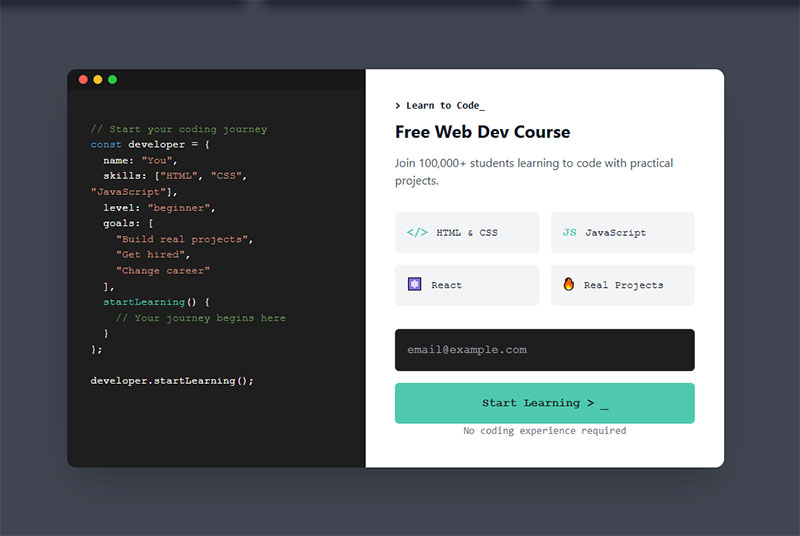
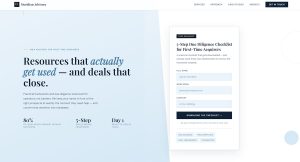
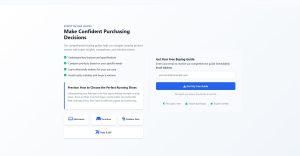
A lead magnet is a free resource offered in exchange for contact information.
Ebooks, templates, checklists, free trials, discount codes. Anything valuable enough to justify sharing an email address.
The best lead magnets solve a specific, immediate problem for your target audience.
Performance data:
- 50% of marketers who start using lead magnets report higher conversion rates
- 55% of landing page submissions come from lead magnets
- Average landing page conversion rate: 18%
- Interactive content (quizzes, calculators): 70% conversion vs 36% for passive content
What Types of Lead Magnets Convert Best
Different formats work for different audiences.
Top-performing formats:
Checklists and templates:
- Quick wins, easy to consume
- Cheat sheets convert at 34%
- Short-form written content preferred by 58.6% of marketers
Ebooks and guides:
- Deeper value, positions you as expert
- Long-form written content effective for 41.4% of marketers
Free tools and calculators:
- Interactive, highly shareable
- Personalized calculators deliver up to 45% revenue tie-in
- Quiz lead magnets: 20-40% conversion (up to 60% in best cases)
Webinar access:
- Live interaction builds trust faster
- Webinars convert at 70.2% among long-form video formats
- 25-56% of attendees turn into leads
Free trials and demos:
- Bottom-funnel, high intent
- On-demand demos convert at 31.9%
Exclusive discounts:
- Works for ecommerce, less effective for B2B
- Contest forms: 35% conversion vs 11% for general lead gen forms
Video content performance:
- 47% of marketers say video and text lead magnets are best-performing opt-in types
- Short-form video: 73% say it drives higher conversion than long-form
- Video clips: 55.7% conversion rate
Gated content requires a form submission to access. Ungated content builds broader awareness but captures fewer leads.
How to Create a Lead Magnet That Attracts Qualified Leads
Start with your ideal customer’s biggest pain point. What keeps them up at night?
Create something that solves that problem partially. Give real value, not fluff.
Best practices:
- Keep it specific: “5 Email Templates That Book Meetings” converts better than “The Complete Guide to Everything”
- Match to your product: If you sell marketing software, offer marketing resources
- Focus on relevance: Lead magnets can increase conversions by up to 785% when highly relevant (Backlinko)
- Test formats: Track which magnets produce leads that actually buy
Deliver through multi-step forms to qualify leads while reducing friction.
Industry-specific benchmarks:
- Government offers: 4.92% conversion
- Professional services: 4.6%
- Finance: 3.8%
By company size (text-based lead magnets):
- 2-9 employees: 17.6% conversion
- 10-49 employees: 8.2%
- 50-249 employees: 6.7%
Test different formats. Monitor which magnets produce leads that convert to customers.
What is a Landing Page for Lead Generation
A landing page exists for one purpose: convert visitors into leads.
No navigation menu. No distractions. Just an offer and a form. Traffic arrives from ads, emails, or social posts. The page convinces them to submit their information.
Performance metrics:
- Average conversion rate: 6.6% across all industries (Unbounce, Q4 2024)
- Top-performing pages: up to 27.4% conversion
- Good landing page conversion rate: 10%+
- B2B landing pages: 13.28% average
- B2C landing pages: 9.87% average
What Elements Make a Landing Page Convert
Four components determine success.
Headline:
Clear benefit statement. What do they get? Why should they care?
Landing page copy at 5th-7th grade reading level: 11.1% conversion vs college level at 5.3%.
Form design:
Fewer fields mean higher completion rates. Ask only what you need.
- Forms with 5 or fewer fields: 120% higher conversion
- 1-second delay drops conversions by 7%
- Pages loading under 2 seconds: 30% higher conversion
- 53% of mobile users abandon pages taking over 3 seconds to load
Designing lead capture forms properly can double conversions.
Call-to-action placement:
Above the fold, repeated below. “Get Free Guide” beats “Submit.”
- Clear CTA ranked #1 by marketers for high-converting pages
- Removing navigation menu: 100% increase in conversions
- 43.6% of marketers have lead generation as main goal for landing pages
Trust signals:
Testimonials, client logos, security badges. Social proof reduces friction.
- 73% of landing pages use human faces to create emotional connection
- Video on landing pages: 86% boost in conversion rates
How to Optimize Landing Page Conversion Rates
Test everything. Headlines, button colors, form length, images.
A/B testing impact:
- 48% of marketers build a new landing page for each campaign
- Companies with 31-40 landing pages get 7x more leads than those with 1-5
- 40+ landing pages: 500% increase in conversions
- Multiple offers on one page: reduces conversions by 266%
Increasing form conversions often comes down to small tweaks. Changing one word in a CTA can lift results 20%.
Page speed matters too. Every second of delay drops conversions 7%.
Traffic source performance:
- Email visitors: 19.3% average conversion (highest performing)
- Organic traffic: higher quality, better long-term results
- Paid search: lower conversion but faster volume
Mobile optimization is mandatory. Over 82.9% of landing page traffic comes from mobile devices.
Mobile forms need thumb-friendly buttons and minimal typing.
Top-performing industries:
- Events and entertainment: 12.3% median conversion
- Financial services: 8.4%
- SaaS: 3.8% (lowest, but highest value)
What is Lead Qualification
Not all leads deserve sales attention. Some are ready to buy. Others just wanted free content.
Lead qualification separates high-potential prospects from time-wasters.
What is the Difference Between MQL and SQL
Marketing Qualified Leads (MQLs) showed interest through content downloads, webinar attendance, or email engagement. They’re not ready for sales yet.
Sales Qualified Leads (SQLs) demonstrated buying intent. Requested a demo, asked about pricing, or meet specific criteria like company size and budget.
Key differences:
- MQLs: Lower lead scores, need nurturing
- SQLs: Higher lead scores, ready for sales conversation
- Average MQL to SQL conversion rate: 13% across industries
- 10-20% of MQLs convert to SQLs (varies by industry)
- Enterprise SaaS: up to 40% MQL to SQL conversion
MQLs go to nurturing campaigns. SQLs go to sales reps.
Common criteria:
MQL indicators:
- Downloaded ebooks or guides
- Attended webinars
- Multiple website visits
- Email engagement
- Fits ideal customer profile
SQL indicators:
- Requested demo or pricing
- Asked specific product questions
- Budget authority confirmed
- Timeline established
- Clear need identified
How Do Businesses Score and Prioritize Leads
Lead scoring assigns points based on actions and attributes. Leads hitting threshold scores get flagged for sales outreach.
Scoring factors:
- Behavioral data (pages visited, content consumed)
- Demographic fit (company size, industry, job title)
- Engagement level (email opens, downloads)
- Buying signals (pricing page views, demo requests)
Salesforce, HubSpot, and Marketo automate this process.
Sales Accepted Leads (SAL):
Some businesses add SAL stage between MQL and SQL. SALs passed acceptance criteria but need further qualification before becoming SQLs.
What Criteria Determine Lead Quality
Demographics tell you who they are. Company size, industry, job title, location.
Behavioral data tells you what they want. Pages visited, content consumed, emails opened.
Lead quality benchmarks:
- Only 27% of B2B leads are sales-ready when generated
- Poor lead quality is the top complaint among sales reps
- 61% of B2B marketers say quality leads are their biggest challenge
High-quality leads match your ideal customer profile AND show buying signals.
Track what matters:
Track which lead sources produce customers, not just form submissions. Cost per lead means nothing if those leads never buy.
Alignment indicators:
- Marketing and sales agree on MQL/SQL definitions
- Regular feedback loops between teams
- Clear handoff process
- Documented qualification criteria
Better conversion through qualification:
- Qualified leads: more likely to move through pipeline
- Proper qualification: improved sales efficiency
- Clear definitions: higher conversion rates
What is a Landing Page for Lead Generation
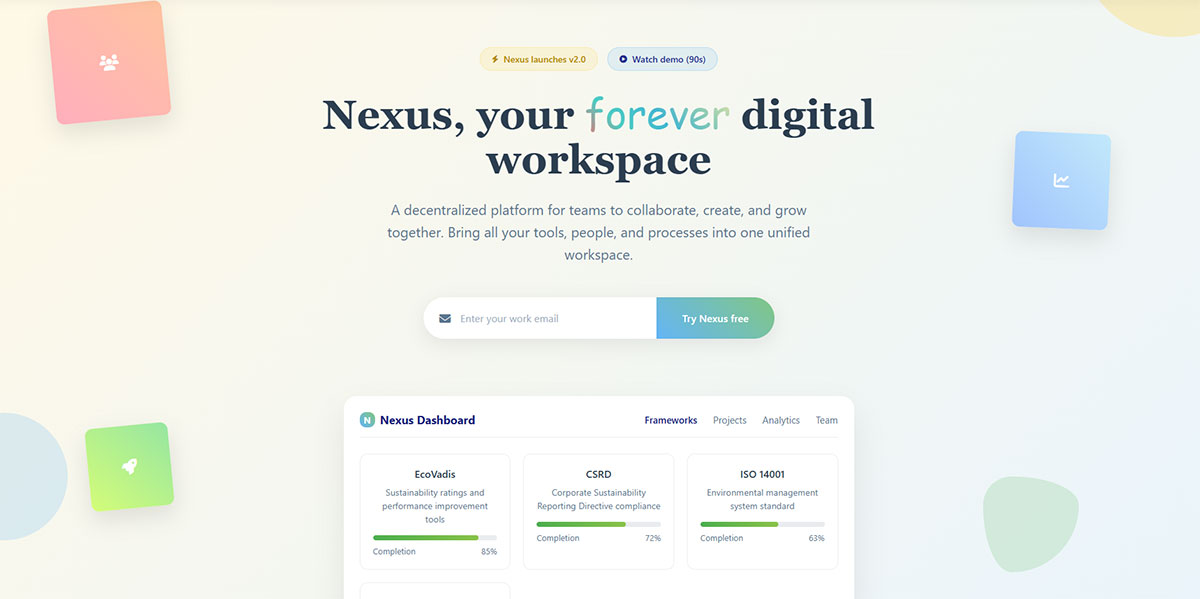
A landing page exists for one purpose: convert visitors into leads.
No navigation menu. No distractions. Just an offer and a form. Traffic arrives from ads, emails, or social posts. The page convinces them to submit their information.
Performance metrics:
- Average conversion rate: 6.6% across all industries (Unbounce, Q4 2024)
- Top-performing pages: up to 27.4% conversion
- Good landing page conversion rate: 10%+
- B2B landing pages: 13.28% average
- B2C landing pages: 9.87% average
What Elements Make a Landing Page Convert
Four components determine success.
Headline:
Clear benefit statement. What do they get? Why should they care?
Landing page copy at 5th-7th grade reading level: 11.1% conversion vs college level at 5.3%.
Form design:
Fewer fields mean higher completion rates. Ask only what you need.
- Forms with 5 or fewer fields: 120% higher conversion
- 1-second delay drops conversions by 7%
- Pages loading under 2 seconds: 30% higher conversion
- 53% of mobile users abandon pages taking over 3 seconds to load
Designing lead capture forms properly can double conversions.
Call-to-action placement:
Above the fold, repeated below. “Get Free Guide” beats “Submit.”
- Clear CTA ranked #1 by marketers for high-converting pages
- Removing navigation menu: 100% increase in conversions
- 43.6% of marketers have lead generation as main goal for landing pages
Trust signals:
Testimonials, client logos, security badges. Social proof reduces friction.
- 73% of landing pages use human faces to create emotional connection
- Video on landing pages: 86% boost in conversion rates
How to Optimize Landing Page Conversion Rates
Test everything. Headlines, button colors, form length, images.
A/B testing impact:
- 48% of marketers build a new landing page for each campaign
- Companies with 31-40 landing pages get 7x more leads than those with 1-5
- 40+ landing pages: 500% increase in conversions
- Multiple offers on one page: reduces conversions by 266%
Increasing form conversions often comes down to small tweaks. Changing one word in a CTA can lift results 20%.
Page speed matters too. Every second of delay drops conversions 7%.
Traffic source performance:
- Email visitors: 19.3% average conversion (highest performing)
- Organic traffic: higher quality, better long-term results
- Paid search: lower conversion but faster volume
Mobile optimization is mandatory. Over 82.9% of landing page traffic comes from mobile devices.
Mobile forms need thumb-friendly buttons and minimal typing.
Top-performing industries:
- Events and entertainment: 12.3% median conversion
- Financial services: 8.4%
- SaaS: 3.8% (lowest, but highest value)
What is Lead Qualification
Not all leads deserve sales attention. Some are ready to buy. Others just wanted free content.
Lead qualification separates high-potential prospects from time-wasters.
What is the Difference Between MQL and SQL
Marketing Qualified Leads (MQLs) showed interest through content downloads, webinar attendance, or email engagement. They’re not ready for sales yet.
Sales Qualified Leads (SQLs) demonstrated buying intent. Requested a demo, asked about pricing, or meet specific criteria like company size and budget.
Key differences:
- MQLs: Lower lead scores, need nurturing
- SQLs: Higher lead scores, ready for sales conversation
- Average MQL to SQL conversion rate: 13% across industries
- 10-20% of MQLs convert to SQLs (varies by industry)
- Enterprise SaaS: up to 40% MQL to SQL conversion
MQLs go to nurturing campaigns. SQLs go to sales reps.
Common criteria:
MQL indicators:
- Downloaded ebooks or guides
- Attended webinars
- Multiple website visits
- Email engagement
- Fits ideal customer profile
SQL indicators:
- Requested demo or pricing
- Asked specific product questions
- Budget authority confirmed
- Timeline established
- Clear need identified
How Do Businesses Score and Prioritize Leads
Lead scoring assigns points based on actions and attributes. Leads hitting threshold scores get flagged for sales outreach.
Scoring factors:
- Behavioral data (pages visited, content consumed)
- Demographic fit (company size, industry, job title)
- Engagement level (email opens, downloads)
- Buying signals (pricing page views, demo requests)
Salesforce, HubSpot, and Marketo automate this process.
Sales Accepted Leads (SAL):
Some businesses add SAL stage between MQL and SQL. SALs passed acceptance criteria but need further qualification before becoming SQLs.
What Criteria Determine Lead Quality
Demographics tell you who they are. Company size, industry, job title, location.
Behavioral data tells you what they want. Pages visited, content consumed, emails opened.
Lead quality benchmarks:
- Only 27% of B2B leads are sales-ready when generated
- Poor lead quality is the top complaint among sales reps
- 61% of B2B marketers say quality leads are their biggest challenge
High-quality leads match your ideal customer profile AND show buying signals.
Track what matters:
Track which lead sources produce customers, not just form submissions. Cost per lead means nothing if those leads never buy.
Alignment indicators:
- Marketing and sales agree on MQL/SQL definitions
- Regular feedback loops between teams
- Clear handoff process
- Documented qualification criteria
What Tools Are Used for Lead Generation
The right tech stack automates capture, nurturing, and tracking.
Market growth:
- CRM market: $101.4 billion in 2024, projected to reach $262.74 billion by 2032
- Marketing automation market: $6.65 billion in 2024, expected to reach $15.58 billion by 2030
- 76% of businesses currently use marketing automation
What CRM Systems Support Lead Management
CRMs store every lead interaction in one place.
Popular platforms:
- Salesforce: Enterprise standard, complex but powerful
- HubSpot: Free tier available, great for SMBs
- Pipedrive: Sales-focused, visual pipeline
- Zoho CRM: Affordable, feature-rich
Adoption statistics:
- 91% of companies with 10+ employees use some type of CRM
- 65% of companies start using CRM within 5 years of opening
- 87% of businesses use cloud-based CRM solutions
- Revenue increases by 245% when businesses start using CRM
- 61% of sales leaders automated their CRM software in 2023
Key benefits:
- Companies using CRM: 30% increase in lead conversion rates
- CRM users: 29% increase in sales
- Mobile CRM: 14.6% boost in user productivity
- 65% of companies using mobile CRM meet their sales goals
Your CRM connects to forms, email platforms, and ad accounts via Zapier integrations.
Integration priorities:
- 84% of companies using marketing automation also use CRM and sales automation
- 50% say easy integration is their main demand for automated marketing
What Marketing Automation Platforms Capture Leads
Automation handles what humans can’t scale.
Performance impact:
- Companies using automation: 451% increase in qualified leads
- Sales productivity increases by 14% after implementing marketing automation
- B2B companies using automation: 10% boost in sales pipeline contribution
- Automated emails: 180% higher conversion rates than batch emails
ActiveCampaign, Marketo, and GetResponse trigger emails based on behavior. Someone downloads a guide, they enter a nurture sequence automatically.
Adoption by channel:
- Email automation: 64% of marketers use it almost always
- Email marketing: 26.7% of marketing automation market share
- 58% of companies globally use automation for upselling
- 78% of marketers cite list segmentation as useful feature
WordPress lead generation plugins connect forms directly to your email platform.
Drip campaigns send the right message at the right time without manual intervention.
Cost efficiency:
- Marketing automation reduces operational costs by 25-30%
- 91% of marketers say automation helps them achieve objectives
- 70% using automation say the cost is worth it
What Analytics Tools Track Lead Performance
Google Analytics shows traffic sources and on-site behavior.
Key metrics to track:
- Traffic sources (which channels drive leads)
- On-site behavior (pages visited, time on site)
- Conversion rates by channel
- Cost per lead by source
Semrush and Ahrefs track organic visibility. Where do you rank? What keywords drive leads?
Platform-specific dashboards in Facebook Ads and Google Ads report cost per lead and conversion rates.
Attribution insights:
- 88% of sales professionals prioritize accurate customer data
- 23% of CRM users cite manual data input as major obstacle
- Attribution modeling reveals which touchpoints actually influence purchases
Automation benefits for tracking:
- Automation aids lead nurturing (57%), customer engagement (36%), campaign reporting (28%)
- 20% increase in employee productivity after setting up marketing automation
- Companies automating: 20% productivity spike among employees
How to Measure Lead Generation Performance
Track the right metrics or waste budget on vanity numbers.
What Metrics Track Lead Generation Success
Cost per lead (CPL): Total spend divided by leads generated.
The Lead Crafters reports average B2B CPL at $200 across industries. Technology sectors range from $40 to $300 per lead based on complexity.
Conversion rate: Percentage of visitors who become leads.
UpLead data shows the average across all industries is 2.9%. Landing pages average 2% to 5%, with top performers hitting 10%+. Check conversion rate benchmarks for your industry.
Lead quality score: Percentage of leads that convert to opportunities.
Grow Corp found organizations with strong Ideal Customer Profiles achieve 68% higher account win rates. B2B startups typically see opportunity-to-deal conversions around 25% to 37.5%.
Time to conversion: How long from first touch to sale.
Responding within 1 minute can increase conversions by 391% according to Grow Corp. Wait just 5 minutes and contact odds drop by 10x. Contact leads within 24 hours or lose momentum.
Marketing Qualified Leads (MQLs): Leads ready for nurturing.
Growth leaders aim for +40% MQL growth year-over-year. Top programs convert 50% to 60% of MQLs to Sales Qualified Leads according to The Lead Crafters.
How to Calculate Lead Generation ROI
Formula: (Revenue from leads – Cost of acquisition) / Cost of acquisition x 100
Example: Campaign costs $5,000, produces $25,000 in sales = 400% ROI.
Track by channel. Email delivers $36 for every $1 spent (3,600% ROI) per Abstrakt research. Paid social barely breaks even.
Key ROI metrics:
- Customer Acquisition Cost (CAC): Companies using data-driven strategies slash CAC by up to 30%
- Customer Lifetime Value ratio: Should be 3:1 or higher for sustainable economics
- Companies tracking CLV see 36% increases in customer retention
Only 52% of companies measure ABM ROI according to DesignRush. Attribution gets messy with long sales cycles.
B2B Lead Generation Methods
B2B sales involve multiple decision-makers, longer cycles, and higher deal values.
How Does Account-Based Marketing Generate B2B Leads
ABM flips traditional lead gen. Target specific companies instead of casting wide nets.
The ABM approach:
- Identify dream accounts
- Create personalized campaigns for each
- Coordinate sales and marketing outreach
WebFX data shows 97% of marketers say ABM delivers higher ROI than other strategies. 91% of companies using ABM increase average deal size, with 25% reporting increases over 50%.
LinkedIn Ads targets by company name, job title, and seniority. Tamarind’s B2B House research indicates 80% of B2B leads come from LinkedIn.
ABM works best for enterprise sales where one client is worth $50k+. G2 findings show 60% of companies report at least 10% revenue increase in year one.
RollWorks data reveals 72% increase in customer engagement with ABA campaigns. Companies combining ABM with Account-Based Advertising see 60% higher win rates.
How Do Trade Shows and Events Capture B2B Contacts
Industry conferences put you face-to-face with prospects. Booth visitors scan badges. Attendee lists provide contact details.
WordPress event registration forms capture signups for your own hosted events.
Event effectiveness:
- 31% of marketers pick events and webinars as most effective channel for 2024
- 91% of consumers are more inclined to purchase after brand activation or experience
- B2B tech average webinar attendance rate hits 37.5%
Follow-up speed matters. Contact leads within 24 hours or lose momentum.
How Does LinkedIn Generate B2B Leads
LinkedIn is where B2B buyers research vendors. Organic content builds authority. Thought leadership posts attract inbound inquiries.
LinkedIn performance:
- 89% of B2B marketers use LinkedIn for lead gen efforts
- 2.74% visitor-to-lead conversion (vs. Twitter at 0.69% and Facebook at 0.77%)
- Conversion rates up to 2x higher on LinkedIn
- 40% of B2B marketers name LinkedIn as most effective channel for high-quality leads
LinkedIn Sales Navigator identifies prospects by company, role, and activity. LinkedIn Ads cost more than Facebook but deliver higher-intent professional audiences.
LinkedIn lead gen forms reduce friction with 13.5% lower cost-per-acquisition when using conversion tracking. Worth it for generating B2B leads in enterprise segments.
Ad-influenced accounts:
- 89% more likely to become open opportunities
- Experience 234% faster progression through the sales pipeline
B2C Lead Generation Methods
Consumer lead gen moves faster. Shorter sales cycles, lower price points, emotional buying triggers.
Databox research shows B2C companies generate 135 new contacts monthly compared to B2B’s 54.5. Landing page conversion rates hit nearly 10% for B2C versus just over 7% for B2B.
How Do E-commerce Businesses Capture Leads
Exit intent popups catch visitors about to leave. Offer a discount code. Capture the email.
Exit popup effectiveness:
- Average conversion rate: 11% according to Popupsmart 2024 data
- Cart abandonment popups convert at 17.12% per OptiMonk findings
- Can save 10% to 15% of abandoning visitors with well-crafted messages
- Top performers hit 42% conversion rates
GetSiteControl data shows exit popups convert 7% of abandoning visitors into email subscribers with discount offers and save up to 13.5% of abandoned sales.
Product quizzes recommend items based on preferences while collecting contact info. Using quizzes for lead capture works especially well for beauty, fashion, and wellness brands.
Abandoned cart emails recover lost sales. Remind shoppers what they left behind. Omnisend reports automated emails generate 41% of all email orders while accounting for only 2% of emails sent.
Lead generation for ecommerce relies heavily on email list building and retargeting. UpLead shows email delivers 2.8% B2C conversion benchmarks.
How Do Retail Brands Generate Consumer Leads
In-store signups connect offline traffic to online nurturing.
SMS marketing captures mobile numbers. Text campaigns hit 98% open rates according to Sender research. Textdrip data reveals 90% of messages are read within 1 to 3 minutes of receipt.
SMS performance metrics:
- Click-through rate: 19% to 35% depending on content and industry
- Conversion rate: 21% to 30% (up to 10x higher than email)
- Response rate: 45% versus email’s 6%
- 82% of consumers check texts within 5 minutes
Constant Contact reports businesses generate an average of $71 for every dollar spent on SMS campaigns in retail and eCommerce sectors.
Loyalty programs incentivize repeat purchases while building your database.
Contests and giveaways drive massive list growth. Quality varies though.
How Does Mobile Marketing Attract Consumer Leads
App downloads capture user data at installation.
Push notifications re-engage lapsed users without email. Omnisend findings show automated push messages generate 21% of all push orders from just 3% of sends.
SMS opt-ins through sign up forms build direct communication channels. Notifyre reports 79% of consumers are more likely to make a purchase when subscribed to SMS, up 21% from 2024.
QR codes bridge physical and digital. Scan to join, scan to save, scan to learn more.
What Are Common Lead Generation Mistakes
Most businesses sabotage their own lead gen efforts. Avoidable errors kill conversion rates.
Why Do Some Lead Magnets Fail to Convert
Generic offers attract generic leads. “Free ebook” doesn’t excite anyone anymore.
Misaligned magnets waste budget. Offering cooking recipes when you sell accounting software makes no sense.
Overpromising and underdelivering destroys trust. If your guide claims “everything you need” but delivers fluff, leads unsubscribe immediately.
What Landing Page Errors Reduce Conversions
Too many form fields. Asking for phone, company size, budget, and blood type kills completion rates. Improving form abandonment rate starts with fewer required fields.
Weak headlines that focus on features instead of benefits. Nobody cares about your product. They care about their problem.
Slow load times. Mobile visitors bounce after 3 seconds.
Missing form validation lets bad data enter your CRM. Typos in email addresses mean leads you can never contact.
How Does Poor Lead Nurturing Affect Results
Leads go cold fast. Wait too long to follow up and they forget you exist.
Generic email blasts annoy subscribers. Segmentation and personalization aren’t optional anymore.
No clear next step leaves leads stuck. Every email needs a CTA moving them forward.
Failing to track engagement means wasting resources on dead leads while ignoring hot prospects.
Good form design captures leads. Good nurturing converts them.
FAQ on How to Generate Leads
What is the fastest way to generate leads?
Paid advertising through Google Ads or Facebook Ads delivers leads within hours. You set a budget, target your audience, and drive traffic to a landing page with a compelling offer. Organic methods take months. Paid works immediately.
How much does lead generation cost?
Cost per lead varies by industry and channel. B2B SaaS averages $50-150 per lead. Legal services can exceed $200. Email marketing and SEO cost less long-term but require upfront investment in content and lead capture forms.
What is the best lead generation channel for small businesses?
Content marketing combined with email list building works best for limited budgets. Create valuable blog posts, offer a lead magnet, and nurture subscribers through automated sequences. Low cost, high ROI, scalable over time.
How do I generate leads without a big budget?
Focus on organic channels. Optimize for SEO, post consistently on LinkedIn, and build registration forms that capture visitor information. Partner with complementary businesses for cross-promotion. Leverage referral marketing from existing customers.
What makes a high-quality lead?
High-quality leads match your ideal customer profile and show buying intent. They have the budget, authority, need, and timeline to purchase. Track which sources produce leads that actually convert to customers, not just form submissions.
How many form fields should a lead capture form have?
Fewer fields mean higher completion rates. Three to five fields work best for most offers. Name and email are mandatory. Add company name or phone only if your sales process requires it. Test contact forms vs lead generation forms to find optimal length.
What is the difference between lead generation and demand generation?
Lead generation captures contact information from interested prospects. Demand generation builds awareness and interest before capture happens. Demand gen creates the audience. Lead gen converts them. Most strategies need both working together. Compare lead generation or demand generation approaches for your business.
How long does it take to see results from lead generation?
Paid ads generate leads within days. SEO and content marketing take 6-12 months to gain traction. Email nurturing converts leads over weeks or months depending on your sales cycle. Set realistic timelines based on your chosen channels.
Should I buy lead lists?
Generally no. Purchased lists contain outdated contacts who never opted in to hear from you. Cold outreach to bought lists damages sender reputation and violates GDPR. Build your own list through using website forms for lead generation instead.
How do I know if my lead generation is working?
Track conversion rates, cost per lead, and lead-to-customer ratio. Monitor which channels produce leads that actually buy. Use Google Analytics and CRM reporting to measure performance. If leads aren’t becoming customers, quality matters more than quantity.
Conclusion
Knowing how to generate leads for your business is only half the battle. Execution matters more than theory.
Start with one or two channels. Master them before expanding. Content marketing and email list building work for most businesses regardless of size or industry.
Build landing pages that convert. Create lead magnets that solve real problems. Set up marketing automation through tools like HubSpot, ActiveCampaign, or Mailchimp to nurture prospects without manual effort.
Track everything. Cost per lead, conversion rates, and lead-to-customer ratio reveal what actually works.
The businesses that win aren’t doing anything magical. They’re consistent, they test relentlessly, and they focus on lead quality over vanity metrics.
Your sales pipeline won’t fill itself. Start today.