







A new client doesn’t sign with an accounting firm because a landing page convinced them. They sign because someone they trust vouched for the firm, or because the firm showed…
Table of contents
Blogging Wizard put a number on it recently: sixty-eight percent of B2B businesses say lead generation is a real struggle for them right now. That stat gets repeated a lot, usually as a hook for whatever tool or framework someone’s selling. Underneath it sits a much more specific problem, and it isn’t really about lead generation at all.
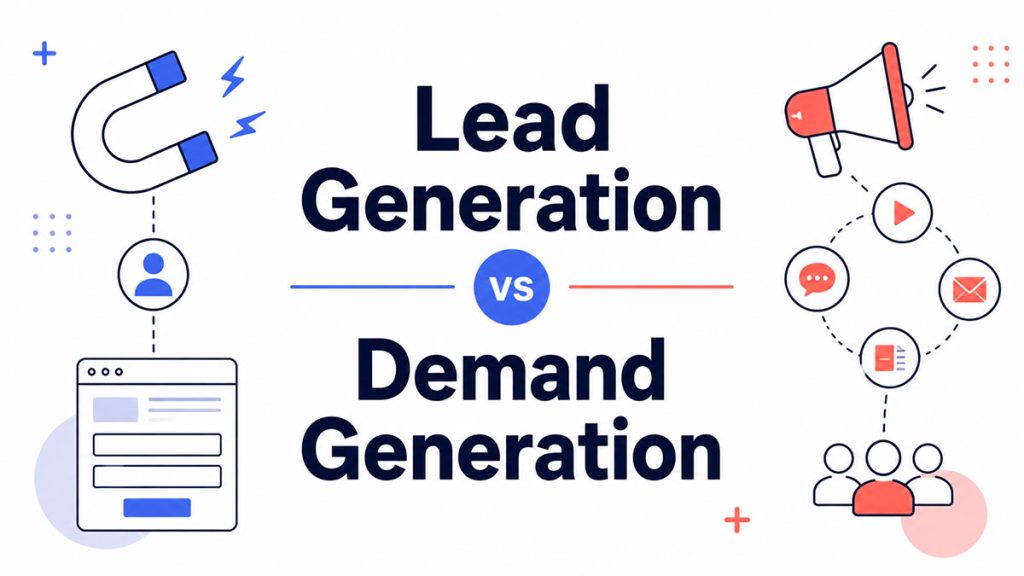
Most of that struggle traces back to one mix-up: treating lead generation vs demand generation as the same job, run off the same budget line, judged by the same scorecard. They aren’t the same job.
Demand generation builds an audience that might buy in six months. Lead generation goes after the person who’s ready to buy this week. Confuse the two long enough and money keeps leaking into the wrong stage, quarter after quarter. MQL counts look fine on a dashboard. Pipeline stays flat anyway.
That gap between activity and actual revenue is where the distinction between the two earns its keep.
What Is Demand Generation
Eloqua and Marketo needed a way to talk about pipeline-building work that happened before anyone ever filled out a form, back when B2B software marketing was still inventing its own vocabulary in the 2000s. That’s roughly still what demand generation means today. It’s a marketing approach built to create market awareness and buyer interest before a prospect ever becomes an identifiable lead.
What it actually produces is harder to put a number on than a lead count. There’s market awareness across a whole addressable market, not just the people shopping right now. There’s pipeline influence that might not show up in a report for weeks, sometimes months, after that first touch. Branded search volume counts too, and it’s probably the earliest real signal you’ll get, even though most dashboards still don’t bother tracking it.
INFUSE research citing Marketo (2023) found 68% of B2B marketers credit demand generation with delivering higher quality leads than traditional acquisition methods.
Budget follows that belief. 43% of B2B organizations increased their marketing budgets in 2025 (8% significantly, 35% slightly), and account-based marketing/experience pulled the single largest share of that new investment at 45%, per the 2025 Demand Generation Benchmark Survey.
Drift is the case everyone in B2B marketing points back to. The company ungated its entire content library and walked away from PPC and display spend, betting instead on content reach and on-page conversation. That decision created the “No Forms” movement and gave Drift a category to own.
Brand marketing and demand generation get confused constantly though, and the split isn’t complicated once you see it. Brand marketing builds recognition, and nobody expects it to tie back to a number in a pipeline report. Demand generation doesn’t get that pass. Every campaign under that banner is supposed to show up somewhere: in pipeline influence, in account engagement, in something a VP can point to in a meeting.
What Is Lead Generation
73% of companies use event marketing to generate leads, and 67% run content marketing specifically for lead capture, according to APSIS research. Underneath both numbers sits the same basic mechanic: trade something of value for a name, an email, a way to follow up later. That’s lead generation, stripped down to one sentence, the process of capturing contact information from prospects who’ve already shown some buying intent, usually behind a gate.
The mechanics haven’t changed much in fifteen years.
- A landing page built around a single, clear offer
- A form asking for name, email, and company details
- A call to action that makes the exchange obvious
- An ebook, template, or lead magnet worth trading contact info for
Getting the fields right matters more than most marketers assume. Building a capture form that doesn’t leak submissions takes more thought than throwing together a generic contact box.
MQL versus SQL is where lead generation actually gets its teeth. A marketing qualified lead has shown interest through a download or a signup, nothing more formal than that. Getting to sales qualified means clearing a much higher bar: budget, authority, need, and timeline all checked off, with a rep ready to pick up the phone.
In the traditional marketing funnel, lead generation sat right at the top, the first capture point before anyone’s information ever touched a CRM record.
What Is the Difference Between Demand Generation and Lead Generation
The difference sits earlier in the funnel than most people assume going in. Demand generation is doing its work before a prospect is even willing to say who they are. Lead generation only picks up once someone’s ready to trade contact details for something they actually want.
| Dimension | Demand Generation | Lead Generation |
|---|---|---|
| Funnel stage | Top and mid funnel | Mid and bottom funnel |
| Primary goal | Awareness, pipeline influence | Contact capture, qualification |
| Core metric | Branded search, pipeline influenced | Cost per lead, MQL volume |
| Typical owner | Growth or field marketing | Demand gen or SDR-aligned marketing |
Gated Content vs Ungated Content
Ungated content (blog posts, guides, podcast episodes) is probably the clearest practical line between the two disciplines. It drives reach with no form standing in the way.
Gated content (whitepapers, templates, product demos) asks for something in return: a name, an email, a reason to follow up later.
Ungated assets consistently outperform gated equivalents on consumption. Strip the form off a piece of content and the reported gains aren’t small. They run into multiples of pages consumed per visitor, not single-digit percentages. Apollo’s own guidance puts a ratio on it too: three to five ungated pieces for every single gated offer, or demand generation starts to choke.
Interest Creation vs Interest Capture
Demand generation creates interest. Lead generation captures it. Neither works particularly well alone.
Roughly 5% of any B2B market is actively in-market to buy at a given moment, per research from Professor John Dawes of the Ehrenberg-Bass Institute, published in 2021 in partnership with the LinkedIn B2B Institute.
Lead generation is chasing that 5%, basically. Demand generation spends its budget on the other 95%, building enough recognition that a brand actually makes the shortlist once those buyers finally enter the market.
The gap between a basic contact form and a dedicated lead generation form comes down to similar logic. One handles general inquiries. The other exists to qualify and route one specific kind of intent.
Where Demand Generation and Lead Generation Sit in the Marketing Funnel
Demand generation covers the top and middle of the marketing funnel. Lead generation takes over from the middle down through the bottom, where capture and qualification actually happen.
Awareness is where demand generation lives, the ungated content, the organic reach. Consideration is shared territory, both disciplines genuinely overlap here more than either camp likes to admit. Decision belongs to lead generation: the gated offers, the sales-ready capture forms.
SiriusDecisions built the original demand waterfall model to map exactly this sequence, tracking a prospect from inquiry through MQL, SQL, opportunity, and closed revenue.
Modern B2B purchases rarely involve just one buyer working alone. INFUSE’s Voice of the Buyer (2025) research puts the typical buying group at around nine stakeholders on average, with close to a quarter of buying groups now running fifteen or more. Each one enters the funnel at a different point and moves at a different pace.
Account-based marketing blends both stages into one motion by targeting named accounts instead of individual funnel positions. A single ABM program might run demand generation content at the account level while lead generation forms capture individual stakeholders within that same account, at the same time.
The lead generation funnel specifically only covers the back half of this picture. It skips the awareness work that gets a prospect there in the first place.
Which Metrics Measure Demand Generation vs Lead Generation Success
Average B2B cost per lead sits at $84 across channels, with Google Ads running $70.11 and LinkedIn at $110, according to 2025 research from Market Research Future.
| Discipline | Primary Metrics | What It Signals |
|---|---|---|
| Demand generation | Branded search, traffic growth, pipeline influenced | Market awareness, future demand |
| Lead generation | Cost per lead, MQL volume, MQL to SQL rate | Capture efficiency right now |
| Shared | Pipeline velocity, marketing-sourced pipeline % | Whether the two are working together |
MQL to SQL conversion averages 13% for B2B SaaS overall, but that number hides a lot of channel variance.
First Page Sage’s June 2025 benchmark puts SEO-sourced leads at 51%, against 46% for email, 39% for webinars, 30% for LinkedIn, and 26% for PPC.
Marketing-sourced pipeline should land between 40% and 50% of total pipeline for a high-performing B2B organization, with 30% as the practical floor, per Martal Group’s 2026 benchmarks.
Tracking the right lead generation KPIs only tells half the story if branded search and content engagement never make it onto the same dashboard as marketing attribution.
Cost per lead alone misrepresents demand generation, and this trips up more marketing leaders than it probably should. A campaign built purely to raise category awareness produces close to zero direct leads. That’s by design, not failure. Judge it on CPL anyway and it looks like a flop even when it did exactly what it was supposed to do.
Form-level conversion rate benchmarks matter here too. A lead generation program with a strong CPL can still underperform if the capture form itself is quietly leaking submissions.
Which Channels and Tactics Belong to Demand Generation vs Lead Generation
Demand generation channels tend to lean organic and inbound. Organic social and community platforms fit here, LinkedIn groups, Slack communities, the places people already spend time. So do podcasts, PR, and thought leadership content. Ungated SEO content published with no capture form anywhere near it belongs here too.
42% of B2B marketers rate email as their most effective distribution channel, per Content Marketing Institute research, and that’s still the largest single share of any channel named.
Lead generation channels sit right up against the transaction itself.
- Gated whitepapers and downloadable templates
- Webinar sign-up pages tied to a specific event date
- Paid search traffic routed to a landing page built around one offer
- Email nurture sequences triggered by a form fill
64% of B2B marketers have generated leads through LinkedIn, ahead of 49% on Facebook and 36% on Twitter (now X), according to a 2015 B2B lead-generation study from Pinpoint Market Research and Anderson Jones PR. It’s an older figure, sure, but it’s still the most-cited breakdown of its kind for platform-level B2B lead share.
Paid social sits in a gray zone. The same LinkedIn Campaign Manager budget can run a brand awareness play one week and a gated offer promotion the next, depending entirely on what the creative asks for.
The line between inbound and outbound lead generation tactics matters less than which funnel stage the tactic actually targets.
| Tool Type | Primary Role | Example Platforms |
|---|---|---|
| Intent data | Surfaces anonymous demand before a lead exists | Bombora, 6sense, Demandbase |
| Marketing automation | Runs and scores lead nurture sequences | Marketo, HubSpot |
| Contact enrichment | Fills in firmographic data on captured leads | ZoomInfo |
91% of B2B marketers now use intent data to prioritize accounts, though only 24% report exceptional ROI from the investment, per DemandScience’s 2026 State of Performance Marketing report.
6sense’s 2025 Buyer Experience Report found 94% of B2B buying groups have already ranked a preferred vendor before a single sales conversation happens. That’s most of the demand generation job already done by the time lead generation gets a chance to capture the contact.
How Demand Generation and Lead Generation Teams Are Structured
Demand generation typically reports up through growth marketing or field marketing leadership, with a mandate tied to pipeline influence and brand metrics.
Lead generation sits closer to the sales floor. It’s usually run by a demand gen manager working alongside SDRs and BDRs who pick up leads the moment they’re qualified.
The handoff point is where most of the friction actually lives.
- Marketing owns everything up through MQL status
- SDRs take over from there, turning MQLs into SQLs
- Sales owns the account from SQL through closed revenue
Organizations with aligned sales and marketing teams generate 208% more revenue from their marketing efforts. That’s a widely cited figure, and it actually traces back to LinkedIn’s research on sales and marketing alignment, not Forrester, even though Forrester gets credited with it constantly. Forrester’s own alignment research, using a different methodology, finds organizations with very high strategic and operational alignment report up to 1.9x higher revenue than peers with none.
Misaligned ownership shows up fast in pipeline reporting. Marketing celebrates MQL volume while sales complains about lead quality, and neither side is wrong exactly. They’re just measuring different parts of the same funnel.
A shared CRM, one agreed definition of “qualified,” and a revenue operations team owning the reporting layer fixes more of this than any org chart redesign ever does.
Which Tools Support Demand Generation vs Lead Generation
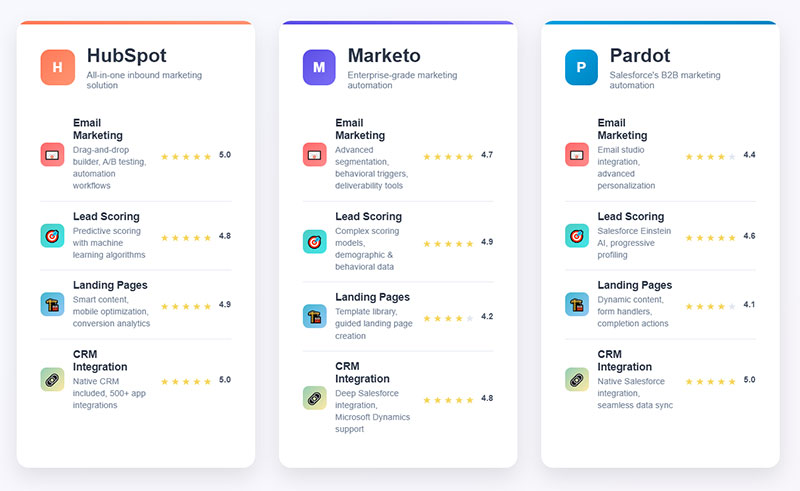
Marketers use only 49% of their martech stack’s actual capability, up from 33% in 2023, according to Gartner’s 2025 Marketing Technology Survey.
That gap shows up fastest in the split between lead generation and demand generation tooling, since the two disciplines rarely share a dashboard.
| Function | Lead Generation Tools | Demand Generation Tools |
|---|---|---|
| Capture and forms | HubSpot forms, Unbounce landing pages | Not typically used, content stays ungated |
| Nurture and scoring | Marketo, HubSpot automation | Marketo, used for multi-touch nurture |
| Signal and targeting | ZoomInfo enrichment | 6sense, Demandbase, Bombora |
Attribution is really the layer that connects the two, when it works. Dreamdata, per its own product documentation, maps every marketing and sales touchpoint, from an anonymous first visit through closed-won revenue, into one account-level model.
HubSpot’s native revenue attribution does something similar inside a single platform, at the cost of losing visibility the moment a touchpoint happens outside HubSpot’s own tracking.
Teams running everything on WordPress often reach for dedicated lead capture plugins built for the CMS instead of standing up a full marketing automation platform for a smaller program.
A company running only a lead capture stack, forms plus a CRM and nothing else, has no visibility into demand generation performance at all. Branded search, content engagement, and account-level intent never enter the system.
When to Prioritize Demand Generation Over Lead Generation
Early-stage companies and category creators need demand generation first, because nobody searches for a solution to a problem they don’t yet know has a name.
Salesforce faced exactly that problem in 2000. Nobody was searching for customer relationship software delivered over the internet, so a gated whitepaper had no audience to reach in the first place.
Marc Benioff’s team staged a mock protest with paid actors outside a Siebel Systems user conference, chanting that software was obsolete. The stunt made headlines and put the on-demand software category on the map years before Salesforce built out a conventional lead capture funnel.
Budgets don’t drift toward demand generation on their own though. Brand awareness accounts for just 29% of B2B media spend, and more than half of marketing budgets tilt toward consideration and conversion activity instead, per Gartner’s 2025 CMO Spend Survey.
Established companies selling into a market that already understands the category can lean harder into lead generation, since the awareness work has already been done by someone, often a competitor.
A company with steady lead volume but flat or declining branded search over several quarters is running on inherited awareness. New buyers aren’t discovering the brand. Only the ones who already knew to look for it are converting.
How Demand Generation and Lead Generation Work Together in a Full Funnel Strategy
Demand generation fills the top of the funnel with people who later respond to a lead generation offer. Run lead generation without that top-of-funnel work and the addressable audience depletes over time.
Gong built this loop on purpose. The company pioneered the Revenue Intelligence category in 2019, pairing that awareness work with a gated maturity assessment and an always-open demo page to capture the leads the awareness produced.
72% of companies with revenue attributable to marketing-sourced leads reported an increase of up to 25% year-over-year, per the 2025 Demand Generation Benchmark Survey.
A typical sequence looks something like this.
- Publish an ungated report that drives organic traffic and shares
- Retarget readers with a related, gated companion asset
- Route form fills into an email nurture sequence tied to the original topic
- Hand qualified replies to sales once engagement crosses a threshold
That nurture sequence rarely starts from a blank page. Most teams begin with a proven lead nurturing template and adjust the cadence once real engagement data comes in.
Revenue teams that report demand generation and lead generation on one shared pipeline number, instead of two separate scorecards, catch the gap between awareness and capture months earlier.
What Mistakes Happen When Companies Confuse Demand Generation With Lead Generation
The same mistakes keep showing up, and none of them are especially exotic.
- Gating content too early, before it has built enough reach to be worth capturing
- Judging demand generation campaigns on cost per lead, a number they were never designed to produce
- Cutting demand generation budget first during a downturn, since its payoff is slower to show up in reporting
- Running a lead generation engine against a market with no underlying demand for the category yet
79% of marketing leads never convert into sales, largely because of weak or missing lead nurturing, according to MarketingSherpa research.
Every extra form field added past the essentials pushes that number the wrong way. Teams chasing a rising form abandonment rate usually find the real fix is fewer fields, not another gated asset.
The fourth mistake is the most expensive one. A lead generation program aimed at a market that doesn’t yet recognize the problem produces high cost per lead and low win rates no matter how well the forms convert, because there’s no demand underneath the capture mechanism to begin with.
What ROI and Benchmark Data Show for Demand Generation vs Lead Generation
Inbound demo requests, the kind demand generation feeds, win at 25% to 40%. Outbound cold pipeline wins at just 10% to 20%, per Pedowitz Group’s RevOps benchmark research.
| Measure | Inbound / Demand-Fed | Outbound / Cold |
|---|---|---|
| Win rate | 25% to 40% | 10% to 20% |
| Sales cycle | 54 days average | 82 days average |
| Typical deal size | Smaller per deal | Up to 50% larger |
Inbound deals close 28 days faster than outbound deals once the opportunity is created, according to a HockeyStack Labs analysis of more than 50 B2B SaaS companies.
The trade-off is worth stating plainly. Outbound-sourced deals run about 50% larger on average, per ITSMA’s ABM Benchmark Study, so a pipeline built entirely on inbound demand capture will likely close faster at a lower average contract value.
Neither number tells the full story by itself. A team optimizing for win rate should lean into demand-fed inbound. A team optimizing for average deal size needs lead generation aimed at named accounts instead, the kind ABM programs are actually built for.
Numbers like these only hold up when demand generation and lead generation get measured together, on the same pipeline, instead of as two scorecards competing for the same budget line.
FAQ on Lead Generation Vs Demand Generation
Is demand generation the same as brand marketing?
No. They overlap but sit on different timelines: brand marketing plays for long-term recall with no direct funnel tie, while demand generation must eventually show up as branded search, engagement, or influenced pipeline on a dashboard someone reviews quarterly.
Which costs more, demand generation or lead generation?
Lead generation has a visible line-item cost (CPL, ad spend), while demand generation’s cost hides in content, PR, and community work that never shows up as a per-lead number. Total spend is often similar; only the accounting looks different.
How long does demand generation take to show results?
Most demand generation programs take several quarters to move branded search and pipeline influence, since content and community work compound slowly. Lead generation can show results within weeks, because capture is immediate by design.
Is content marketing demand generation or lead generation?
It depends on the wrapper. Ungated blog posts, guides, and podcasts function as demand generation. The same piece becomes lead generation the moment it’s repackaged as a content upgrade sitting behind a form.
Is account-based marketing a form of demand generation or lead generation?
Neither, exactly. Most vendors file ABM under demand generation because it targets accounts before they’re identified as leads. But once an ABM program routes a stakeholder to a gated demo request, that motion is lead generation wearing an account-based label.
Do B2C companies need demand generation?
Yes, though the term is used less outside B2B. Retail and consumer brands run the same play under different names: brand marketing plus performance marketing. The underlying split, awareness before capture, holds regardless of the B2B or B2C label.
Is cold outbound email demand generation or lead generation?
Lead generation, almost always. Cold outbound targets people already identified as fitting an ideal customer profile and asks for a reply or meeting immediately. Demand generation never asks for anything on the first touch; it just builds recognition.
What is the dark funnel and why does it matter for demand generation?
The dark funnel is the research buyers do anonymously (AI tools, peer reviews, dark social) before any form fill or intent signal appears. Demand generation programs built only around trackable channels miss most of what actually shapes a purchase decision.
Can a one-person marketing team run both demand generation and lead generation?
Yes, at a small scale. One person can publish ungated content for demand generation and spin up a landing page with a free WordPress form plugin for lead generation. The discipline of doing both jobs is what’s hard to maintain.
Does demand generation replace SEO?
No. SEO is a channel; demand generation is a strategy that SEO serves. Ungated, search-optimized content is one of the most common demand generation tactics, but SEO supports lead generation the moment that content sits behind a landing page form.
Conclusion
Settle the lead generation vs demand generation question with one audit, not a new framework. Pull branded search volume for the last two quarters before touching next quarter’s budget.
If that number is flat while cost per lead climbs, the fix sits upstream. No amount of landing page testing repairs a pipeline problem that started with weak awareness.
Fund demand generation first when the category needs explaining. Fund lead generation first when buyers already know your name and just need a reason to fill out the form.
Expect the payoff to show up on different clocks too. Lead capture moves in weeks. Brand recall moves in quarters. Budgeting both against the same 30-day window is where most B2B marketing strategy breaks down.