



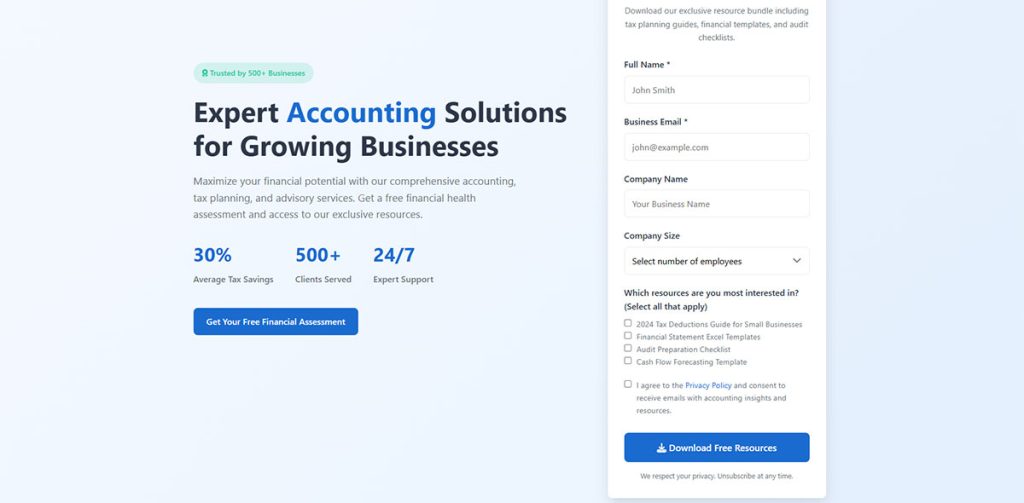





Look up the average conversion rate and nearly every source gives you a different answer. Unbounce’s 2024 Conversion Benchmark Report puts the median landing page rate at 6.6% across 41,000…
Table of contents
A new client doesn’t sign with an accounting firm because a landing page convinced them. They sign because someone they trust vouched for the firm, or because the firm showed up in the right Google search at the exact moment a 1099 arrived that nobody knew how to file. That’s lead generation for accountants in practice: turning a stranger’s tax problem, or a business owner’s messy books, into a signed engagement letter for tax, bookkeeping, or advisory work.
Solo practitioners run this differently than a twelve-partner firm does. The channels shift with size, and so does what “working” even means: cost per lead and discovery-call conversion matter more here than raw website traffic ever will.
Existing clients still do most of the heavy lifting. The AICPA’s 2022 Client Advisory Services Benchmark Survey found top-performing firms pull 79% of leads from current tax clients, against 67% across everyone else in the survey.
What Is Lead Generation for Accountants
The mechanics match what a general breakdown of what lead generation actually means describes: prospects, funnels, conversion. What’s different in accounting is the amount of trust required before step one even starts. A stranger has to hand over tax returns, bank details, and payroll records before a firm can scope the work, and that single fact shapes almost every channel decision covered below.
Two kinds of demand run through this: work tied to a single return or a one-time filing, and work tied to bookkeeping, payroll, or advisory retainers that repeats every month. The recurring kind is worth chasing harder, since it compounds every year the client sticks around. A single tax return doesn’t.
Marketing and lead generation get treated as the same thing at a lot of small firms, and they’re not. Marketing is the slower job, the reputation and network a firm builds over years. Lead generation is narrower: it’s what turns that reputation into an actual phone call or booked consultation.
What Lead Generation Channels Work for Accounting Firms
Referrals, local search, content, LinkedIn, webinars, paid ads. Firms pull new clients from all of these, and each one behaves differently on cost, speed, and which size of firm it actually suits.
| Channel | Cost Pattern | Time to Convert | Best Fit |
|---|---|---|---|
| Referrals | Low direct spend | Slow, unpredictable | Solo and small firms |
| Local SEO & Google Business Profile | Low to moderate | Months | Small to mid-size firms |
| Content marketing & webinars | Moderate | Months | Advisory-focused firms |
| LinkedIn outreach | Moderate, time-heavy | Weeks to months | B2B-focused firms |
| Google Ads | Higher, pay-per-click | Days to weeks | Firms wanting fast volume |
Referral-Based Channels
Referrals still carry more weight than anything a firm can buy. MYCPE ONE research found 80.9% of accounting firms rely on referrals as their main lead source, though 58.6% of those firms only pull in one to five leads a month this way. So “relying on referrals” and “having an actual referral system” turn out to be two very different things.
Karbon’s data shows why firms keep leaning on them anyway. A prospective client converts roughly four times more often after a personal recommendation than one who shows up cold.
Turning that from luck into something repeatable comes down to timing and follow-through: ask for the introduction right after a filed return or a resolved audit, not months later, offer the referring client something small in return, and log the source in the CRM so nobody’s guessing where new clients actually came from.
Digital and Content Channels
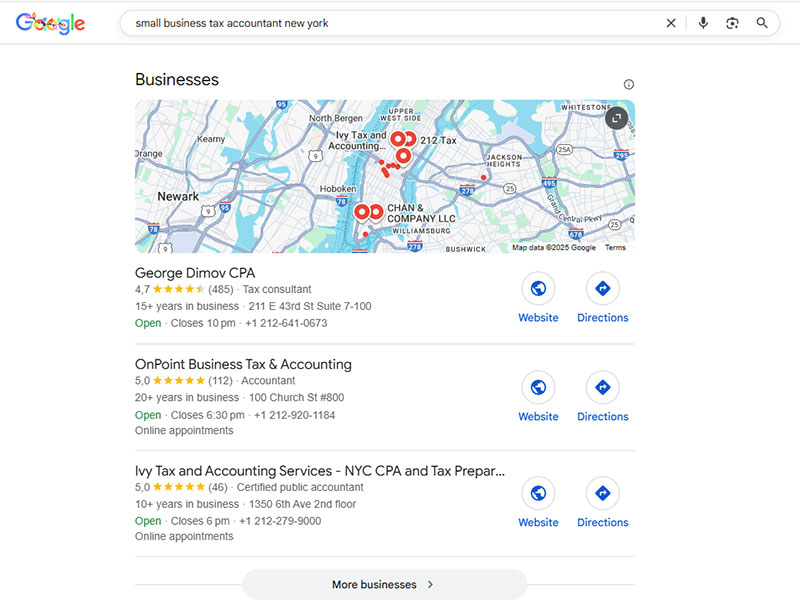
Local SEO paired with an updated Google Business Profile. Content built around a specific niche. LinkedIn outreach aimed at business owners. Webinar funnels for advisory and virtual CFO work. These sit closer to inbound marketing than the word-of-mouth pull of referrals, a distinction covered in more depth in a piece comparing inbound and outbound lead generation.
Haskell & White, a midmarket firm, saw leads climb 96.16% year over year after a website redesign paired with ongoing content and SEO work (Bop Design case study, 2023). That’s not a typical result, and it didn’t happen in a quarter, but it’s the kind of number that makes the slower channels worth the patience.
Full strategy breakdowns for combining these live in a wider guide to lead generation strategies that isn’t specific to accounting.
Paid Acquisition Channels
Paid channels buy speed. They don’t buy the trust referrals build on their own, and no amount of ad spend fixes that.
They earn their cost when a firm needs volume fast instead of a slow drip, or when it’s chasing niche keywords, R&D credits, outsourced CFO work, that carry less competition and a lower price per click.
Google Ads campaigns built around tax season keywords can fill a pipeline quickly, especially close to filing deadlines set by the Internal Revenue Service. Cold email works for a narrower slice of this world too, mostly firms chasing bookkeeping clients at scale.
What Compliance Rules Restrict Lead Generation for Accountants
CPA firms can’t advertise the way a local plumber or a dentist does. The AICPA’s Advertising and Other Forms of Solicitation Rule (1.600.001) bans false, misleading, or deceptive claims in anything meant to attract clients, and state boards of accountancy stack their own rules on top, rules that don’t always agree with each other from state to state.
Guaranteed outcomes and refund promises are off the table in most states. Testimonials need careful wording under several state board rules tied back to NASBA licensure standards, and contacting a known prospective client out of the blue can trigger a violation in some jurisdictions. Fee comparisons against a named competitor sit in a legal gray zone in a handful of places too.
That reaches back into every channel already covered. A testimonial pulled from a referral program needs sign-off language before it goes anywhere near a website, and a Google Ads campaign promising “guaranteed refund maximization” is more likely to draw a complaint to the state board than a new bookkeeping client.
How Much Does Lead Generation Cost for an Accounting Firm
Cost per lead for accounting firms swings from close to free (referrals) to several hundred dollars (paid search). MYCPE ONE’s 2026 research puts some real numbers on that range:
- Google Ads cost per click for US accounting firms: $15 to $70, averaging $25 to $45
- Google Ads cost per lead: $80 to $400, depending on service line and metro
- Firms with structured referral partnerships generate 3 to 5 times more referrals, at roughly 3 times the client lifetime value of ad-sourced prospects
Cost per Lead by Channel
Line them up from cheapest to priciest and referral programs come first, since the only real cost is whatever incentive gets offered, not the acquisition itself. Local SEO and content marketing cost labor more than cash, and that labor pays off over months rather than days. LinkedIn outreach eats time more than budget. Google Ads sits at the top of the hard-cost list, but it’s also the fastest way to actually produce a lead.
Niche services, R&D tax credits, outsourced CFO work, dental-focused CPA practices, tend to run 30% to 60% cheaper per click than generic “tax preparation” keywords, simply because fewer firms bid on them.
Tracking the right numbers matters more than which channel gets picked, and a fuller list of what’s worth watching sits in a guide to lead generation KPIs that applies well past this one industry.
Client Lifetime Value by Service Tier
| Service Tier | Revenue Pattern | Acceptable CAC |
|---|---|---|
| Single tax filing | One-time, low value | Low, must stay cheap |
| Ongoing bookkeeping | Recurring, monthly | Moderate |
| Advisory or virtual CFO retainer | Recurring, high value | Higher, justifies paid channels |
A client paying for one tax return can’t justify the same cost per lead as one signing an advisory retainer, and treating them the same on a spreadsheet is a common way firms convince themselves a channel isn’t working when it’s actually just working for the wrong tier.
Comparing a firm’s actual close rate against outside numbers helps catch this early. A set of conversion rate benchmarks by industry gives a rough baseline worth checking against.
The ratio between acquisition cost and lifetime value decides whether a channel works, not the sticker price of the lead.
How Does the Client Conversion Funnel Work for an Accounting Firm
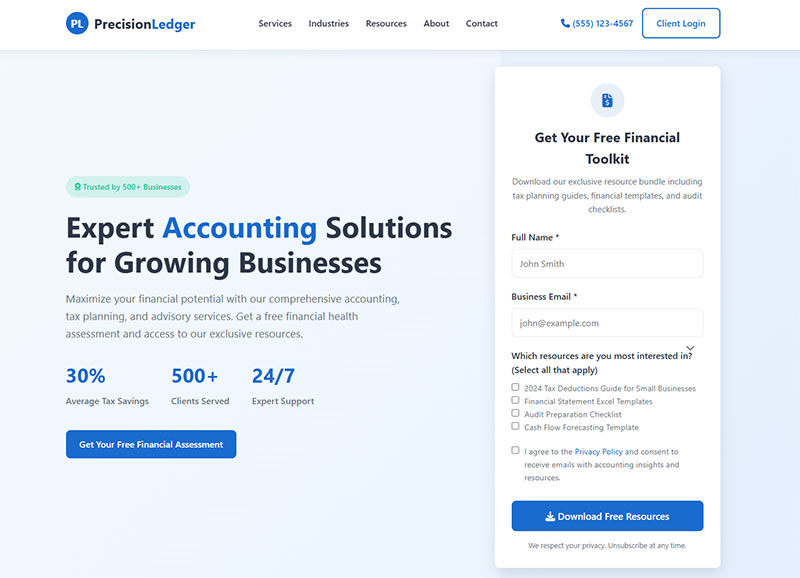
Awareness comes first, built through referrals, search, or ads. Then a discovery call, where fit and budget actually get tested. A proposal follows, putting scope and fee in writing. And somewhere after that, hopefully, a signed engagement, the point where a lead finally becomes a client.
Each stage has its own drop-off point, and the channel a lead came from usually predicts where it stalls.
MYCPE ONE reports firms with a systematic process hit a 60% discovery-call-to-proposal conversion rate, and roughly 50% proposal-to-client. That second number is where most firms lose ground. A vague proposal, sent without any follow-up cadence, just dies quietly in someone’s inbox.
The structure lines up with the general idea of a lead generation funnel, just narrowed to a service where the first conversation matters more than the first click.
A firm’s website carries the earliest part of this, since a contact or discovery-call request form is usually the moment a browser turns into an actual prospect. That shift gets covered in more depth in a broader look at using website forms for lead generation.
Practice management tools like Karbon or TaxDome track where each lead sits in this sequence, so a stalled proposal gets flagged before the prospect goes cold.
How Do You Qualify a Lead Before Taking on a New Accounting Client
Qualifying a lead just means checking fit before a discovery call turns into an hour nobody gets back.
That means sizing up the business or household (a one-person LLC needs different work than a forty-person company), checking whether the industry matches a firm’s actual niche, pinning down the specific service needed, tax filing, bookkeeping, audit, advisory, and getting a rough sense of budget early rather than waiting until the proposal stage to find out it was never going to work.
Unqualified leads quietly raise cost per acquisition without raising revenue. Staff time spent on a discovery call that goes nowhere is still time that got paid for.
The fastest fix sits upstream of the call itself. Asking the right questions on the initial contact form filters out mismatched prospects before anyone’s calendar gets touched, an approach covered in detail in a piece on form fields for capturing high-quality leads.
Firms that formalize this step often move straight into a structured onboarding form once a lead clears qualification, and intake form examples built for professional services show what that actually looks like.
Qualification criteria shift by service tier, too. A firm chasing advisory retainers screens harder on budget than one filling a roster of straightforward tax returns.
What Technology Supports Lead Generation for Accounting Firms
Software doesn’t generate leads by itself, but the wrong stack lets leads slip through right after the hard part, getting them to actually inquire, is already done.
Insightly’s 2025 CRM Research Report found only 34% of teams fully use the CRM systems they’re already paying for, a gap that shows up constantly in accounting firms too.
Practice Management and CRM Tools
Generalist tools like HubSpot or Salesforce were built for broad sales pipelines, and they’re genuinely strong on marketing automation and email nurture sequences.

What they’re not built around is engagement letters, billing cycles, or tax deadlines, which is where accounting-specific practice management software steps in.
Karbon and TaxDome handle client onboarding and workflow. Practice Ignition and Canopy are built more around proposals and engagement letters, and both tend to sit tighter alongside QuickBooks Online and Xero for client financial data.
Firms running high lead volume through digital channels tend to outgrow spreadsheets fast. A mismatch between CRM and practice management software is usually where leads get lost between the discovery call and the signed engagement.
Proposal, Onboarding and Document Collection Tools
A firm’s website is where most of this starts. A basic contact or consultation-request form still counts as the entry point into the whole stack, and a walkthrough on how to create lead capture forms covers the setup mechanics.
Once a lead clears qualification, document collection becomes the next bottleneck. Content Snare or Canopy chase down missing paperwork automatically. Calendly or something similar handles scheduling the discovery call itself. And a secure upload form takes care of W-2s, prior returns, and bank statements.
New clients often try to email scanned documents too large for a plain attachment, which is exactly where a properly built form with file upload saves a firm from an annoying back-and-forth thread.
Does Lead Generation Change Between Tax Season and the Rest of the Year
Demand for accounting services swings hard around one date: the April filing deadline.
The IRS processed about 161 million individual income tax returns during the 2024 filing season, most of it crammed into a three-and-a-half month window. That spike is why so many firms measure their whole year against tax season, even when doing so distorts how they think about lead generation the rest of the time.
Advisory work and bookkeeping don’t run on the same calendar. A recurring bookkeeping client signs up in October just as easily as in February, and virtual CFO engagements often start right after year-end planning conversations wrap up.
Firms shifting toward value pricing see the payoff of building demand outside tax season directly: a 25% increase in overall annual revenue within the first year, alongside an 80% increase in the number of clients on recurring billings (Thomson Reuters’ Practice Forward member survey, 2023).
Firms that have moved away from pure referral dependency toward an SEO-first approach report picking up dozens of qualified leads a month within six months, spread across the year instead of bunched into filing season.
Nurture sequences built during the slow months matter here. Ready-made lead nurturing templates save a firm from starting that email sequence from a blank page every fall.
A webinar on estate planning or entity structure, promoted through simple webinar registration forms, fills those same slow months with warm prospects instead of empty calendar space.
The channel matters less than the timing of the ask. Someone who hears about entity structuring in October is having a completely different conversation than the same person calling in a panic on April 10th.
How Do You Build a Lead Generation Strategy for an Accounting Firm
A lead generation strategy is a sequence, not a single tactic bolted onto a website afterward. Something like this, roughly in order:
- Define the target client (industry, revenue size, service need)
- Pick two or three channels that actually fit that client, not every channel available
- Set up a CRM or practice management tool to track each lead
- Build a qualification script for the discovery call
- Launch the funnel and route every inquiry through the same intake process
- Review cost per lead and conversion rate every month, not once a year
Channel choice in step two carries more weight than most firms give it. Content marketing generates roughly three times more leads than outbound prospecting, at 62% lower cost, according to MYCPE ONE research.
Steward Ingram & Cooper PLLC, a Raleigh accounting firm, saw a 49% increase in conversion rate and a 300% increase in mobile click-to-call after rebuilding its website and SEO approach around a sequence close to this one (TheeDigital case study).
Step four deserves more attention than it usually gets, too. A qualification script stops a firm from burning discovery-call time on a lead who was never going to sign anyway.
It works best paired with a direct ask on the page itself. A look at strong call to action examples shows what that ask should sound like sitting next to a “book a discovery call” button.
Reviewing performance in step six comes down to two numbers, really: how many people start the intake form, and how many actually finish it. That gap gets covered well in a guide on how to increase form conversions.
Whatever channels get picked in step two, every testimonial or ad this strategy produces still has to clear the same AICPA solicitation rule that governs the channels themselves. Being part of a bigger plan doesn’t earn an exception.

When Does Lead Generation Not Work for Accounting Firms
Lead generation breaks down in a handful of predictable ways, and most of them have nothing to do with which channel got picked.
Compliance-Driven Failure Points
A testimonial published without the required disclosure language is one of the more common trip-ups. So is a paid referral arrangement with a non-CPA that runs into the AICPA’s Commissions and Referral Fees Rule (1.520). A guaranteed-outcome claim in ad copy gets flagged by state boards regularly, and cold-calling a prospect already known to work with another firm is restricted outright in several states.
A single complaint to a state board can pull a whole campaign offline while a firm sorts out the paperwork, wiping out weeks of lead flow in the process.
The fix here is procedural, not creative. Legal or compliance review before publishing, not after, catches most of this before it turns into an actual problem.
Operational and Fit-Related Failure Points
Speed kills more deals than bad copy ever does.
The Lead Response Management study, run by a Sloan School of Management researcher alongside InsideSales.com, found leads contacted within five minutes convert into qualified opportunities roughly 21 times more often than leads contacted after 30 minutes. A firm running paid ads but routing inquiries through a shared inbox checked twice a day is paying for leads it then lets go cold, which is about as wasteful as marketing spend gets.
A firm running ads during the exact week extensions come due often watches its own intake form bleed abandons, a pattern examined in tips for improving form abandonment rate.
Fit failures show up just as often. A channel built for high-volume tax prep clients doesn’t work aimed at advisory-retainer prospects who need a slower sales cycle. A Google Ads campaign left running at full budget in late April is burning money the moment search volume for tax help drops off a cliff. And a referral program with no tracking step means nobody can actually tell which incentive is working and which one is just a cost.
None of this means lead generation fails as a concept. It means speed, targeting, and timing matter more than which channel gets picked in the first place.
FAQ on Lead Generation For Accountants
What Is the Difference Between Marketing and Lead Generation for an Accounting Firm?
Marketing builds the reputation and network a firm draws on for years. Lead generation is the narrower job: turning that reputation into an actual inquiry, tracked by cost per lead rather than brand awareness. Firms that conflate the two usually end up measuring the wrong thing.
How Does Referral Marketing Work for an Accounting Firm Specifically?
A referral marketing conversation asks a satisfied client for one specific introduction, not a vague “let us know if you hear of anyone.” Naming a target client type, a dentist, a contractor, gives the referrer something concrete enough to act on right away.
What Mistakes Do Accounting Firms Make With Lead Generation?
Most firms skip tracking lead source, so nobody actually knows which channel is pulling its weight. Others run one generic contact form for every service instead of routing tax, bookkeeping, and advisory inquiries differently, which weakens qualification before the discovery call even starts.
How Long Does It Take to See Results From Lead Generation as an Accounting Firm?
Referrals and local SEO usually take three to six months to produce a steady flow, sometimes longer if a firm’s starting from nothing. Paid Google Ads campaigns can generate inquiries within days, though conversion into a signed engagement still runs through the same discovery-call and proposal timeline either way.
What Discovery Call Questions Should Accountants Ask Prospective Leads?
Strong discovery calls confirm entity type, current bookkeeping method, and whatever specific event triggered the call, an audit letter, a growth spurt, a messy handoff from a prior accountant. Budget range and decision timeline come before scope or price, not after.
Can an Accounting Firm Buy Leads Instead of Generating Them?
Purchased lead lists exist for accounting and tax services, but quality varies widely and the same prospect often gets sold to several firms at once. Most compliance-minded firms still prefer owned channels, referrals, content, local SEO, over third-party lists.
What Should You Fix First in Lead Generation For Accountants?
Lead generation for accountants breaks down fastest at the qualification step, not the channel choice. Fixing intake speed before adding a new channel is the highest-leverage move available to almost any CPA firm.
Paying the upper end of that Google Ads range for a lead, then answering it slowly, produces conversion odds close to an unqualified referral. The response-speed gap outweighs the price gap between channels, every time.
The order that actually works: fix response speed and lead qualification first, then channel mix and budget allocation, then compliance review of testimonials and ad copy. Doing it in reverse just means polishing ad copy for leads that go cold before anyone calls them back.
Fixing response speed before switching channels means giving up the quick visibility a new campaign promises, in exchange for a gain that compounds across every channel already running.
The fastest place to act on this is the intake form itself. A walkthrough on how to design lead capture forms covers the field order and qualification logic that turns slow intake into same-day response.