
Online booking sites changed everything. Walk-in traffic disappeared, and travel agents now compete with algorithms for every client. Lead generation for travel agents has become the difference between thriving agencies…
Table of Contents
97% of your website visitors leave without buying anything. Most never return.
Lead generation for eCommerce turns those anonymous browsers into identifiable prospects you can actually reach again. Without it, you are paying for traffic that vanishes the moment someone closes their tab.
This guide covers how to convert visitors into customers through strategic lead capture, email nurturing sequences, and conversion optimization techniques that top-performing online stores use daily.
You will learn which capture methods work best, how to build forms that actually convert, and the exact email sequences that turn subscribers into buyers.
What is eCommerce Lead Generation
Lead generation for eCommerce is the process of capturing contact information from website visitors who show interest in your products but are not ready to purchase immediately.
Only 3% of your traffic is ready to buy right now. The other 97%? They browse, compare, and leave.
Your job is turning anonymous visitors into identifiable prospects you can nurture toward a sale.
This differs from direct sales. You collect emails, phone numbers, and preferences first. Then you build relationships through targeted communication until they convert into paying customers.
The average visitor-to-lead conversion rate sits between 3-5% for most online stores. Top performers hit 7-10% or higher through strategic optimization.
Personal care brands naturally convert better (5-7%) than luxury goods retailers (2-3%). Know your industry benchmarks before setting targets.
Why bother with lead capture when you could focus purely on immediate sales?
Customer lifetime value. A nurtured lead spends 47% more than a non-nurtured one, according to research from marketing platforms like HubSpot.
Building an email list through tools like Klaviyo or Mailchimp gives you a direct communication channel. No algorithm changes. No rising ad costs. You own the relationship.
First-party data collection matters more than ever with third-party cookies disappearing. Your lead capture forms become your most valuable traffic monetization asset.
How Does the eCommerce Lead Generation Process Work

The process follows four stages: awareness, consideration, conversion, and retention. Each stage requires specific tactics to move prospects forward.
Awareness brings visitors through paid ads, organic search, social media, or referrals.
Most visitors are cold. IRP data shows the average eCommerce conversion rate sits at 1.65% in 2024. That means 98+ out of 100 visitors leave without buying.
Consideration is where lead capture happens. Visitors show buying signals:
- Multiple product views
- Reading reviews
- Adding items to wishlists
- Extended time on site (3+ minutes)
Your website forms capture these interested browsers.
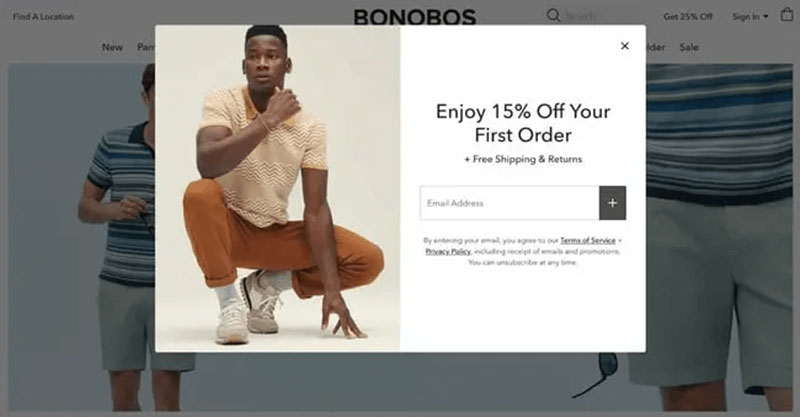
Exit intent popups offering 10% off convert 4.65% of abandoning visitors on average, according to Wisepops research. Cart abandonment popups perform even better at 17.12% because they target high-intent shoppers.
A popup form with a first-purchase discount works. Product quizzes that recommend items based on preferences work. Newsletter signups promising exclusive deals work.
Each touchpoint collects contact information and moves prospects into your funnel.
Conversion transforms leads into customers through email sequences, retargeting, and personalized recommendations.
Omnisend data shows automated welcome emails convert at 3%, while cart abandonment emails hit 2.39%. Not everyone converts on the first email. Research from Klaviyo indicates automated email flows generate 30x more revenue per recipient than one-off campaigns because they’re timely and targeted.
Some prospects need five touches. Others need fifteen.
Retention keeps customers returning through follow-ups, loyalty programs, and re-engagement.
Timeline Breakdown
- Day 1: Visitor arrives, sees exit intent popup, subscribes for discount
- Days 1-3: Welcome series introduces brand values
- Days 4-7: Educational content builds trust
- Days 8-14: Product recommendations based on browsing
- Days 15-30: Limited-time offer triggers purchase
The journey from visitor to first purchase spans 24 hours to 60+ days depending on product category and price point.
Track Your Drop-Off Points
Use Google Analytics and behavior tracking (Hotjar, Microsoft Clarity) to identify where prospects exit. This reveals optimal lead capture placement.
Key metrics to monitor:
Cart abandonment rate: Industry average is 70.19% according to Baymard Institute. If yours exceeds 75%, your checkout has friction.
Email open rates: eCommerce averages 25.1% open rates per Omnisend. Below 20% signals list quality issues.
Popup conversion rates: Average is 4.65%. Under 2% means poor targeting or weak offers.
Place lead capture forms where data shows highest engagement. Don’t guess.
Types of eCommerce Leads
Not all leads carry equal value. Understanding lead types helps you prioritize follow-up and allocate resources where they generate the highest ROI.
Marketing Qualified Leads
MQLs show interest through engagement but haven’t expressed direct purchase intent.
Downloaded your style guide. Subscribed to your newsletter. Took your product quiz.
These actions signal curiosity, not buying readiness.
Industry data shows only 13% of MQLs convert to SQLs on average, according to research from Implisit analyzing hundreds of company pipelines. Top performers using behavioral lead scoring hit 40%, more than triple the average.
MQLs need nurturing through educational content, brand storytelling, and gentle product introduction. According to Landbase research, 79% of marketing leads never convert because they’re not qualified or nurtured properly.
Don’t push for the sale. Build the relationship.
Sales Qualified Leads
SQLs demonstrate clear buying signals through behavior.
Added products to cart. Visited pricing pages multiple times. Requested product demos. Started checkout but abandoned.
These leads convert to opportunities at 20-30% rates, compared to just 5-15% for MQLs, per Sales So research. That’s a 4-6x improvement.
SQLs warrant immediate, personalized follow-up. Abandoned cart email sequences convert at 2.39% according to Omnisend data. Generic newsletters convert at 0.9%.
The difference? Timing and relevance.
Response speed matters. Companies following up within the first hour report 53% conversion rates, compared to 17% for follow-ups after 24 hours, according to Data Mania’s 2025 benchmark study.
Product Qualified Leads
PQLs have experienced your product and shown activation behavior.
In eCommerce, this includes:
- Repeat visitors browsing specific categories consistently
- Customers who made a small initial purchase
- Users who created accounts and built wishlists
- Quiz completers who received personalized recommendations
PQLs convert faster because they understand your value proposition. The average repeat customer rate in eCommerce is 28.2%, with industry leaders hitting 35-45%, according to Opensend research.
Your sign up forms captured them. Their subsequent behavior qualified them.
Lead Scoring Systems
Assign point values to different actions:
- Viewing a product page: 5 points
- Adding to cart: 20 points
- Abandoning checkout: 50 points
When leads hit certain thresholds, they move from marketing nurture to sales-focused communication.
Lead scoring delivers measurable results. Companies implementing it achieve 138% ROI on lead generation compared to 78% for those without it, per Landbase research.
Machine learning lead scoring reports 75% higher conversion rates than traditional methods. High-performing companies reach 6% conversion rates versus the 3.2% industry average by using AI-driven scoring systems.
Implementation Benchmarks
Website leads convert at 31.3% from lead to MQL.
Customer referrals hit 24.7%.
Webinars reach 17.8%.
Email campaigns struggle at 0.9%.
Source matters enormously. According to Geckoboard’s analysis, organic search generates 16% conversion rates, the highest of any channel. Amazon follows at 10-15%.
Focus your budget where data shows results, not where you hope for them.
Lead Capture Methods for Online Stores
Your capture method determines both quantity and quality of leads. Test everything. What works for one store bombs for another.
Email Signup Forms
The simplest capture method. Email field, maybe a name, submit button.
Place in your header, footer, and within blog content. Subscription forms convert at 1-3% when passive, but strategic placement boosts performance.
Field count matters:
- 3 fields: 10% conversion (highest)
- Email + name: 7.41%
- Email + birthdate: 5.73%
Average conversion: 2.9%. Top performers: 6.5%.
The key is value exchange. Nobody gives their email for nothing.
Warby Parker promises first dibs on new frames. Glossier offers insider beauty tips. Early access to sales. Exclusive content. Member-only discounts.
HubSpot data shows email collection forms average 15% conversion, significantly better than most passive methods.
Exit-Intent Popups

These trigger when cursor movement suggests a visitor is leaving. Technology tracks mouse position moving toward browser close button or address bar.
WordPress exit intent popup plugins like OptinMonster or Justuno make implementation straightforward.
Timing is everything:
- Second page view: 28.98% conversion
- Four-page delay: 10.69%
- 5-15 seconds: Sweet spot
- Under 5 seconds: 4.25% (risks annoying visitors)
Average performance: 4.65%. Top 10%: 19.77%.
Offer free shipping. 15% discount code. Exclusive sale access. Make it compelling enough to stop the exit.
Product Quiz Funnels
Quizzes engage visitors while collecting preference data. Brooks Running uses a shoe finder. Warby Parker helps choose frame styles.
40.1% of quiz starters become leads. This rate has held steady since 2013 across 80+ million leads generated.
65% complete all questions once they start. High completion signals strong engagement.
You learn what customers want while capturing contact info. The personalized recommendations feel helpful, not salesy.
Quizzes and interactive forms work particularly well for product recommendations where personalization drives decisions.
Gated Content Downloads

Hide valuable resources behind email capture. Style guides. Sizing charts. Buying guides. Recipe collections.
Gated content works best for considered purchases where education matters.
Examples: Furniture store room planning guide. Skincare personalized routine builder. Supplement nutrition guide.
Landing pages with gated content: 23% conversion. Standard popups: 15% (despite making up 66% of all signup forms).
Over 30% of marketers report highest conversion from 4-field forms. Don’t ask for more than necessary.
Account Creation Options
Guest checkout reduces friction but sacrifices lead capture.
The data shows a clear trade-off:
- Mandatory account creation: 26% cart abandonment
- 2024 shopper abandonment from forced accounts: 34%
- Registered customers: 64% conversion
- Guest checkout: 52% conversion
- Requiring accounts cuts conversion: 25-30%
Balance both with social sign-in through Google or Facebook. One-click account creation. No forms. No passwords. No friction.
Registration forms become invisible.
Best approach: Offer guest checkout prominently, then encourage post-purchase account creation. Capture the sale first, build the relationship after.
Social Sign-In Integration
Meta Business Suite and Google integration simplify signup dramatically.
One click. Name and email auto-populate. Account created in seconds.
The password field has the highest abandonment rate at 10.5%. Email fields cause 6.4% abandonment, phone numbers 6.3%.
Social sign-in eliminates password friction entirely while building first-party data.
Form Optimization Benchmarks
Key performance data:
- Form starters who complete: 66%
- Overall completion (including non-interacting visitors): Under 50%
- Contact form view-to-completion: 9%
- Users who interact but don’t submit: 62%
- Social proof boost: Up to 26% increase
Test field combinations. Test button copy. Test timing. Massive variance exists in performance based on implementation details.
How to Build High-Converting Landing Pages for Lead Capture
Your landing page exists for one purpose: getting visitors to complete your lead generation form.
Everything else is distraction.
Median conversion rate: 6.6% across industries according to Unbounce’s Q4 2024 analysis of 41,000 landing pages. Good performance: 10% or higher. Top performers: 11.45%.
Page Layout and Visual Hierarchy

Lead the eye toward your capture form. Remove navigation menus that offer escape routes.
Removing navigation doubles conversion rates. VWO case study showed conversions jumped from 3% to 6% simply by stripping the nav menu.
Use F-pattern or Z-pattern layouts matching natural reading behavior. Place your headline top-left. Supporting image top-right. Form in the primary visual path.
Form design matters more than page aesthetics. A beautiful page with a buried form fails. An ugly page with a prominent form converts.
Single CTA pages: 13.5% conversion. Pages with 2-4 CTAs: 11.9%. Five or more CTAs: 10.5%.
Eliminate competing calls-to-action. Each additional CTA link pulls focus and drops performance by roughly 2-3 percentage points.
Trust signals belong above the fold. Customer logos. Review counts. Security badges.
92% of consumers read testimonials when making purchase decisions according to research from Abmatic. 37% of top landing pages include customer testimonials. These reduce anxiety before visitors even read your offer.
Form Design and Field Optimization

Every additional field reduces completions.
Performance by field count:
- Single-field forms: 5.77% conversion
- 3-field forms: 10% conversion (Omnisend)
- 5 or fewer fields: 120% better than forms with more fields
- Traditional multi-field contact forms: 1.7%
Ask only for email initially. Collect additional data through progressive profiling in subsequent interactions.
Multi-step forms break the process into digestible chunks. These outperform single long forms by making commitment feel incremental despite requesting the same information.
Button copy matters:
Personalized CTAs: 202% better performance than generic ones (HubSpot).
Specific examples that worked:
- “Get My Discount” vs “Submit”
- “Start My Free Trial” vs “Submit”
- “Get Started” increased conversions 111.55% over “Book a Demo” in PartnerStack case study
Benefit-focused language wins. First-person phrasing like “Start My Free Trial” outperforms “Start Your Free Trial” by 90%.
Proper form validation catches errors without frustrating users.
Inline validation showing errors as users type outperforms validation that only triggers on submission. Research from CXL shows 22% decrease in form errors with inline field validation.
Mobile Responsiveness
82.9% of landing page traffic comes from mobile devices according to Backlinko data. Yet desktop converts 8% higher than mobile.
Your mobile forms must work flawlessly on small screens.
Thumb-friendly buttons. Appropriately sized input fields. Auto-advancing between fields. Numeric keyboards for phone number entry.
Test on actual devices, not just browser simulators.
Load time matters even more on mobile:
- Under 2 seconds: 9.6% conversion
- 3 seconds: 53% of mobile visitors leave
- 4 seconds: 46% abandon
- 5 seconds: 3.3% conversion
- Over 3 seconds: Massive abandonment
Each additional second of load time between 0-5 seconds: 4.42% drop in conversion.
For mobile, every second delay can impact conversion rates by up to 20%.
Copy and Readability
Copy complexity directly impacts performance:
- 5th-7th grade reading level: 11.1% conversion
- College reading level: 5.3% conversion
Simplified copy more than doubles conversion rates according to Backlinko analysis. Shortened attention spans (now just 47 seconds in 2024) make accessible language critical.
Use short sentences. Simple words. Clear benefits.
Performance Benchmarks to Track
Traffic source conversion rates:
- Email traffic: 19.3% (highest performing)
- Paid search: Lower performance
- Social media: Lowest conversion
Industry variations:
- Financial services: 8.4% median
- B2B landing pages: 13.28% average
- B2C landing pages: 9.87% average
- eCommerce product pages: 2.86%
Load time vs conversion relationship:
- 1 second load: 39% conversion
- 2 seconds: 34% conversion
- 3 seconds: 29% conversion
- 6 seconds: 18% conversion
Sites loading in 1 second convert 3x higher than sites loading in 5 seconds.
Testing priority based on impact:
- Page speed optimization (under 2 seconds)
- Mobile responsiveness and form functionality
- Reduce form fields (5 or fewer)
- Add testimonials near CTAs
- Personalize CTA copy
- Remove navigation menu
- Simplify copy to 5th-7th grade reading level
Small changes compound. A landing page optimized across all these factors can easily 2-3x baseline conversion rates.
What Are Trust Signals and Why Do They Increase Conversions
Trust signals are visual or textual cues that reassure visitors about your store’s credibility. They reduce purchase anxiety and increase form completion rates.
The impact is measurable: Research from Spiegel Research Center shows displaying reviews increases conversions by 270%. Baymard Institute found trust badges can improve conversion rates by 42%.
Nearly 49% of shoppers see missing trust badges as red flags according to Yieldify research.
Place these elements near your call-to-action buttons and lead capture form templates for maximum impact.
Customer Reviews and Star Ratings
90% of shoppers read reviews before buying according to Capital One Shopping research.
Products with 4.2-4.7 star ratings convert better than perfect 5-star scores. They feel authentic. Northwestern University’s Spiegel Research Center confirms ratings around 4.5 stars peak purchase likelihood.
Display review counts prominently. “2,847 reviews” signals popularity and reduces uncertainty.
The numbers that matter:
- 5+ reviews: 270% higher purchase probability
- 50+ reviews: 4.6% conversion increase
- First 5 reviews: Biggest impact on sales
- Products with reviews: 354% increase in conversion vs no reviews
- 40 reviews minimum: Required before customers trust average rating
85% of consumers consider star ratings the most important aspect of online reviews according to Capital One Shopping data.
Review engagement drives sales: Shoppers who interact with reviews show 144% higher conversion rates and spend 13% more per order according to BigCommerce data.
Negative reviews matter. 85% of shoppers think negative reviews are as important or more important than positive ones. Mixed reviews increase credibility.
Security Badges and Payment Logos

SSL certificates (the padlock icon), PayPal logos, Visa and Mastercard badges, and Norton Secured seals address payment security concerns directly.
Blue Fountain Media case study: Adding a VeriSign trust badge increased form conversions by 42%.
48% of consumers say trust seals are crucial in building trust on eCommerce sites according to Yieldify research. 76% said trust seals affected their sense of trust in a website.
61% of shoppers didn’t make a purchase because no visible trust badges or logos were present.
Norton and McAfee badges rank as most trusted according to Baymard Institute research.
Place these on checkout pages and anywhere you collect sensitive information through GDPR compliant forms.
Implementation impact: ConversionTeam case study showed repositioning trust elements (reviews, chat, shipping info) led to 133% conversion increase and 36.7% revenue growth.
Return Policy Displays
67% of buyers check return policies before purchasing.
Simple phrases like “30-Day Free Returns” displayed on product pages reduce hesitation.
Red Door saw a 90% boost in sales after adding trust seals for free shipping.
84% of shoppers check return policies when making purchasing decisions according to SellersCommerce data.
Key return policy statistics:
- 67% of shoppers: Check return page before buying
- 49% of retailers: Now offer free return shipping
- 62% of shoppers: More likely to buy if in-store returns available
- Return rate averages: 17.6% for online purchases
Visual Website Optimizer experiment with “30-day money-back guarantee” badge increased sales over 32% in 11 days.
Clear policies remove risk from the buying decision.
Third-Party Certifications
Better Business Bureau accreditation, industry-specific certifications, and awards from recognized organizations build credibility instantly.
B-Corp certification and carbon neutral badges appeal to environmentally conscious shoppers.
75% of B2B buyers consider industry awards a key part of their purchase decision according to TrustRadius.
Third-party endorsement badges increase conversions by up to 30% according to VeriSign case studies.
Know what matters to your audience.
Social Proof Elements
User-generated content showing real customers using your products builds trust faster than professional photography.
The user-generated content advantage:
- Websites with UGC: 29% higher web conversion rates
- Product pages with UGC: 74% higher conversion than pages without
- UGC drives: 154% higher revenue per visitor
- Product pages with customer photos/videos: 140% higher conversion when visitors interact with galleries
- Average order value: 15% higher with UGC interaction
93% of consumers say online reviews influenced their purchase decisions according to Podium data.
Display customer counts, recent purchases, and social media mentions. Bandwagon effects work.
Real-time social proof notifications increase conversions by 98% according to research from Genesys Growth.
Video testimonials outperform text by 80-86% according to multiple studies. 79% of people have watched a video testimonial to learn about a product.
Implementation Strategy
Placement priority:
- Checkout pages (highest trust test point)
- Product pages (near add-to-cart button)
- Homepage (first impression)
- Form pages (wherever collecting data)
Trust signal combinations work best:
- Reviews + security badges + free shipping: Strongest combination
- Multiple trust types convert better than single types
- Place near decision points (checkout buttons, forms)
Testing matters:
- A/B test trust badge placement
- Test different badge types
- Monitor conversion lift by element
- Track which signals resonate with your audience
Common mistakes to avoid:
- Using fake or unverifiable testimonials (95% of consumers can detect fakes)
- Displaying only perfect reviews (triggers skepticism)
- Poor mobile optimization (alienates 60% of users)
- Outdated testimonials (reduced relevance)
- Generic testimonials that don’t address specific buyer concerns
Mobile optimization critical: 67% of users more likely to purchase from mobile-friendly sites with trust signals.
Trust signals aren’t optional. They’re conversion multipliers backed by data across multiple studies showing 30-270% lifts when implemented correctly.
Product Page Optimization for Lead Generation
Product pages drive the majority of eCommerce traffic. Optimize these for both immediate sales and lead capture.
Product page sessions convert at nearly 50% for viewing product details according to Smart Insights data, making these pages critical conversion points.
The baseline performance: Global eCommerce product pages average 2-4% conversion in 2025, with top performers reaching 5-10% according to AMRA & ELMA research.
Product Descriptions That Convert

Lead with benefits, not features. Bullet-point format for scanability.
87% of customers say product content is the most important factor when deciding to purchase online according to ConvertCart data.
The same 87% are unlikely to make repeat purchases if product descriptions aren’t accurate.
Include size, materials, care instructions, and shipping details.
80% of shoppers conduct online research before buying. Your descriptions need detail and value.
Storytelling boosts value by 2,706% according to ConvertCart research.
Critical description elements:
- Benefits before features
- Specific measurements and specs
- Care and usage instructions
- Shipping timeline details
- Material composition
10% of eCommerce sites lack sufficient detail in product descriptions.
53% of US online customers abandon purchases if they can’t find quick answers to questions.
Use form fields strategically to capture interest from browsers not ready to buy.
“Back in stock” notifications: 67% of B2B eCommerce pros rank this as the top conversion strategy according to WordStream data.
Image and Video Requirements
Multiple angles. Zoom functionality. Lifestyle shots showing products in use.
Image quality drives conversion:
- 67% of consumers consider product image quality vital in decision-making (higher than product info at 63%, descriptions at 54%, reviews at 53%)
- 93% of online shoppers say visual appearance is a prime purchasing factor
- 83% of US shoppers find product images extremely influential
- Professional photography: 33% higher conversion vs low-quality visuals
Image quantity matters:
- 1 image: 2x conversion vs no images
- 2 images: 2x conversion vs 1 image
- 3-5 images: Bare minimum expected
- 5-8 images: Ideal across angles, close-ups, context
PowerReviews study (1,200 retailers): Image gallery interactions increase conversions by 110.7%.
40% of eCommerce stores don’t support pinch or tap gestures for product images.
3D visualization tools increase engagement: 82% of shoppers use 3D view when available.
Poor imagery kills conversions faster than any other factor.
Video demonstrations for complex products:
- Videos on landing pages: 86% conversion increase
- Explainer videos: 74% of viewers subsequently bought the product
- Product demo videos: 69% of consumers say best assists purchase decisions
- Sites with video: 4.8% average conversion vs 2.9% without video
- 93% of marketers report strong ROI from video marketing
Video engagement:
- Visitors spend 1.4x longer on pages with video (Wistia)
- 88% increase in time spent on sites with video
- 83% of consumers convinced to buy after watching product video
Video testimonials convert 80-86% higher than text reviews.
Call-to-Action Button Placement
Primary CTA above the fold. Sticky add-to-cart buttons on mobile.
Personalized CTAs convert 42% more visitors than generic ones according to AMRA & ELMA data.
HubSpot research shows personalized CTAs perform 202% better than basic versions.
Button color contrast matters. Test variations through Salesforce or Google Analytics tracking.
CTA optimization priorities:
- Place primary button above fold
- Use sticky buttons on mobile (critical as mobile is 70-75% of traffic)
- Test button copy (first-person phrasing 90% better)
- Ensure contrast for visibility
- Add secondary CTAs for wishlist, notifications
Secondary CTAs for wishlist saves and email notifications.
Mobile CTA requirements: Mobile converts at 2.8-2.9% vs desktop 3.2-4.8%. Optimize mobile checkout to close this gap.
Desktop vs mobile conversion:
- Tablet: 3.6% average
- Desktop: 3-5% range
- Mobile: 2% average
Desktop continues converting 3x higher than mobile for some categories despite mobile driving majority traffic.
Cross-Selling and Upselling Elements
“Frequently bought together” sections increase average order value.
Cross-selling and upselling performance:
- 30% of eCommerce revenue driven by cross-selling
- Upsell conversion rate: 20% average
- 72% of salespeople saw revenue grow from these strategies
- 42% more revenue when using these strategies
- Cross-selling can boost revenue up to one third
Probability of success:
- Selling to existing customers: 60-70% more likely than new customers
- Upselling to new customers: Only 5-20% success rate
Customer lifetime value impact: Upselling can boost CLV by 20-40%.
Cross-selling best practices:
- Keep cross-sells at half the price or less of main item
- Products with natural bundling convert best
- Relevant recommendations only (85% reject irrelevant suggestions)
- Timing matters: Cart review stage shows highest conversion
“Complete the look” recommendations keep visitors engaged longer.
Every additional page view increases lead capture opportunity.
Product interaction data from PowerReviews (1.5MM pages, 1,200 retailers):
- Users who interact with product pages: 106.3% more likely to convert
- Q&A section interactions: 194.2% conversion increase
- User-generated content presence: 8.5% conversion increase
- Visitors scrolling through UGC: Additional 3.8% conversion jump
Personalized product recommendations:
- Stores with personalization: 4.5x higher conversions
- Advanced personalization strategies: 35% revenue increase
- Relevant recommendations reduce cart abandonment 4.35%
- 49% of customers made additional purchases based on personalized recommendations
- 26% increase in add-to-cart rates from personalized suggestions
Site search optimization: CXL data shows optimizing site search increases conversions up to 43%.
Site search users convert 2-3x higher than non-searchers.
Implementation Checklist
Product descriptions:
- Lead with benefits and value
- Include all technical specs
- Add storytelling elements
- Ensure 100% accuracy
- Answer common questions inline
Images and video:
- Minimum 5-8 high-quality images
- Enable zoom functionality
- Add 3D view if possible
- Include lifestyle context shots
- Create product demo video
- Add customer photo galleries
CTAs and buttons:
- Primary CTA above fold
- Sticky mobile buttons
- Personalize button copy
- Test color contrast
- Add secondary CTAs (wishlist, notify)
Cross-selling:
- Implement “frequently bought together”
- Keep suggestions under 50% of item price
- Show relevant bundles only
- Add personalized recommendations
- Test placement (cart review performs best)
Additional optimizations:
- Enable site search
- Add Q&A sections
- Display customer reviews (26-50 reviews optimal)
- Include user-generated content
- Optimize page load under 2 seconds
- Mobile-first design
Load time impact: Sites loading in 1 second achieve 3x higher conversion than 5-second sites.
Pages loading within 1-2 seconds see 3.05%+ conversion rates considered “good” across niches.
Average order value globally: $144.57 in late 2024 (8.7% annual increase).
Product pages are conversion engines when optimized correctly. Focus on image quality, detailed descriptions, personalized CTAs, and strategic cross-selling.
Cart Abandonment Recovery Strategies

Average cart abandonment rate: 70.19% (Baymard Institute 2025, analyzing 48+ studies). That represents massive revenue leaking from your funnel.
$260 billion in recoverable lost orders globally (Baymard Institute). $4.6 trillion worth of products left in carts annually.
35.26% conversion increase possible through better checkout design alone (Baymard research on large eCommerce sites).
Exit-Intent Triggers
Detect when shoppers move to leave your checkout page.
Exit-intent popup performance:
- Average conversion: 4.65% (Wisepops 2025, up from 4.01% in 2024)
- Top 10% of campaigns: 19.77% conversion (nearly 5x average)
- Cart abandonment exit popups specifically: 17.12% average (OptiMonk)
- Can recover 10-15% of abandoning visitors (multiple studies)
- Mobile exit-intent: 11.07% vs desktop 9.69% (Arfadia)
Trigger exit-intent forms offering incentives to complete purchase or at minimum capture their email.
GetSiteControl data shows: Exit popups can convert 7% of abandoning visitors into email subscribers and save up to 13.5% of abandoned sales with coupon incentives.
Key timing factors:
- Displayed first 5 seconds: 4.25% conversion
- After 4+ seconds: 92% of top-performing popups use this timing
- Well-timed popups can achieve up to 60% conversion (Campaign Monitor)
Even capturing abandoned cart emails lets you follow up later.
Abandoned Cart Email Sequences
Cart abandonment emails generate exceptional results:
Open rates:
- Average: 39.07% (Analyzify 2024)
- Single email: 62.94%
- Can exceed 50.5% (Klaviyo 2024)
- Food & beverage industry: 52.16%
- With coupon codes: 44.37%
Click-through rates:
- Average: 23.33% (Analyzify)
- Single email series: 14.53%
- Food & beverage: 6.63%
- Klaviyo all-industry average: 6.25%
Conversion rates:
- Average: 10.7% (Analyzify, StatsUp)
- Industry range: 3.33-3.66% for placed orders
- Food & beverage: 3.66% placed order rate
- 50% of clicked emails result in purchases (Moosend)
Send the first within 1 hour of abandonment.
Revenue performance:
- Abandoned cart flows: $3.65 revenue per recipient (highest of all email flows per Klaviyo)
- Top 10% performing flows: $28.89 RPR (36.40% higher than second-best flow)
- 3-email series generates $24.9 million vs $3.8 million from single email
- Three emails bring 69% more revenue than one email
Sequence structure:
- Email 1 (1 hour): Simple reminder with cart contents
- Email 2 (24 hours): Add social proof or product benefits
- Email 3 (72 hours): Include discount code as final push
Email sequence performance comparison:
- Single email: $10.75 revenue per recipient
- Two emails: $8.28 RPR
- Three emails: $5.52 RPR (but highest total revenue)
Platforms like Klaviyo, Omnisend, and ActiveCampaign automate this entirely.
Retargeting Campaigns
Facebook Pixel and Google Tag Manager track abandoned carts for retargeting ads.
Retargeting performance:
- Brings up to 26% of abandoners back to website
- 70% of retargeted visitors likely to convert
- Dynamic retargeting converts at 2-3x the rate of generic display ads
- SMS recovery: 16.4 orders per 100 messages delivered (60-minute delay)
Show shoppers the exact products they left behind.
Dynamic retargeting converts at 2-3x the rate of generic display ads.
Combined recovery strategies: High-performing approaches with automated emails, retargeting ads, and discounts can recover up to 20% of potential lost revenue.
Checkout Simplification
Complicated checkout procedures cause most abandonments.
Top abandonment reasons (Baymard 2024):
- 48%: Extra costs (shipping, taxes, fees)
- 41%: High delivery fees
- 26%: Mandatory account creation
- 22%: Too long/complicated checkout process
- 17%: Website errors/crashes
- 16%: Unsatisfactory return policy
- 43%: “Just browsing” (unavoidable)
Checkout complexity data:
- Average checkout: 5.1 steps long
- Contains 11.3 form elements by default
- Ideal checkout: 12-14 form elements total (7-8 form fields)
- 20-60% reduction in form elements possible for most sites
Device-specific abandonment:
- Mobile: 80.2% (77.65-79.61% range)
- Desktop: 70% (69.3-70% range)
- Tablet: 70.68%
Industry-specific rates:
- Luxury & jewelry: 81.68-82.84% (highest)
- Beauty & personal care: 81.71%
- Home & furniture: 78.65%
- Fashion & apparel: 78.53%
- Food & beverage: 63.62%
- Pet care: 52.84-54.78% (lowest)
Regional differences:
- Middle East & Africa: 93%
- APAC: 79.81-80.59%
- EMEA: 73.44-78.89%
- Americas/North America: 72.72-79.14%
Minimize steps. Implement auto-fill technology. Offer multiple payment options through Stripe, PayPal, and Shop Pay.
Checkout optimization alone can recover 20-30% of abandoned carts without any follow-up campaigns.
Payment optimization:
- Multiple payment methods boost conversions significantly
- Digital wallets (Apple Pay, Google Pay) reduce friction
- Buy Now Pay Later (BNPL) reduces abandonment
Implementation Priority
Immediate actions:
- Set up exit-intent popups (17.12% conversion on cart pages)
- Create 3-email abandoned cart sequence (69% more revenue than single email)
- Simplify checkout to 12-14 form elements (35.26% conversion increase possible)
- Enable retargeting pixels (26% of abandoners return, 70% convert)
Quick wins:
- Remove mandatory account creation (26% cite as reason for abandonment)
- Display all costs upfront (48% abandon due to unexpected fees)
- Offer free shipping threshold (41% abandon due to delivery fees)
- Add multiple payment options
- Mobile-optimize checkout (mobile 80.2% abandonment vs desktop 70%)
Email timing best practices:
- First email: 1 hour after abandonment
- Best subject lines: “Oops, Did Something Go Wrong?” (70% open rate)
- “Your Buy Fencing Direct Basket” (30% conversion rate)
Testing priorities:
- A/B test email sequence timing
- Test exit popup offers (discount vs free shipping)
- Experiment with popup delay (4+ seconds performs best)
- Test checkout flow reduction
- Monitor device-specific performance
Key metrics to track:
- Cart abandonment rate by device
- Email open/click/conversion rates
- Exit popup conversion rate
- Checkout completion rate
- Recovery campaign ROI
Benchmark targets:
- Email open rate: 40-50%
- Email click rate: 20-25%
- Email conversion: 10%+
- Exit popup conversion: 15-20% (cart abandonment specific)
- Overall recovery rate: 15-20% of abandoned carts
Recovery strategy matters. B2C businesses using automated workflows witness 50% increase in conversion rate (Moosend).
Three-pronged approach (exit-intent + email + retargeting) delivers highest recovery rates.
Email Nurturing Sequences for eCommerce
Nurtured leads spend 47% more than non-nurtured leads (multiple 2024-2025 sources). Email sequences automate the relationship-building process.
Automated email performance (2024-2025 data):
- Generate 320% more revenue than manual emails
- Drive 37% of all email-generated sales from just 2% of email volume
- Achieve 52% higher open rates than manual campaigns
- Convert 47% better than single emails
- Deliver 80% higher engagement rates with automation
Email ROI: $36-$68 for every $1 spent (US merchants averaging $68, Omnisend).
41% of marketing professionals rank email as their most effective channel (double the next category at 16%).
Welcome Email Series

Trigger immediately after signup.
Welcome email performance:
- Open rates: 50-83.63% (86% more effective than standard newsletters)
- Click-through rates: 16.60-27%
- Click-to-open rate: 19.85%
- Conversion rate: 3% (B2B welcome sequences)
- Revenue per recipient: $2.65 (eCommerce average)
- Generate 320% more revenue per email than promotional emails
8 out of 10 people open welcome emails, resulting in 4x as many opens and 10x more clicks than other email types.
B2B sector: Welcome email series show 63% open rate vs 18% for regular emails.
New subscribers who receive well-crafted welcome emails demonstrate 33% more engagement with a brand.
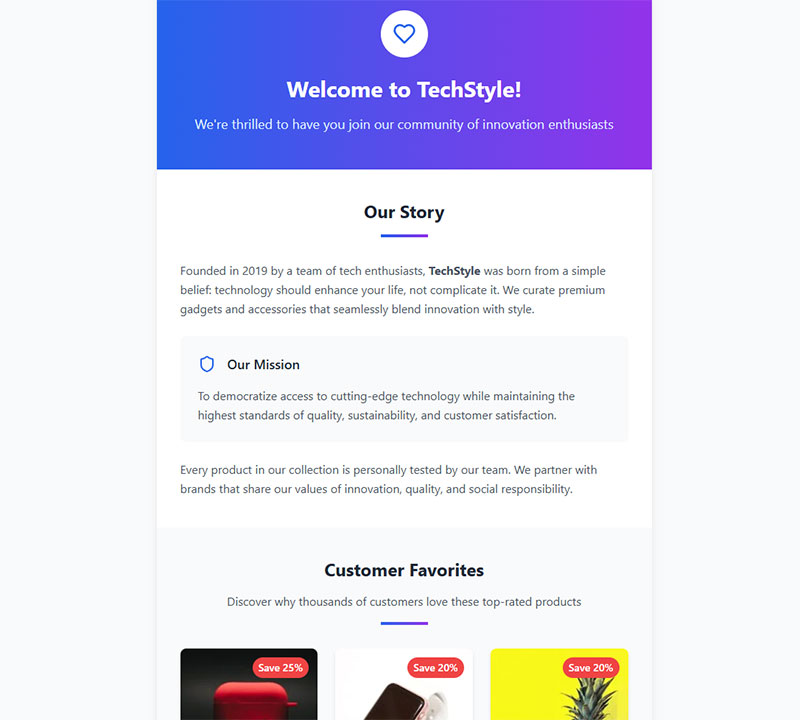
Introduce your brand story, set expectations for future emails, and deliver any promised discount code.
Welcome sequences average 50%+ open rates. Use this attention wisely with your strongest content.
Common failures:
- 83% of businesses fail to make a good first impression
- 41% of companies don’t send welcome email within 48 hours
Compared to other promotional emails, welcome emails help achieve 9x higher transaction rates.
Educational Content Sequences
Provide value without selling. Styling guides, usage tips, ingredient explanations, behind-the-scenes content.
Nurture email performance:
- Click-through rate: 8% (vs 3% for general email sends)
- Response rate: 4-10x higher than generic broadcast emails
- Lead nurturing emails generate up to 10x the response rate vs standalone blasts
- 47% of marketers believe email is most effective lead nurturing tactic
71% of B2B marketers used email newsletters to nurture leads in 2024.
Converting a lead typically takes 5-20 interactions. Each touchpoint builds trust incrementally.
Multi-channel approach: Adding social media, retargeting, or SMS can increase lead response by 63%.
Build trust before pushing products. Three educational emails minimum before promotional content.
Content alignment: Matching content with prospect’s buyer journey stage can boost conversion rates by 72%.
Product Recommendation Emails

Behavioral targeting based on browse history and past purchases.
Segmentation performance:
- 760% increase in revenue from segmented campaigns (Campaign Monitor 2025)
- Segmented campaigns boost CTR by 50% vs untargeted campaigns
- Top reasons for segmentation: improved open rate (82%), higher CTR (75%), better customer satisfaction (58%)
- 51% of marketers say list segmentation is most effective personalization tactic
Personalization impact:
- 6x higher transaction rates with personalized content
- Subject line personalization: 26% higher open rates (up to 50% for cold emails)
- Personalized emails: 29% higher unique open rates, 41% higher unique click rates
- 80% of consumers more likely to buy with personalization
- 71% of consumers expect personalized interactions
Behavioral targeting:
- Behavior-based emails drive 3x higher engagement than scheduled blasts
- 66% of marketers use demographic data (gender, age) for personalization
- 60% of businesses personalize based on past purchases (up from 38% in 2019)
- 79% of marketers agree personalization boosts engagement
Segment audiences by interest category.
Highly segmented campaigns reach conversion rates up to 28.6%, over 10x the email average (0.08% average, 0.44% for top 10%).
Automation for segmentation:
- 56% of marketers use automation for segmentation
- 68.5% of marketers believe automation improved message targeting
- 91% agree automation crucial for nurturing across channels
- 74% cite saving time as main benefit
Re-engagement Campaigns
Target subscribers who have not opened emails in 60-90 days.
Re-engagement/winback performance:
- Open rates: 36-57% (varies by strategy)
- Click-through rate: 18.27% (automated winback emails)
- Conversion rate: 10.34% (automated winback campaigns)
- Read rate: 12% (vs 14% overall average)
- 45% of subscribers who receive winback email will open future emails
Effectiveness data:
- Can increase likelihood of selling to current clients by 60-70%
- Winback initiatives achieve up to 57% open rates and 11% CTR
- Less expensive to re-engage lapsed customers than acquire new ones
- Inactive subscribers generate 7% of overall revenue, cost 5x less to win back
Win-back sequences with special offers or “we miss you” messaging.
Key insights:
- Over 25% of email addresses in databases classified as “inactive” (30+ days no use)
- Only 33% of total audience engaged in last 12 months
- 4% stopped getting emails after winback, but 85% had read the message
- $ off discounts nearly 2x as successful at getting reads vs % off discounts
- Optimal timing: typically after 3 months of inactivity
Subject line performance:
- “Miss You”: 13% read rate
- “Come Back”: 12.7% read rate
- No single “silver bullet” (must test)
Clean your list regularly. Dead subscribers hurt deliverability.
Email frequency best practices:
- Optimal: 2-4 times per month
- 86% of companies send at least monthly
- 58% email subscribers weekly or more
- 44% cite excessive emails as unsubscribe reason
- 47% leave due to poor frequency management
Post-Purchase Follow-ups
Thank you emails, shipping confirmations, delivery notifications, and review requests.
Post-purchase email performance:
- Order follow-ups: 49.75% open rate, 4.44% click-to-sent, 22.64% click-to-conversion
- Cross-sell emails: 40.95% open rate, 3.18% click-to-sent, 21.12% click-to-conversion
- General post-purchase: 40.5% open rate, 6.4% click rate, 0.7% conversion
- Digital receipts: 65% open rate, 10.4% click rate, 1.4% conversion
- Order confirmations: 114.30% open rate (vs 14.40% for bulk emails)
Recipients opened 52% more automated messages than manual campaigns (Omnisend 24 billion emails analyzed).
Post-purchase engagement increases repeat purchase rates by 25-40%.
Transactional email advantage:
- 8x higher opens and clicks compared to regular marketing emails
- 41% unique open rates, 13% click rates, 24% click-to-open rates
Ask post-purchase survey questions to gather feedback.
Automated birthday emails: 43.3% open rate, 14.3% click-to-conversion rate.
Repeat customer value:
- Represent 21% of customers but drive 44% of revenue and 46% of orders
- 60-70% more likely to buy vs new customers (5-20% new customer conversion)
- Acquiring new customers costs 5-7x more than retaining existing
Consumer behavior:
- Nearly 50% of consumers made purchase directly from email in past year
- 59% say email marketing influences purchase decisions
- 60% completed purchase after receiving marketing email
- Consumers spend 138% more when marketed via email
Implementation Priority
Immediate setup (highest ROI):
- Welcome series (50-83.63% open rate, 320% more revenue)
- Send within minutes of signup
- 2-3 email sequence
- Include brand story, expectations, incentive
- Post-purchase sequence (49.75% open, 22.64% click-to-conversion)
- Order confirmation (immediate)
- Shipping notification (when processed)
- Delivery confirmation
- Review request (7-30 days post-delivery)
- Cross-sell opportunities
- Cart abandonment (39.07% open, 23.33% CTR, 10.7% conversion)
- 3-email series generates 69% more revenue than single
- Email 1: 1 hour after abandonment
- Email 2: 24 hours (add social proof)
- Email 3: 72 hours (discount code)
- Segmented campaigns (760% revenue increase)
- Segment by purchase history, browsing behavior, demographics
- Personalize subject lines (26% higher opens)
- Behavioral targeting (3x higher engagement)
- Re-engagement series (18.27% CTR, 45% open future emails)
- Target 60-90 days inactive
- 3-4 email sequence
- Personalized incentives based on past behavior
Automation essentials:
- Set up triggered workflows (drives 37% of sales from 2% of volume)
- Implement behavioral triggers
- Create dynamic segmentation rules
- Enable personalization tokens
Performance benchmarks to track:
| Email Type | Target Open Rate | Target CTR | Target Conversion |
|---|---|---|---|
| Welcome | 50-80% | 16-27% | 3%+ |
| Post-purchase | 40-65% | 4-10% | 0.7-1.4% |
| Cart abandonment | 39-50% | 20-25% | 10%+ |
| Nurture/Educational | 40-45% | 6-8% | 1.8% |
| Re-engagement | 36-57% | 11-18% | 10%+ |
| Standard promotional | 20-25% | 2-3% | 0.08% |
Email frequency matrix:
- Welcome: Immediate + 2-3 follow-ups over first week
- Nurture: 2-4 times per month
- Post-purchase: Event-triggered only
- Re-engagement: After 60-90 days inactivity
- Promotional: Maximum 5 per week (2-4/month optimal)
Mobile optimization (critical):
- 65% of email opens on mobile devices
- 81% opened/read on mobile
- Mobile-optimized emails: 15% higher conversion
- Subject lines under 70 characters perform best (mobile optimization)
Testing priorities:
- A/B test subject lines (personalized vs generic)
- Test send times (best: 4-6 AM, 5-7 PM)
- Experiment with email frequency
- Test segmentation criteria
- Optimize for mobile first
Content best practices:
- Keep emails 50-125 words for optimal engagement
- Use personalization beyond first name (54% of enterprise marketers plan this)
- Include clear single CTA (button vs text link: 28% higher conversion)
- Send 2-4 emails per month maximum (unless triggered/transactional)
- 22% of campaigns opened within first hour (optimize send timing)
Key success metrics:
- Email marketing ROI: $36-$68 per $1 spent
- Automated emails: 320% more revenue than manual
- Segmentation: 760% revenue increase
- Personalization: 6x higher transaction rates
- Welcome series: 4x opens, 10x clicks vs standard
Marketing automation adoption:
- 48% of marketers plan email automation in programs
- 47% use for welcome emails
- 46% for promotional emails
- 28% for transactional emails
- 95% rate AI for email creation as “effective”
Critical reminder: Converting leads requires 5-20 interactions. Nurture sequences systematically guide prospects through complex buying journeys that manual campaigns can’t replicate.
80% of new leads never translate into sales without proper nurturing. Consistent engagement with relevant information through automated sequences is necessary, not optional.
Lead Scoring Methods for Online Retail
Not all leads deserve equal attention. Lead scoring identifies who is ready to buy and who needs more nurturing.
Lead scoring effectiveness (2024-2025 data):
- Only 44% of organizations use lead scoring (massive untapped opportunity)
- 75% of businesses see increased conversion rates with lead scoring
- Companies using CRM for lead scoring: up to 29% sales increase
- Machine learning lead scoring: 75% higher conversion rates than traditional methods
- Only 27% of leads sent to sales are actually qualified
Market growth: Lead scoring software market $2.04-4.84 billion in 2024, projected $8.3-35.4 billion by 2032 (24.74% CAGR).
Conversion benchmarks:
- Average B2B conversion: 3.2%
- High performers with AI-driven scoring: up to 6% (near-doubling performance)
- Top performers using behavioral scoring: 39-40% MQL to SQL conversion (vs 13% average, triple the rate)
Behavioral Scoring Criteria
Assign point values to actions:
Recommended point structure:
- Email open: 1 point
- Email click: 5 points
- Product page view: 5 points
- Add to cart: 20 points
- Checkout started: 50 points
- Cart abandoned: 30 points
Engagement frequency scoring (most companies’ top criterion):
- 74% of companies rank engagement frequency as #1 lead scoring factor
- Other key factors: lead source, company industry (52%), company size and budget
- Attended events, age, gender rank least important
Typical lead score distribution:
- 40% of leads score between 41-60
- ~33% of leads score between 61-80
- Less than 10% achieve scores between 81-100
Behavioral scoring performance:
- B2B SaaS with behavioral scoring: 39-40% conversion rates
- Basic demographic scoring alone: significantly lower performance
- 21% performance gap between top and bottom quartile companies
- Predictive scoring with ML: 30% improvement in campaign ROI
High scores trigger sales-focused automation or personal outreach.
First-party intent tracking:
- Multiple visits to pricing/demo pages
- Product comparisons
- High engagement with sales emails
- Download of sales materials
Third-party intent signals:
- Review site activity (G2, TrustRadius)
- Competitor research
- Intent provider data (Bombora)
- Identifies in-market buyers
Machine learning advantages:
- 98.39% accuracy using Gradient Boosting Classifier (2025 study)
- 46% more sales using ML vs traditional methods
- 77% more conversions for marketing automation users with predictive scoring
- Continuous learning improves accuracy over time
Demographic Scoring Factors
Location, purchase history, average order value, and customer segment all influence lead quality.
Demographic personalization usage:
- 66% of marketers use demographic data (gender, age) for personalization
- 60% of businesses personalize based on past purchases (up from 38% in 2019)
- 54% of enterprise marketers plan to personalize beyond first/last name
Industry-specific conversion rates:
- Legal services: 7.4% (highest B2B)
- Professional services: 9.3%
- B2C models: 18-22% (shorter decision cycles)
- Consumer Electronics: 21%
- FinTech: 19%
- Automotive: 18%
- Healthcare: 12-13% (long buying cycles, compliance)
- Oil & Gas: 12% (complexity hurdles)
- B2B eCommerce: 1.8% (lowest)
- B2B technology/real estate: 1.7%
A repeat customer browsing sale items scores differently than a first-time visitor from paid ads.
Firmographic factors (B2B):
- Company size and revenue
- Industry vertical
- Growth stage
- Technology stack
- Employee count
Average order value impact:
- Higher AOV customers weighted more heavily
- Lifetime value (LTV) predictions
- Purchase frequency patterns
- Category preferences
Qualification frameworks:
- BANT implementation: 59% increase in conversion rates
- MEDDIC framework: 25% increase in win rates
Engagement Level Tracking
Track email engagement, site visit frequency, and recency of interaction.
Recent engagement beats historical engagement:
- Modern scoring uses time-decay (scores naturally decrease outside time period)
- Typical tracking windows: 7 days, 30 days, 90 days
- Real-time scoring updates vs static models
Email engagement metrics:
- 8% CTR for lead nurturing emails (vs 3% general sends)
- 4-10x higher response rate than generic broadcasts
- Open rate tracking
- Click-through patterns
- Download activity
- Link engagement depth
Website engagement signals:
- Session duration and frequency
- Pages visited per session
- Return visit patterns
- Content consumption depth
- Feature usage (for SaaS)
- Scroll depth and click patterns
Response time critical factors:
Speed to lead statistics (2024-2025):
- 78% of customers buy from business that responds first
- 35-50% of sales go to first responder (some studies show up to 78%)
- Average lead response time: 47 hours (Forbes), 29 hours (RevenueHero 2024), 17 hours for web leads
- Only 37% of businesses respond within first hour
- 63% of businesses don’t respond to inbound leads at all
- Only 17% manage instant response
- 57% of companies take full week or longer to respond
- 51% of leads never contacted at all
Response time conversion impact:
- Within 5 minutes: 10x more likely to reach shoppers vs 10 minutes later
- Within 5 minutes: 21x more likely to convert vs 30 minutes later
- Within 5 minutes: 100x increase in conversion vs 30-minute delay
- Within first hour: nearly 7x more likely to have meaningful conversations
- Within 1 minute: 391% improvement in conversions vs after 1 hour
- Within first hour: 53% conversion rate vs 17% after 24 hours
Follow-up persistence requirements:
- 80% of sales require 5+ follow-up attempts
- 92% of sales reps quit after just 4 attempts
- 50% of all sales happen after the 5th contact
- 71% of internet leads wasted due to poor/slow follow-up
Best response channels and timing:
- Phone outreach: higher conversion than email alone
- Omnichannel approach (phone + email + SMS + LinkedIn) shortens sales cycle
- Thursday: highest lead qualification rates
- Wednesday: close second
- Friday: worst day
- 74% of subscribers expect automatic welcome email
Salesforce, HubSpot, and Segment automate scoring based on custom rules you define.
Marketing automation integration:
- 48% of marketers plan to include email automation
- 47% use automation for welcome emails
- 46% for promotional emails
- 28% for transactional emails
CRM integration benefits:
- Real-time score updates pushed to Salesforce, HubSpot
- Automated lead routing based on scores
- Seamless workflow without multiple system logins
- Background qualification automation
Implementation Strategy
1. Define scoring model:
- Establish point values for behavioral actions
- Weight demographic/firmographic factors
- Set score thresholds for MQL/SQL designation
- Create negative scoring for disqualifying factors
2. Set up automation rules:
- High score (80-100): Immediate sales outreach
- Medium score (50-79): Marketing nurture sequence
- Low score (0-49): Long-term nurture or disqualify
- Automated routing to appropriate team member
3. Response time optimization:
- Target sub-5-minute response for high-value leads
- 24/7 coverage using AI chatbots or global teams
- Automated first response while routing to rep
- Mobile access for reps to respond anywhere
4. Multi-touchpoint tracking:
- Anonymous website visitor tracking
- Known contact activity monitoring
- Third-party intent signal integration
- Cross-channel engagement aggregation
5. Continuous refinement:
- Track conversion rates by score range
- Adjust point values based on actual conversion data
- A/B test different scoring criteria
- Monthly review of score thresholds
Key Performance Metrics
Lead quality benchmarks:
- MQL to SQL conversion: 13% average, 39-40% top performers
- SQL to opportunity: 20-30% (vs 5-15% for unscored MQLs)
- Opportunity to customer: 22-30%
- Overall funnel: 2.3% visitors to leads, 31% leads to MQL, 13% MQL to SQL
Scoring accuracy indicators:
- 96% of website visitors aren’t ready to buy
- Only 20% of acquired leads close successfully
- 80% of new leads never translate into sales without nurturing
- Nurtured leads make almost 150% more purchases than non-nurtured
AI/ML scoring advantages:
- 25-40% improvement in qualification accuracy with GPT-based models
- 30% improvement in campaign ROI
- Removes human bias from scoring
- Scales with lead volume automatically
- Adapts to changing buyer behavior
Industry adoption trends:
- 71% of Q1 2025 venture funding went to AI companies
- 15% of daily work decisions will be AI-autonomous by 2028 (up from 0% in 2024)
- Platform convergence integrating scoring as core functionality
Common Pitfalls to Avoid
1. Overcomplicating the model:
- Start simple, add complexity gradually
- Focus on 5-10 key actions initially
- Avoid scoring too many insignificant actions
2. Ignoring negative scoring:
- Unsubscribes: deduct points
- Job title mismatches: disqualify or reduce score
- Competitor email domains: flag or reduce
- Geographic exclusions
3. Static scoring models:
- Update scoring criteria quarterly
- Remove outdated criteria
- Add new engagement channels as they emerge
4. Lack of sales-marketing alignment:
- Define MQL/SQL thresholds together
- Regular feedback loops on lead quality
- Shared visibility into scoring criteria
- Consistent handoff processes
5. Poor response time despite good scoring:
- 63% don’t respond despite having leads
- Average 47 hours wastes the scoring investment
- Automation without speed = missed opportunities
- First responder wins 35-78% of sales
Technology Stack Requirements
Essential tools:
- CRM system (Salesforce, HubSpot, Dynamics)
- Marketing automation platform (Marketo, Pardot, Eloqua)
- Lead scoring software (6sense, MadKudu, native CRM scoring)
- Analytics platform (Google Analytics, Adobe Analytics)
Advanced capabilities:
- AI-powered predictive scoring
- Intent data providers (Bombora, TechTarget, G2)
- Data enrichment (ZoomInfo, Apollo.io)
- Conversation intelligence (Gong, Chorus)
- Real-time routing automation
Integration requirements:
- Bi-directional CRM-MAP sync
- Clean campaign naming conventions
- Standardized data fields
- Automated score updates
- Cross-platform activity tracking
Success Metrics to Track
Monthly KPIs:
- Lead volume by score range
- MQL to SQL conversion rate by score
- Average time to convert by score
- Sales acceptance rate of MQLs
- Win rate by lead source and score
Quarterly reviews:
- Score distribution changes
- Conversion rate trends by criteria
- Point value effectiveness
- Threshold optimization
- ROI per lead source
Annual analysis:
- Lead scoring ROI calculation
- Comparison to non-scored periods
- Sales cycle length impact
- Customer acquisition cost reduction
- Revenue attribution by score ranges
Target improvements:
- Increase MQL to SQL from 13% to 30%+
- Reduce response time from 47 hours to under 5 minutes
- Improve first-contact qualification rate
- Decrease sales cycle by 30%
- Increase win rates by 25%+
Proper lead scoring transforms 27% qualified lead rate into 40%+ qualification for top performers. The 21% performance gap between best and average represents millions in potential revenue.
Critical reminder: Speed matters more than perfect scoring. 78% buy from first responder. Sub-5-minute response with decent scoring beats perfect scoring with 24-hour delay every time.
Conversion Rate Optimization for Lead Forms
Small form improvements compound into significant conversion gains. Test continuously.
Data from Zuko shows that forms typically achieve a 66% completion rate, but 34% of users abandon forms midway through completion. The average form conversion rate across all industries sits at 1.7%, according to Ruler Analytics.
Form Length Testing

Start with single-field forms. Add fields only when qualification matters more than volume.
Multi-step forms convert 86% higher than traditional forms, according to HubSpot research. Only 40% of marketers currently use them. Venture Harbour documented a 743% increase in leads after switching from a basic contact form to a multi-step format. BrokerNotes saw conversion rates jump from 11% to 46% using multi-step forms.
Why multi-step forms work:
- Reduce psychological friction by breaking down fields into digestible chunks
- Allow you to ask sensitive questions (like email) on the final step after users are invested
- Create momentum through progress indicators
- Start with low-friction questions to engage users immediately
Forms with 5 or fewer fields achieve 120% higher conversion rates compared to longer alternatives. Research from Getmonetizely found that reducing form fields from 11 to 4 increased conversions by 120%.
Multi-step forms or single-step forms each have advantages depending on your goals and audience.
Action step: Audit your current forms. If you have more than 5 fields, test a multi-step version. Start with engagement questions before asking for contact details.
Field Label Optimization
Labels above fields outperform inline labels. Clear, specific labels reduce confusion.
Research from CXL shows that inline form-field validation causes a 22% decrease in form errors. Labels positioned above input fields improve completion rates because users can see both the label and their input simultaneously.
Proper placeholder text guides users without replacing visible labels. Placeholder text should never replace actual labels, as it disappears when users start typing.
Action step: Review your form labels. Replace vague labels like “Name” with specific ones like “Your First Name.” Position all labels above fields, not inside them.
Button Copy Variations
Test specific benefit language against generic “Submit” copy. Personalized CTAs convert 202% better than basic CTAs, according to HubSpot analysis of 330,000 CTAs.
First-person phrasing (“Start My Trial”) often outperforms second-person (“Start Your Trial”). Research from Capturly found that changing “Create Your Account” to “Create My Account” can impact conversions significantly. Wisernotify data shows that using specific, clear CTAs can increase conversion rates by 161%.
Examples of high-converting button copy:
- “Get My 15% Off” beats “Subscribe”
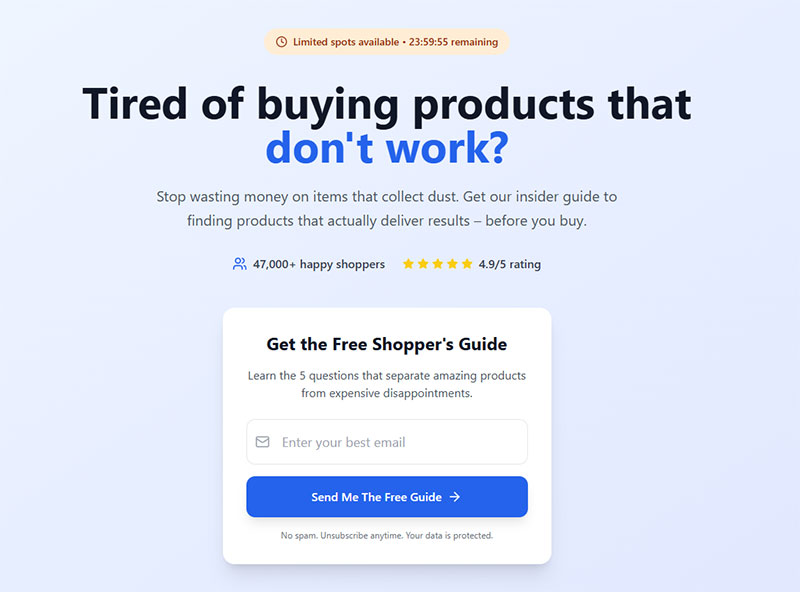
- “Download Your Free Guide” beats “Submit”
- “Start My Free Trial” beats “Sign Up”
Action verbs that work: Get, Reserve, Try, Download, Start. Research from Wordstream confirms these trigger words drive higher engagement than passive terms.
Action step: Replace generic button copy with first-person, benefit-specific language. Test at least 3 variations. Track which phrases resonate with your specific audience.
Progress Indicators
Multi-step form templates with progress bars reduce abandonment by showing how close users are to completion.
Progress indicators increase completion rates by up to 43%, according to IvyForms data. Users need to see their progress to stay motivated. “Step 1 of 3” feels manageable. An endless-seeming form triggers exits.
Data from Landbase shows that multi-step forms with clear progress tracking improve completion rates across all industries. Breaking complex forms into digestible steps with visible progress creates completion momentum.
Best practices for progress indicators:
- Use numbers (Step 1 of 3) rather than percentages
- Show all steps upfront so users understand the total commitment
- Highlight the current step visually
- Keep step names short and clear
Action step: Add progress indicators to any form with 3+ steps. Test numbered steps versus progress bars to see which performs better for your audience.
Personalization Techniques for Higher Conversions
Generic messaging converts poorly. Personalization at scale drives results.
Fast-growing companies derive 40% more revenue from personalization than slower-growing peers, according to McKinsey research. Companies implementing personalization see an average 26% increase in conversion rates, with personalized CTAs converting 202% better than generic versions.
Behavioral Targeting
Show different content based on browse history, traffic source, and on-site actions.
First-time visitors see welcome offers. Returning visitors see recently viewed products.
Real-time personalization delivers 20% higher conversion rates than batch processing, according to data from BCG. Personalized landing pages convert 20-50% better than generic pages when properly aligned with visitor behavior.
Implementation by visitor type:
- New visitors: Welcome messages, category overviews, popular items
- Return visitors: Recently viewed products, abandoned cart items, related recommendations
- High-value customers: VIP offers, early access, loyalty rewards
- Browse abandoners: Product reminders within 24 hours, social proof snippets
Research from Instapage shows that personalized emails deliver 6x higher transaction rates than non-personalized ones. Automated browse abandonment emails achieve 4.3% conversion rates versus 1.7% for generic campaigns.
Action step: Set up basic behavioral triggers. Start with three segments: new visitors, returning visitors, and cart abandoners. Show each group relevant content based on their journey stage.
Product Recommendations Based on History
Collaborative filtering: “Customers who bought X also bought Y.” Content-based filtering: Products similar to items viewed.
Amazon attributes 35% of revenue to recommendation engines. Personalized product recommendations can increase conversion rates by 320%, according to data from Instapage. Recommendation widgets increase click-through rates by 2-5x compared to static product lists.
Recommendation strategies that work:
- Cross-sell recommendations at checkout raise average order value by 10-20%
- Personalized bundles convert approximately 20% better than standard bundles
- Product recommendation emails account for 10-25% of total email revenue for retailers
- Recent reviews and social proof alongside recommendations boost trust
Amazon maintains a 10-13% conversion rate, far exceeding the 1.65% global ecommerce average. Their recommendation system processes billions of data points to create highly personalized experiences. Products with star ratings between 4.2 and 4.5 have the highest purchase probability, so pair recommendations with review data.
Action step: Implement at least two recommendation types: “Customers also bought” on product pages and “You might like” based on browsing history. Test recommendation placement at checkout to boost average order value.
Dynamic Content Display
Personalize headlines, images, and offers based on customer segments. Geographic targeting for shipping messaging.
Tools like Segment and customer data platforms make dynamic content accessible to smaller stores.
AI-powered personalization typically increases revenue by 10-15%, with some implementations achieving up to 25% improvements, according to research from Envive AI. Dynamic product sorting through personalized ranking produces conversion lifts of 7-18% in A/B tests.
Dynamic elements to personalize:
- Headlines based on traffic source (paid ads, organic, email)
- Hero images showing products relevant to past purchases
- Shipping messages displaying local delivery times
- Currency and language based on location
- Seasonal promotions tied to regional weather or events
- Stock availability for nearby stores
Personalized homepages increase session length by 10-30% on average, according to Marketing LTB data. Location-based personalization increases local conversions by 10-30% through targeted campaigns showing local inventory and weather-relevant products.
Action step: Start with geographic personalization. Show local shipping times, nearby store locations, and region-specific promotions. Test personalized headlines based on traffic source next.
Customer Segmentation
Divide your list by:
- Purchase history (buyers vs. browsers)
- Engagement level (active vs. dormant)
- Acquisition source (organic vs. paid)
- Product interest (category preferences)
Targeted messages to segments outperform broadcasts to full lists every time.
Segmentation can increase conversion rates by up to 50%, according to NotifyVisitors research. Segmented email campaigns generate 58% of all revenue and show 77% ROI. Email campaigns using segmentation report 39% higher open rates.
Segmentation performance data:
- Personalized emails achieve 29% higher open rates and 41% higher click-through rates
- Segmented automated email messages have 46% higher open rates than marketing messages
- Segmented campaigns can result in 760% increase in revenue
- Companies using segmentation are 60% more likely to understand customer challenges
Research from Business Dasher shows businesses tailoring offerings to customer segments generate 10-15% more revenue than those that don’t. Companies that segment customers are 130% more likely to know customer motivations.
Effective segmentation criteria:
By engagement:
- Active (purchased within 30 days): Upsell campaigns, new arrivals
- Warm (engaged but no purchase): Product education, testimonials, limited offers
- Cold (no engagement 90+ days): Re-engagement campaigns with steep discounts
By purchase history:
- One-time buyers: Replenishment reminders, complementary products
- Repeat customers: Loyalty rewards, VIP early access
- High-value customers: Premium products, exclusive experiences
By acquisition source:
- Organic search: SEO-related content, comparison guides
- Paid ads: Direct offers matching ad copy
- Social media: User-generated content, community features
- Email subscribers: Exclusive content, subscriber-only deals
Action step: Create at least four segments based on purchase behavior: new subscribers, one-time buyers, repeat customers, and lapsed customers. Send each group targeted messages that match their relationship with your brand. Track conversion rates by segment to optimize messaging.
Measuring Lead Generation Performance
Track the right metrics to improve continuously.
Organizations generate 1,877 leads per month on average, according to data from AI-Bees. Yet only 21% of generated leads are sales-ready and convert. 53% of marketers spend over half their budget on lead generation efforts.
Key Metrics to Track
- Visitor-to-lead conversion rate
- Lead-to-customer conversion rate
- Customer acquisition cost (CAC)
- Customer lifetime value (CLV)
- Email list growth rate
- Form abandonment rate
Google Analytics and your email platform provide most of this data.
Research from HubSpot shows that 31% of web analytics professionals consider sales, leads, and conversion rates the most important metrics when assessing site performance. Direct sales is the most popular lead generation metric to track content marketing ROI.
Tracking lead source performance:
According to UpLead data, leads from organic search conversions achieve 14.6% close rates, demonstrating high-value creation versus other channels. Email marketing delivers the highest ROI at $42 for every $1 spent, according to Campaign Monitor. The average email click-through rate across all industries sits at 1.86%.
Segmented email campaigns drive 30% more opens and 50% higher click rates than non-targeted batches, based on research from UpLead. 73% of B2B buyers say email is their favorite way of hearing from sellers.
Action step: Set up conversion tracking in Google Analytics for each lead magnet and entry point. Tag each lead source so you can track which channels produce the highest quality leads at the lowest cost.
Conversion Rate Calculation
Divide conversions by total visitors, multiply by 100.
1,000 visitors, 35 email signups = 3.5% conversion rate.
Conversion rate benchmarks vary by industry: personal care averages 6.8%, food and beverage 4.6-4.9%, luxury goods 2-3%. The global average website conversion rate stands at 3.68%, according to Higher Visibility research.
Industry-specific benchmarks:
Research from Smart Insights shows conversion rates vary dramatically by industry. B2B ecommerce averages 1.8%, while professional services see 4.6%. Landing pages with personalized content generate 202% more leads than generic pages.
The average lead-to-customer conversion rate varies by source. Sopro’s analysis of 97 million emails shows that 25% of leads come from the initial email, while the first and second follow-ups generate 28% and 27% respectively. This means businesses focusing only on initial outreach capture just one-quarter of potential conversions.
What impacts conversion rates:
Companies that post 15 blog posts per month generate around 1,200 new leads monthly on average, according to Blogging Wizard. Marketers who blog are 13x more likely to drive positive ROI than those who don’t.
Video marketing helps generate 66% more qualified leads per year. Content marketing produces around 3x more leads than traditional lead generation channels while costing 62% less.
Action step: Calculate your conversion rate for each traffic source weekly. Identify your top three performing sources and double down on those channels. Track changes month-over-month to spot trends.
Customer Acquisition Cost
Total marketing spend divided by new customers acquired.
If CAC exceeds customer lifetime value, your funnel is unprofitable regardless of lead volume.
Average CAC sits at approximately $700 across industries and has climbed 14% year-over-year, according to Marketer research. Between 2023 and 2025, CAC jumped by 40-60%, driven by higher competition, privacy rules, and attribution challenges.
CAC by channel (2025 data):
Research from Phoenix Strategy Group shows dramatic CAC variations by acquisition method:
- Referral programs: $150 (lowest CAC for B2B SaaS)
- Organic search (SEO): $290-$647 for thought-leadership content approaches
- Paid search: $802 average for B2B, $70.11 per lead for general campaigns
- Paid social: Facebook averages $230, LinkedIn $982
- Outbound sales: $1,980 for B2B (highest CAC but effective for large deals)
B2B SaaS companies face average CAC of $1,200 per customer due to long sales cycles and complex decisions. The median New CAC Ratio reached $2.00 in 2024, meaning businesses spend $2 to acquire $1 of new ARR.
The CAC-to-CLV ratio:
You should aim for a customer lifetime value (CLV) of at least 3x your CAC. This provides a comfortable buffer ensuring you’re not overspending on marketing. Fourth-quartile SaaS companies spend $2.82 to acquire $1 of new ARR, creating unsustainable unit economics.
The average CAC payback period for private SaaS companies is 23 months. This means companies operate at a loss on new customers for nearly two years before breaking even.
What’s driving CAC increases:
Companies spend just $1 on conversion rate optimization for every $92 spent on customer acquisition, according to Invesp research. This massive gap between acquisition and optimization spending contributes to rising CAC.
AI and automation show promise for reducing CAC. Companies using AI-powered chatbots and dynamic content personalization report 20-30% improvements in conversion rates. Marketing automation software increases qualified leads by 451% and improves conversion rates by over 77%.
Action step: Calculate your true CAC including all marketing and sales costs divided by new customers. Track separately for each channel. Set a target CLV-to-CAC ratio of 3:1 minimum. If your ratio is below 3:1, focus on conversion rate optimization before increasing ad spend.
Lead Quality Assessment
Track which lead sources produce buyers versus tire-kickers.
Quiz leads might convert at 8% while popup leads convert at 2%. Allocate resources accordingly.
Marketers increasingly prioritize quality over quantity in lead generation. Only 18% of marketers believe generating leads through outbound methods results in high-quality leads, according to AI-Bees data.
Measuring lead quality:
Marketing automation solutions that nurture leads see a 451% increase in qualified leads. Businesses that nurture leads with marketing automation report conversion rates improving by over 77%.
Multi-channel lead generation creates higher quality. Research from Sopro shows that 52% of B2B buyers are now driven by personal rather than professional drivers, requiring more emotion-driven nurturing tactics.
Lead scoring framework:
Track these indicators to assess lead quality:
- Email engagement rate (opens, clicks on nurture sequences)
- Content consumption depth (number of pages viewed, time on site)
- Form completion rate (abandoned vs completed)
- Response time to follow-up (faster = higher quality)
- Demographic fit with ideal customer profile
- Behavioral signals (downloaded multiple resources, attended webinar)
Research from DesignRush shows that 89% of B2B marketers use LinkedIn for lead generation, with 62% saying it produces leads effectively. However, 40% of B2B marketers rank LinkedIn as the most effective channel for high-quality leads specifically.
Optimizing for quality:
Landing pages with video content can increase conversions by up to 80%, but the impact varies dramatically by industry and implementation. Personalized landing pages for different audience segments increase conversions by 202%.
The worldwide lead generation solutions market, valued at $3.1 billion in 2021, is projected to reach $9.6 billion by 2028, representing a 17.5% CAGR. This growth reflects increased investment in quality-focused lead generation.
Action step: Create a lead scoring system with points for engagement actions. Track conversion rates by lead source for 90 days. Calculate the actual customer value from each source, not just volume. Redirect budget from high-volume, low-quality sources to those producing customers who actually buy.
FAQ on Lead Generation for eCommerce
What is the average visitor-to-lead conversion rate for eCommerce stores?
Most online stores convert 3-5% of visitors into leads. Top performers reach 7-10% through optimized lead capture forms and strategic popup timing. Personal care brands typically convert higher than luxury goods retailers.
How long does it take to convert a lead into a customer?
The timeline varies from 24 hours to 60+ days depending on product price and category. Email nurture sequences through platforms like Klaviyo or ActiveCampaign typically require 5-15 touchpoints before purchase.
What is the best lead capture method for online stores?
Exit intent popups convert up to 28.98% when timed correctly. Product quizzes average 40-60% conversion rates. Single-field email forms work best for volume; longer forms qualify leads better.
How many form fields should a lead capture form have?
Start with one field (email only). Every additional field reduces completions by 10-25%. Use multi-step forms if you need more data, as they feel less overwhelming than long single-page forms.
What should I offer in exchange for email signups?
Discount codes (10-15% off) work best for most eCommerce stores. Free shipping, early sale access, and exclusive content also convert well. The offer must provide immediate, specific value.
How often should I email my leads?
Maximum three times per week to avoid unsubscribes. Welcome sequences can be daily for the first 3-5 days. Nurtured leads spend 47% more than non-nurtured leads, so consistency matters.
What is the best time to show a popup form?
Wait 5-15 seconds after page load. Immediate popups annoy visitors who have not evaluated your site yet. WordPress exit intent popup plugins trigger when cursor movement suggests leaving.
How do I recover abandoned carts?
Send abandoned cart emails within 1 hour. These generate 40-50% open rates. Use a three-email sequence: reminder, social proof, then discount offer. Retargeting through Facebook Pixel recovers additional sales.
What trust signals increase lead form conversions?
Customer reviews, SSL certificates, payment logos (PayPal, Visa), and return policy badges reduce anxiety. Displaying reviews increases conversions by 270% according to Spiegel Research Center data.
How do I measure lead generation success?
Track visitor-to-lead rate, lead-to-customer rate, customer acquisition cost, and email list growth. Google Analytics monitors traffic; your email platform tracks engagement. Compare against conversion rate benchmarks for your industry.
Conclusion
Lead generation for eCommerce separates struggling stores from profitable ones. The difference between 2% and 7% conversion rates compounds into thousands of additional customers annually.
Start with single-field email capture forms. Add exit-intent triggers to recover leaving visitors. Build automated nurture sequences through tools like Drip or Omnisend.
Test everything. Popup timing, button copy, form placement, email frequency.
The stores winning at customer acquisition cost optimization are not doing anything revolutionary. They capture contact information early, nurture consistently, and follow up on abandoned carts within hours.
Your traffic already exists. Stop letting 97% of it disappear. Implement one lead capture method this week and measure results through Google Analytics.