








A new client doesn’t sign with an accounting firm because a landing page convinced them. They sign because someone they trust vouched for the firm, or because the firm showed…
Table of contents
Most travel agencies don’t rise or fall on brand awareness. They rise or fall on whether a stranger’s inquiry turns into contact information somebody actually follows up on, and then into a deposit. Agents working under a host agency and agents with their own supplier accreditation both live by that math, and both track it the same way: cost per lead against what that lead eventually books for, not clicks or page views.
A 2023 survey from the American Society of Travel Advisors found that 27% of member agencies report more than half their current clients are new to working with an advisor at all (ASTA, 2023). That’s a sign the industry is running on fresh inquiries now, not just repeat clients coming back for the next trip.
What Is Lead Generation for Travel Agents?
Every inquiry a travel agent gets starts as a stranger’s interest and, if the process works, ends as contact information sitting in a CRM that someone will actually call. That’s the whole job at this stage. Nothing gets sold yet.
Leads land in one of two ways: pushed to an agent from a host agency’s centralized marketing budget, or built independently through referrals, an agent’s own website, and social presence.
This is different from building general brand awareness, a distinction marketers usually describe as lead generation versus demand generation.
Demand generation is the broader play, getting people interested in travel as a category. Lead generation is narrower and a lot more useful day to day: an actual name, an actual email address, actual travel dates sitting in your client database.
A few things it isn’t, and it’s worth being clear on this since the term gets stretched to cover almost anything marketing does. It isn’t a seasonal campaign you run for three months and then shut off. It isn’t one single tactic either, a Facebook ad or a landing page doesn’t count as “lead generation” on its own, that’s just one channel feeding into it. And it definitely isn’t booking generation, which happens further down the line, once someone’s already agreed to book.
The mechanics work the same way they do in any client-facing business, which is worth knowing if you want the fuller picture of what lead generation actually means outside the travel context.
What Makes a Lead Qualified for a Travel Agency
Budget matters most, and it needs to be an actual figure the traveler has set aside, not some vague sense of “affordable.” Dates matter almost as much, specific or close to it, not “sometime next year.” Then there’s the destination itself: named, or at least narrowed to a short list, because “somewhere warm” isn’t information an agent can quote against. And whoever’s on the call needs to be able to say yes without checking with someone else first. Otherwise you’re pitching to a middleman.
Miss any one of those and the inquiry usually turns into unpaid research time instead of a booking.
An inquiry that fails all four is what agents call a tire kicker. It still deserves a reply, but it doesn’t belong in the same follow-up queue as a warm lead who already has dates and a budget in mind.
Unqualified leads make the cost per lead look cheap and the cost per booking look expensive. A host agency or independent pipeline that skips qualification ends up spending advisor hours on inquiries that were never going anywhere.
Lead Sources and Channels Travel Agents Use
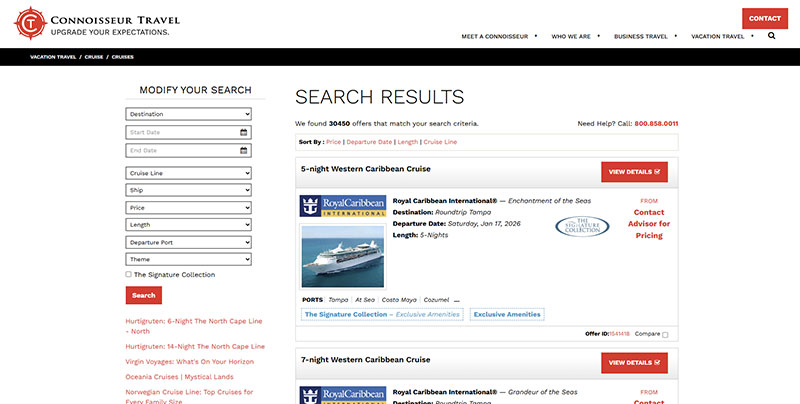
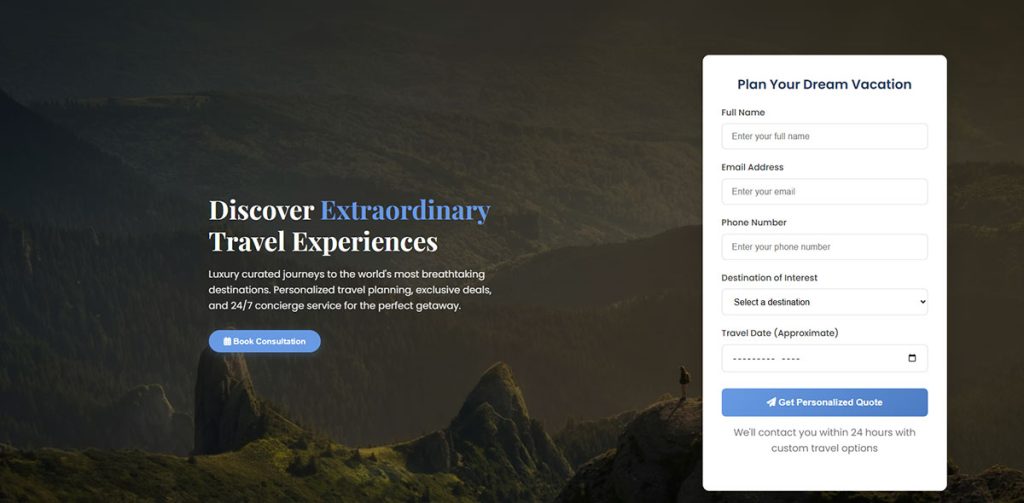
Travel agents pull leads from five or six channels in any given month, and they rarely perform equally. Referral and content-driven traffic sit on one side of the ledger, paid ads and cold contact lists sit on the other, the same inbound versus outbound lead generation split that shows up in most client-based businesses.
Referral and Past-Client Channels
Referral converts better than almost anything else on this list. Ruler Analytics puts the average conversion rate for travel-brand referrals at 9.5%, the highest of any channel it tracks.
Past client reactivation is the cheapest version of this channel, since the contact already trusts you. That can be as small as a check-in email sent a year after a big trip, a referral incentive tied to the client’s next booking, or just a simple ask at the end of a trip review call.
Paid and Organic Digital Channels
In practice, most of that traffic funnels through a handful of places.
- Meta Ads Manager campaigns targeted at past-visitor lookalike audiences
- Google Business Profile listings that capture near-me destination searches
- TripAdvisor reviews that route inquiries back to the agent named in them
- Organic blog content answering the destination questions travelers search first
A downloadable packing checklist or destination guide works as a lead magnet, trading something useful for an email address.
Warm leads captured this way usually go into an email newsletter sequence run through Mailchimp or HubSpot before an agent ever picks up the phone.
Host Agency-Distributed Channels
Some leads never touch an agent’s own marketing budget at all.
Travel Leaders Group runs this model through its Agent Profiler platform, which delivered over 300,000 leads in 2024, converting to 68,750 bookings worth $733 million in sales (Travel Leaders Network, 2024).
Dream Vacations distributes leads the same way through its franchise structure, funding campaigns centrally and routing inquiries to the nearest matching agent.
No marketing spend from the individual agent. The commission split gets adjusted instead, to account for the lead supply.
How Host Agency Lead Distribution Works
Host agencies distribute leads through one of two models, opt-in assignment or rotation.
With opt-in, an agent picks and chooses based on niche or geography, cherry picking is allowed. Rotation doesn’t work that way. Leads just get assigned in sequence, whether or not they’re actually a good fit for whoever’s next in line.
A few things move the commission split up or down: how the lead was sourced, the agent’s sales volume over the trailing twelve months, and certification level with the host’s preferred suppliers.
New agents typically start at a 70/30 or 60/40 split in the host’s favor for host-supplied leads, a range consistent with published commission structures at host agencies like Fora Travel. Experienced agents who bring in consistent volume can negotiate up to 80/20 or 90/10 in their own favor.
KHM Travel Group, Nexion Travel Group, and Travel Planners International all run lead-sharing programs built around this kind of tiered split.
Avoya Travel takes the mechanism a step further, pulling cookie data from its own website to profile visitors before a lead ever reaches an agent. Corporate inquiries get routed to advisors with matching expertise instead of landing in a general queue.
Compliance Rules for Travel Agent Lead Generation
Lead generation itself isn’t regulated, but what happens right after a lead turns into a paying client is.
Seller of Travel registration is the rule most agents run into first. As of 2026, four states enforce active Seller of Travel registration: California, Florida, Hawaii, and Washington. Iowa repealed its version of the requirement back in 2020, so agents can ignore older lists that still include it.
This matters for lead capture specifically because the rules follow the client, not the agent. An agent based in New York booking a client in California still has to comply with California’s law. And disclosure of the registration number only has to happen before payment is accepted, not before the first conversation.
Fora Travel handles this by registering under its own Seller of Travel numbers in all four required states (California, Florida, Hawaii, and Washington), letting its affiliated advisors operate under that umbrella instead of filing individually.
ASTA’s code of ethics adds a second layer, covering how agents can advertise, solicit, and represent supplier relationships in marketing. A lead capture page that overstates a partnership with a cruise line, for instance, runs into this before it ever runs into a legal problem.
Cost Per Lead by Channel for Travel Agents
Cost per lead swings hard by channel, and the cheapest lead on paper is rarely the cheapest booking.
| Channel | Average Cost | Typical Conversion Rate | Lead Ownership |
|---|---|---|---|
| Paid search (Google Ads) | $44.70 per lead | 5.83% | Agent-owned |
| Referral and past clients | Low or no direct cost | 9.5% | Agent-owned |
| Host agency-distributed | Embedded in commission split | Varies by program | Host-supplied |
| Organic content and SEO | Time cost, low cash cost | Lower, builds over time | Agent-owned |
Comparing these numbers against conversion rate benchmarks across industries puts travel in a middling spot, better than cold retail, behind high-intent categories like legal services.
A handful of numbers are worth holding onto here.
- Google Ads average cost per lead for travel: $44.70, based on 13,474 US search campaigns run between April 2025 and March 2026 (WordStream by LocaliQ, 2026 benchmarks)
- Google Ads average conversion rate for travel: 5.83% (WordStream by LocaliQ, 2026 benchmarks)
- Average booking value per converted lead through Travel Leaders Network’s Agent Profiler: $10,665 (Travel Leaders Network, 2024)
- Standard new-agent host commission split: 70/30 to 60/40, rising with volume, consistent with published rates at agencies like Fora Travel and OutsideAgents.com
None of these numbers account for the time an agent spends qualifying and following up. A $15 lead that needs six touches to close costs more in practice than a $70 lead that books after one call.
From Lead to Booking: The Travel Agent Sales Cycle
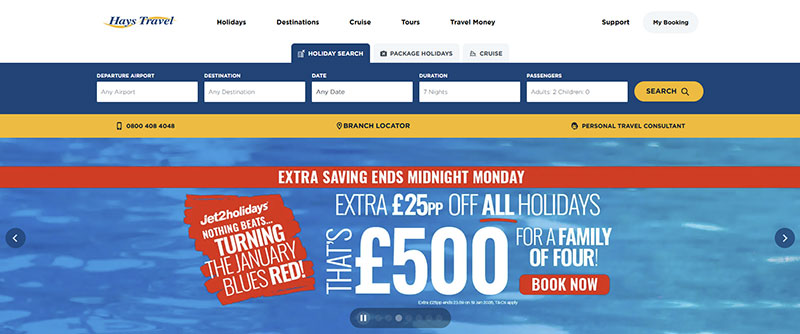
A travel lead rarely turns into a deposit on the first phone call. The inquiry moves through stages that look a lot like a standard lead generation funnel, just stretched out over weeks instead of days.
Booking windows vary a lot by trip type. Leisure travelers might take anywhere from a few weeks to a few months between the first inquiry and an actual booking. Corporate travel moves much faster, often closing within a couple of weeks. Luxury trips and group travel are the outliers, three months or more isn’t unusual there.
What stretches things out is usually one of a few things: more than one decision maker in the same household or travel party, a high-ticket luxury or multi-destination itinerary that needs several rounds of pricing, or a group trip waiting on the last few people to actually confirm.
Travel Leaders sends a follow-up survey at the 21-day mark asking new leads to rate their early experience with the agent. Nearly 77% say they’re likely to book as a result of that first impression, which says more about response speed than about the destination itself.
Watching the right lead generation KPIs makes it possible to spot a stalled inquiry before it goes cold instead of after.
A longer cycle isn’t the same as a dead lead. It just means the follow-up cadence needs to match the trip, not the other way around.
Niche Specialization and Lead Value for Travel Agents
A narrower niche produces fewer leads and a higher average value per lead.
Host Agency Reviews’ independent advisor research consistently shows the segment skews experienced and specialized, with most advisors building a niche practice over time rather than working as generalists.
| Niche | Lead Volume | Value Signal | Certification Path |
|---|---|---|---|
| Luxury travel | Lower | Highest per-trip spend | Virtuoso, Signature Travel Network |
| Cruise | Moderate | Repeat booking pattern | CLIA certification |
| Group and destination wedding | Seasonal spikes | Multiple bookings per lead | Host agency wedding specialization tracks |
Virtuoso survey data shows its affluent clients planned to increase average per-person travel spending from roughly $20,700 to $27,800 in a single year, a 34% jump driven largely by pent-up post-pandemic demand. A single qualified lead in that segment can be worth what a generalist agent earns from several separate bookings combined.
CLIA certification gives cruise specialists a credential travelers can verify before booking, which raises trust in that specific niche.
The tradeoff runs the other direction too. A narrower niche means fewer inquiries overall, so a slow month can look alarming until the seasonal pattern becomes familiar.
Host Agency Leads Versus Independent Lead Generation
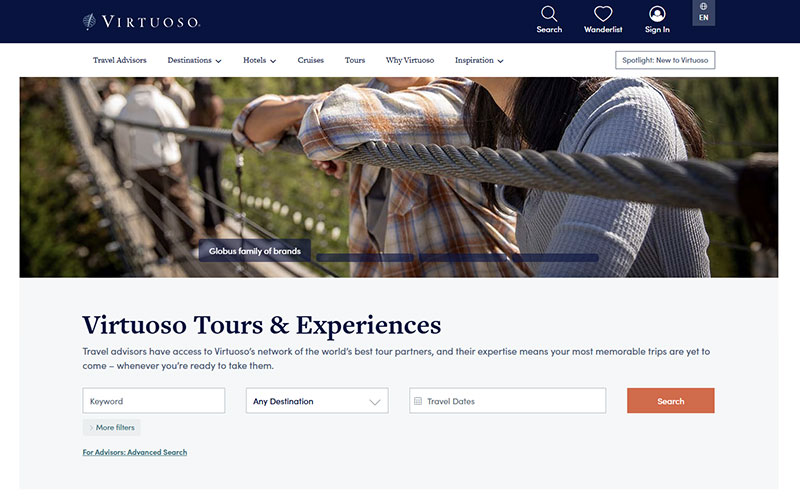
Choosing between host-supplied leads and an independent pipeline comes down to what an agent is willing to trade for consistency.
Host Agency Reviews’ 2024 research found full-time hosted advisors with three or more years of experience earned $60,583 on average, while full-time independently accredited advisors earned $78,940.
Go the host agency route and you get steady lead flow without needing a marketing budget, which matters a lot when you’re new and trying to get bookings on the board fast. The tradeoff shows up on every single host-supplied booking, in the form of a lower commission split.
Independent lead generation flips that arrangement. You keep the full commission on everything you book, and you control your own niche and marketing message entirely, nobody’s telling you what to run or say. What you don’t get is any guarantee of lead flow. Your income depends entirely on whatever pipeline you’ve managed to build yourself.
Part of that income gap probably comes down to experience as much as the business model itself. Independent accreditation tends to attract advisors who are further along in their careers, while the hosted channel is where most newcomers start out.
Signature Travel Network and Ensemble Travel Group offer a middle path, letting independently accredited agents keep their own supplier relationships while sharing in a consortium’s marketing co-op.
OutsideAgents.com advertises commission payouts up to 95% for high-producing agents, near the top of the published range for host-supplied leads.
Agents moving toward full independence often certify through a body like The Travel Institute before applying for direct supplier accreditation.
Tools Travel Agents Use to Capture and Manage Leads
The right stack turns a scattered inbox into a pipeline that’s actually possible to follow up on.
| Tool | Purpose | Best For |
|---|---|---|
| ClientBase | Travel-specific CRM tracking client history and lead status | Agencies with an established client base |
| Travefy | Proposal and itinerary builder | Turning a qualified lead into a bookable presentation |
| Axus Travel App | Itinerary and trip-planning tool | Nurturing a lead through multi-stop planning |
| Sabre, Amadeus, Travelport | Global distribution system booking engines | Ticketing once a lead converts to a booking |
The intake point itself matters as much as the CRM behind it. A basic inquiry form and a proper qualification form aren’t the same thing, which is the whole point of the distinction between contact forms and lead generation forms.
Agencies using travel-focused CRM software consistently report faster response times and higher lead conversion than those relying on generic contact forms or spreadsheets, since inquiries get routed and tracked automatically instead of sitting in an inbox.
HubSpot gives visibility into which pipeline stage a lead sits in, useful once volume passes what a spreadsheet can track. Constant Contact and similar platforms offer pre-built lead nurturing templates suited to a multi-week travel sales cycle.
How to Build a Lead Generation System for a Travel Agency
A working system needs four pieces in place before the first lead ever arrives.
- Pick one or two channels to start. Referral plus one digital channel is enough to cover most new agencies without spreading effort too thin.
- Build the intake form around the four qualifying filters. Budget, dates, destination, and decision authority belong on the form itself, not buried in a follow-up email later.
- Connect the form to a CRM. Even a simple one keeps a lead from getting lost in someone’s personal inbox.
- Set a follow-up cadence before the first lead ever shows up. Two touches in the first week, then a spaced-out sequence that matches the expected sales cycle.
- Review conversion by channel every month. Cut what isn’t converting before doubling down on what is.
Step two is where most systems break down first. Skipping past the form fields built for capturing high-quality leads and using a generic three-field contact form is the single most common early mistake.
Agents who build their own intake form from scratch instead of a template usually spend a weekend on it. The process to create lead capture forms that actually filter out tire kickers isn’t complicated, it just needs the four filters built in from the start.
None of these steps require a large budget. They require sequencing, doing the intake form before the ad spend, not after.
When Lead Generation Does Not Work for Travel Agents
Lead generation fails under specific, identifiable conditions, not randomly.
It breaks down in a few predictable spots. A brand-new agent with no referral base often can’t cover paid lead costs out of commission alone, the math just doesn’t work yet. Saturated local markets are another one, where a host agency’s own paid campaigns end up competing directly with an agent’s independent ads in the same metro area. Thin-margin trip types cause trouble too: budget domestic trips rarely generate enough commission to justify paying $45 for a lead. And then there’s the simplest failure mode, skipped qualification, agents who accept every inquiry without filtering just burn hours on leads that were never going to book.
Host Agency Reviews’ 2024 survey found new advisors (those under three years’ experience) earned $12,057 on average, a figure that leaves little room for aggressive paid lead spend before commission catches up.
This doesn’t mean lead generation is a bad investment. It means the channel and the spend need to match the agent’s actual stage, not the stage they’re hoping to reach.
FAQ on Lead Generation For Travel Agents
Is cold calling still effective for travel agent lead generation?
Cold calling still works for corporate accounts and event-generated leads, but conversion trails referral and warm lead channels. Most agents pair a short call with one qualifying question, then move promising contacts into an email nurture sequence.
Do travel agents need their own website to generate leads, or is a host agency page enough?
A host agency page captures inquiries but rarely builds a client database an agent controls long term. Agents building a niche travel agency brand or targeting luxury travel clients typically need an independent site to own referral and repeat traffic.
What is the most common lead generation mistake travel agents make?
Slow follow-up beats weak lead sources as the top mistake, and it’s not close. A qualified lead contacted within an hour converts far better than one left overnight, since warm leads cool fast once they start comparing agents or booking platforms.
Can travel agents generate leads without paid advertising?
Yes. Referral programs, past client reactivation, and organic content routinely outperform paid channels on conversion. An agent with an established client database can run a full pipeline through email newsletters and word of mouth alone, though volume grows more slowly.
Do trade shows still produce usable leads for travel agents?
Trade shows and destination showcases still generate leads, mostly for group travel bookings and corporate accounts rather than individual leisure trips. The leads arrive warm but cool quickly without a fast follow-up plan.
How long should a travel agent wait before writing off a lead?
Most advisors mark a lead cold after 90 days of no response, though luxury travel clients and group trips justify a longer window given longer sales cycles. A short reactivation email at that point often revives a stalled lead.
What Should You Fix First in Lead Generation For Travel Agents?
Lead generation for travel agents delivers the fastest return when an agent fixes lead qualification before adding new channels, since an unqualified inquiry wastes advisor hours no matter what it cost to acquire.
The intake process comes second on that list, and expanding channel mix comes third, since a wider funnel only pays off once qualifying and follow-up already work. In practice that means the intake form’s criteria matter more than which channels feed it, and how fast that first-hour follow-up happens matters more than how many channels are running at once.
Combining WordStream’s current paid-search figures with Travel Leaders Network’s reported booking values puts the effective cost of a paid lead at roughly $767 per booking, close to one-fourteenth of the $10,665 average value a host-distributed lead converts into.
The same qualification discipline carries over into the broader mechanics of lead generation for travel companies, where volume and supplier relationships scale differently than for a single independent advisor.