






Most independent coaches never sit through a single sales training. They figure out client acquisition the hard way, usually right after a slow month makes it obvious that referrals and…
Table of contents
A single quote request for a stamping die can sit in front of six or seven people before anyone signs a purchase order. That’s the environment lead generation for manufacturers actually operates in: turning an engineer’s spec download or a buyer’s rfq into a conversation someone in sales can actually work.
Original equipment manufacturers run this differently than contract shops and fabricators do, though the shape of the work overlaps. Engineering checks whether it fits. Somebody in procurement negotiates the terms, and finance checks the total against a budget line before any of it goes anywhere.
None of that runs on a website-visit timeline. A deal can sit open for months, and nobody on the sales side gets credited for traffic. They get credited for a signed po.
Committees keep growing too. SalesRoads found the average manufacturing buying group runs 6.3 stakeholders spread across engineering, procurement, and finance, and the number has been climbing as more departments get pulled into capital equipment decisions (SalesRoads, 2024).
What Is Lead Generation for Manufacturers
Nobody buys a hydraulic press on impulse.
The output here isn’t a sale. It’s a request for quote, or a real conversation with someone in procurement who controls a budget and is dealing with an actual production problem right now.
That’s a narrower job than demand generation, which builds awareness across a whole category rather than pushing one buyer toward a direct response.
Doesn’t matter much whether you’re an OEM building to your own catalog or a contract shop building to someone else’s print, or a fabrication outfit that only does one-off runs. The mechanics hold across capital equipment, components, and engineered-to-order work.
The process produces a completed rfq on one end. On the other, a marketing qualified lead that a rep can actually work instead of starting from zero on the phone.
Who Makes Up the Manufacturing Buying Committee
A manufacturing purchase rarely rests with one person signing off. It moves through an engineer, a procurement manager, a plant manager, and often a finance approver too, before anyone actually signs a purchase order.
Each of them is looking at a different part of the same rfq. That’s exactly why a lead capture form asking for just a name and an email falls apart the second a real deal starts moving.
Gartner’s research on the B2B buying journey puts the typical buying group at 6 to 10 decision-makers for a complex purchase, each arriving with their own independently gathered research (Gartner, 2024).
The Technical Evaluator
This is usually an engineer, sometimes a plant manager, and they’re the one checking the rfq against tolerances and materials, and whether it actually fits with what’s already running on the floor, before price even comes up.
- Reads the datasheet line by line
- Flags anything that doesn’t match spec
- Holds veto power long before procurement gets involved
If this person can’t verify a claim from your content, the deal stalls here. It never even reaches the commercial stage.
The Commercial Approver
This one rarely opens a spec sheet. Cost, terms, and who’s carrying the risk if a supplier falls through, that’s the whole job, and it usually splits across two people rather than one. A finance approver is checking the total against a budget line and a depreciation schedule that was probably set months before your content ever showed up. A procurement manager is negotiating terms, pulling vendor certifications, and generally trying not to get blamed later if the supplier flakes.
Write only for the engineer and this person has nothing to take upstairs. Write only for this person and the engineer kills the deal before it gets that far.
How the Manufacturing Sales Funnel Moves a Lead to a Quote
A manufacturing lead doesn’t jump from inquiry straight to purchase order. There’s a technical evaluation sitting in the middle that most consumer funnels never have to deal with, and it’s where a lot of deals quietly die.
Marketing usually hands the lead to sales once it clears that rfq stage, not before. Push a rep into a conversation earlier than that and you’re mostly wasting their time on people who aren’t ready to buy anything.
SalesRoads found the average manufacturing sales cycle runs about 130 days, well past the timeline most inbound playbooks assume (SalesRoads, 2024).
The lead generation funnel concept still applies here, it just stretches out and picks up a technical checkpoint most b2c funnels skip entirely. An inquiry starts things off, whether that’s a form fill, a spec download, or someone scanning a badge at a trade show booth. Then an engineer checks fit against requirements. If it clears that, an rfq gets submitted with drawings or specifications attached, and eventually commercial terms get finalized into a signed purchase order.
Falcon Structures, a manufacturer of modular, shipping-container based structures, rebuilt its website and inbound funnel with a HubSpot partner and generated 738 marketing qualified leads alongside a 14% lift in monthly sales (Weidert Group).
Which Content Formats Move Industrial Buyers Through the Funnel
Spec sheets, datasheets, case studies, whitepapers, webinars, none of them do another format’s job well. Each one matches a specific stage of the funnel and a specific person on the buying committee, and mixing them up costs you more than it seems like it should.
CMI’s Manufacturing Content Marketing Benchmarks found video is the most effective format for manufacturing marketers at 74%, followed by case studies at 45% and white papers at 43% (Content Marketing Institute, 2025).
Spec sheets and datasheets belong at the technical evaluation stage, where engineers are the ones reading them. Case studies do their work later, at the decision stage, read by whoever has to justify the purchase to someone above them. White papers earn their keep earlier still, in the research phase, before anyone has attached a company name to the conversation. Certification documents show up during risk review, and it’s procurement checking those, not engineering.
Whitepapers and other gated content earn their place early in the funnel, when the goal is capturing a contact in exchange for real depth, not late in the process when an engineer just wants a fast technical answer.
Gating a spec sheet at the technical evaluation stage usually backfires. Engineers want the number, not a lead capture step, and a blocked datasheet just sends them to a competitor’s site.
Webinar registration forms work well further up the funnel too, when the goal is education rather than an immediate technical answer.
How Lead Qualification and Scoring Work for Manufacturers
An mql here is just a contact who did something that signals real intent, downloading a spec sheet, requesting a quote, sitting through a product demo. An sql is that same person after a rep has actually gotten them on the phone and confirmed there’s budget, someone with authority is involved, and a project timeline that’s real rather than aspirational.
A few signals come up again and again in scoring models. An rfq submitted with drawings or specifications attached. A return visit to a pricing or capabilities page. A spec sheet or datasheet downloaded. A job title that matches a known buying committee role.
None of this works if the form only asks for a name and an email. The form fields that capture high-quality leads for manufacturers usually include company size, industry, and project timeline, fields a consumer form would never need.
Lead enrichment tools like ZoomInfo and Clearbit fill in the gaps a short form leaves behind, appending company size, naics code, and job title before the lead ever reaches a scoring model.
Which Lead Generation Channels Work Best for Manufacturers
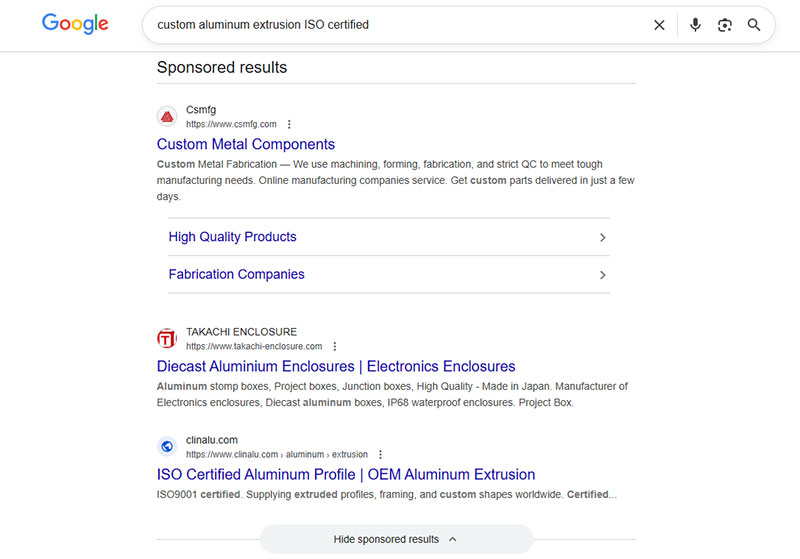
No single channel reaches the whole buying committee. Organic search, account based marketing, trade shows, and marketplaces all pull different volume and quality, and picking just one usually means missing whoever isn’t looking in that particular place.
| Channel | Typical lead volume | Best-fit buying stage | Relative cost per lead |
|---|---|---|---|
| Organic search / SEO | High, compounding over time | Early research | Low once ranked |
| Trade shows | Moderate, concentrated in a short window | Technical evaluation, hands-on demo | High |
| Account based marketing | Low volume, high fit | Decision, multi-stakeholder | Moderate to high |
| Marketplaces (Thomasnet, Alibaba) | Moderate | Early research, sourcing | Low to moderate |
Organic search and social media are the most widely used channels among manufacturers, at 69% adoption each, though email is most often named the best-performing channel with trade shows a close second (Lead Forensics, 2026).
Trade shows still earn their spot when a product needs a hands-on demo. A complex machine with a long evaluation cycle benefits from someone standing next to it on the show floor, since no datasheet replicates watching it actually run.
The website carries more weight than most manufacturers assume it does. Advanced Piping Products, a supplier of piping system supports and hangers, fixed a stalled organic search presence and rebuilt how it uses website forms for lead generation with a HubSpot partner after realizing it wasn’t ranking for the terms its buyers were actually searching (SmartBug Media).
Which CRM and Marketing Automation Platforms Fit a Manufacturing Sales Cycle
HubSpot, Salesforce, Marketo, and Pardot handle a long, multi-stakeholder sales cycle in pretty different ways, and picking between them mostly comes down to team size and how deep the erp integration actually needs to go.
Manufacturers have one of the highest CRM adoption rates of any industry, at 71%, just behind business services firms at 75% (Forrester research, cited by ServiceNow).
HubSpot is the fastest of the four to get running, and it works well for a small marketing team that wants content and email living in the same place. Where it falls short is depth. Complex, multi-entity erp integrations are more Salesforce’s territory, and it’s the default pick for larger manufacturers for exactly that reason, even though it takes longer to configure and usually needs someone dedicated just to administer it.
Marketo and Pardot sit a level up in nurture sequencing, which matters for cycles this long, and both are built to run alongside Salesforce or Adobe’s marketing stack rather than compete with it directly. The tradeoff is a steeper learning curve that’s honestly overkill for a small manufacturing team running one or two channels.
A global medical device manufacturer ran into this exact mismatch. Marketing used HubSpot while sales ran Salesforce, and the two systems never talked to each other until an integration synced lead handoff between them (Smartbridge).
Nurture sequences matter more here than in most industries, since a lead sits in the funnel for months. A set of lead nurturing templates built around the technical evaluation and decision stages keeps a lead warm without demanding constant manual follow-up from a rep.
What Lead Generation Costs per Lead for Manufacturers
Manufacturers pay an average of $391 per lead, with costs ranging from $90 to $691 depending on channel and product complexity (Sopro, 2025).
For complex or technical products, that high end climbs to $691 per lead (Sopro, 2025), and trade shows push the number even further, running about $840 per lead, the highest-cost channel across B2B generally (Sopro, 2025).
The gap between the low and high end comes down mostly to sales cycle length. A short-cycle consumable part costs less to generate a lead for than a capital equipment purchase that needs a plant manager, an engineer, and a finance approver to all sign off before anything moves.
Cost per lead on its own is a thin metric without conversion rate benchmarks by industry to compare it against. A $690 lead that converts to a six-figure purchase order is cheap. A $90 lead that never reaches an rfq is expensive no matter what it cost to acquire.
When Lead Generation Does Not Work for a Manufacturer
A formal lead generation program doesn’t pay for itself below a certain volume threshold, and manufacturers under that line are usually better off just working their referrals directly instead.
A few situations come up often where it just doesn’t apply:
- The company serves one or two locked-in customers under long-term contracts, with no open market to generate leads from
- The business is engineer-to-order and grows almost entirely through repeat work and referrals from existing clients
- Sales capacity is already the bottleneck, not lead volume. Adding more inbound rfqs to a team that can’t respond to the ones it already has just adds backlog
- The product line is a true commodity where procurement runs a reverse auction on price, and content or nurturing has no influence on the outcome
Engineer-to-order manufacturers in particular should be honest with themselves about this one. If most new work comes from a handful of existing clients referring you to their peers, a content program built to attract cold traffic is solving a problem you don’t actually have.
The fix in that case isn’t more lead generation. It’s a referral and account expansion program aimed at the relationships that are already producing the work.
How to Build a Manufacturing Lead Generation Strategy Step by Step
The order you build this in matters more than any individual tactic you pick.
Most generic lead generation strategies assume a short cycle and one decision-maker, and neither of those assumptions holds up here.
Channel selection has to follow buying committee mapping, not come before it, or the whole program ends up targeting the wrong job titles from day one.
- Map the buying committee. Identify the technical evaluator, the commercial approver, and anyone else who touches the rfq before it’s signed.
- Pick two channels, not five. Start with the channel that matches your sales cycle length and the stage where most deals currently stall.
- Build one content asset per funnel stage. A spec sheet for the technical evaluator, a case study for the commercial approver, nothing gated at the wrong stage.
- Connect the crm. Route form submissions and rfqs into a system sales actually checks, not a spreadsheet someone updates once a week.
- Set scoring rules. Define what separates an mql from an sql before the first lead comes in, not after sales starts complaining about lead quality.
Most manufacturers skip step one and jump straight to step two, picking a channel based on what a competitor happens to be doing rather than who they actually need to reach.
None of this works without well-built forms behind it. Manufacturers that launch a campaign before they create lead capture forms that ask for the right fields end up with a crm full of contacts nobody can act on.
HYDAC, a manufacturer of hydraulic components, built its inbound program by launching a dedicated content portal on hydraulics before layering in lead capture, using content to establish authority with engineers first (HYDAC, HubSpot customer story).
The minimum viable setup is smaller than most teams assume. One crm, one channel, and a single scoring rule tied to rfq submission is enough to start finding out whether the program works at all.
Which Metrics Show Whether Manufacturing Lead Generation Is Working
Rfq rate and quote-to-close percentage are the two numbers that actually tie marketing activity to revenue. Mql volume alone never really gets you there.
| Metric | What it measures | Typical reporting cadence |
|---|---|---|
| Rfq rate | Share of leads that reach a formal quote request | Monthly |
| Quote-to-close rate | Share of quotes that convert to a purchase order | Quarterly |
| Website conversion rate | Visitors who become a tracked lead | Monthly |
First Page Sage’s industry conversion benchmarks put manufacturing website conversion around 2.2%, a realistic target rather than the higher numbers some inbound vendors like to promise (First Page Sage, 2026).
Attribution gets harder the longer the cycle runs. That 130-day average mentioned earlier hides a lot of real variation, since a capital equipment deal can run well past it, and credit needs to follow whichever touchpoint actually moved the deal forward, not just whatever form got filled out last before the sale closed.
Weekly reporting doesn’t fit a cycle this long. Monthly lead generation KPIs and quarterly quote-to-close rates give a truer read than a dashboard refreshed every Monday morning showing noise instead of signal.
What Mistakes Cause Manufacturing Lead Generation Programs to Fail
Treating manufacturing leads like consumer leads is probably the biggest one. A three-email nurture sequence built for an impulse purchase does absolutely nothing for a buyer who needs nine months and four signatures to get anything approved.
Measuring lead volume instead of quote-to-close rate is a close second. A dashboard full of mqls looks productive right up until sales points out that none of them ever actually requested a quote.
Then there’s the tracking side. Running channels without crm integration means rfqs submitted through a form that doesn’t sync anywhere get answered late, if they get answered at all, and the channel ends up taking the blame for what’s really just a tracking failure. Skipping the buying committee mapping step causes a related problem: content built for one persona, usually the engineer, leaves the commercial approver with nothing to bring upstairs to justify the purchase.
Only 20% of manufacturing marketers rate their own content strategy as very effective, with 67% landing at moderately effective (Content Marketing Institute, 2025).
That gap between having a strategy and running one well is where most of these mistakes live. The plan usually isn’t wrong. It’s the execution against it that’s inconsistent.
FAQ on Lead Generation For Manufacturers
How Is Manufacturing Lead Generation Different from Standard B2B Lead Generation?
Manufacturing lead generation targets a multi-person buying committee evaluating technical specifications, not a single buyer comparing price on the spot. The output is a request for quote tied to engineering approval, and the sales cycle runs months longer than a typical b2b deal.
What Role Does an RFQ Play in the Manufacturing Buying Process?
A request for quote works as the formal signal that a buyer has moved from research into evaluation. It documents drawings, tolerances, and volume, so engineering and procurement can compare suppliers on identical technical terms before price ever comes up.
Is Trade Show Marketing Still Worth It Compared to Digital Channels?
Trade shows still win when a product needs a hands-on demo, but digital channels compound over time and reach buyers earlier, while they’re still just researching. Most manufacturers run both, trade shows for relationship building, digital for volume.
Should a Manufacturer Build Lead Generation In-House or Hire an Agency?
Smaller teams without a dedicated marketer usually get faster results going with an agency that already has industrial content and channel experience built up. Manufacturers with an in-house marketer and a stable content budget can build and control the program themselves over time instead.
How Long Does It Typically Take to See Results from a New Program?
First rfqs tend to show up within one or two sales cycles once content and channels start working. A measurable lift in quote-to-close rate takes longer, often six to twelve months, since manufacturing buying committees just move slowly by nature.
What Tools Support Execution Beyond the Core CRM?
Intent data platforms like 6sense and Demandbase flag accounts that are researching a category before they ever submit an rfq. Prospecting tools like ZoomInfo and LinkedIn Sales Navigator fill in job titles and company details that a short form never captures on its own.
What Should You Fix First in Lead Generation For Manufacturers?
Most of the breakdown happens at the top of the funnel, not inside the crm or the scoring model most teams rush to rebuild first. A low website conversion rate just lets buyers leave before a form ever captures them, and no amount of scoring logic downstream fixes that.
Manufacturers already run crm software at a higher rate than most industries, 71% adoption against the cross-industry average (Forrester). Paired with a website conversion rate of just 2.2% (First Page Sage, 2026), that points to a funnel problem sitting above the system, not inside it.
Tightening lead scoring before the rfq stage lowers raw lead volume, sure, but it raises the share of leads that reach a quote, and that’s a trade manufacturers with fixed sales capacity are usually happy to make over chasing a bigger mql count.
Fixing that conversion point starts with the landing page and the form sitting on it, which is exactly where form conversion improvements make the fastest measurable difference.