



Most lead magnets don’t work. They get downloaded, skimmed for 30 seconds, and forgotten. Meanwhile, your email list fills up with people who will never buy anything. The problem isn’t…
Table of Contents
Online booking sites changed everything. Walk-in traffic disappeared, and travel agents now compete with algorithms for every client.
Lead generation for travel agents has become the difference between thriving agencies and those barely surviving on referrals alone.
ASTA reports that agents actively generating leads earn 40% more than passive ones. The math is clear.
This guide covers how to attract qualified travel prospects, which tools actually work, and what conversion rates to expect by niche. You’ll learn website strategies, social media tactics, email sequences, and how to measure what matters.
No fluff. Just methods that fill your sales funnel with travelers ready to book.
What is Lead Generation for Travel Agents
Lead generation for travel agents is the process of finding and attracting potential travelers who want to book trips through an agent instead of doing it themselves online.
These prospects show interest through quote requests, consultation calls, or website inquiries.
The goal is simple. Build a customer database of people actively planning vacations, honeymoons, cruises, or corporate travel.
Travel advisors then nurture these booking inquiries into confirmed reservations and commission income.
Why Do Travel Agents Need Lead Generation
Online travel booking competition changed everything.
Walk-in traffic at brick-and-mortar agencies dropped significantly over the past decade. Research from Grand View Research shows that 72% of travel bookings in 2024 were completed online, with over 45% made via mobile phones. Sites like Expedia and Booking.com trained consumers to book direct.
OTAs now dominate the market. According to multiple industry reports, online travel agencies hold a 55% share of the travel booking market compared to 45% for direct suppliers. In Europe alone, OTA market share jumped from 19.7% to 29.6% between 2013 and 2023.
Commission Structures Require Consistent Client Flow
Travel agents work on commission. No bookings means no income.
Commission rates vary by service type:
- Hotels: 5% to 10% average (some agents earn 12% or higher)
- Cruises: 10% to 18%, with volume bonuses reaching 20%
- Tour operators: 10% to 15% on most bookings
- Travel insurance: Up to 40% on premium policies
Data from Host Agency Reviews shows full-time travel advisors with three or more years of experience average $67,256 annually. Independently-accredited advisors earn $78,940 average. Top performers exceed $100,000, with 25% of experienced agents crossing six figures.
Lead Generation Directly Impacts Revenue
According to Travel Leaders Network, their Agent Profiler platform delivered over 300,000 leads in 2024 (a 17% increase from 2023). Those leads converted to 68,750 bookings, $733 million in sales, and $110 million in member commissions. That’s an average booking value of $10,665 per lead conversion.
Research from Travel Weekly reveals agencies using travel-focused CRM software responded to customer queries 33% faster and saw 25% more lead conversions in Q1 2025.
According to ASTA (American Society of Travel Advisors), agents who actively generate leads report 40% higher annual sales than those relying solely on referrals.
Client Acquisition Costs Matter
Paid advertising for travel services typically runs $15 to $50 per lead depending on niche.
One case study from Promodo showed how automated PPC campaigns helped bus carrier KLR achieve a 461% increase in ticket sales across 50,000+ route combinations.
Organic methods cost less but take longer to produce results.
The Math Is Simple
More qualified travel prospects in your sales funnel equals more consultations, more bookings, more revenue.
The U.S. Bureau of Labor Statistics reports the median annual wage for employed travel agents was $48,450 in 2024. Self-employed agents need consistent lead flow to match or exceed that baseline, especially when commission-only income depends on closing deals.
Survey data from Travel Leaders Network shows that 40% of respondents listed social media as their No. 1 most effective way of driving new sales. Their top business priority from 2024 to 2025 is investing more in marketing and lead generation.
With online bookings forecast to account for 73% of travel sales by 2029, agents who don’t actively generate leads will struggle to compete. Direct booking platforms aren’t going away. The only viable response is building a consistent pipeline of qualified prospects who value expert guidance over automated systems.
How Does Lead Generation Work for Travel Agencies
The process follows a basic pattern: attract attention, capture contact information, nurture the relationship, book the trip.
Most travel agents use a mix of inbound and outbound methods. Some work better for luxury travel concierge services. Others fit group travel bookings or cruise consultation.
Data from APH shows the average time between booking a trip and departing is 73 days. UK research indicates 35% of travelers book between one and three months before departure, making this the most common booking timeline. Business travelers typically book closer to departure (43 days), while international travelers have longer purchase paths (85 days).
Where Do Travel Agent Leads Come From
Research shows the typical customer journey takes 71 days from initial consideration to booking, with 33 days spent looking for inspiration and 38 days researching and planning.
Primary lead sources for established agents:
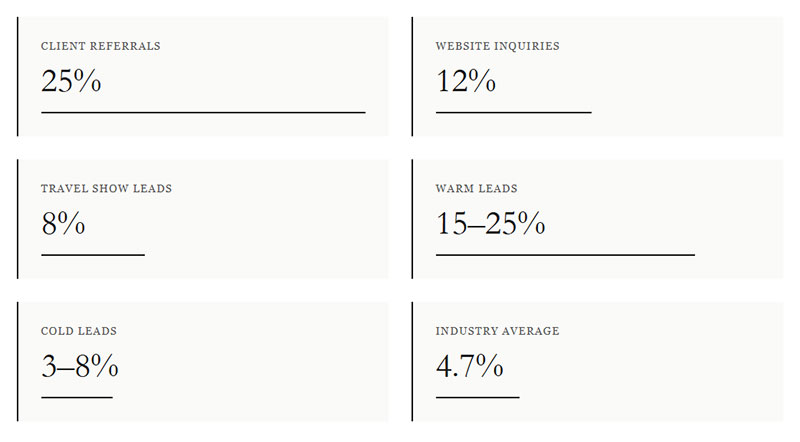
- Referrals from past clients (convert at 25% according to industry data)
- Website inquiries (12% average conversion rate)
- Social media engagement
- Travel trade shows (8% conversion rate)
- Consortium membership programs
According to a 2024 Podium survey, 88% of consumers trust online reviews as much as personal recommendations. This makes testimonials and high star ratings equally powerful as direct referrals.
Virtuoso and Signature Travel Network members get access to shared lead programs. Host agency partnerships through Travel Leaders Group or Ensemble Travel Group offer similar benefits for independent contractor agents.
Travel Leaders Network’s Agent Profiler platform demonstrates the power of structured lead generation. In 2024, it delivered over 300,000 leads with close rates ranging from 10% to 95% depending on agent expertise and follow-up quality.
Conversion Benchmarks by Lead Source
Data from Causal Funnel shows conversion rates vary significantly by source:
- Client referrals: 25% conversion rate
- Website inquiries: 12% conversion rate
- Travel show leads: 8% conversion rate
Research from Promodo reveals travel industry conversion rates typically range from 0.2% to 4%. If your rate exceeds 2%, you’re in the top 20% of travel sites. Achieving 3% to 4% positions you among the best 10%.
The average landing page conversion rate for travel businesses is 11.9%, with a median of 4.8%, according to Landingi data. This wide disparity highlights the performance range among travel companies.
What Makes a Qualified Lead for Travel Agents
Four factors determine lead quality:
Travel intent timeline: Booking within 90 days signals higher conversion potential. Data from Hopper shows 29% of all bookings in Q1 2025 were made within two weeks of travel, indicating strong last-minute demand.
Realistic budget range: Knowing what clients can spend prevents mismatched expectations. Expedia’s Q1 2025 report shows travelers spent 18% more on holidays compared to the previous year.
Specific destination interest: Clear preferences beat vague inquiries. According to Skyscanner’s 2025 survey, 66% of customers expect tailored recommendations based on their travel habits and preferences.
Group size clarity: Understanding whether it’s solo, couple, family, or group travel shapes the entire approach. Travel Market Report data shows group travel saw a 21% increase in Q1 2025.
A family vacation inquiry with dates and budget beats a vague “someday we want to go to Europe” every time.
Response Time Impacts Conversion
Research from Travel Weekly shows agencies using travel-focused CRM software responded to customer queries 33% faster and saw 25% more lead conversions in Q1 2025.
Speed matters. Data from Peek Pro indicates nurtured leads make 47% larger purchases and move through the sales funnel 23% quicker compared to cold leads.
For premium and luxury travel, 60% of travelers start with an online search before closing over the phone or in-store, according to Ruler Analytics. This means digital presence drives initial interest, but personal contact closes deals.
What Are the Best Lead Generation Methods for Travel Agents
No single method works for everyone. Your travel niche, target audience, and available time all shape the right approach.
Here’s what actually moves the needle for most travel advisors.
How Do Travel Agents Generate Leads Through Websites
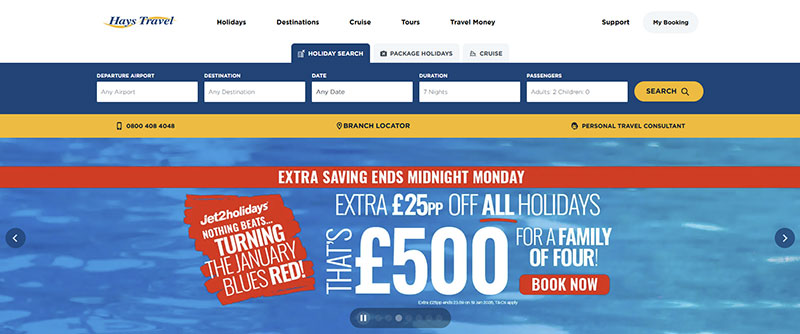
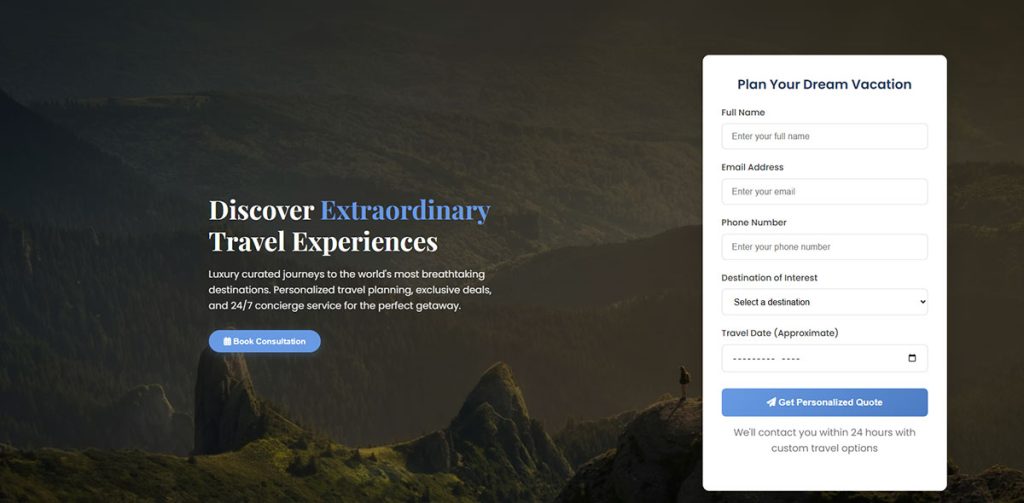
Your website needs to capture visitor information before they leave. A well-designed lead generation form converts browsers into prospects.
Research from Promodo shows travel industry conversion rates range from 0.2% to 4%. If your rate exceeds 2%, you’re in the top 20% of travel sites. Achieving 3% to 4% positions you among the best 10%.
Data from Ruler Analytics indicates the average travel website conversion rate is 4.7%, with top performers reaching 18.2%.
Website elements that capture leads:
- Quote request forms with destination and date fields
- Trip planning questionnaires that qualify leads automatically
- Newsletter signup boxes offering destination guides
- Live chat widgets for immediate engagement
If you run WordPress, dedicated WordPress lead generation plugins make setup straightforward.
The contact us page matters more than most agents realize. It should answer objections and make reaching out feel easy.
Consider using multi-step forms for complex trip requests. They feel less overwhelming than one long form and often improve completion rates.
Page Load Speed Impacts Conversion
Research from Promodo shows a website that loads in one second experiences a 2.5 times higher conversion rate compared to a site with a five-second loading time. In the travel industry, 60% of traffic comes from mobile devices, and websites load about 70.9% slower on phones compared to computers.
Average travel site page load benchmarks: sites loading in less than 2.2 seconds rank in the top 20%, while less than 1.7 seconds puts them in the top 10%.
How Do Travel Agents Get Leads from Social Media
Social platforms drive awareness and engagement. Converting followers into actual leads requires strategy.
According to a 2024 survey, 89% of travelers turn to social media for travel inspiration, and 83% of travel companies report increased bookings due to social media marketing.
Social Media Platform Performance
Facebook: Works well for group travel and destination wedding leads. According to Amra & Elma data, 30% of travel marketers see Facebook as the most effective way to target new audiences. Data shows 62% of travelers use Facebook for travel-related activities. Engagement rate: 0.09% for travel brands.
Instagram: Builds brand through destination content. Stories and Reels showcase FAM trips (familiarization trips) and supplier relationships. According to industry research, 35% of people find new destinations on Instagram, and 28% of travel marketers consider it most effective for targeting new audiences. The travel industry maintains an engagement rate of 1.41% on Instagram, making it the most engaging platform. User-generated content drives a 5x increase in engagement.
TikTok: Reaches younger travelers. Quick tips about travel insurance, packing, or destination secrets perform well. Research shows TikTok travel content achieves an engagement rate of 8.74%, significantly higher than other platforms. The hashtag #travel has 265.2 billion views on TikTok.
Pinterest: Captures early-stage planners researching honeymoon ideas or family vacation spots. Pins link back to your trip planning pages.
How Do Email Marketing Campaigns Generate Travel Leads
Email remains one of the highest-converting channels for travel agents. Data from Ruler Analytics shows email has an average conversion rate of 4.7% for travel brands.
According to Promodo, the average open rate for the travel industry is 15.70%, with click-through rates of 1.60%. However, MailerLite’s 2025 data shows travel and transportation has an open rate of 30.10%, though this varies significantly by email type.
Most agents use Mailchimp or HubSpot for automation.
Effective email sequences:
- Welcome series after subscription forms are completed
- Destination inspiration emails with booking CTAs
- Abandoned inquiry follow-ups (someone started a quote but didn’t finish)
- Seasonal promotions tied to supplier deals
Research from GetResponse shows those who send one newsletter per week get the highest open and click-through rates, at 37.08% and 5.58% respectively.
The key is consistent value. Travel content marketing builds trust before the sales pitch. According to OptInMonster, segmented email campaigns have a 14.31% higher open rate than non-segmented ones.
How Do Referral Programs Work for Travel Agents
Happy clients send friends. A structured referral incentive program accelerates this.
Data from Ruler Analytics shows referral has an average conversion rate of 9.5% for travel brands, making it the highest-converting channel. Research indicates 76% of travelers post reviews on social media after trips.
According to a 2024 Podium survey, 88% of consumers trust online reviews as much as personal recommendations.
Common referral approaches:
- Future travel credits ($50-100 per booking referral)
- Gift cards
- Charitable donations in the client’s name
Some agents create formal partner agent referral networks. Others leverage supplier co-op marketing funds for referral bonuses.
What Role Do Lead Generation Services Play for Travel Agents
Third-party services deliver pre-qualified prospects directly. Travefy, consortium lead programs, and host agency lead sharing all fit this category.
Costs vary. Some charge per lead ($10-30 each). Others bundle leads with membership fees.
Quality ranges widely. Always track your conversion rate by source. According to Host Agency Reviews data, close rates from lead generation programs range from 10% to 95% depending on agent expertise and follow-up quality. Some paid leads convert at 15%, while others barely hit 3%.
What Tools Do Travel Agents Use for Lead Generation
The right travel CRM software makes everything easier. Here’s what most successful agents rely on:
- CRM Systems: TravelJoy, ClientBase, Sabre Red, or generic options like HubSpot
- GDS Platforms: Amadeus, Travelport for booking and supplier access
- Scheduling: Calendly for travel consultation booking
- Analytics: Google Analytics to track which lead sources convert
- Email: Mailchimp, Constant Contact for nurturing sequences
- Forms: Dedicated lead capture forms on landing pages
Many agents also use booking form templates to streamline the initial inquiry process.
Tools matter less than consistency. Pick what you’ll actually use and stick with it.
How Do Travel Agents Convert Leads into Bookings
Getting leads is half the battle. Converting them into paying clients requires a structured approach to prospect nurturing.
Speed matters most. Research shows businesses that respond within an hour are almost seven times more likely to have meaningful conversations with decision-makers. According to industry data, 78% of buyers go with the first company that responds to them.
Studies indicate fast response increases travel conversions by up to 300%. Research from Causal Funnel shows travel inquiries lose interest quickly if not contacted within 24 hours, as many travelers submit inquiries to multiple travel companies and book with the first to respond professionally.
Data reveals that every 10-minute delay lowers conversion chances by 400%. According to multiple studies, 82% of consumers expect responses within 10 minutes of reaching out.
What is the Average Lead Conversion Rate for Travel Agents
Industry benchmarks vary significantly by lead source and quality.
Data from Causal Funnel shows conversion rates by inquiry source:
- Client referrals: 25% conversion rate
- Website inquiries: 12% conversion rate
- Travel show leads: 8% conversion rate
Research from CLIA (Cruise Lines International Association) puts average conversion at 15-25% for warm leads and 3-8% for cold leads. Luxury travel advisors with Virtuoso often exceed 30% due to pre-qualified clientele.
According to Ruler Analytics, the travel industry overall sees conversion rates of 4.7%, with top performers reaching 18.2%.
Critical Factors That Impact Conversion Rates
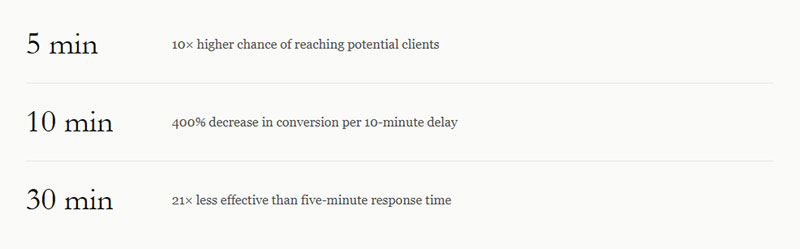
Response time: Calling after 30 minutes is 21 times less effective than within five minutes. Research shows the likelihood of reaching shoppers within five minutes is 10 times higher than if you let 10 minutes elapse.
Travel expertise demonstration: According to Causal Funnel, detailed destination knowledge, insider tips, and personal travel experience increase conversion rates significantly. Generic travel advice reduces credibility and conversion rates.
Proposal quality: Professional itineraries with clear pricing, inclusions, and travel logistics convert better than basic email responses.
Personalization: Cookie-cutter travel responses reduce conversion effectiveness dramatically. Travelers want to feel their trip is unique and specially crafted.
How Long Does Lead Nurturing Take for Travel Bookings
Decision timelines vary by trip type. According to APH research, the average time between initially considering a trip and booking is 71 days, with 33 days spent looking for inspiration and 38 days researching and planning.
The average time between booking and departure is 73 days across all travel types.
Booking windows by trip type:
Cruises: Industry sources indicate booking 6-12 months in advance is standard for securing best prices and cabin choices. According to Royal Caribbean and Princess Cruises, passengers typically book 12-18 months ahead for global voyages and 6-12 months for international departures. Wave Season (January-March) represents peak booking time when cruise lines offer the best annual deals.
Honeymoons: According to InTeleTravel, couples should book 12-18 months ahead for optimal cabin selection and early booking perks. Planning requires 6-8 months lead time for shore excursions and 3-6 months for specialty dining reservations.
Family vacations: Research indicates families often book 6-12 months in advance, especially for peak seasons like summer and school holidays. Last-minute bookings (within two weeks of departure) made up 29% of all Q1 2025 bookings according to Hopper data.
Corporate travel accounts: Business travelers typically book closer to departure (43 days average) according to APH research. However, establishing corporate contracts can take 2-6 months.
Group tours: Specialized and expedition cruises require booking 18-24 months in advance to secure best options, according to multiple cruise line sources.
Follow-Up Sequences That Work
Build follow-up sequences that match these timelines. A lead generation funnel keeps prospects moving toward booking without feeling pressured.
Systematic follow-up requirements:
According to Causal Funnel, many travel inquiries don’t convert immediately but may book later. Implementing systematic follow-up sequences for unconverted travel inquiries is critical. Seasonal reminders and destination updates often generate delayed bookings.
Research from Peek Pro shows nurtured leads make 47% larger purchases and move through the sales funnel 23% quicker compared to cold leads.
Response protocol recommendations:
- Respond to travel inquiries within 2 hours when possible
- Use automated acknowledgment emails highlighting your travel expertise
- Follow up personally within 24 hours maximum
- Send relevant destination content based on traveler interests
- Segment by travel style, budget range, and preferred destinations
What Are Common Lead Generation Mistakes Travel Agents Make
Most agents sabotage their own efforts. Here’s what kills conversions:
- Slow response times: Waiting more than 4 hours drops close rates by 50%+
- Generic follow-up messages: Copy-paste emails feel impersonal; customize based on trip interest
- Missing mobile optimization: 60%+ of travel searches happen on phones
- Unclear value proposition: Prospects don’t understand why they should use an agent vs booking direct
- No qualification process: Wasting time on tire-kickers who won’t book
Work on increasing form conversions before spending more on traffic. Fix leaky buckets first.
Form abandonment is another silent killer. Focus on improving form abandonment rate by removing unnecessary fields and adding progress indicators.
How Do Travel Niches Affect Lead Generation Strategy
Different travel specialties require different approaches. What works for adventure tour sales won’t work for corporate travel accounts.
How Do Luxury Travel Agents Generate Leads
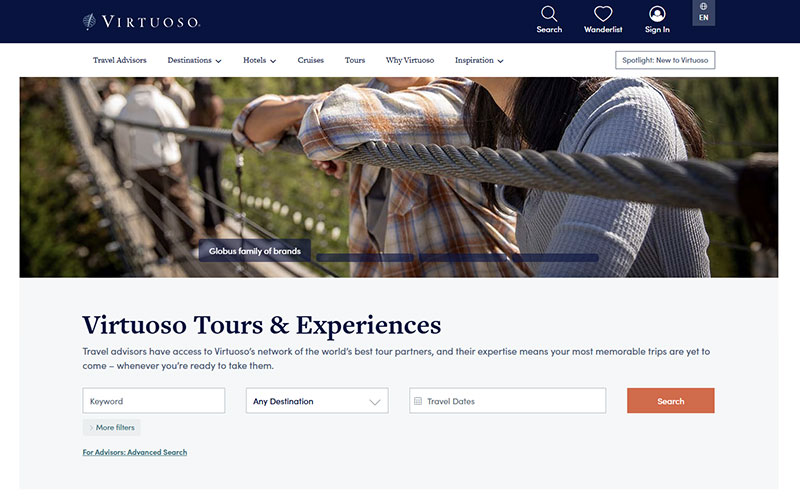
The luxury travel market reached $1.48 trillion in 2024 and is projected to grow at a CAGR of 8.2% through 2033, according to Straits Research.
McKinsey research shows that 35% of the luxury travel market now consists of travelers with net worths between $100,000 and $1 million. The traditional high-net-worth individual (HNWI) segment is expanding beyond ultra-wealthy clients.
According to Grand View Research, the U.S. luxury travel market was valued at $397.91 billion in 2024, with customized and private vacations accounting for over 27% of revenue share.
High-net-worth targeting strategies:
- Private networks and exclusive membership organizations
- Charity event sponsorships
- Concierge partnerships
- Virtuoso and Signature Travel Network membership (signals credibility to affluent travelers)
Content focuses on exclusive experiences rather than price. Trip proposal templates emphasize personalization and access.
Research from McKinsey reveals that post-trip debriefs are the number-one differentiator between trusted travel advisors and transactional agents for high-net-worth consumers. That debrief creates a learning relationship that makes clients “sticky.”
According to a 2024 Strategic Vision survey, 91% of luxury travel advisors saw increased revenues in 2023. Nine out of 10 agents say clients are willing to spend more on exclusive or bespoke travel experiences.
Data shows 36.2% of luxury travelers prioritize sustainability when booking destinations, according to Kinglike Concierge research of over 158,000 high net worth individuals.
How Do Group Travel Specialists Find Leads
Target organizations, not individuals.
The incentive travel market reached $3.7 billion in 2024 and is projected to hit $4.8 billion by 2028, according to The Business Research Company.
According to the 2024 Incentive Travel Index, 45% of buyers expect incentive travel activity to be above or significantly above 2024 levels by 2026. Additionally, 76% of executives identify rising costs as a significant challenge.
Target segments:
- Corporate HR departments for incentive travel (average spend per person: $5,400 in North America according to IRF/SITE research)
- Religious group coordinators for pilgrimages
- School administrators for student trips
- Reunion planners (family, military, college)
- Wedding planners for destination wedding groups
Research shows 81% of organizations design incentive travel programs specifically to retain high-performing employees, according to the 2024 Incentive Travel Index.
Data from the 2024 Attendee Preferences for Incentive Travel report reveals 91% of respondents describe group incentive travel to an appealing destination as “very” or “extremely motivating.”
According to the Incentive Research Foundation, 54% of buyers plan to use more tiers in their incentive programs, while 47% see incentive travel as a reward for individuals over broader benefits.
Webinar registration forms work well for educating group decision-makers. Host sessions on “Planning Your Church Group’s Holy Land Trip” or similar niche topics.
Key statistics for corporate incentive travel:
Research from Bishop McCann shows 42% of respondents anticipate increased use of all-inclusive resorts for incentive programs, with 73% citing budget considerations as the reason.
Data indicates 65% of respondents consider free time the most important factor for successful incentive programs in 2024, up from eighth place in previous years.
How Do Cruise Specialists Attract Leads
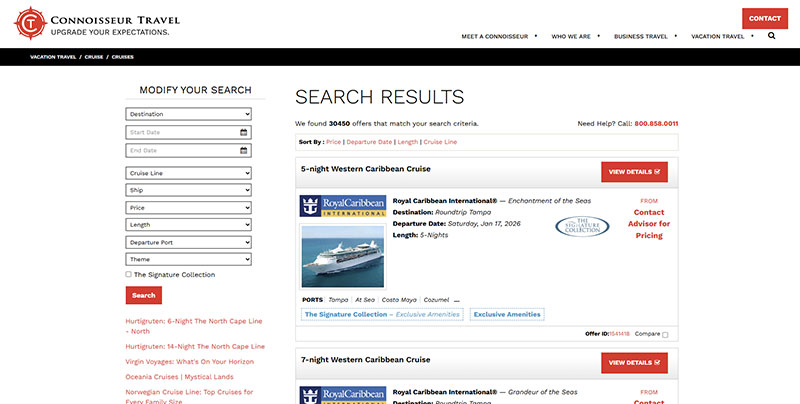
Cruise consultation requires different tactics. Ship review content, port excursion guides, and cabin comparison tools attract research-phase prospects.
According to multiple industry sources, cruise bookings typically occur 6-12 months in advance for standard sailings and 12-18 months for global voyages.
Royal Caribbean and other cruise lines indicate that Wave Season (January-March) represents the industry’s prime booking window when cruise lines offer their best annual deals.
Cruise specialist tactics:
CLIA certification builds trust with prospects. Preferred supplier programs with Royal Caribbean, Norwegian, or Carnival provide co-op marketing funds and exclusive offers.
Research shows that in 2024, cruise sales surged 152% compared to 2023, with agencies handling two-thirds of bookings according to industry data.
According to the 2024 Incentive Travel Index, buyers and participants show openness to cruises, with 75% of participants agreeing cruises are desirable regardless of destination. Buyers cite multiple ports of call as a main reason for choosing river and Mediterranean cruises, while 53% state budget-friendly options drive Caribbean cruise selection.
Using conditional logic in intake forms helps route prospects to the right cruise type based on their preferences.
How Much Does Lead Generation Cost for Travel Agents
Costs vary wildly by method and niche. Here’s what to expect:
- Facebook/Instagram Ads: $15-40 cost per lead for vacation packages
- Google Ads: $25-75 CPL (luxury travel runs higher)
- Third-party lead services: $10-30 per lead, quality varies
- Trade show booths: $2,000-10,000+ per event, plus travel costs
- Content marketing: Time investment, 10-20 hours/month for consistent output
- Consortium membership: $200-500/year with access to shared leads
Track your client acquisition cost by source. Divide total spend by number of booked clients, not just leads.
A strong lead magnet reduces paid ad costs by capturing organic traffic. Destination guides, packing checklists, and budget planners all work well.
Check out lead magnet ideas for more inspiration on what to offer.
How Do Travel Agents Measure Lead Generation Success
Numbers don’t lie. Track these KPIs in your travel CRM:
- Lead-to-consultation ratio: What percentage of inquiries become actual calls/meetings
- Consultation-to-booking ratio: How many consultations convert to confirmed trips
- Cost per acquisition: Total marketing spend divided by new booked clients
- Lead source attribution: Which channels produce the highest-value bookings
- Client lifetime value: Average total revenue per client over their relationship with you
- Average booking value: Commission earned per trip
Google Analytics tracks website behavior. TravelJoy and ClientBase provide booking-specific metrics.
Review numbers monthly. Double down on what works. Cut what doesn’t.
Consider sending post-purchase survey questions after trips complete. Client feedback reveals which lead sources produce the happiest travelers and most repeat bookings.
FAQ on Lead Generation For Travel Agents
How do travel agents get leads in 2025?
Most agents use a mix of website contact forms, social media marketing, email campaigns, and referral programs. Consortium memberships through Virtuoso or Travel Leaders Group also provide shared lead access.
Trade shows and supplier co-op marketing round out the strategy.
What is a good conversion rate for travel agent leads?
Warm leads convert at 15-25% industry-wide. Cold leads average 3-8%.
Luxury travel advisors often exceed 30% due to pre-qualified clientele. Track your numbers in TravelJoy or ClientBase to benchmark against these figures.
How much should travel agents spend on lead generation?
Budget 10-15% of target commission income. Facebook Ads run $15-40 per lead. Google Ads cost $25-75 CPL for travel keywords.
Always track client acquisition cost against lifetime value.
What is the best CRM for travel agent lead management?
TravelJoy leads for independent agents. ClientBase works well for larger agencies using Sabre.
HubSpot offers robust automation for those wanting advanced nurturing sequences. Pick what matches your booking volume and budget.
How do I generate leads for luxury travel services?
Target high-net-worth individuals through private networks and charity event sponsorships. Virtuoso or Signature Travel Network membership signals credibility.
Content should emphasize exclusive experiences and personalized service, not price.
Do paid lead generation services work for travel agents?
Results vary wildly. Some agents report 15% conversion from Travefy leads. Others see below 3%.
Test small before committing. Track every source separately in your CRM.
What lead magnets work best for travel agents?
Destination guides, packing checklists, and budget planning worksheets perform consistently. Cruise comparison charts work for specialists.
Offer something travelers actually want in exchange for email addresses. Learn more about how to create a lead magnet that converts.
How quickly should travel agents respond to new leads?
Within one hour. Travel Weekly data shows agents responding in 60 minutes close 7x more bookings than those waiting 24 hours.
Set up automated responses for after-hours inquiries.
Which social media platform generates the most travel leads?
Facebook delivers highest volume through targeted ads and group engagement. Instagram builds brand awareness.
Pinterest captures early-stage planners. Best results come from using multiple platforms together.
How do I qualify travel leads before consultation calls?
Use intake forms asking about travel dates, budget range, destination preferences, and group size.
This filters serious prospects from tire-kickers before you invest consultation time.
Conclusion
Lead generation for travel agents requires consistent effort across multiple channels. There’s no single magic solution.
Website forms capture booking inquiries. Email marketing nurtures prospects. Referral networks multiply your reach without ad spend.
The agents winning right now combine these methods with proper tracking in their travel CRM. They know exactly which sources produce commission income and which waste time.
Start with one channel. Master it. Then expand.
Build your client database methodically. Focus on prospect nurturing rather than chasing every new tactic. CLIA-certified agents with destination expertise consistently outperform generalists.
Your next booking is already searching online. The question is whether they’ll find you or your competitor first.