






A new client doesn’t sign with an accounting firm because a landing page convinced them. They sign because someone they trust vouched for the firm, or because the firm showed…
Table of contents
A homeowner with a burst pipe at 2 a.m. isn’t shopping around. They’re calling whoever answers first, inside whatever radius Google decides counts as “nearby.” That single behavior shapes almost everything about how plumbing companies find work online.
Lead generation for plumbers runs through four channels that usually overlap: local search visibility, paid placements such as Local Services Ads, shared lead marketplaces, and referral networks. The number that actually matters isn’t cost per lead. It’s cost per booked job, because a cheap lead that never converts ends up costing more than an expensive one that does.
Google phased out the Google Guaranteed, Google Screened, and License Verified by Google badges inside Local Services Ads on October 20, 2025, replacing all three with a single Google Verified badge for every advertiser. The money-back guarantee tied to the old Google Guaranteed badge went away separately, effective November 7, 2025 (Google Support, 2025). Small change on paper, bigger one in practice, since it flattens a distinction plumbers used to pay extra to earn.
What Is Lead Generation for Plumbers?
Strip away the marketing language and it comes down to this: turning homeowner and commercial search demand into a job on the calendar, inside a service radius that’s fixed whether the plumber likes it or not.
It runs on the same fundamentals behind what lead generation actually means as a marketing discipline, just narrowed down to people who are searching for a plumber right now, not people who might need one eventually.
Worth being clear on what it isn’t, too. Not a single ad campaign run once and forgotten. Not general brand advertising aimed at some future awareness that never quite pays off. And not a substitute for having enough dispatch capacity to actually answer the calls it produces, since a full pipeline with no one to run it is just an expensive way to generate voicemails.
A plumbing company sits inside the broader category of generating leads for local businesses, where proximity and same-day availability count for more than brand recognition ever will.
Emergency calls (burst pipes, no hot water, sewage backups) push this category into faster decision cycles than most other home service trades. Nobody researches a water heater failure for three weeks.
How Local Search Visibility Generates Plumbing Leads
Local search visibility puts a plumbing company inside Google’s three-result Local Pack, and most emergency or same-day searches never scroll past those three listings before dialing.
Ranking there comes down to proximity to the searcher, the categories chosen on the profile, and how consistently the business shows up across the web. Get any one of those wrong and the other two don’t matter much.
Google Business Profile Optimization
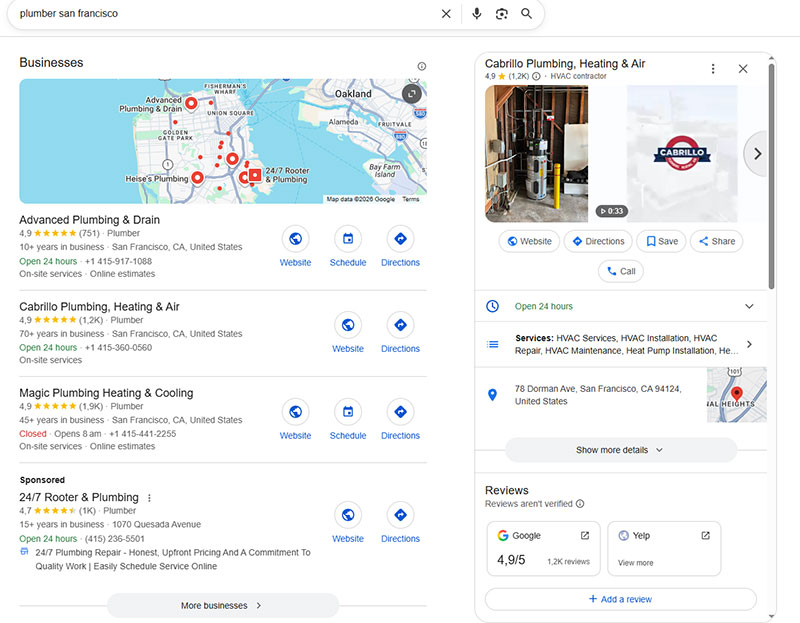
The ranking inputs that matter most are the primary and secondary service categories set on the profile, service area boundaries that actually match the coverage zone, and photos, hours, and messaging that get updated instead of left to rot.
A complete profile still won’t overcome a missing category or a service area that stops short of where the calls are actually coming from. Plenty of otherwise solid profiles lose visibility over exactly that.
Citation and Directory Consistency
The same business name, address, and phone number needs to match everywhere it appears online. Not close. Matching.
Inconsistent listings confuse the local ranking algorithm and can quietly suppress a profile that would otherwise qualify for the Local Pack. It happens more than most owners realize, usually from an old phone number left live on one directory from years back.
- Yelp
- Better Business Bureau
- Nextdoor
- Bing Places and Apple Maps
Tools like Yext and BrightLocal exist specifically to find and correct mismatched listings across these directories at scale, which beats checking each one by hand.
How Google Local Services Ads Work for Plumbers
Google Local Services Ads let a plumber pay only when a homeowner calls or messages through the ad, not when someone clicks it and bounces.
Listings appear above both organic results and standard Google Ads, showing the business name, star rating, and a Google Verified badge. Getting that badge means clearing three requirements at once: an active master plumber license, general liability insurance typically running $1 million to $2 million, and a background check covering the business owner and any field workers who’ll actually be inside customers’ homes.
Plumbing Local Services Ads averaged $57 per lead with a 44.5% book rate, based on a 230-account benchmark tracking $2.03 million in spend (SearchLight Digital, 2026).
Ranking inside the ad unit depends on review volume, response time, and dispute rate. Not on how much a plumber is willing to bid, which surprises people used to how regular Google Ads works.
A slow callback undoes the advantage fast. Google routes the next search to whichever Verified listing answers first, and it doesn’t wait around for a callback an hour later.
Exclusive Leads vs Shared Leads
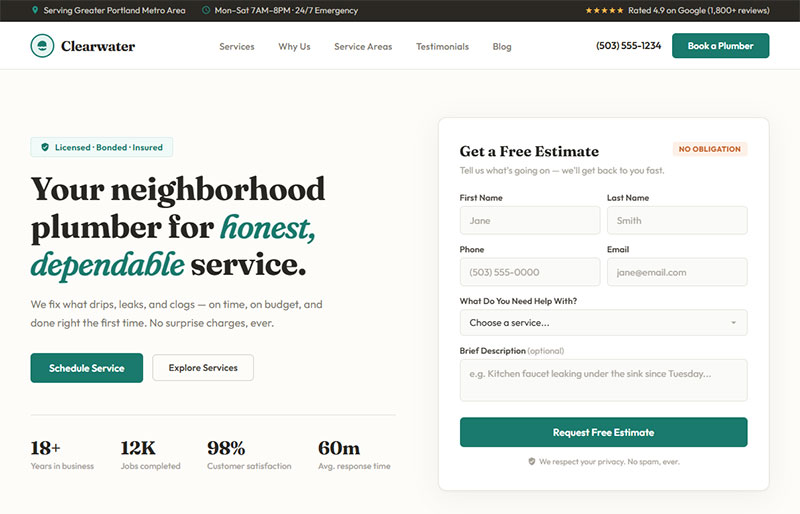
A shared lead gets sold to three to eight plumbers at once, and whoever calls back first usually wins the job regardless of price or reputation. Marketplaces like Angi, HomeAdvisor, and Thumbtack built their entire pricing model around exactly this.
The close rate on shared leads runs 13% to 20% (LeadTruffle, 2026). That’s the tradeoff for a lower price and instant availability: the lead is real, but so is the race to reach the homeowner before someone else does.
Exclusive leads work differently. The homeowner chose that specific business, nobody else got the same contact, and the close rate reflects it: 27% to 30%, nearly double the shared version. The catch is speed of scale. Exclusive volume takes months to build without existing rankings or reviews behind it, and a brand-new plumbing business with no review history often ends up on shared marketplaces anyway, simply because exclusive channels aren’t fast enough to fill an empty schedule.
Most exclusive volume still needs somewhere to land, which is why plumbers building their own pipeline look into building lead capture forms that collect job details before the first call even happens.
Comparing Plumbing Lead Generation Channels by Cost
Raw cost per lead hides the number that actually matters: cost per booked job. A cheap shared lead with a weak close rate can end up pricier in the end than an expensive exclusive lead that converts at double the rate.
| Channel | Cost per lead | Book rate | Cost per booked job |
|---|---|---|---|
| Local Services Ads | $57 | 44.5% | about $168 |
| Google Ads (search) | $73 to $95 | 25% to 30% | $250 to $400 |
| Angi or HomeAdvisor | $15 to $85 | 13% to 20% | $1,000-plus |
Figures come from a 230-account SearchLight Digital benchmark and PipelineOn’s 2026 channel comparison, both built on tracked plumbing campaign spend.
Local Services Ads keep winning this comparison for one reason: Google only charges for a completed contact, not a click that goes nowhere.
Referrals and organic local search sit outside the table entirely. No direct media cost, just the time spent earning reviews and rankings, which some owners forget still costs something.
How Plumbers Qualify and Convert Leads Into Booked Jobs
Before anyone drives out, the job needs a quick check: is it real, is it inside the service area, and is it worth dispatching a technician for at all.
Standard phone screening usually covers job type and urgency level, location inside the service radius, and some kind of budget signal or willingness to pay a diagnostic fee.
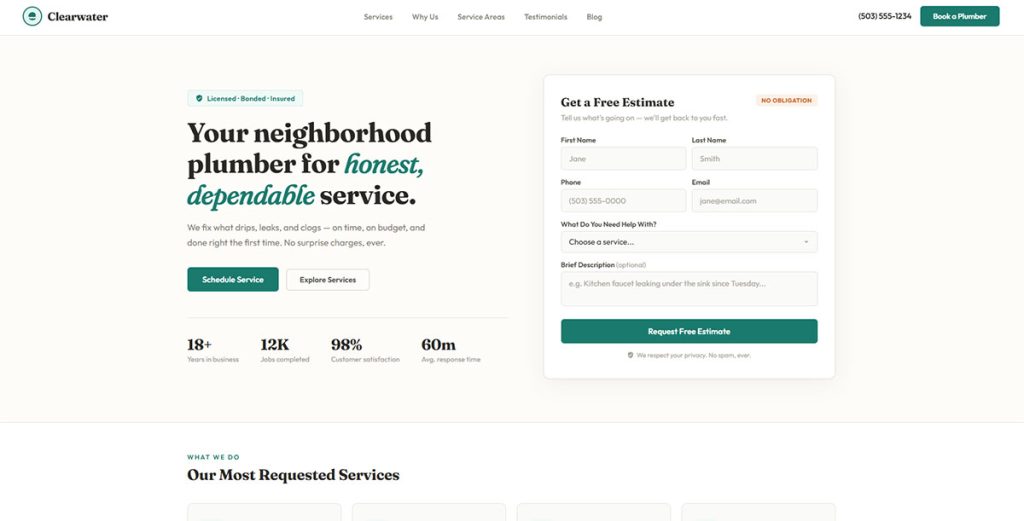
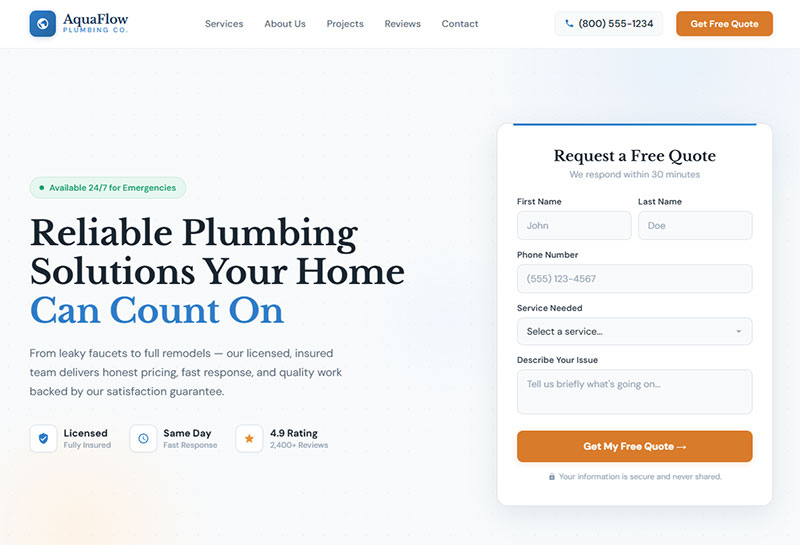
Many plumbers pair that call with a website intake form, and getting the field selection right matters more than people expect. That’s the whole point behind choosing form fields that capture high-quality leads instead of a generic name-and-message box.
Booking software closes the gap between a qualified lead and a job on the calendar, cutting the no-show rate that plagues phone-only intake.
Plumbing conversion rates average 6.1% to 11.3%, above the 7.5% cross-industry average, mostly because these searches carry higher intent to begin with (Web Tonic, 2026). That edge only holds up against general conversion benchmarks from other industries when a plumber actually answers fast enough to capture it.
A lead that goes fifteen minutes without a callback is, in practice, a lead someone else already booked.
Reviews and Reputation’s Role in Plumbing Lead Generation
Star rating and review count decide which three plumbers show up in the Local Pack, and which one actually gets the call once they do.
A homeowner comparing three listings almost always calls the one with more reviews at a strong rating, before reading a single word on the website.
- Plumbers typically need around 215 reviews to reach the industry median for 3-Pack visibility (Local Falcon, Q4 2025)
- Service businesses overall need 11 to 25 reviews just to qualify for the 3-Pack at all (Local Falcon, Q4 2025)
- Purchase likelihood peaks between 4.0 and 4.7 stars, with a perfect 5.0 generating less trust than a 4.7 (Spiegel Research Center, Northwestern University)
That last point surprises most business owners. A flawless score tends to read as curated rather than earned, and people notice.
Review management tools like Podium and Birdeye automate the request right after a job closes, timed to when satisfaction is highest.
Response rate and review recency count almost as much as the raw total. A stale profile sitting on hundreds of old reviews loses ground to a smaller, active one that’s still getting new ones every week.
Seasonal Demand Patterns in Plumbing Lead Generation
Plumbing demand moves in two waves each year: one from heavy summer usage, one from winter freeze events.
Frozen pipe repair searches climb 609% in January, while emergency plumber searches rise 191% between April and July (WebFX, 2026).
- Winter: frozen pipes, burst lines, no-heat emergencies
- Summer: heavy fixture use, irrigation lines, vacation-season leaks
- Shoulder months: maintenance and inspection requests, lower urgency
Cost per lead on paid channels climbs during both spikes, since every competitor in the market raises bids the moment a cold snap hits. A plumber who waits until the freeze to raise Local Services Ads budgets is already behind the businesses that scheduled the increase ahead of time.
Evergreen services like drain cleaning and leak detection stay flat year round, which makes them a decent anchor for organic content during the slow months between spikes.
Tracking and Attributing Plumbing Leads
Call tracking assigns a unique phone number to each marketing channel, so every inbound call carries a record of where it actually came from.
27% of calls to home service businesses go unanswered, according to platform data from call intelligence provider Invoca. That number gets a lot more painful once money is being spent to make the phone ring in the first place, since an unanswered call still counts against the budget that generated it.
| Tool | Primary function | Fits best for |
|---|---|---|
| CallRail | Call and form tracking by source | Attributing calls to specific campaigns |
| ServiceTitan | Dispatch, invoicing, revenue reporting | Larger plumbing operations with multiple crews |
| Housecall Pro | Booking, quoting, payment collection | Small to mid-size plumbing teams |
Feeding call data into a plumbing crm software platform lets a job get logged, dispatched, and closed without a separate spreadsheet trying to keep up with it.
The same discipline applies to web forms. Plumbers running a quote-request form should know how to track form submissions in Google Analytics, so form leads get the same source-level credit as phone calls instead of disappearing into “direct” traffic.
An attribution gap opens the moment a returning customer calls a saved number instead of the tracked one. Small thing, but it quietly understates how well organic and referral channels are actually performing.
Step-by-Step Process to Set Up Plumbing Lead Generation
The order matters here more than the individual tactics. Running paid ads before tracking is live just burns budget with no way to measure any of it.
- Claim and fully complete the Google Business Profile
- Install call tracking numbers across every channel before spending a dollar on ads
- Apply for the Google Verified badge and launch Local Services Ads
- Add a quote-request form to the website for people who prefer not to call
- Connect booking software so qualified leads land directly on the schedule
- Build a review-request workflow that fires automatically after each job closes
- Set a monthly referral ask into the closing conversation on every invoice
Step four covers more ground than it looks like. Getting it right means understanding how to use website forms for lead generation rather than dropping in a generic contact box and hoping.
Most plumbing websites run on WordPress, and picking from the right WordPress lead generation plugins saves the rebuild work later, once the basic contact form stops being enough.
Skipping step two is probably the single most common mistake in this whole sequence. It means every dollar spent in steps three through seven runs blind for weeks.
When Plumbing Lead Generation Does Not Work
Paid lead generation doesn’t fail plumbers randomly. It tends to break down in the same handful of situations.
A service area with too few monthly searches can’t support the cost per lead that a competitive metro market can absorb. A small-town plumber running the same budget as a city competitor will burn through it fast, and won’t understand why until the numbers stop making sense.
Businesses that can’t answer or book a lead within minutes lose it to whichever competitor picks up first, no matter how much was spent getting that phone to ring in the first place.
Roughly 70% of plumbing contractors in major metros now run Local Services Ads, and that saturation means review velocity and response time decide who wins, not bid amount (SearchLight Digital, 2026).
Dispute processes on paid platforms leak spend too, with 8 to 18 points of recoverable ad cost typically lost to the automated dispute system rather than clawed back (SearchLight Digital, 2026).
A missing or lapsed license and insurance file blocks Google Verified eligibility outright, which removes Local Services Ads from the channel mix entirely until the paperwork gets sorted.
A website contact form that fills up with spam submissions can bury a handful of real jobs inside dozens of fake ones. Fixing that starts with knowing how to stop spam from WordPress contact forms rather than just ignoring the inbox and hoping the real ones stand out.
None of this means lead generation stops working for plumbers. It just means the channel, the market, and the response system all have to line up before it does.
FAQ on Lead Generation For Plumbers
Should plumbers buy leads or build their own pipeline?
Buying leads from marketplaces like Angi or Thumbtack fills gaps fast, but it rents visibility rather than owning it.
Building an owned pipeline through local search and referrals lowers cost per booked job over time. Most plumbers end up running both together, not choosing one.
What is the minimum budget to start generating plumbing leads?
Local Services Ads can start producing calls with a few hundred dollars a month, since cost runs per lead, not per click.
Shared lead marketplaces need less upfront but bill per lead delivered. Local search and referrals cost time rather than media spend, which is easy to forget when budgeting.
What common mistakes lower plumbing lead quality?
Slow callbacks let hot leads go cold within minutes, and weak service area targeting pulls in searches from outside the coverage zone that never should have shown the ad in the first place.
Skipping call tracking before launching ads hides which channel actually works. Thin Google Business Profile listings suppress local pack visibility on top of that.
How long does it take before plumbing lead generation shows results?
Local Services Ads and paid search can produce calls within days once tracking is live.
Local search visibility through Google Business Profile typically needs 60 to 90 days to move inside the Local Pack, with review-driven trust building more slowly past that point.
Do plumbers need a website if they are running Local Services Ads?
Local Services Ads can generate calls without a website, since Google handles the contact step directly.
A website still matters for exclusive lead capture forms, service area pages, and organic rankings that Local Services Ads simply doesn’t reach.
What Should You Fix First in Lead Generation for Plumbers?
Start at the point where an inbound call actually reaches a live person. Spend on local search visibility, Local Services Ads, or shared lead marketplaces returns nothing once a caller hits voicemail, and that’s true regardless of how good the channel strategy above it looks on paper.
Review accumulation stops improving Local Pack rank past a 4.8 star average, per Local Falcon’s Q4 2025 analysis. Chasing volume beyond that ceiling wastes effort that would do more good spent on response speed instead.
A $1,714 average plumbing ticket set against a $168 cost per booked job on Local Services Ads means that channel consumes under 10% of revenue per job. Neither figure states that ratio on its own (SearchLight Digital, 2026), but it’s worth doing the math yourself before assuming a channel is too expensive.
The next step in this pipeline is laying out a capture form that doesn’t leak the leads it collects, since channel strategy only pays off once the form behind it actually converts.