







A new client doesn’t sign with an accounting firm because a landing page convinced them. They sign because someone they trust vouched for the firm, or because the firm showed…
Table of contents
A landscaper in Tulsa and a landscaper in Portland are technically doing the exact same job, but their lead generation strategy has almost nothing in common once their service radius differs by even ten miles. That’s the part people miss when they copy a tactic from a national ecommerce brand, then wonder why it flops for a service business running four trucks and one zip code.
Independent contractors, franchise locations, and single-location retailers all run into the same wall: a customer has to be reachable within a drive time that actually makes sense, or a delivery radius that doesn’t eat the margin.
80% of US consumers search online for a local business every week, and 32% do so daily, according to SOCi’s 2024 Consumer Behavior Index. A lot of that searching happens standing in a driveway or a parking lot, phone in hand, wanting an answer right now.
Cost per lead, review volume, and local search visibility are what push that weekly habit toward an actual booked appointment, or a walk-in, instead of staying just a search.
What Is Lead Generation for Local Businesses?
Every dollar in this channel only matters if the person on the other end lives, works, or shops within driving distance. That’s the whole distinction from a national campaign, and it’s what shapes the process day to day: attracting and converting nearby prospects into contactable leads, tied to a defined service area instead of an open market.
In practice that means phone calls from click-to-call ads and Google Business Profile listings, form fills through website forms and landing pages, booked appointments through tools like Calendly, and walk-ins that get traced back to whatever campaign actually drove them in.
The broader concept of what lead generation actually means applies here too, just narrowed to a geographic radius and local search intent. It isn’t brand awareness, and it isn’t generic organic traffic with no conversion path attached.
It also sits apart from demand generation, which builds category awareness over months rather than producing a contactable lead this week.
How Local Lead Generation Works
Skip a stage in this process and the ones after it get harder, sometimes impossible. Visibility has to happen before contact, contact before qualification, and so on down the line.
- Visibility: a prospect finds the business through local search, a Google Maps listing, or a referral
- Contact: they reach out by phone, form, or in person
- Qualification: the business checks whether the person fits its service area and budget
- Nurture: a follow-up sequence, call, text, email, keeps the lead warm until they decide
- Conversion: the lead becomes a paying customer
This sequence maps closely onto a standard lead generation funnel, just compressed because local buyers tend to decide faster than enterprise ones.
Trust signals, mainly reviews and consistent business information, sit underneath every stage rather than belonging to just one of them.
Call tracking and CRM software, HubSpot and Salesforce among the common choices, connect the online and offline halves of the process.
Zapier often sits quietly in the background, pushing a new form submission straight into the CRM without anyone touching it manually.
Local Search Visibility Factors That Drive Local Leads
Businesses that land in Google’s local map pack, also called the 3-pack, get 126% more traffic and 93% more actions than businesses ranked four through ten for the same search (SOCi Consumer Behavior Index).
That gap is why local search ranking gets more attention than almost any other channel in this space, and it comes down to a handful of things a business actually controls: profile completeness, review volume, and citation accuracy. Get those right and showing up when someone nearby searches for what you sell stops being a coin flip.
Google Business Profile Signals
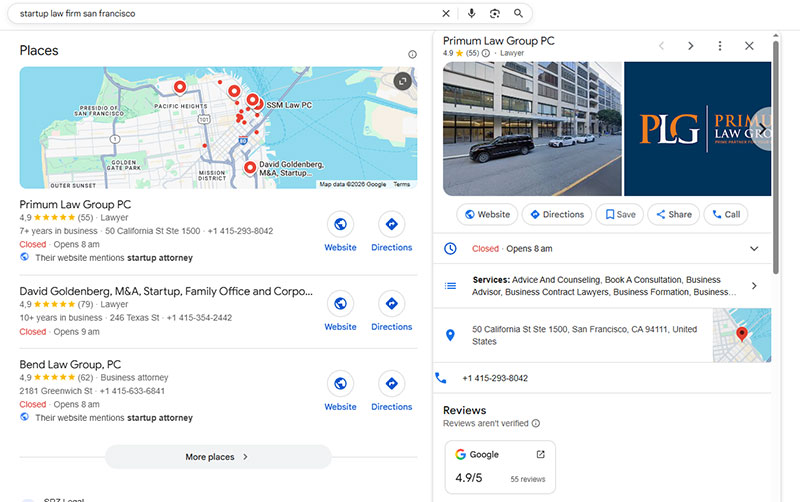
The profile is the single largest lever a local business controls directly.
- Business category accuracy
- Complete hours, phone number, and service list
- Photo volume and recency
- Posts and Q&A activity
Multi-location franchises, hardware co-ops and salon chains among them, run a separate Google Business Profile for every storefront rather than one national page.
That per-location approach is what lets each store rank for its own neighborhood instead of competing against its sister locations.
Citation and Review Signals
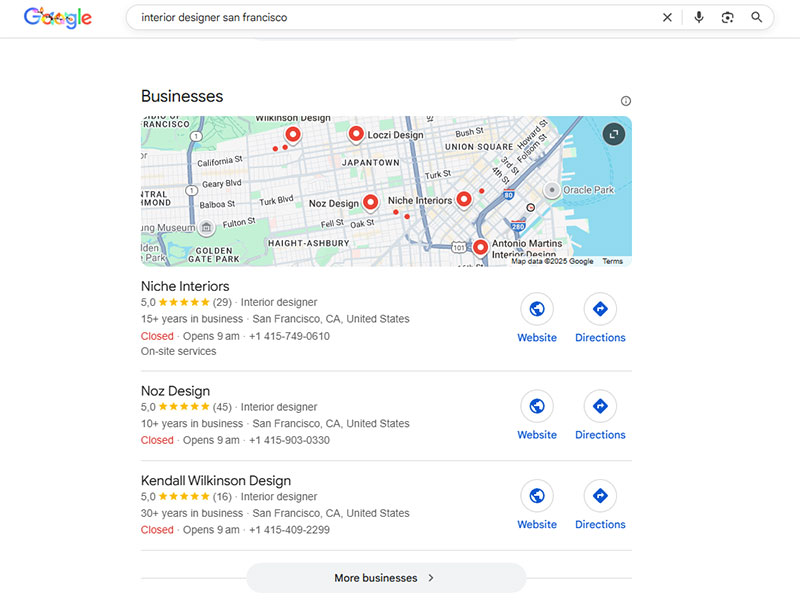
Consistency matters more than volume here.
NAP consistency, meaning the name, address, and phone number match across every directory a business appears in, feeds directly into local search ranking.
- Yelp
- Better Business Bureau
- Chamber of Commerce directories
- Industry-specific listing sites
Tools like Moz Local and Yext exist specifically to keep those listings synchronized without manual updates across dozens of sites.
Schema markup, built on the Schema.org LocalBusiness type, feeds the same name, address, and hours to search engines in a machine-readable format.
Review management platforms such as Podium and Birdeye help centralize new reviews as they come in, instead of a business checking five sites by hand.
A profile with steady, recent reviews reads as active. Get a cluster of five reviews from three years ago and nothing since, though, and it reads as abandoned no matter how busy the business actually still is.
Defining Your Service Area
73% of local searches start on a mobile device, according to BrightLocal’s 2026 Consumer Search Behavior report.
That single fact is why service area decisions matter more than most local businesses assume. A phone in someone’s pocket already knows roughly where they are standing.
A service area usually comes down to zip code targeting (simple, but it ignores natural travel patterns that don’t care about zip boundaries), a mile radius (which matches how far a customer will actually drive, or how far a technician is willing to go), or a city or region for businesses with a wider draw, specialty retailers and destination restaurants being the obvious examples.
Mobile, vehicle-based businesses, plumbers, HVAC technicians, mobile groomers, tend to widen the radius because their cost of travel is already built into the price.
Salons and dentists, on the other hand, are usually tightening it. Nobody’s driving 40 minutes across town for a routine cleaning or a haircut, so there’s no point paying for reach that far out.
Ad platforms enforce this through geo-targeting, and a radius set too wide just burns budget on leads outside a realistic drive time.
Lead Qualification Criteria for Local Leads
A qualified local lead sits inside the service area, has a real budget behind the request, and needs the work done within a reasonable window. Miss any one of those and it usually wastes a technician’s time or a sales call.
Distance from the business or technician’s base matters, and so does the stated budget or project scope. Urgency counts too, same week versus someday, along with behavioral signals like call duration or how much detail someone actually typed into a form.
Most of that filtering happens automatically once website forms built for lead generation are set up to ask the right questions upfront.
Field choice does the heavy lifting here.
A short list of form fields built to capture higher-quality leads, project type, timeline, rough budget range, filters out browsers before a human ever sees the submission.
In practice, a qualified lead looks like a local zip code, a clear project, and someone ready to book within two weeks. Vague requests with no timeline, coming from outside the service area, usually aren’t.
A marketing-qualified lead just matches the basic filters. A sales-ready lead has also confirmed budget and timing, which is the difference between a call worth making and one worth skipping.
Comparing Local Lead Generation Channels
No single channel covers every local business, and the right pick depends on budget and trade, and honestly on how fast leads need to show up too.
| Channel | Setup effort | Budget control | Best for |
|---|---|---|---|
| Organic local search | High upfront, low ongoing | No direct spend cap | Businesses with time to build authority |
| Google Local Services Ads | Low, requires verification | Pay per lead, weekly cap | Home service trades wanting fast volume |
| Google Ads (search) | Moderate | Pay per click, full control | Services Local Services Ads don’t cover |
| Referrals and directories | Low | Often free or flat fee | Trust-heavy services like legal or medical |
Referral programs and platforms like Nextdoor sit closer to the inbound side of the inbound versus outbound lead generation split, where the prospect finds the business rather than the other way around.
Paid search and Local Services Ads work the other side of that split. They buy visibility rather than earn it over time.
Local landing pages built around a specific neighborhood or service usually outperform a single generic homepage once paid traffic gets involved.
Paid vs Organic Trade-offs
Paid gets results fast, sometimes within days of turning campaigns on, and the moment spend stops, the leads stop too. That’s the trade nobody loves but everyone accepts, because it’s also easy to scale up for a busy season and dial back in a slow one.
Organic is the opposite bet. It takes three to six months to actually rank for anything, sometimes longer in a competitive metro, but once a business gets there, leads keep showing up without ongoing spend, and a competitor can’t just outbid their way past it.
Home service marketplaces such as Thumbtack and Angi blend both worlds. They charge per lead like a paid channel, but the buyer arrived through organic search on the marketplace itself.
Cost Per Lead and Conversion Rate Benchmarks
Cost per lead and conversion rate only mean something together. A cheap lead that never converts costs more than an expensive one that closes.
- Home service Local Services Ads average $53 per lead, based on $6.72 million in tracked spend across 888 contractors (SearchLight Digital, February 2026)
- Standard Google Search Ads for the same trades average $90.92 per lead, up 10.51% year over year (LocaliQ, 2025)
- Positive reviews make 85% of consumers more likely to use a local business (BrightLocal Local Consumer Review Survey, 2026)
- 75% of consumers decide which local business to use in under 30 minutes (BrightLocal Consumer Search Behavior, 2026)
Those numbers only matter against a real target, and conversion rate benchmarks by industry give a business something concrete to compare its own numbers against instead of guessing.
A roofing company paying $162 for a Local Services Ads lead needs a very different conversion rate than a locksmith paying $34 for the same kind of lead to hit the same return.
Tracking this over time matters more than any single month’s number, especially once the data is scattered across Google Analytics, a CRM, and an ad platform dashboard that rarely agree with each other.
A short list of lead generation KPIs worth tracking, cost per lead, lead-to-customer rate, and average time to close, turns scattered numbers into a trend a business can actually act on.
Decision speed cuts both ways. A business that responds slowly loses leads to whichever competitor picks up the phone first, no matter how strong its cost-per-lead number looks on paper.
Lead Generation Tools and Software for Local Businesses
Most of the stack below exists to do one job well: capture a lead, track it, or keep in touch with it automatically.
Layering three or four specialized tools usually beats hunting for one platform that does everything.
| Tool | Category | Price tier | Best for |
|---|---|---|---|
| HubSpot | CRM | Free tier, paid tiers scale up | General lead tracking for any local business |
| ServiceTitan | Field service management | Custom quote only | Multi-crew home service operations |
| HouseCall Pro | Field service CRM | Entry-level monthly plan, higher tiers for teams | Solo operators and small crews |
| Podium | Review and messaging platform | Mid-tier monthly subscription | Review generation and two-way texting |
For businesses running their own website on WordPress, plugins built specifically for local lead capture handle the on-site side that a CRM never touches directly.
CRM software stores the lead and tracks where it sits in the pipeline. Field service software takes over once that lead converts, scheduling the actual job. Review and messaging platforms run quietly in the background, keeping the reputation loop going.
71% of small businesses now use a CRM system, based on Freshworks’ 2024 survey of 600 business owners and professionals.
Most of that adoption is recent. A business still running lead tracking off a spreadsheet or a stack of sticky notes is now the exception, not the norm.
Lead Nurturing Workflow After You Get a Lead
Firms that attempted contact with a web lead within an hour were seven times more likely to qualify it than firms that waited even one hour longer (Harvard Business Review, 2011 analysis of 2,241 U.S. companies).
That gap hasn’t closed with time. If anything, fast response has become the baseline customers expect.
- Call or text within minutes of the form fill or missed call
- A follow-up email the same day, confirming details and next steps
- A second touch within 48 hours if there’s no response
- A final check-in around day 5 to 7 before moving the lead to a longer nurture list
The same research found firms that waited 24 hours or longer to respond were more than 60 times less likely to qualify the lead than those that responded within the first hour.
Automation closes most of that gap. A CRM with an autoresponder handles the first touch instantly, then hands the lead to a person once it clears the qualification filters covered earlier.
For businesses building this out by hand, pre-built templates for a nurture sequence cut the setup time down to editing a few fields instead of writing every message from scratch.
Step-by-Step Local Lead Generation Strategy

The order here matters. Skipping ahead to paid ads before the basics are in place just makes leads more expensive than they need to be.
- Claim and complete the Google Business Profile. Category, hours, service list, and photos all need to be accurate before anything else gets built on top of it.
- Fix citation consistency. Name, address, and phone number should match across every directory the business appears in.
- Start collecting reviews. A simple text asking for one after every job works better than any review-generation software on its own.
- Build a capture point on the website. A dedicated lead capture form converts better than a generic contact page buried in the navigation.
- Add one paid channel. Local Services Ads for eligible trades, or Google Ads search for everyone else.
- Connect the CRM. Every form fill, call, and ad click should land in one place, not three separate inboxes.
- Build the follow-up sequence. The cadence covered above turns a captured lead into a booked job.
Most of the failure points show up between steps 4 and 7, not in the first three.
A landing page built around a single service, paired with a short form, consistently outperforms sending paid traffic to a homepage.
Businesses that skip straight to paid ads without fixing citation consistency first tend to pay more per lead than they should. A shaky profile drags down Local Services Ads ranking regardless of budget.
When Local Lead Generation Does Not Work
Local lead generation fails under a few specific, predictable conditions.
None of them are exotic. Most local businesses getting disappointing results are hitting one of these without realizing it.
No fixed service area is the most basic mismatch. Ecommerce-only or fully remote businesses gain little from geo-targeted tactics built around proximity, and a market that’s just too small is a related problem, since a town with limited search volume can’t sustain a paid local campaign built for city-sized demand.
Unresolved reputation problems make it worse in the opposite direction. Sending more traffic to a business with a poor review history amplifies the damage instead of fixing it. And a long, high-friction sales cycle just doesn’t fit cost-per-lead math built around a same-week decision, no matter how good the targeting is.
Platform eligibility adds a harder limit on top of that.
Google’s Local Services Ads program only covers a defined list of categories, mostly home services and a handful of legal and financial professions. Restaurants, retail, and most ecommerce businesses aren’t eligible at all.
Google also retired the separate Google Guaranteed badge in October 2025, folding it into a single Google Verified badge across eligible categories. Businesses researching this channel through older articles may be reading about a badge system that no longer exists.
None of this means local lead generation is a bad investment. It means the tactics need to match the business model, not the other way around.
FAQ on Lead Generation For Local Businesses
How Is Local Lead Generation Different From National Lead Generation?
Geo-targeting, citations, and proximity-based local search visibility are what local lead generation runs on, all pointed at prospects inside one defined service area.
National campaigns don’t bother with any of that. They optimize for volume across every market at once, with no service radius shaping the strategy at all.
What Counts As A Local Business For Lead Generation Purposes?
A local business serves customers within a specific geographic radius, whether a storefront, a mobile service fleet, or a single-location practice.
What qualifies is the service area constraint, not company size, revenue, or whether the business also sells online nationally.
Are Lead Marketplaces Like Thumbtack Or Angi Worth It Compared To Owned Channels?
Marketplaces get you volume fast. Thumbtack or Angi will hand you leads within days, no Google Business Profile buildout required, though you’re paying full price for that speed every time.
Owned channels are the slow build, a website, local search visibility, referral programs. They cost less per lead once the pipeline gets going, but “once it gets going” can mean months, not days.
How Often Should A Business Follow Up With A New Lead Before Giving Up?
Most CRM workflows use five to seven touches across two weeks: a call within minutes, a same-day email, then spaced follow-ups.
An unanswered lead after a day-seven check-in moves to a long-term nurture list.
What Common Mistakes Cause Local Lead Generation Campaigns To Underperform?
The most frequent mistake is running paid ads before fixing citation consistency or collecting reviews, which inflates cost per lead.
Slow response time and an unqualified service area radius account for most of the remaining underperformance.
How Long Does It Take To See Results From Local Lead Generation?
Local Services Ads and Google Ads can generate leads within days of launch.
Organic local search ranking, citation building, and review volume typically take three to six months to produce a steady, compounding stream of qualified leads.
What Should You Fix First in Lead Generation For Local Businesses?
Fix things in order of leverage. Local search visibility and response speed compound over time, an ad budget just rents attention for as long as you keep paying, so it should be the last lever pulled, not the first.
- Local search visibility
- Response speed
- Paid channel spend
Google’s Local Services Ads platform will not activate a profile below a three-star rating, a hard floor that overrides budget entirely.
Combine the fifty-three dollar average Local Services Ads cost per lead with the sevenfold qualification lift from responding within an hour, and that lead is worth roughly seven times more to whichever business answers first.
The next document worth opening covers the specific tactics that increase form conversions, since a well-ranked profile still loses money if the landing form leaks visitors before they submit.