



Most consultants are one or two dry months away from a pipeline crisis. Referrals slow down, the inbox goes quiet, and suddenly business development becomes the only thing on the…
Table of Contents
Most lead magnets don’t work. They get downloaded, skimmed for 30 seconds, and forgotten. Meanwhile, your email list fills up with people who will never buy anything.
The problem isn’t email marketing itself. It’s the opt-in offer. A generic PDF or recycled blog post won’t cut it when your audience has seen hundreds of them before.
This guide covers lead magnet ideas that actually drive conversions and grow your subscriber list with people who care about what you sell. From templates and quizzes to calculators and email courses, you’ll find formats matched to specific business types, real conversion data, and practical advice on picking the right one for your audience.
What Is a Lead Magnet?
A lead magnet is a free resource you offer visitors in exchange for their email address or contact details. That’s it. No fancy explanation needed.
You give something useful. They give you permission to follow up. The whole concept sits at the top of your lead generation funnel, where cold traffic turns into actual subscribers you can talk to.
The format can be almost anything. A PDF checklist, an email course, a quiz, a discount code, a spreadsheet template. What matters is that the resource feels worth the trade.
Here’s where most people get confused, though. A lead magnet is not the same as general free content on your blog or YouTube channel. The difference comes down to one thing: gated content.
Blog posts are open to everyone. A lead magnet sits behind a sign up form. You don’t get access until you hand over your email. That exchange is the entire point.
And the numbers back it up. Email marketing returns roughly $36 for every $1 spent, according to Litmus. So every email address you collect through a well-built opt-in offer has real, measurable dollar value behind it.
The 2024 HubSpot Marketing Strategy Report found that 63% of businesses still consider lead and traffic generation their biggest challenge. Lead magnets directly solve that problem by giving you a repeatable system for turning site visitors into contacts.
Quick side note. Not every freebie counts as a lead magnet. If you’re giving away a 40-page ebook that nobody asked for, that’s just noise. The best ones solve a specific, narrow problem for a specific audience. More on that next.
What Makes a Lead Magnet Convert?
Took me a while to figure this out, but the secret to a high-performing lead magnet isn’t the format. It’s the alignment between what you offer for free and what you sell.
A lead magnet that converts does one thing extremely well: it gives someone a quick win related to a problem your paid product or service also solves.
Specificity Over Breadth
Narrow topics win. “The Complete Guide to Digital Marketing” sounds impressive, but it converts terribly compared to “5 Facebook Ad Headlines That Got Us 3x ROAS.”
People don’t want everything. They want the one thing that fixes their current problem.
GetResponse survey data from 2024 found that 58.6% of marketers say short-form written content (checklists, toolkits, newsletter snippets) outperforms long-form guides for lead generation. Shorter, more specific resources just work better.
Immediate Perceived Value
The best opt-in offers deliver value within minutes of download, not days.
Think templates someone can use right now. Checklists they can run through today. A quiz that gives them a personalized answer in 60 seconds.
According to Interact’s conversion data (covering over 80 million leads), quizzes achieve a 40.1% opt-in rate on average. That’s roughly double what most static downloads pull. Why? Because the value is instant and personalized.
Alignment With Your Paid Offer
This is the part that separates lead magnets that grow revenue from ones that just grow a list of freebie-seekers.
If you sell a $2,000 SEO course, your lead magnet should be something like a keyword research template or an audit checklist. Not a random social media calendar. The freebie needs to attract the exact person who would eventually buy your thing.
HubSpot data shows that 44% of marketers use landing pages as their primary tool for generating leads. But the landing page is only as good as the offer sitting on it. Misaligned lead magnets produce contacts who never convert downstream.
Format Matching Your Audience
GetResponse research also shows that video lead magnets are the top performer for solopreneurs (who made up 60% of their survey respondents), while text-based formats convert better for companies with 2-49 employees.
Your mileage may vary, obviously. But the point stands: match the format to who’s actually downloading it.
Template and Swipe File Lead Magnets

Templates are probably the closest thing to a guaranteed conversion you’ll find in email list building. People love them because there’s zero guesswork involved. Download, fill in your details, done.
A GetResponse study found that 55.9% of marketers said ebook samples and similar short-form written content produced their highest conversion rates. Templates and swipe files sit right in that sweet spot, short enough to feel easy, specific enough to feel valuable.
What Types of Templates Work Best
Email swipe files are huge right now, especially in the coaching and consulting space. Pre-written cold outreach sequences, sales follow-ups, and onboarding emails give subscribers something they can literally copy and paste into their workflow.
Social media caption packs work well for anyone targeting content creators or small business owners. Thirty days of Instagram captions, sorted by content type? That’s a no-brainer download.
Notion and Google Docs templates have blown up in the last couple of years. Project planning dashboards, editorial calendars, client onboarding checklists. The tool itself becomes the delivery mechanism.
Canva has made design templates ridiculously accessible too. You can build a branded PDF template in under an hour, share a Canva link, and let subscribers customize it for their own use. Low effort on your end, high perceived value on theirs.
Best Industries for Template Lead Magnets
Real estate: Listing presentation templates, open house checklists, buyer questionnaire forms. Agents building their email list through real estate lead generation strategies often see templates as their top performer.
SaaS and tech: Onboarding email sequences, product launch checklists, feature comparison spreadsheets.
Freelancers: Proposal templates, contract templates, pricing calculators. Look, freelancers are busy and most hate the admin side. Anything that cuts that friction converts.
Ecommerce: Product photography shot lists, influencer outreach scripts, seasonal promotion calendars. Brands focused on lead generation for ecommerce often find that a good template outperforms even a discount code with warmer traffic.
Checklist and Cheat Sheet Lead Magnets

There’s something almost irresistible about a one-page checklist. It promises completeness in a format you can scan in 30 seconds.
And the data backs this up. Lead magnet landing pages convert at roughly 18% on average, but cheat-sheet style pages can push that to around 34%, according to Amra and Elma research.
Where Checklists and Cheat Sheets Shine
Blog post companions: Write a detailed how-to article, then offer a downloadable checklist version as a content upgrade. This is one of the oldest content upgrade ideas in the book, and it still works because the blog post does the selling for you.
Launch and audit checklists: Website launch checklist. SEO audit checklist. Podcast episode prep checklist. These target people at a specific action stage, which makes the download feel urgent.
Technical cheat sheets: Keyboard shortcuts for Figma. CSS grid properties. Google Analytics 4 event parameters. If your audience is technical, a well-organized one-pager beats a 20-minute tutorial video every time.
Formatting Tips That Actually Matter
Keep it to one page. Seriously. The moment a checklist becomes two pages, it stops being a checklist and starts being a mini-guide. That’s a different lead magnet.
Brand it, but don’t overdesign it. A clean layout with your logo in the corner, readable fonts, and clear checkboxes does the job. Canva or Figma both handle this well.
And here’s a tip that took me forever to figure out: include your website URL and a soft CTA at the bottom of the PDF. Something like “Need help with this? Book a free call at [your URL].” People print these out. They share them in Slack channels. That URL is free, ongoing marketing.
Quiz and Assessment Lead Magnets
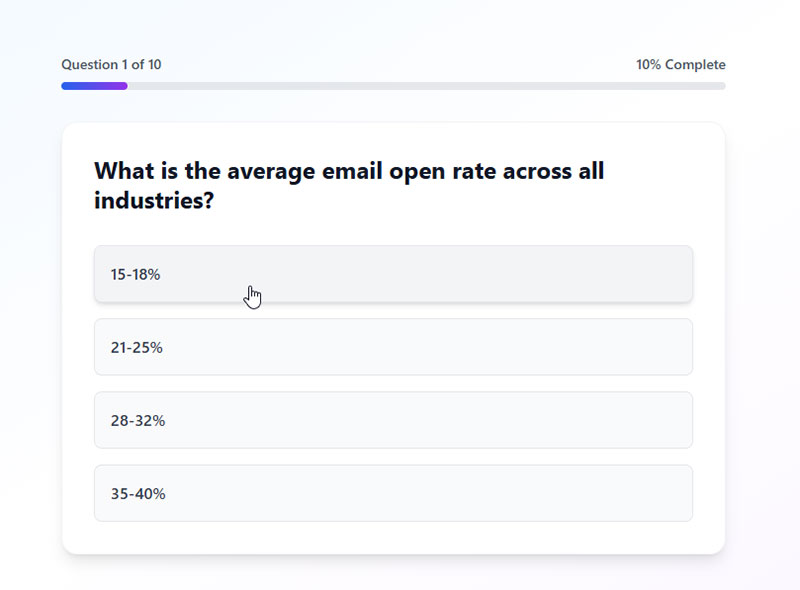
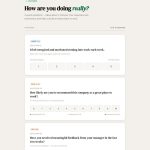
Quizzes convert at rates that make every other lead magnet format look sluggish.
Interact reports a 40.1% start-to-lead conversion rate across their platform, based on over 80 million leads generated. Compare that to the typical 18-25% conversion on a standard opt-in page, and the gap is hard to ignore.
Why do quizzes work so well? Because people get something personalized back. A checklist gives everyone the same thing. A quiz says “here’s what’s true about you specifically.” That personal angle makes handing over an email feel like a fair trade.
Types of Quiz Lead Magnets
Personality and style quizzes: “What’s your brand archetype?” or “What type of investor are you?” These work across almost any niche. Jenna Kutcher famously uses a quiz to segment her audience before they ever hit her email list.
Readiness assessments: “Is your business ready to scale?” or “How launch-ready is your online course?” These attract people at a decision point, which makes them high-intent leads.
Product recommendation quizzes: Sephora’s skincare quiz matches users with specific products. Warby Parker does the same with eyeglasses. This format is especially effective for brands working on lead generation for ecommerce.
Actually wait, I already mentioned that ecommerce link. Let me correct that thought. Product recommendation quizzes are especially popular in DTC and retail because the quiz result doubles as a sales page.
Platforms like Typeform, Interact, and ScoreApp handle the heavy lifting. Most integrate directly with ConvertKit, Mailchimp, ActiveCampaign, and HubSpot, so quiz answers can automatically tag subscribers and trigger specific email sequences.
How to Segment Your List Using Quiz Answers
This is where using quizzes for lead generation gets really powerful.
Each quiz result maps to a tag in your email platform. Someone who scores “beginner” gets a different nurture sequence than someone who scores “advanced.” Instead of blasting the same emails to everyone, you’re speaking directly to where each person is.
ConvertFlow research found that 43% of marketers using quizzes reported improved list quality within 60 days. Better segmentation means better open rates, better click rates, and ultimately better sales.
The data a quiz collects is also what Forrester calls “zero-party data,” information people proactively share with you. In a world where cookies are disappearing and privacy regulations keep tightening (consider GDPR compliant forms if you serve EU traffic), zero-party data from quizzes is increasingly valuable.
Mini Course and Email Course Lead Magnets

Not everything has to be a one-and-done download. Sometimes the best lead magnet is one that shows up in someone’s inbox over several days.
Email courses build familiarity and trust in a way that a single PDF simply can’t. You’re training your new subscriber to open your emails from day one. That habit matters more than most people realize.
Automated emails generated 37% of all email-driven sales in 2024, according to Omnisend. An email course is basically a pre-built automation that delivers value while warming people up to your paid offers.
Common Email Course Structures
The sweet spot for most businesses is five days. Long enough to build real momentum, short enough that people actually finish it.
How to Set One Up
Pick one narrow outcome your audience wants. “Learn to write better headlines in 5 days.” “Set up your first Facebook ad campaign.” “Build a weekly meal prep system.”
Each email covers one step or concept. Keep them between 300-500 words. Any longer and completion rates drop hard.
ConvertKit, ActiveCampaign, and Mailchimp all support drip sequences that handle delivery automatically. Pair the signup with a clean landing page form and you’ve got a lead generation system that runs without you touching it.
Pat Flynn used a free email course to grow his early Smart Passive Income audience. Ramit Sethi still uses mini courses as entry points into his paid programs. The format has been around for years, and it keeps working because it proves your expertise before you ask for a sale.
What Makes Email Courses Different From Drip Campaigns
A drip campaign is a sequence of automated emails triggered by an action. An email course is a specific type of drip that teaches something structured.
The distinction matters because an email course has a clear start, middle, and end. Subscribers know what they’re getting. “Day 1 of 5: Your First Headline Formula.” That clarity increases open rates and reduces unsubscribes.
Marketing automation users see a 451% increase in qualified leads, according to PGM Solutions. An email course stacks automation with genuine value delivery, which is why it remains one of the strongest lead magnet formats for anyone selling courses, coaching, or professional services.
Free Tool and Calculator Lead Magnets
Interactive tools convert better than almost any other lead magnet format. A 2024 HubSpot report found that interactive content like quizzes and calculators convert at roughly 5.2%, compared to just 0.9% for gated ebooks. That’s nearly six times the performance.
The reason is simple. A calculator or free tool gives someone a personalized answer to a real question. “How much will I save?” or “What’s my ROI?” Those are high-intent queries, and the person using the tool is already thinking about buying.
Amra and Elma research shows that interactive lead magnets produce a 70% conversion bump over static content. And unlike a PDF that gets downloaded and forgotten, a tool keeps pulling traffic month after month because people bookmark it and share it.
Real-World Examples That Work
HubSpot’s Website Grader is probably the most famous example. Enter a URL, get an instant score with recommendations. It’s been generating leads for HubSpot for over a decade.
CoSchedule’s Headline Analyzer follows the same pattern. Type a headline, get a quality score. The tool does the selling.
Brew Interactive built a solar savings calculator for a client in the energy space. Over 16,000 people used it, generating 3,300 leads and closing 195 deals, according to Encharge.
Low-Cost Ways to Build a Calculator Lead Magnet
The custom-coded route costs more upfront but pays off over time through organic backlinks. Sites link to useful tools. They rarely link to PDFs.
If you’re running a WordPress site, some WordPress lead generation plugins can help you embed calculator forms directly into your pages without hiring a developer.
Ebook and Guide Lead Magnets

Ebooks were the default lead magnet for years. But their performance has dropped significantly as the format became oversaturated.
A 2024 HubSpot report puts the average conversion rate for gated ebooks at below 0.9%. That’s a tough number to work with, especially if you’re spending money driving traffic to a landing page.
But here’s the thing. Ebooks still work in specific situations. You just can’t use them the same way you did in 2018.
When Long-Form PDFs Still Convert

Complex B2B topics: If your buyer needs to justify a purchase to a team, a well-researched guide or whitepaper gives them ammunition. Marketing Sherpa data shows 78% of B2B customers used white papers to evaluate purchase decisions in 2024.
Research-heavy audiences: Analysts, consultants, and technical professionals still value depth. A 5,000-word industry report with original data? That performs. A generic “Ultimate Guide to X”? Not so much.
Audiences earlier in the buying cycle: Someone who isn’t ready to talk to sales but wants to understand the landscape. A comprehensive guide meets them where they are.
When Ebooks Fall Flat
General consumer audiences don’t have the patience for long-form PDFs. If your buyer persona is a busy small business owner or a consumer browsing on their phone, a 30-page ebook is the wrong format.
Salesfully research shows that 58% of lead magnet interactions in 2025 happen on mobile. Reading a long PDF on a phone screen is miserable. Your mileage will vary here, but if mobile traffic makes up a big chunk of your visitors, shorter formats will almost always outperform.
Tools like Beacon and Designrr make it faster to create a lead magnet in ebook format. But speed of creation doesn’t fix a relevance problem. Before building an ebook, ask: would my audience actually prefer a one-page cheat sheet instead?
Webinar and Video Training Lead Magnets
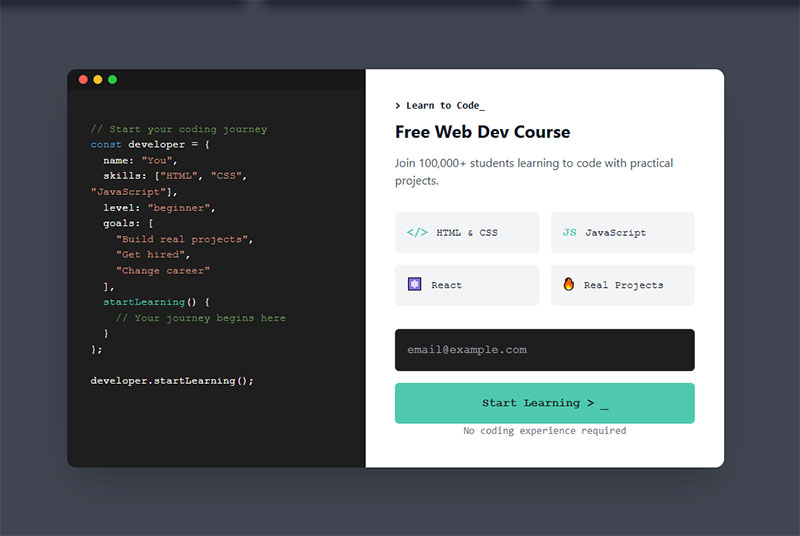
Webinars convert at rates that make most other formats jealous.
GetResponse data shows webinars achieved the highest conversion rate (70.2%) among all long-form video content types. ON24’s 2025 Webinar Benchmarks Report found that the average registration-to-attendee rate sits at 57%, with average engagement lasting 51 minutes per session.
That’s 51 minutes of someone’s attention. No blog post or ebook gets that kind of time.
Live Webinars vs. Pre-Recorded
Live webinars build urgency. People register because the event has a date and time. The scarcity is built in. 73% of B2B marketers consider webinars their best source for high-quality leads, according to ON24.
Evergreen (pre-recorded) webinars trade that urgency for consistency. You record once, set up an automated funnel, and the webinar runs on a schedule without you being there. Platforms like Demio and WebinarJam handle this well.
Live works better for high-ticket offers where the Q&A builds trust. Evergreen works better for lead generation at scale, especially if you’re pairing it with a webinar registration form that feeds directly into your email marketing automation.
Evergreen Webinar Funnels That Run on Autopilot
The basic structure looks like this:
- Registration page with a countdown to the “next session”
- Automated reminder emails before the session starts
- Pre-recorded video that plays at the scheduled time
- Follow-up sequence with a replay link and call to action
ON24 data from 2024 shows that 45% of webinar attendees now join on-demand rather than live. That number keeps climbing. People want the content on their schedule, not yours.
Amy Porterfield built much of her business around evergreen webinar funnels for her course launches. The model works especially well for lead generation for coaches and course creators who sell programs in the $500-$2,000 range.
Discount, Trial, and Access-Based Lead Magnets
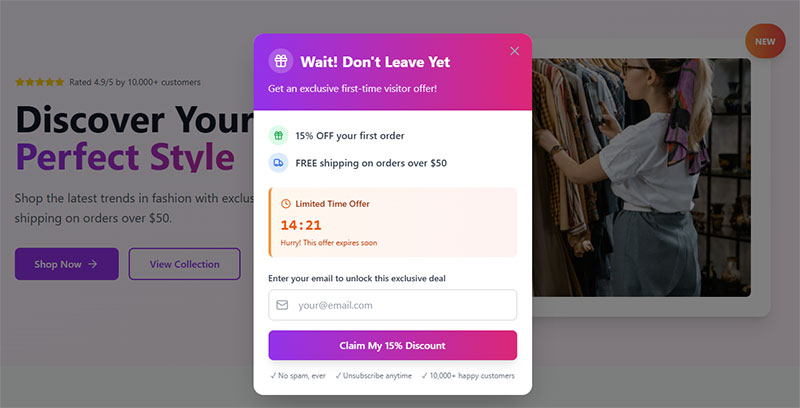
Sometimes the best lead magnet isn’t educational at all. It’s transactional.
Discount codes, free trials, and early access offers trade a direct financial incentive for an email address. They work best when the person is already close to buying and just needs a nudge.
Discount Code Lead Magnets
Getsitecontrol research found that email popup forms with a lead magnet attached converted at 7.73% on mobile, compared to 3.83% without one. That’s roughly double the performance just from adding a discount offer to the popup.
Gymshark, ASOS, and most major ecommerce brands use this approach. First-time visitors get a popup offering 10-15% off in exchange for an email. Simple, effective, and proven.
One watch-out though. Discount-driven subscribers tend to have lower lifetime value. They came for the deal, not for your brand. If you’re relying entirely on discount magnets, you’ll build a list of bargain hunters.
Free Trial and Freemium Lead Magnets

The SaaS playbook: Slack, Notion, Canva, and most modern software companies use free tiers or time-limited trials as their primary lead generation tool. The product itself becomes the lead magnet.
This model works because people who use a product for 14 days are far more invested than someone who downloaded a PDF. The friction to cancel is higher than the friction to buy.
Companies focused on lead generation for SaaS almost always test some version of free trial vs. freemium vs. demo request. Each attracts a different type of lead at a different stage.
Early Access and Waitlist Lead Magnets
Scarcity works. “Join the waitlist” creates anticipation and collects emails before you even have something to sell.
Product Hunt launches, beta access signups, and “founding member” invitations all fall into this category. The perceived exclusivity makes people more willing to hand over their contact info.
This approach pairs well with a clean subscription form that keeps fields minimal. Name and email. That’s it. Every extra field you add drops your conversion rate. Sleeknote research shows conversions drop from 4.41% to 2.90% when going from one input field to two.
How to Choose the Right Lead Magnet for Your Audience
There’s no single best lead magnet. The right choice depends entirely on who you’re trying to reach, what you sell, and where your traffic comes from.
Picking the wrong format wastes time and ad spend. A quiz won’t help a B2B enterprise audience that wants data. An ebook won’t convert a mobile-first consumer audience that wants a quick answer.
Lead Magnet Ideas by Business Type
If you’re a local business generating leads, a simple checklist or free consultation offer probably beats a complicated quiz funnel. Match complexity to your audience’s patience.
Matching Lead Magnets to Awareness Stages
Cold traffic (doesn’t know you): Low-commitment formats win here. Checklists, cheat sheets, quizzes. Anything that delivers value fast with minimal friction.
Warm traffic (knows you, considering options): Case studies, comparison guides, webinars. These formats work because the person already trusts you enough to invest more time.
Hot traffic (ready to buy): Free trials, discount codes, consultations. The lead magnet here is basically a stepping stone to the sale. Don’t overthink it.
HubSpot data shows that 51% of marketers use social media to drive traffic to landing pages, followed by 44% using email. The traffic source matters because a subscriber from Instagram has different expectations than one from a Google search. Test different magnets for different channels.
Testing and Iterating
Start with one lead magnet. Don’t try to launch five at once.
Build a clean lead capture form, drive traffic to it, and measure your conversion rate against conversion rate benchmarks for your industry. If you’re below average, tweak the offer before tweaking the page design.
Unbounce and Leadpages both support A/B testing on landing pages. But honestly, the biggest lever is usually the lead magnet itself, not the button color. A better offer beats a better design almost every time.
Once your first magnet is converting well, add a second one targeting a different audience segment or funnel stage. Build from there. The businesses that do this well don’t have one lead magnet. They have a system of them, each matched to a specific buyer at a specific point in their journey.
FAQ on Lead Magnet Ideas
What is a lead magnet?
A lead magnet is a free resource offered in exchange for someone’s email address. Common formats include checklists, templates, quizzes, and ebooks. The goal is turning website visitors into subscribers you can nurture through email marketing.
What makes a good lead magnet?
It solves one specific problem fast. The best opt-in offers deliver value within minutes, not days. Alignment matters too. Your freebie should attract the exact audience that would eventually buy your paid product or service.
What are the highest converting lead magnet formats?
Quizzes, checklists, and interactive calculators consistently outperform other formats. GetResponse data shows short-form content like cheat sheets and toolkits converts better than long-form guides for most audiences.
How do I create a lead magnet without design skills?
Canva, Google Docs, and Notion all work well for building templates and checklists without a designer. For quizzes, platforms like Typeform and Interact handle both the design and the email integration for you.
Do lead magnets work for ecommerce?
Yes. Discount codes, product recommendation quizzes, and early access offers perform well in ecommerce. Brands like Gymshark and ASOS use popup forms with percentage-off codes to capture first-time visitor emails at scale.
How long should a lead magnet be?
As short as possible while still delivering real value. One-page checklists and cheat sheets often outperform 30-page ebooks. If your audience can get a quick win in under five minutes, that’s the sweet spot.
Can I use a webinar as a lead magnet?
Absolutely. Webinars are one of the strongest lead generation formats, especially for B2B. You can run them live for urgency or set up evergreen replays using platforms like Demio or WebinarJam to collect leads on autopilot.
How do I deliver a lead magnet after someone signs up?
Most email platforms like ConvertKit, Mailchimp, and ActiveCampaign send the download link automatically after form submission. You can also redirect subscribers to a thank-you page with the download link displayed directly.
How many lead magnets should I have?
Start with one strong lead magnet matched to your core audience. Once it converts well, add a second one targeting a different segment or funnel stage. Quality beats quantity here. Most businesses do fine with two or three.
How do I know if my lead magnet is working?
Track your conversion rate on the landing page or popup. Anything above 20% is solid for most industries. Below 10% means the offer, the form design, or the traffic source needs work.
Conclusion
The best lead magnet ideas share one trait. They give your audience a quick, specific win that connects directly to what you sell.
Whether you build a quiz funnel in Typeform, a swipe file in Google Docs, or an ROI calculator through Outgrow, the format matters less than the fit. Match the offer to your buyer’s awareness stage and your business model.
Start with one lead magnet. Set up a clean landing page, connect it to your email platform, and track your conversion rate weekly. If it’s working, build a second one for a different audience segment.
Don’t overthink it. A one-page checklist that gets downloaded 500 times beats a polished ebook that sits untouched. Test, measure, adjust. That’s the whole game.
The tools are accessible. ConvertKit, Canva, ActiveCampaign, and HubSpot make it possible to go from idea to live opt-in form in a single afternoon. The only thing left is picking the right idea and shipping it.