









A new client doesn’t sign with an accounting firm because a landing page convinced them. They sign because someone they trust vouched for the firm, or because the firm showed…
Table of contents
Agents chase two kinds of contact info: people who might buy and people who might sell, both before they’ve signed anything with anyone. That’s real estate lead generation in practice, whether the source is a home valuation form, a portal ad, or a stranger’s number picked up cold.
Agents, brokerages, and the paid portals that resell buyer traffic to them all run this process, and how well it works depends heavily on the local market, meaning the inventory and price point of wherever the agent actually works. MLS access and Fair Housing advertising rules also shape what a capture form or ad campaign is even allowed to say before a lead reaches a human agent.
National Association of REALTORS® membership stood at 1,438,569 as of its 2026 Member Profile. Put another way, every buyer or seller lead in the country gets split among more than 1.4 million competing agents.
What Is Real Estate Lead Generation?
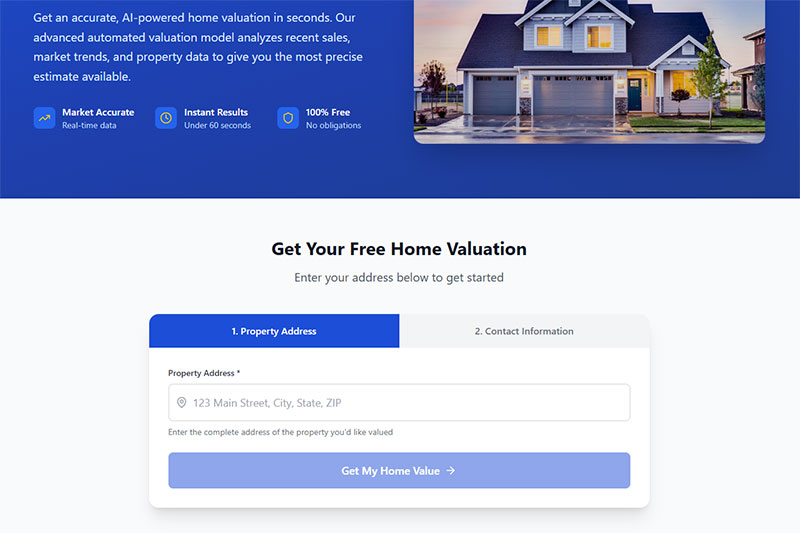
Contact info is the product here. An agent or brokerage needs a name, a phone number, an email, something that lets them start a conversation with someone who might buy or sell, and they need it before either side has signed anything.
The broader concept behind capturing prospect details works the same way across most industries, but property transactions add rules that other sectors never have to deal with.
MLS data and IDX syndication decide which listings a lead is even allowed to see. Fair Housing Act language limits how an ad can target people or, just as often, quietly exclude them. And a single deal can take months to close, not minutes, which changes how patient the whole follow-up process has to be.
Redfin built its entire growth model around owning its lead pipeline instead of buying it from a third-party portal.
Eighty-eight percent of buyers still purchased their home through an agent or broker in the past year, according to the National Association of REALTORS® (NAR, 2025).
That number matters here. It confirms the agent relationship still sits at the center of the transaction, no matter how many listing sites a buyer scrolls through first.
How Does Real Estate Lead Generation Work?
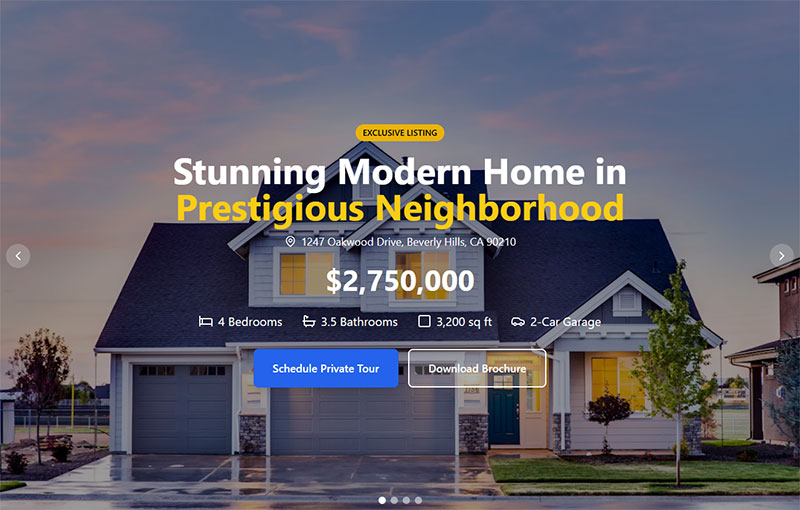
Real estate lead generation works as a pipeline, not a single action. It moves a name from stranger to signed client, and each stage depends on the one before it.
A broken link anywhere in the chain (a slow reply, a form nobody bothered to test) stalls the whole process.
It runs through five rough stages, though calling them stages makes it sound cleaner than it actually is. Some source brings in a name and a way to reach them. A form, a call, or a landing page catches that contact. Then comes qualification, the agent checking how real the intent is, along with timeline and budget. After that it’s nurture, the follow-up calls and emails that keep a lead from going cold. And eventually, if all of that worked, the lead turns into an actual listing appointment or a buyer consultation.
Most agents rely on web forms placed on their IDX pages to handle the capture step, since a phone cannot ring twenty-four hours a day on its own.
Compass built its own internal routing system to move a captured lead to the right agent within minutes of a form submission.
The sequence is sometimes mapped out as a funnel with a wide top and a narrow bottom, though in practice the drop-off between qualification and nurture is where most agents lose the most ground.
What Are the Main Real Estate Lead Generation Channels?
Agents pull leads from a handful of channel types. Each behaves differently on cost, speed, and how good the leads actually turn out to be.
| Channel | Type | Cost Level | Best Fit |
|---|---|---|---|
| IDX website and organic search | Inbound | Low ongoing cost | Agents building a long-term brand |
| Paid portal ads | Inbound | Pay-per-lead or ad spend | Agents wanting fast, scalable volume |
| Geographic farming | Outbound | Moderate, mostly time and mailers | Agents targeting one neighborhood |
| Referral network | Relationship | Free, built on service quality | Agents with an established client base |
These four types map onto the wider menu found in most general lead generation strategy breakdowns, adapted here for property transactions.
Grouping them as inbound versus outbound is the simplest way to compare effort against speed.
Inbound Channels
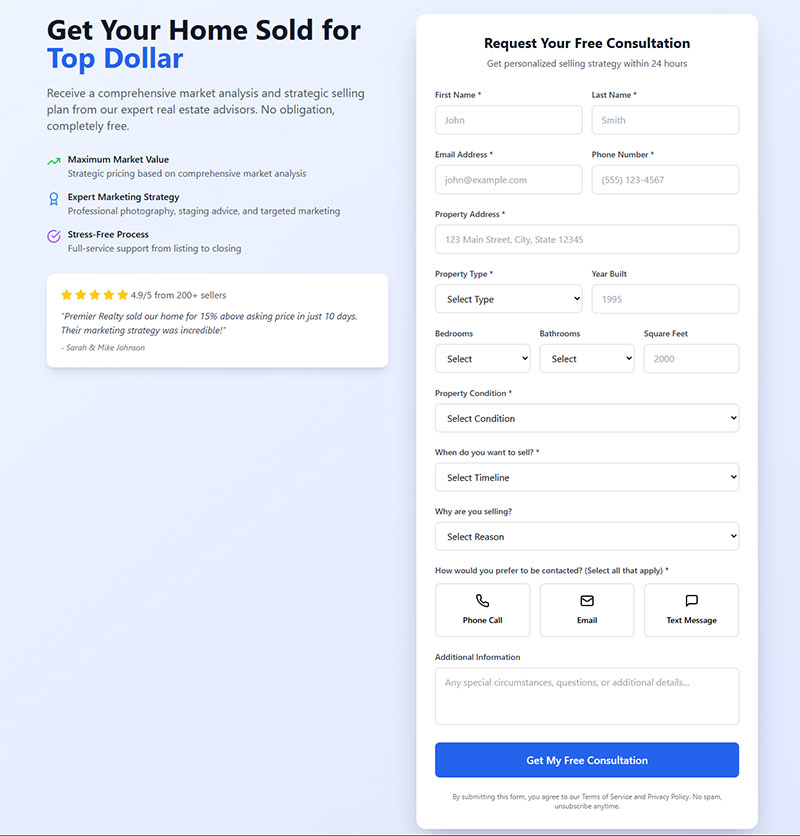
Inbound channels wait for the prospect to make first contact, usually through a form, a search click, or a paid ad.
Common inbound sources include IDX websites with home valuation tools, paid portal ads on Zillow and Realtor.com, search engine content plus paid search, and Facebook or Instagram lead ads.
These sources need a working capture form more than a good script. Nobody picks up a phone before they have even said hello.
Outbound Channels
Outbound channels start the conversation before the prospect asks for one.
Forty-three percent of buyers found their agent through a referral, and sixty-six percent of sellers chose an agent they found through a referral or had worked with before, according to NAR’s 2025 Profile of Home Buyers and Sellers.
The main outbound methods are geographic farming in one zip code or subdivision, circle prospecting around a new listing, cold calling expired and FSBO leads, and direct mail postcards sent to a farmed area.
Brian Buffini built an entire referral-based coaching system on one idea: past clients, not strangers, are an agent’s cheapest source of new business.
Cold calling and texting also fall under TCPA rules, a compliance layer covered in more depth later in this piece.
Should an Agent Use Free or Paid Real Estate Lead Generation?
Free methods trade time for cost. Paid methods trade cost for speed and volume.
New agents with more hours than dollars usually lean free at first, then add paid channels once commission checks start covering ad spend.
On the free side that usually means sphere of influence and past-client outreach, geographic farming and open houses, organic social media content, and a downloadable buyer or seller guide offered in exchange for someone’s contact details.
That downloadable guide is a classic example of a lead magnet built specifically for property transactions, and it costs nothing but the time to write it.
Paid options run toward Zillow Premier Agent and Realtor.com ad placements, Facebook and Google ad campaigns, purchased expired listing and FSBO data, and full-service lead generation platforms like CINC or Ylopo.
HomeLight built a free-to-the-consumer, agent-funded referral model that sits between these two camps, charging agents only after a closing.
A solo agent without a big ad budget can still build a working capture system directly on a WordPress site, which keeps the free route from depending purely on luck.
How Much Do Real Estate Leads Cost?
Cost per lead varies more than most new agents expect, often by a factor of ten within the same city.
Zillow Premier Agent leads typically run $60 to $500 or more per lead depending on ZIP code competition (The Close, 2025). Purchased online leads convert at roughly 0.4% to 1.2% industry-wide, compared with roughly 2% to 5% for organic and referral leads (industry benchmarks, 2025).
Checking those numbers against conversion benchmarks from other industries helps an agent tell a slow month from a genuinely broken funnel.
Cost per lead is the wrong number to obsess over alone. Cost per closed transaction is what actually pays the mortgage.
An agent paying eighty dollars per lead at a one percent conversion rate needs roughly a hundred leads, around eight thousand dollars in spend, to close one deal.
Tracking the right metrics alongside cost per lead, like contact rate and appointment rate, turns a vague budget line into something manageable.
Which Real Estate Lead Generation Companies Are Worth Using?
The company an agent picks depends on budget, market, and whether exclusivity matters more than raw volume.
| Company | Lead Type | Exclusivity | Pricing Model |
|---|---|---|---|
| Zillow Premier Agent | Buyer and seller | Shared, multiple agents per ZIP | Pay-per-lead or Flex commission share |
| Realtor.com Connections Plus | Buyer | Shared | Monthly subscription |
| REDX | Expired listing and FSBO data | Data access only | Flat monthly fee |
| CINC | Buyer and seller | Exclusive | Subscription plus ad spend |
Pay-Per-Lead Platforms
Zillow Premier Agent is the biggest name here by sheer visitor volume. It sells access to buyer and seller traffic that’s already searching Zillow’s own site. Realtor.com runs a similar model through Connections Plus, tied to the official NAR-affiliated listing site, while Ylopo takes a different angle entirely, layering paid ads with AI-driven follow-up on top.
Agents give up exclusivity on most of these platforms. The same lead often lands in two or three other inboxes at once.
Data-Provider Platforms
Data-provider platforms sell a list, not a warm lead, leaving the entire outreach up to the agent.
REDX covers expired listing and FSBO contact data, plain and simple. Vulcan7 does something similar but pairs its expired-listing data with skip-traced phone numbers, which matters more than it sounds like it should when you’re the fifth agent calling that day. Espresso Agent runs a comparable expired and FSBO data feed.
A Mojo Dialer or similar power dialer usually pairs with these services. Manually dialing a purchased list one number at a time wastes the data’s shelf life.
Which CRM Tools Manage Real Estate Leads Best?
A real estate CRM needs to do more than store contact names. It needs to route a new lead to the right person, score how serious they actually are, and nudge someone when follow-up has gone quiet too long.
Social media produced the most quality leads for thirty-nine percent of agents in 2025, but a CRM still ranked as the top lead-generating tool for twenty-three percent, ahead of the local MLS at seventeen percent, per NAR’s 2025 Technology Survey.
| Tool | Best For | Standout Feature |
|---|---|---|
| kvCORE | Teams and brokerages | Bundled IDX site, CRM, and ad manager |
| Follow Up Boss | Solo agents and small teams | Simple pipeline with wide third-party integrations |
| BoomTown | Larger teams | Built-in lead routing and ISA support |
| LionDesk | Budget-conscious agents | Low-cost automation and video texting |
All-in-One Platforms
kvCORE bundles a website, CRM, and lead capture forms under one login, which is probably why brokerages default to it so often. BoomTown takes a different route, layering in an inside sales team that qualifies leads before an agent ever calls back. And then there’s Chime, which pairs its CRM with its own paid ad management, so budget and follow-up live in the same dashboard.
eXp Realty offered kvCORE as its default agent technology stack for years, but in July 2025 the brokerage moved to a “CRM of Choice” program, letting agents pick from BoldTrail (a rebuilt version of kvCORE), Cloze, or Lofty as part of their standard monthly fee.
Budget and Team CRMs
Smaller shops rarely need the full suite that a two-hundred-agent brokerage runs on.
Follow Up Boss keeps a clean pipeline view and connects to a wide range of other tools, though it doesn’t bundle a website. LionDesk keeps monthly cost down with basic automation and video texting. Zurple leans on behavior-based nurture, adjusting its messaging based on how a lead actually browses listings.
The right choice comes down to team size, and how much of the follow-up process an agent wants to automate versus handle personally.
How Do Real Estate Agents Nurture Leads Into Clients?
Nurturing is the stretch between a captured contact and a booked appointment, and it is where most leads actually die.
Speed decides more of this than script quality does. Lead Response Management research from MIT and InsideSales.com, based on an analysis of over a million sales leads, found that responding within five minutes makes an agent up to twenty-one times more likely to qualify that lead than waiting thirty minutes.
A typical sequence starts with an immediate acknowledgment by text or call within minutes of capture, moves into a short qualifying conversation about timeline, budget, and must-haves, settles into a scheduled cadence of calls, texts, and drip emails matched to how hot the lead actually is, and ends with a specific ask, a showing, a listing consultation, or a phone appointment, not a vague “let me know.”
Teams large enough to staff an inside sales agent often route every new lead straight to that ISA for the first call, freeing the listing agent to focus only on appointments already booked.
| Lead Temperature | Response Window | Weekly Touches |
|---|---|---|
| Hot (ready within 30 days) | Under 5 minutes | 3 to 5 |
| Warm (3 to 6 months out) | Same day | 1 to 2 |
| Cold (no clear timeline) | Within 48 hours | Monthly |
Good nurture templates for email and text save an agent from writing a new message at every stage for every lead.
Every message in that sequence needs one job. A clear call to action pointing at one specific next step works better than a vague “let me know if you have questions.”
What Compliance Rules Apply to Real Estate Lead Generation?
A handful of federal rules touch almost every lead generation channel an agent uses, and ignoring any one of them gets expensive fast.
| Rule | Restricts | Channel Affected |
|---|---|---|
| TCPA | Calls and texts to numbers on the Do Not Call Registry | Cold calling, SMS follow-up |
| CAN-SPAM Act | Unlabeled or non-opt-out commercial email | Drip email campaigns |
| Fair Housing Act | Ad targeting or language that excludes protected groups | Paid social and portal ads |
TCPA penalties run steep. Violations cost $500 to $1,500 per call or text, and each non-compliant contact counts as a separate violation.
Keller Williams agreed to pay $40 million in 2023 to settle a class action over prerecorded calls made to numbers on the national registry.
Coldwell Banker’s parent company, Realogy (now Anywhere Real Estate), reached a separate $20 million settlement, approved in 2025, over similar unsolicited-call claims tied to its franchise network.
Fair Housing rules apply just as hard to a Facebook ad as to a printed flyer. Excluding zip codes or demographics from an ad audience can violate the law even without a single explicit word about who should not apply.
CAN-SPAM adds its own baseline. Every marketing email needs a working opt-out link and an honest subject line. That part isn’t optional.
How Does Lead Generation Differ for Buyer and Seller Clients?
Buyer leads and seller leads need almost opposite marketing, even though both start with the same contact form.
Median buyer search time ran 10 weeks in the past year, while the typical seller’s home spent just 4 weeks on the market, according to NAR’s 2025 Profile of Home Buyers and Sellers.
That gap alone explains why a buyer nurture sequence runs longer than a seller one.
Buyer Lead Generation
Buyer leads usually start further from a decision and need more education before they act.
IDX search tools and saved-search alerts are what keep a buyer engaged over months, since nobody buys a house after one email. Pre-approval status is probably the single biggest qualifying question an agent can ask early. Showings, not phone calls, are what actually move the relationship forward from there.
Repeat visits to the same listing, mortgage calculator use, and saved searches clustered in one price band are all decent signals that a buyer lead is warming up.
Seller Lead Generation
Sellers don’t need education. They need a number.
A home valuation estimate, delivered fast and looking credible, opens more seller conversations than any amount of educational content ever will.
Comparative market analysis reports, expired listing outreach, and life-event targeting (a new baby, a job move, a downsizing parent) all circle back to the same question sellers actually care about: what is this place worth right now.
Seller leads generally carry a higher commission value per closed deal, which is why data-provider platforms built entirely around expired and FSBO sellers still find a market.
When Does Real Estate Lead Generation Not Work?
Lead generation fails under a few specific, predictable conditions, and no tool or platform fixes any of them.
It breaks down when local inventory is too tight for the leads an agent is already paying for, when nobody follows up fast enough to matter, when the lead source and the local price point simply don’t match, or when a shared-lead platform floods one small market with too many competing agents chasing the same names.
National existing-home inventory sat at 4.6 months of supply through the middle of 2026, essentially flat for a full year, according to data reported by The Close.
Paid buyer leads make little sense in a market that tight. There simply are not enough listings to show the buyers an agent is already paying to reach.
Offerpad scaled back its home-buying volume when higher rates cooled demand, a plain reminder that even data-driven, algorithm-run models pull back once a market turns.
Geographic farming also fails quietly in low-turnover neighborhoods. A subdivision where residents stay put for fifteen years returns almost nothing on years of consistent mailers.
Circle prospecting around a new listing rarely works in a market already saturated with three or four other agents doing the same thing in the same zip code the same week.
FAQ on Lead Generation For Real Estate
What Is Geographic Farming In Real Estate?
Pick one neighborhood or zip code and market to it constantly, mailers, local updates, the same name showing up again and again until residents just know it. That’s geographic farming. It builds sphere of influence over months and works best where turnover and home values stay steady.
Is Zillow Premier Agent Worth The Cost?
Worth depends on volume and follow-up speed. Agents who answer within minutes and have spare budget often recoup the spend through closed deals. Agents without fast response systems typically see wasted spend, since shared leads reach competitors first.
What Is The Best Real Estate Lead Generation Software For A Solo Agent?
A solo agent rarely needs a full brokerage suite. Follow Up Boss covers pipeline tracking and integrations without a bundled website or ISA layer, keeping monthly cost low while still routing every lead into one place instead of scattered inboxes.
Do Real Estate Teams Need A Different Approach Than Solo Agents?
Teams add layers a solo agent just doesn’t need. There’s usually a dedicated inside sales agent handling first response, some kind of lead routing rules sending leads to the right zip code or price band, and a shared CRM dashboard everyone can see. Solo agents skip most of that and rely on personal follow-up with a tighter, self-managed pipeline instead.
Is Real Estate Lead Generation Worth It For A Brand-New Agent?
New agents usually see the fastest return from free channels: sphere of influence, open houses, and referrals from family and friends. Paid platforms make more sense once commission checks arrive, since cost per lead only pays off with cash flow behind it.
Can Real Estate Agents Generate Leads Without Cold Calling?
Yes. Inbound channels like an IDX website, paid portal ads, and organic content never require a phone script. Referrals and past-client outreach also skip cold calling entirely, relying on relationship strength instead of interrupting a stranger’s day.
How Long Does It Take To See Results From Real Estate Lead Generation?
Paid channels can produce a first conversation within days, though a closed deal usually takes 60 to 90 days given typical buyer search timelines. Free, relationship-driven channels take longer to build but tend to convert at a higher rate once established.
How Many Leads Does An Agent Need To Close One Deal?
Raw lead count matters less than qualification. Most captured contacts are not ready to transact, so the real question is how many pass qualification, not how many forms get submitted. A strong nurture process narrows that gap fastest.
What Should You Fix First in Real Estate Lead Generation?
Real estate lead generation improves fastest when an agent fixes response time before adding budget, since a slow first reply wastes every dollar already spent on any channel or platform.
Fixing this starts with cutting response time down to minutes, not hours. After that, shift budget toward referral and organic sources before adding more paid volume, and lock in a real nurture cadence before scaling anything further.
Referral-driven acquisition and speed-driven paid conversion pull an agent toward opposite skill sets, one rewarding patience, the other rewarding infrastructure and instant reply.
Building both at full strength spreads a limited budget thin, so most agents pick one as the primary engine and keep the other as a supplement.
The next step is designing a lead capture form built to convert on the first visit, since sequencing alone cannot save a lead the form itself loses before qualification starts.