






Over 62 million U.S. adults had a mental illness in 2024, according to SAMHSA. Nearly half received no treatment. The demand for therapy is massive, but most private practices still…
Table of Contents
Empty treadmills don’t pay bills. Fitness centers compete against Planet Fitness, Anytime Fitness, and boutique studios on every corner. Lead generation for gyms separates the survivors from the closures.
The fitness industry lives on recurring membership revenue. No pipeline of new prospects? Even gyms with premium equipment and experienced trainers hit a wall.
This guide breaks down how gym lead generation actually works. The channels that deliver results, tools that automate the grunt work, metrics worth tracking.
You’ll see how to capture fitness leads through Facebook Ads and Google My Business. Build lead magnets that actually convert. Skip the mistakes that burn through marketing budget.
CrossFit box, yoga studio, 24-hour health club. These strategies apply across the board.
What is Lead Generation for Gyms
Lead generation for gyms means attracting potential members and collecting their contact information through marketing. Fitness centers use digital ads, referral programs, free trials, local outreach. All building toward a pipeline of prospects.
The goal? Turn strangers into members who pay monthly fees.
Here’s where gyms differ from other industries: location matters more. Most people pick facilities within 15-20 minutes of home or work. Local marketing drives everything.
Google My Business, Facebook Ads, Instagram handle the bulk of fitness leads today.
Software like Mindbody, GymMaster, ClassPass automates the capture and nurturing side.
No steady flow of new prospects means declining membership numbers. Even the best-equipped health club can’t escape that math.
How Does Lead Generation Work for Fitness Centers
What Steps Turn a Prospect into a Gym Member
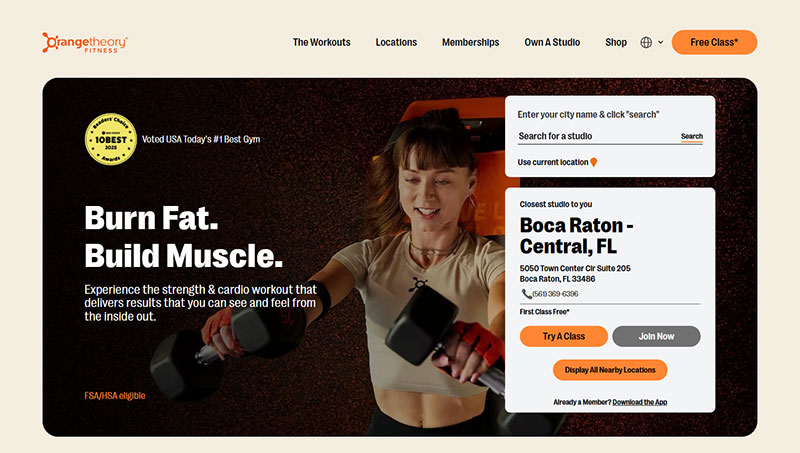
The lead generation funnel for gyms follows a predictable path: awareness, interest, consideration, conversion.
First, someone sees your ad on TikTok or finds you through a “gyms near me” search on Google.
They click through to your website, maybe grab a free 7-day pass, and enter their email address through a lead capture form.
Your gym membership sales team follows up within 24 hours. A tour gets scheduled. The prospect tries a workout class or personal training session.
Research from Keepme shows the average cost per lead via Google Ads in the fitness industry is $61.56, with a click-to-lead conversion rate of 7.4%. You’re paying for approximately 13 clicks to get a single form submission.
If the experience matches expectations, they sign up for a monthly membership.
Speed matters. Vodify data reveals that 48% of leads who attend a class convert to members, compared to just 24% who don’t attend. More critical: 70% of leads who convert attend their first class within 5 days of becoming a lead, and 85% attend within 12 days.
The entire process takes anywhere from 3 days to 3 weeks depending on how ready the person is to commit.
Where Do Gym Leads Come From
According to the 2025 U.S. Fitness Industry Report, 77 million Americans now hold gym memberships, representing 25% of the population. This creates opportunities across multiple channels:
Digital Channels (40-60% of leads)
- Paid social ads on Facebook, Instagram, and TikTok
- Google Ads targeting local fitness-related searches
- Organic traffic from local SEO and Google My Business
Referral Programs (20-30% of leads)
GymMaster research shows that peer recommendations influence over 90% of B2B purchases, demonstrating the impact of referral marketing. Most successful fitness centers build structured referral programs that reward existing members.
Community & Organic Discovery (remaining leads)
- Walk-ins from signage and location visibility
- Community events and local business partnerships
The Health & Fitness Association reports gym visits increased 3.5% in the first half of 2025, with budget gyms (Planet Fitness, Crunch, EōS Fitness) seeing a 3.8% increase in total visits. These facilities averaged 193,000 visits per location.
What Makes a Qualified Lead Different from an Unqualified Lead
A qualified gym lead has both intent and ability to purchase a membership.
Qualified leads have:
- Location proximity (live or work near your gym)
- Financial capacity for your pricing tier
- Specific fitness goal driving their search
- Active engagement with your content or offers
Unqualified leads are:
- Just browsing with no purchase timeline
- Located too far from your facility
- Downloaded free content with zero membership intention
- Price shopping without budget to join
Lead scoring helps separate the two. Someone who books a tour after requesting a free trial? Highly qualified.
Industry data from Wodify shows that only 25% of gyms answer their public telephone number when called during business hours. This means 3 out of every 4 people expressing interest don’t talk to someone, likely calling another gym instead.
Someone who bounced after 10 seconds on your pricing page? Not worth the follow-up call.
Follow-up speed determines conversion success. Studies from InsideSales reveal that conversion rates jump 8X if contact is attempted in the first 5 minutes versus waiting between 5 minutes and 24 hours. Velocify research shows responding within 1 minute can boost conversions by 391%.
The U.S. gym industry generated approximately $45-46 billion in revenues in 2025, with projections to climb into the mid-$50 billions range by 2030. With over 90,000 fitness clubs operating in the U.S., competition is mounting. Your ability to quickly identify and respond to qualified leads can be the difference between membership growth and stagnation.
What Types of Lead Generation Methods Work for Gyms
Digital Lead Generation Channels
How Do Social Media Ads Generate Gym Leads

Facebook Ads Manager and Meta Business Suite let you target people within a specific radius who’ve shown interest in fitness, weight loss, or athletic activities.
A typical gym social media ad offers a free week pass or discounted first month in exchange for contact information.
Facebook reaches over 2 billion active users with targeting options.
According to 2025 data, Facebook delivers an 8.95% average conversion rate for paid ads.
CPC ranges from $0.51-$0.83 across industries, and 29% of marketers report Facebook gave them the best ROI compared to other social platforms.
Instagram works best for boutique fitness studios and yoga centers where visual content sells the experience.
The platform excels at product discovery, with 83% of users finding new products through Instagram.
Fitness and health content performs moderately with 0.40-1.2% engagement rates.
What Role Does Local SEO Play in Gym Lead Generation
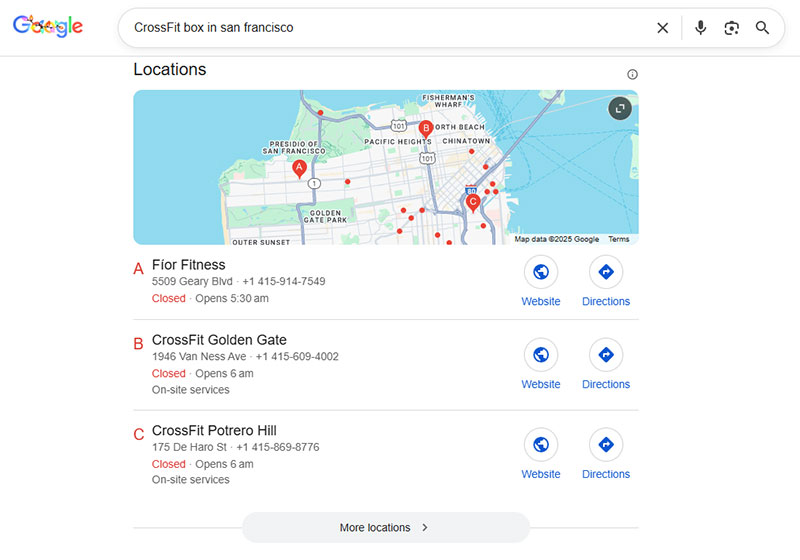
When someone searches “gym near me” or “CrossFit box in [city name],” Google pulls results from local listings.
The numbers tell the story:
- 46% of all Google searches have local intent
- 1.5 billion “near me” searches happen monthly
- 76% of people who search for local businesses visit within 24 hours
- 80% of local searches convert into customers
Optimizing your Google My Business profile with photos, reviews, and accurate hours puts your facility in front of high-intent searchers.
Google Business Profile signals account for 32% of all map pack ranking factors.
A verified profile gets around 200 clicks monthly. Research shows customers are 2.7 times more likely to trust a business with a complete profile.
Location drives retention.
50% of gym members cite location as their reason for staying, followed by positive staff interactions (45%) and quality equipment (38%).
Yelp reviews and consistent NAP (name, address, phone) information across directories also boost local visibility.
88% of consumers who conduct a local search on their smartphone visit or call a store within a day.
How Does Email Marketing Capture Fitness Leads
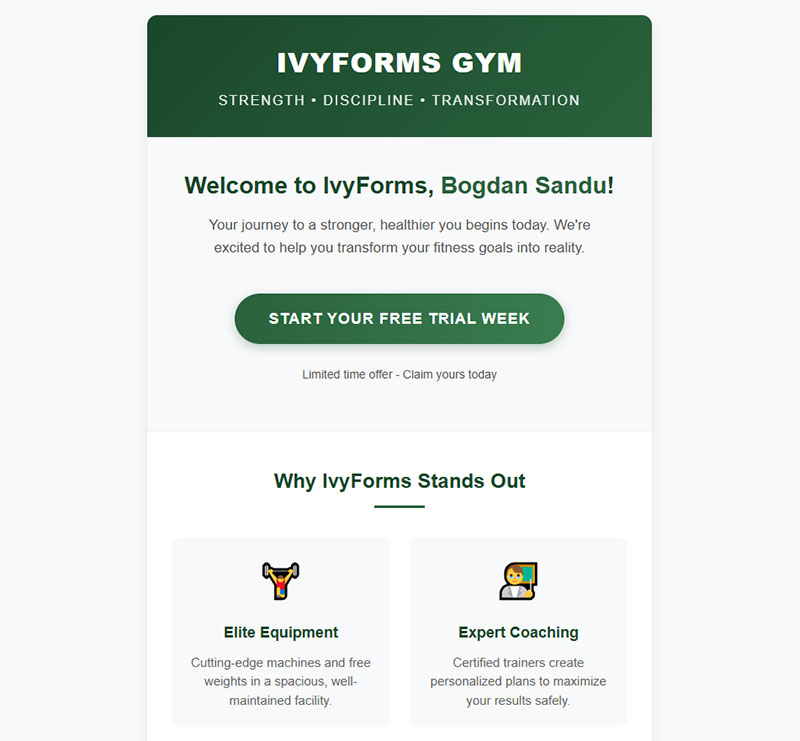
Email campaigns nurture prospects who aren’t ready to commit immediately.
Collect addresses through website forms, free trial signups, and downloadable fitness guides.
Then send a sequence: welcome email, gym tour invitation, member success story, limited-time offer.
Health and fitness email open rates average 47.81% according to 2025 benchmarks from MailerLite, with click rates of 1.45%.
Welcome emails achieve open rates of 91.43%, significantly higher than regular promotional emails.
Tools like Mailchimp and HubSpot automate this entire workflow.
Email marketing generates between $36-$40 for every dollar spent, translating to a 3,600-4,000% ROI.
Traditional Lead Generation Channels
How Do Referral Programs Bring New Members
Referral programs turn your current members into a sales team.
Research shows 21% of martial arts school members found their current gym through a referral.
However, 41% decided to visit their gym for the first time based on a referral.
That means an additional 20% sought opinions from people they know before trying it out.
Effective referral incentives:
- Free month for the referrer
- Waived enrollment fee for the friend
- Non-cash rewards like merchandise or upgraded membership tiers (often outperform discounts)
Data from INVESP shows referred customers have a 37% higher retention rate and are 4 times more likely to refer others.
This creates exponential growth.
65% of all new business comes from referrals, and peer recommendations influence over 90% of purchase decisions.
Planet Fitness and Anytime Fitness built massive growth on referral mechanics.
What Community Events Generate Gym Leads
Host free outdoor boot camps, charity 5K runs, or nutrition workshops at your facility.
Collect contact information at check-in with a simple registration form.
Community events position your gym as a local fitness authority while filling your pipeline with warm prospects.
The global fitness market is worth $257 billion, with the U.S. generating approximately $35 billion in revenues.
How Do Local Business Partnerships Create Leads
Partner with complementary businesses: health food stores, physical therapy clinics, athletic apparel shops, corporate offices.
Cross-promote through employee wellness programs, joint discounts, and co-hosted events.
The World Health Organization recommends actions to protect and promote mental health at work, making corporate wellness programs more valuable than ever.
Corporate partnerships with local companies can deliver 10-50 new members from a single HR relationship.
The health and fitness market is valued at $101.45 billion in 2024 and expected to grow over 9% annually to reach $157.6 billion by 2029.
What is a Lead Magnet for Gyms
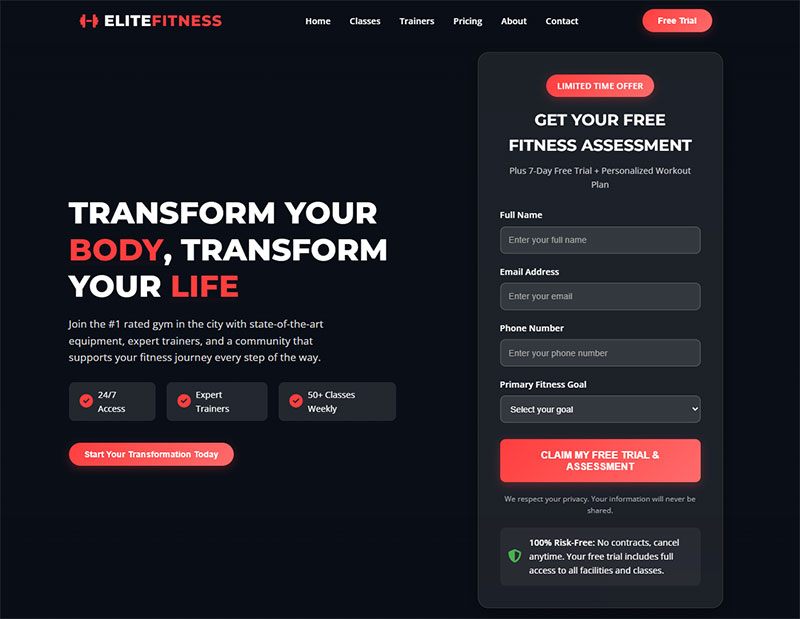
A lead magnet is something valuable you give away free in exchange for contact information.
For gyms, this means free trials, downloadable workout plans, nutrition guides, or fitness assessments.
The best gym lead magnets solve an immediate problem: “I don’t know how to start working out” or “I need a meal plan that fits my schedule.”
What Types of Lead Magnets Attract Gym Prospects
Free Trial Memberships
The classic gym lead magnet. Offer 3-7 days of full access with no commitment.
Trials of 7 days or less yield 40.4% conversion rates according to Recurly data, while trials longer than 61 days drop to 30.6%.
Capture name, email, and phone number through a simple signup form.
Follow up before the trial ends.
Downloadable Fitness Guides and Meal Plans
Create PDF resources: “30-Day Beginner Workout Plan” or “Muscle-Building Meal Prep Guide.”
Gate them behind an email signup using gated content strategies.
Lead magnet landing pages convert at around 18% on average according to 2025 data. Short-form written content like checklists and samples see higher conversion rates, with 58.6% of marketers reporting better results compared to long-form guides.
These prospects aren’t ready to join today but might be in 30-60 days.
Fitness Quizzes and Assessments
Interactive quizzes like “What’s Your Fitness Personality?” or “Which Workout Style Fits You?” engage visitors and collect data.
Using quizzes for lead capture works because people love personalized results.
Interactive content converts 70% better than passive content. Quiz lead magnets achieve 20-40% conversion rates, with best cases reaching 60%.
The quiz answers also help your sales team tailor their follow-up pitch.
Free Workout Sessions or Classes
Invite prospects to a specific class: Saturday morning yoga, Tuesday evening spin, Thursday CrossFit intro.
Collect their info through an event registration form when they RSVP.
In-person experiences convert at higher rates than digital-only touchpoints.
Remember, 48% of leads who attend a class convert to members according to Vodify data, compared to just 24% who don’t attend.
How to Create a High-Converting Gym Lead Magnet
The best fitness lead magnets share three traits: specific promise, immediate value, low friction.
Be specific.
“Free gym access” is vague.
“7-Day Full Gym Access + One Personal Training Session” is specific.
Deliver value instantly.
Don’t make people wait 24 hours for a PDF they requested.
Adding a lead magnet to popup forms raises mobile conversion from 3.8% to 7.7%, and desktop from 1.8% to 4.7%. That’s a 100-155% lift according to industry data.
Keep forms short.
Name, email, phone. That’s it for initial capture.
You can choose the right form fields to qualify leads without creating friction.
Research shows 50% of marketers report seeing higher conversion rates when using lead magnets. The key is matching the magnet to the prospect’s immediate need.
Test different lead magnets quarterly.
What worked last January might flop in June when motivation cycles shift.
AI-powered solutions have increased inbound leads by 99% after six months according to HubSpot’s 2025 State of Marketing report, with website traffic jumping 143% after a year.
What Tools and Software Help Gyms Generate Leads
The right tech stack automates repetitive tasks and prevents leads from slipping through cracks.
CRM Systems for Fitness Centers
| CRM System | Primary Use Case | Key Fitness Features | Business Model |
|---|---|---|---|
| Mindbody | Industry-leading platform for studios, gyms, wellness centers with 20 years of market presence and marketplace integration | Class scheduling (8.3 rating), student database (9.0 rating), waitlist automation, retail POS, online marketplace, mobile app with 24/7 booking | Starts at $159/month. Best for large facilities and multi-location businesses |
| Zen Planner | Boutique fitness specialist for martial arts, CrossFit, yoga studios with highest customer support rating (8.7/10) and 99% user satisfaction | Automated collections (8.8 rating), belt rank tracking, member portal (8.0 rating), attendance monitoring, recurring billing automation, progress tracking | User-based pricing. Ideal for small to mid-sized boutique studios |
| Glofox | Mobile-first platform for boutique studios emphasizing member experience with integrated CRM for faster onboarding | Booking system, branded member app, retention analytics, push notifications, automated email campaigns, access control, community features | Tiered pricing (Silver, Gold, Platinum). Best for yoga, Pilates, barre studios |
| Exercise.com | Comprehensive platform for personal trainers and fitness professionals with workout programming and custom branded app builder | Workout builder with exercise library, progress tracking, nutrition logging, client assessments, video hosting, integrations with Stripe, Mailchimp, MyFitnessPal, Fitbit | Custom pricing. Best for trainers and programming-focused businesses |
| HubSpot CRM | Scalable growth platform with proven fitness industry results. Gold’s Gym SoCal achieved best six months of sales after implementation | Marketing automation, lead nurturing, email tracking, sales pipeline tracking, 1,000+ integrations, workflow automation with Breeze AI, reporting dashboards | Free tier available, paid from $25/user. Best for growth-focused gyms and chains |
Mindbody dominates the fitness CRM space with scheduling, payments, and lead tracking in one platform.
The gym management software market was valued at $1.2 billion in 2024 and is forecasted to reach $3.5 billion by 2033, advancing at a CAGR of 15.2%.
GymMaster offers similar features at lower price points for independent gyms.
Trainerize focuses on personal trainers who need client management alongside lead capture.
The global fitness software market size reached $13.4 billion in 2025 and will become $43.4 billion by 2033, growing at 15.8% CAGR.
CRM systems can boost member retention by up to 27% according to industry statistics.
Marketing Automation Platforms
| Platform | Gym-Specific Features | Best For | Starting Price |
|---|---|---|---|
| Mindbody Marketing Automation | Built-in class booking integration, member retention campaigns, automated check-in reminders, fitness studio scheduling sync | Fitness studios requiring scheduling, class management, and member booking automation within a single platform | $139/month (Starter) |
| HubSpot | CRM with membership lifecycle tracking, lead nurturing workflows, form builders for trial signups, landing page creation for promotions | Gyms scaling operations with complex sales funnels, multiple locations, or extensive lead generation needs | $20/month (Starter), $890/month (Professional with automation) |
| ActiveCampaign | Behavioral triggers based on gym visits, membership renewal sequences, goal-based automation, segmentation by attendance frequency | Mid-sized gyms needing advanced segmentation for member engagement, reactivation campaigns, and behavioral email triggers | $29/month (Plus with 1,000 contacts) |
| Klaviyo | SMS marketing for class reminders, merchandise promotion flows, supplement upsell sequences, post-workout product recommendations | Gyms with retail operations (apparel, supplements, equipment) requiring e-commerce integration and product marketing automation | Free up to 250 contacts, then $20/month |
| Mailchimp | Basic email templates for newsletters, event invitations, simple membership drip campaigns, mobile app for on-the-go updates | Small gyms or independent trainers starting with email marketing, limited budget, basic newsletter and promotion needs | Free up to 500 contacts, then $13/month |
Keap (formerly Infusionsoft) handles email sequences, lead scoring, and follow-up reminders automatically.
HubSpot offers a free CRM tier that works for smaller fitness businesses just getting started.
Mailchimp remains the simplest option for gyms that only need email marketing without complex automation.
AI-powered solutions for lead generation increased leads by 99% after six months according to HubSpot’s 2025 State of Marketing report.
Website traffic jumped 143% after a year of implementation.
Landing Page Builders
| Platform | Best For Gym Context | Membership Conversion Features | Starting Price (Monthly) |
|---|---|---|---|
| Unbounce | A/B testing promotional campaigns for class sign-ups, membership trials, and personal training packages | Dynamic text replacement for local gym searches, AI-powered optimization, sticky bars for limited-time offers | $99 |
| Leadpages | Quick deployment of free trial landing pages with integrated payment processing for membership enrollment | Built-in alert bars, countdown timers for membership deadlines, native Stripe integration, lead magnet delivery for workout plans | $49 |
| Instapage | Enterprise gyms running multiple location campaigns with personalized landing pages per branch or trainer | Heatmaps for form optimization, advanced analytics tracking user interaction with class schedules, collaboration tools for marketing teams | $199 |
| ClickFunnels | Complete membership sales funnels from awareness to recurring billing, including upsells for supplements or training gear | Multi-step checkout sequences, order bumps for nutrition plans, one-click upsells, automated email follow-up for trial conversions | $147 |
| Webflow | Custom-branded gym websites requiring specific design implementations like animated class schedules or interactive facility tours | CMS for managing trainer profiles and class offerings, custom interactions, embeddable booking widgets, full design control for brand consistency | $14 (site plan) |
| HubSpot Landing Pages | Gyms using CRM-driven lead nurturing with automated workflows for trial members moving to paid memberships | Native CRM integration tracking member journey from inquiry to renewal, smart forms pre-filling contact information, automated lead scoring | $15 (Starter tier) |
| Elementor (WordPress) | WordPress-based gym websites needing deep integration with booking systems like Mindbody, WellnessLiving, or Zen Planner | Drag-and-drop forms connecting to membership platforms, popup builder for exit-intent membership offers, extensive third-party plugin ecosystem | $59 (annual) |
Leadpages and ClickFunnels create dedicated landing page forms for specific offers.
A landing page for your “Free 7-Day Trial” converts better than sending ad traffic to your homepage.
The average landing page conversion rate is 6.6% across all industries according to Q4 2024 data from Unbounce, analyzing 41,000 landing pages with 464 million visitors.
Most builders include A/B testing so you can optimize headlines, images, and form placement.
Companies that actively A/B test see 37% conversion gains, yet only 17% of marketers use A/B testing to optimize their pages.
Key optimization stats:
- Shorter landing pages with clear CTAs outperform longer ones by 13.5%
- Personalized CTAs convert 42% more visitors than generic ones
- Embedding videos on landing pages can lead to an 86% increase in conversions
- Companies with 10-15 landing pages generate 55% more customers than those with fewer than 10
Social Media Management Tools
Meta Business Suite handles Facebook and Instagram ads, audience targeting, and performance tracking.
Canva creates scroll-stopping visual content without needing a graphic designer.
Google Analytics tracks which channels actually deliver members who stick around past month one.
The fitness app market was valued at $10.59 billion in 2024 and is projected to reach $33.58 billion by 2033, growing at a CAGR of 13.59%.
74% of U.S. citizens used at least one fitness app during the pandemic, demonstrating the shift toward digital fitness solutions.
What is the Cost of Lead Generation for Gyms
Gym lead generation costs vary wildly based on location, competition, and channels used.
Budget gyms in suburban areas might pay $5-15 per lead.
Boutique studios in Manhattan? $50-100+.
Average Cost Per Lead by Channel
Google Ads leads the pack at the highest cost.
The average cost per lead via Google Ads in the fitness industry is $61.56 as of 2024, with a click-to-lead conversion rate of 7.4%.
You’re paying for approximately 13 clicks to get a single form submission.
The average cost per click for fitness ads on Google is $4.71.
Here’s the breakdown by channel:
- Facebook/Instagram Ads: $8-25 per lead (some reports show $25 average in 2024)
- Google Ads: $15-40 per lead (though industry data shows $61.56 average)
- Referral programs: $0-20 per lead (incentive costs only)
- Organic SEO: $0 per lead (after initial investment)
- Community events: $5-15 per lead
Paid advertising delivers faster results.
Organic methods cost less but take 3-6 months to gain traction.
Organic traffic converts at higher rates, around 45.3% on average, especially when combined with strong brand presence and immediate engagement.
How to Calculate Gym Lead Acquisition Cost
Divide total marketing spend by number of leads generated.
$2,000 spent, 100 leads captured = $20 cost per lead.
Track this monthly by channel.
Google Analytics and your CRM handle the math automatically.
The recommended lifetime value to customer acquisition cost (LTV:CAC) ratio is at least 3:1 according to industry standards.
Successful gyms often achieve ratios between 30:1.
What Factors Affect Lead Generation Costs
Geographic competition drives costs up.
Ten gyms within 5 miles means higher ad bids.
The U.S. fitness industry generated $45-46 billion in revenues in 2025, with 77 million Americans holding gym memberships.
This saturation creates competitive ad markets.
Seasonality matters significantly.
January leads cost 30-50% more than summer leads due to New Year’s resolution demand.
Statistics show gym membership surges in January, with many facilities seeing their highest sign-up rates of the year.
Your conversion infrastructure impacts costs.
Your form design and landing page quality directly impact conversion rates, which affects cost per lead.
The average landing page conversion rate is 6.6% across industries.
Shorter landing pages with clear CTAs outperform longer ones by 13.5%, directly reducing your effective cost per lead.
Membership pricing affects lead quality.
Budget gym memberships average $40-70 per month, while boutique studios charge $199+ for unlimited classes.
Higher-priced offerings typically require lower volume but higher-quality leads, affecting your acceptable cost per lead threshold.
How to Qualify Leads for a Gym
Not every lead deserves a phone call.
Qualification separates serious prospects from tire-kickers.
Just 27% of leads sent to sales by marketers are qualified, according to Zoom Info, yet 61% of marketers send all leads to sales.
What is Lead Scoring for Fitness Businesses
Assign points based on actions: downloaded guide (+5), booked tour (+20), opened 3 emails (+10), lives within 10 miles (+15).
Leads above a threshold (say, 40 points) get priority follow-up from your sales team.
Survey data shows 40% of leads score between 41-60, making this the most common range. Less than 10% achieve scores between 81-100.
Lead scoring delivers results.
Organizations using lead scoring experience a 77% lift in lead generation ROI compared to those without scoring systems.
75% of businesses see increased conversion rates with lead scoring.
AI-based lead scoring has resulted in a 51-52% increase in conversion rates from lead to customer. One study found conversion rates of sales-qualified opportunities quadrupled from 4% to 18% after implementing AI-driven scoring.
What Questions Identify High-Intent Prospects
Add qualifying questions to your intake form:
- When are you looking to start? (This week = hot lead)
- Have you been a gym member before?
- What’s your primary fitness goal?
- How far do you live/work from our location?
Keep it short.
Three qualifying questions max or you’ll kill conversion rates.
Research shows 68% of highly successful marketers name lead scoring based on content and interaction as one of their main revenue drivers.
75% of marketers believe lead scoring is critical to their sales and marketing strategy according to an Infer survey.
What Behaviors Indicate Purchase Readiness
Tour bookings, pricing page visits, and responses to limited-time offers signal buying intent.
Someone who opens every email but never clicks? Interested but not ready.
Someone who clicks “Schedule Tour” within 24 hours of their first visit? Call them immediately.
Engagement frequency matters most.
About 75% of businesses use engagement frequency (how often a lead interacts with the brand) as their top scoring signal.
Email opens, webinar participation, and site revisits are now more predictive than demographic data alone.
The chance of converting internet leads increases 9 times if follow-up happens within five minutes.
Nurtured leads outperform significantly.
Nurtured leads make almost 150% more purchases than non-nurtured leads.
Lead nurturing emails generate an 8% CTR compared to general email sends, which generate just 3% CTR.
Companies using marketing automation platforms with predictive scoring report 77% more conversions.
What Are the Best Lead Generation Strategies for Different Gym Types
Lead Generation for Budget Gyms
Planet Fitness, Anytime Fitness, and similar chains compete on price and convenience.
Nearly 40% of gym-goers pay less than $25 monthly according to industry data, making this the largest market segment.
Focus on high-volume, low-cost acquisition:
- Run Facebook ads targeting price-conscious fitness beginners
- Offer referral bonuses and “bring a friend free” promotions
- Keep acquisition costs low (lifetime value averages $200-400)
Budget gyms saw record traffic in 2025 per HFA’s FIT Tracker, driven by consumer price sensitivity.
Lead Generation for Boutique Fitness Studios
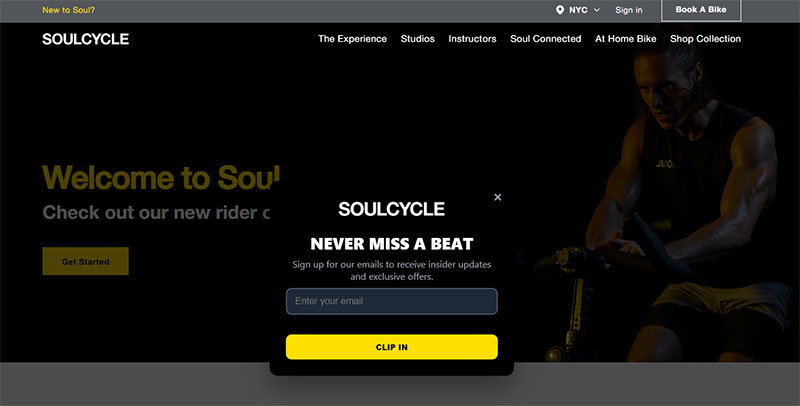
SoulCycle, Orangetheory Fitness, and F45 Training sell community and experience, not equipment access.
Boutique brands increased 121% from 2013-2017 while big gyms gained only 18%, according to market research.
This segment can charge $199+ monthly versus $30-36 for traditional gyms.
Instagram content showcasing the vibe, transformation stories, and influencer partnerships drive leads.
Higher price points mean you can afford higher cost-per-lead.
Community is everything here.
Mindbody found 43% of consumers say community is very important to wellness experiences.
User-generated content works because 80% of people trust it versus just 13% for brand-created content.
Lead Generation for Personal Training Studios
One-on-one attention requires trust-building before the sale.
Research shows 73% of clients value trainers with certified skills and a good reputation.
Nielsen found 88% of consumers trust personal recommendations most of all channels.
Three strategies that work:
- Use Trainerize for client management
- Publish workout videos on YouTube
- Offer free fitness consultations as your primary lead magnet
Build authority through content. About 48% follow fitness professionals on social media for credibility confirmation according to industry surveys.
Hybrid models combining virtual check-ins with in-person sessions work best since 54% prefer online convenience while 41% want face-to-face motivation.
Lead Generation for CrossFit Boxes
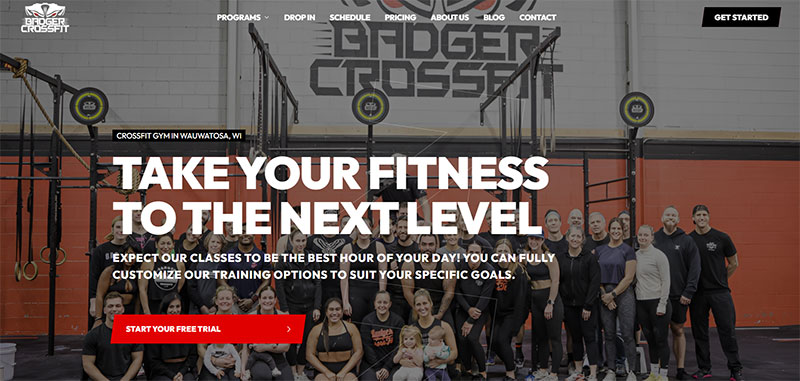
CrossFit attracts a specific audience that values intensity and community.
Free intro classes convert exceptionally well.
WorldMetrics reports CrossFit has a 78% conversion rate from trial to paid memberships. The average box sees 30% membership growth in year one with 91% retention after the first year.
PushPress data shows CrossFit gyms add 8-9 new members monthly versus 7-8 for competitors.
What works best:
- Free intro classes (78% conversion rate)
- Local competition sponsorships
- Member testimonial videos
The CrossFit community shares organically when the experience delivers.
Target affluent prospects since the average household income is $150,000 according to Total Shape data.
How to Convert Gym Leads into Members
Generating leads means nothing if they don’t become paying members.
What Follow-Up Sequence Works Best
Speed wins. Contact new leads within 5 minutes and your conversion rate jumps 9X compared to slower responses according to lead generation research.
Harvard Business Review found businesses responding within an hour are almost 7X more likely to have meaningful conversations with decision-makers. Only 37% of businesses actually respond within the hour.
The winning sequence:
- Immediate text/email confirmation
- Phone call within 24 hours
- Tour invitation
- Post-tour follow-up
- Limited-time offer if they haven’t signed
Use confirmation messages that set clear next-step expectations.
Answer the phone.
Wodify data shows only 25% of gyms answer their public telephone number when called during business hours. That means 3 out of 4 potential members reach voicemail instead of a person.
Research from Zen Planner confirms 78% of buyers choose the first responder.
How Long Should the Nurturing Process Take
Hot leads convert in 3-7 days. Warm leads need 2-4 weeks of nurturing.
Companies that excel at lead nurturing generate 50% more sales-ready leads according to Forrester Research.
Lead nurturing emails get 10X the response rate of one-off email blasts per Demand Gen Report.
After 60 days without engagement, move them to a monthly newsletter and stop active outreach.
Some will return when life circumstances change.
Persistence matters.
Research shows 80% of prospects say “no” four times before they say “yes,” making consistent follow-up crucial.
What Offer Converts Leads to Paying Members
First-month discounts (50% off), waived enrollment fees, and “founding member” rates create urgency.
Planet Fitness uses enrollment fees as low as $1 during promotional periods like New Year’s (versus standard $49), according to their promotional calendar.
The biggest savings happen during three key periods: January, June-July summer promotions, and August-September back-to-school.
Bundle personal training sessions with membership signups to increase perceived value and average revenue per member.
Trial classes work exceptionally well.
Wodify found gyms that get leads to attend a class within their first 12 days see double the conversion rate.
Gyms with 83% lead attendance rates focus on being proactive immediately when new leads come in.
What Mistakes Hurt Gym Lead Generation
Common Digital Marketing Errors
Targeting too broad an audience (nationwide instead of 10-mile radius) wastes budget on people who’ll never visit.
Sending ad traffic to homepage instead of dedicated landing pages. Unbounce found the median landing page conversion rate is 6.6% across industries. Generic homepages convert much lower.
No form validation leading to fake emails and bad phone numbers that corrupt your lead database.
Ignoring mobile optimization is costly.
Research shows 60% of gym searches occur on smartphones according to fitness marketing data. Mobile platforms account for 62.54% of global website traffic.
Solitude Marketing found that simplifying lead capture forms to less than five fields yields a 50% higher conversion rate.
Follow-Up Failures That Lose Leads
Waiting 48 hours to call a new lead kills conversion.
Research shows 41% of companies struggle to follow up with leads quickly, and 44% of sales representatives are too busy to follow up.
Generic messaging doesn’t work.
Sending “just checking in” emails with no clear call-to-action wastes the opportunity. Lead nurturing emails get 10X the response rate of one-off email blasts according to Demand Gen Report.
The form abandonment rate tells you how many prospects you’re losing before they even submit.
Targeting the Wrong Audience
A CrossFit box advertising to people interested in “relaxing yoga” wastes budget.
Luxury gym pricing shown to college students looking for cheap options? Misaligned.
Match your targeting to your actual member demographics and price point.
Nearly 40% of gym-goers pay less than $25 monthly, while boutique studios charge $199+. Know which segment you serve.
How to Measure Lead Generation Success for Gyms
What Metrics Track Lead Generation Performance
Core metrics every gym should monitor:
- Cost per lead by channel
- Lead-to-tour conversion rate
- Tour-to-member conversion rate
- Customer acquisition cost (total marketing spend ÷ new members)
- Member lifetime value
If customer acquisition cost exceeds 3-month membership revenue, your funnel has problems.
Track what actually drives revenue.
Companies using lead scoring increase closed sales rates by 30% according to Businesses.com research.
How to Use Google Analytics for Gym Leads
Set up goal tracking for form submissions, tour bookings, and free trial signups.
Track which traffic sources (Google Ads, Facebook, organic) deliver leads that actually convert to members, not just form fills.
Organic search traffic converts at 45.3% according to Keepme data, significantly outperforming paid traffic.
Email-driven visitors to landing pages have the highest average conversion rate at 19.3% per Unbounce research.
The conversion rate benchmarks for fitness landing pages run 2-5%. Below 2%? Your page needs work.
What Conversion Rate Should Gyms Expect
Industry averages for gym lead generation:
- Landing page to lead: 2-5%
- Lead to tour: 20-40%
- Tour to member: 40-60%
- Overall visitor to member: 0.5-2%
Wodify found that gyms getting leads to attend a class within 12 days see double the conversion rate.
Different models have different benchmarks.
Boutique studios with higher price points see lower lead volume but higher tour-to-member rates (50-60%).
Budget gyms flip that ratio with higher lead volume but lower tour conversion (30-40%).
Track these monthly. Small improvements at each stage compound into significant membership growth.
FAQ on Lead Generation For Gyms
What is the best way to generate leads for a gym?
Combine Facebook Ads targeting local fitness audiences with Google My Business optimization. Offer free trial memberships as lead magnets. Referral programs from existing members deliver high-quality prospects at low cost.
How much does gym lead generation cost?
Costs range from $8-40 per lead depending on location and channel. Facebook and Instagram ads average $8-25 per lead. Google Ads run $15-40. Referral programs cost $0-20 per lead in incentives.
What is a good lead conversion rate for gyms?
Landing pages should convert 2-5% of visitors to leads. Lead-to-tour rates average 20-40%. Tour-to-member conversion runs 40-60%. Overall visitor-to-member rates fall between 0.5-2% for most fitness centers.
How quickly should gyms follow up with new leads?
Contact leads within 5 minutes for best results. Response within 5 minutes increases conversion rates by 400% compared to 30-minute delays. Use automated text and email confirmations for instant acknowledgment.
What lead magnets work best for fitness centers?
Free 7-day trial passes convert highest. Downloadable workout guides and meal plans attract prospects not ready to commit. Fitness quizzes engage visitors while collecting contact data. Free class invitations work for boutique studios.
Which software helps gyms manage leads?
Mindbody and GymMaster handle CRM, scheduling, and lead tracking. Keap automates email sequences. Mailchimp works for basic email marketing. Leadpages and ClickFunnels build high-converting landing pages for specific offers.
How do referral programs generate gym leads?
Offer current members incentives for bringing friends: free months, waived fees, or merchandise. Non-cash rewards often outperform discounts. Planet Fitness and Anytime Fitness built massive growth through referral mechanics.
What mistakes hurt gym lead generation?
Targeting too broad an audience wastes ad budget. Slow follow-up kills conversions. Sending traffic to homepages instead of dedicated landing pages reduces capture rates. Ignoring mobile forms loses 70%+ of prospects.
How does local SEO help gyms get leads?
Optimizing Google My Business puts your gym in “near me” searches. Consistent name, address, and phone across directories boosts rankings. Yelp reviews and local citations increase visibility to high-intent local searchers.
How long does it take to convert a gym lead?
Hot leads convert in 3-7 days. Warm leads need 2-4 weeks of nurturing through email sequences. After 60 days without engagement, move prospects to monthly newsletters. Some return when circumstances change.
Conclusion
Lead generation for gyms comes down to three things: reaching local prospects, capturing their information, and following up fast.
The channels matter less than the execution. Facebook Ads, Google Ads, referral programs, community events. Pick two or three and master them before expanding.
Tools like Mindbody, GymMaster, and HubSpot handle the repetitive work. Let automation nurture cold leads while your team focuses on tour bookings and membership closes.
Track your cost per lead and conversion rates monthly. Small improvements at each funnel stage compound into significant membership growth over time.
Whether you run a budget 24-hour facility, a boutique yoga studio, or a CrossFit box, the fundamentals stay the same.
Build your pipeline. Qualify your prospects. Close the ones who show up ready to commit.
Start with one lead generation strategy, measure results for 60 days, then iterate.