






Most independent coaches never sit through a single sales training. They figure out client acquisition the hard way, usually right after a slow month makes it obvious that referrals and…
Table of contents
A bank’s lead generation program doesn’t get to stop at a form submission. Every prospect has to clear KYC and AML screening, survive a credit pull, and actually end up funded before marketing gets to count it as a win. That’s the layer general marketing never deals with.
Retail banks, credit unions, and wealth divisions all run this across deposit, lending, and advisory lines, but they measure it by cost per funded account and Regulation B exposure, not by how many contacts land in the CRM.
Paid search is the more expensive way to get there. Banks acquiring customers through paid search pay an average customer acquisition cost of $590, compared with $431 through organic search, according to First Page Sage’s 2024 banking research.
What Is Lead Generation for Banks
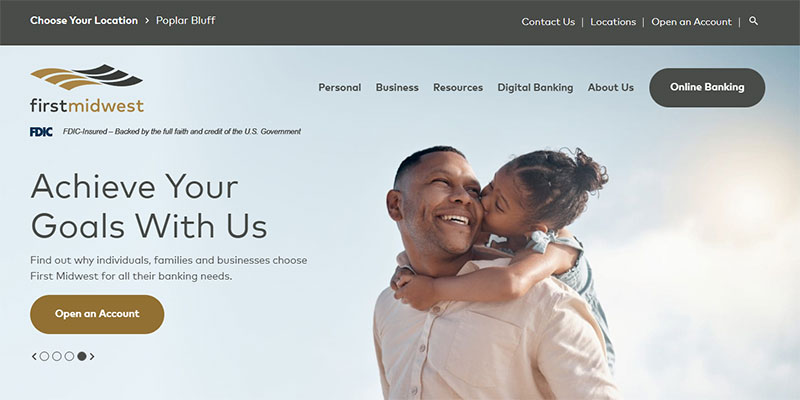
Two things separate this from generic marketing: a verification layer that has to clear before anyone counts as a real prospect, and a funded outcome sitting at the end instead of a form submission.
Most people’s mental model of lead generation stops at a name and email landing in a spreadsheet. Banking keeps going. It tracks that same person through underwriting, all the way to a booked account or a disbursed loan.
Verification matters more than volume here. A bank can pull in ten thousand contact forms and have nothing to show for it if none of those people clear KYC and AML screening.
This sits at the intersection of financial services marketing and compliance operations, not bolted onto either one. It’s the connective tissue between a campaign and a booked account.
What Types of Leads Do Banks Generate
Banks pull leads out of retail and deposit accounts, lending products, and wealth or business banking, and each of those behaves completely differently on cost, sales cycle, and lifetime value. A checking account lead and a private wealth referral aren’t really the same species of prospect, even when the same marketing team is chasing both.
| Segment | Typical Lead | Primary Driver |
|---|---|---|
| Retail and deposit | Checking, savings, CD account | Rate and convenience |
| Lending | Mortgage, auto, personal loan | Rate and approval speed |
| Wealth and business | Advisory account, business credit | Referral and trust |
Retail and deposit leads
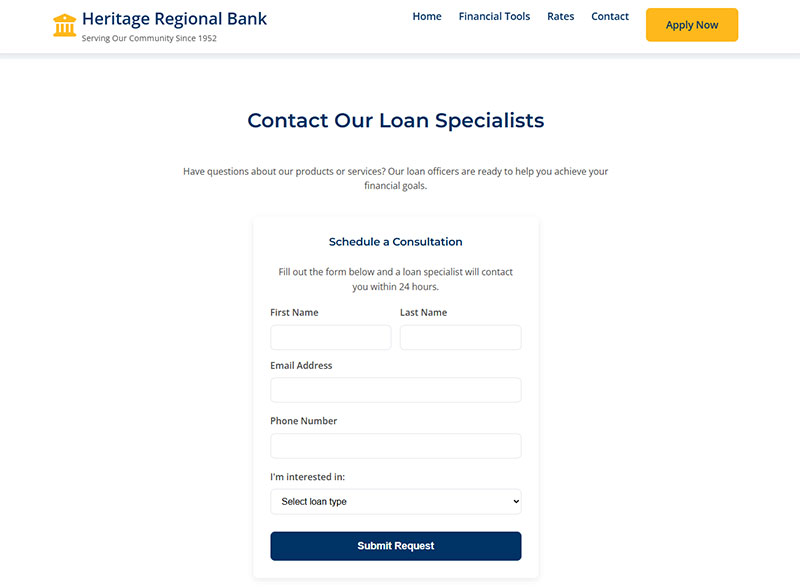
These target individual consumers opening checking, savings, or CD accounts. Cost per lead runs lowest here, but so does the standalone lifetime value of any single account.
- Checking and savings account leads
- Certificate of deposit and money market leads
- Digital-only account leads from streamlined onboarding flows
Ally Bank built much of its retail growth around exactly this segment, competing on rate and a low-friction digital application instead of branch presence.
A single account barely moves the needle in fee revenue, but deposit growth here still matters because it funds the balance sheet.
Lending leads
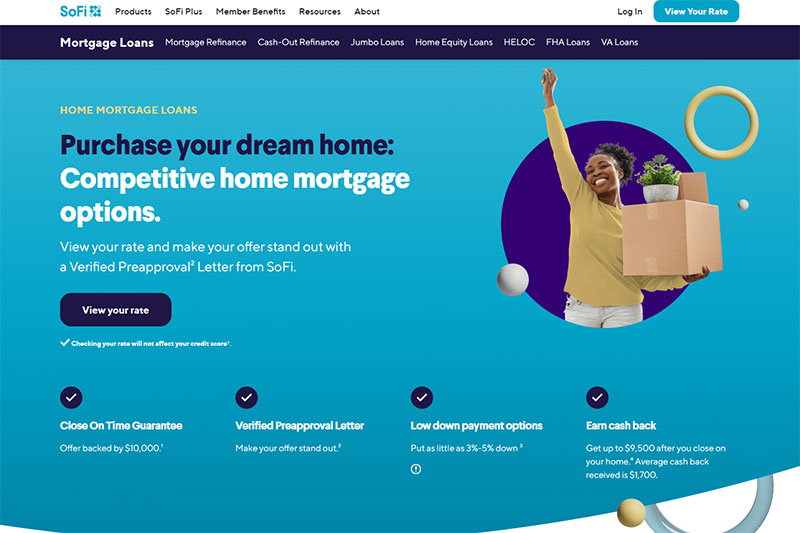
Channel matters less here than what happens after the lead lands. Loan officer follow-up decides this segment more than channel choice does.
Mortgage carries the highest average deal size and the longest sales cycle of the group. Auto loans move fast, often bundled straight through dealership partnerships. Personal loans close faster but with more rate sensitivity, and small business lending drags because it gets underwritten more like a B2B deal than a consumer one.
Small business lending leads behave like B2B lead generation run through a company’s own website forms. The prospect is a business owner comparing several lenders before applying anywhere.
Wealth and business leads
Trust and referral run this segment, not paid channels.
A prospect handing over investment account details behaves closer to how financial advisors attract and qualify new clients than how a retail bank attracts a checking account customer.
- Advisory and investment account leads
- Trust and estate planning leads
- Business banking leads, including merchant services and treasury management
How the Bank Lead Generation Funnel Works
A prospect moves through awareness, application, underwriting, and funding before a bank can call them a customer. Most standard marketing funnels stop at conversion, but banking tacks on two extra gates, underwriting and funding, that a lead has to survive before it counts as real.
- Awareness: the prospect sees an ad, branch signage, or a referral mention
- Application: the prospect submits personal or business information through a form
- Underwriting: the bank verifies identity, income, and creditworthiness
- Funding: the account opens or the loan disburses
Most of the drop-off concentrates between application and underwriting, not between awareness and application.
For every completed digital checking account, banks see 3.36 abandoned applications along the way, according to a Cornerstone Advisors benchmarking study commissioned by Alkami (2026). Digital checking openings made up just 27% of new checking accounts in that same study, which says the channel is growing but still leaking most of its volume mid-funnel.
Neobanks like Chime and Ally have reset expectations here. A signup flow that takes ten minutes now reads as broken next to a competitor’s two-minute one, and prospects notice.
Form design decides a lot of that leakage. The debate between breaking an application into steps versus keeping everything on one page shows up directly in completion rates for loan and account applications.
Which Channels Generate Bank Leads
Organic search, paid search, social media, referral, branch walk-ins, direct mail, and loan aggregator sites all funnel leads into a bank’s pipeline, but they don’t behave the same way on cost or control.
| Channel | Cost Tier | Best Fit | Compliance Control |
|---|---|---|---|
| Organic search and SEO | Low, slow to build | Deposit and mortgage | Full control |
| Paid search and social | Medium to high | Mortgage, personal loan | Full control |
| Referral | Low | Wealth, small business | Full control |
| Aggregator sites | Pay per lead, variable | Mortgage, credit card | Shared with vendor |
Owned channels
Owned channels include a bank’s own website, branch network, email list, and social accounts, all controlled end to end by the bank itself.
Website forms sit at the center of this. Turning a homepage or product page into a lead capture point is usually the fastest lever a marketing team can pull without touching a paid budget.
- Organic search and SEO content
- Branch walk-in and in-person referral
- Email marketing to existing customers for cross-selling
- Paid search and paid social
Aggregator and referral channels
Aggregator sites get a bank in front of high-intent, rate-shopping traffic fast, and without any upfront content or SEO investment. The tradeoff shows up on the other side of that deal. The bank has little control over how its offer actually gets displayed, margins compress once the aggregator’s fee comes out, and the resulting customer tends to feel less connected to the brand that just onboarded them.
Referral marketing runs the opposite way. Slower to scale, but it produces the highest trust and the lowest churn, which is why it dominates wealth management and small business banking.
Choosing between these is really a choice between channels that wait for the prospect to arrive versus ones a bank actively pays for or reaches out through.
American consumers now lean digital regardless of which channel actually brought them in the door. 55% of bank customers use a mobile app as their top banking method, versus 8% who favor branch visits, according to a 2024 Morning Consult survey conducted for the American Bankers Association.
What Technology Powers Bank Lead Generation
Customer relationship management, marketing automation, and loan origination software make up the stack, and all three need to talk to the core banking system sitting underneath them.
Salesforce Financial Services Cloud and Total Expert are the two CRM platforms built specifically for banking sales teams.
Loan origination software is where an application moves from submitted to underwritten, often integrated with core providers like Jack Henry & Associates or Fiserv.
Data enrichment platforms such as MX Technologies pull in account and transaction data to personalize offers before a lead ever talks to a banker.
CRM is the technology bank marketers rate as having the single biggest impact on results. Its reported impact climbed from 12.3% in 2024 to 25.7% in 2026. Marketing automation’s reported impact took a bumpier path, rising to 25.4% in 2025 before slipping back to roughly 22% in 2026, per an American Bankers Association survey.
A banking-specific CRM ships with compliance fields for KYC and Regulation B documentation already built in, and it plugs into core banking systems natively. None of that comes free, though. Licensing costs more than a general-purpose CRM, and the ecosystem of third-party integrations runs thinner.
A generic CRM like HubSpot or Marketo works fine for top-of-funnel nurture emails. It usually needs custom development, though, to handle the compliance documentation a banking-specific platform ships with out of the box.
Compliance Rules for Bank Lead Generation
TCPA, CAN-SPAM, Regulation B, and the data handling standards the CFPB enforces all shape how a bank can legally collect and contact a lead.
| Regulation | Governs | Risk If Violated |
|---|---|---|
| TCPA | Outbound calls and texts | Statutory damages per violation |
| CAN-SPAM Act | Email contact | FTC penalties |
| Regulation B (ECOA) | Fair treatment of applicants | CFPB enforcement action |
| KYC requirements | Identity verification before onboarding | AML exposure, account freezes |
TCPA carries the sharpest teeth of the group, specifically for lead generation. Statutory damages run $500 to $1,500 per violation, and most TCPA cases get filed as class actions rather than individual claims.
Capital One found this out directly. The bank agreed to pay $75.5 million in 2014 to settle claims that its debt collection calls used an autodialer to reach cell phones without proper consent. That remains the largest TCPA settlement on record.
Community Reinvestment Act obligations add another layer on top, pushing banks to document outreach to underserved market segments instead of only chasing the cheapest leads available.
Any bank with clients or prospects in the EU also needs to think about building consent and data handling into the forms themselves, not just into a privacy policy nobody reads.
How Bank Leads Are Qualified and Scored
A lead doesn’t become sales-qualified just by submitting a form. It has to clear a credit threshold, verify income, and fit the right deposit or loan size before anyone treats it as real.
The median credit score on new mortgage originations reached 775 in the third quarter of 2025, according to the Federal Reserve Bank of New York, even though most conventional loans only require a 620 minimum.
That gap between the minimum and the median says something. Banks are pre-qualifying leads well before underwriting starts, filtering out anyone unlikely to close.
A soft-pull credit estimate happens right at the point of lead capture, then gets refined later against Experian, Equifax, or TransUnion data. Income is self-reported at first and confirmed with documentation once underwriting starts. Deposit or loan size fit matches the lead to the right product tier before a banker ever picks up the phone.
Lead scoring models translate these screens into a single number, separating a marketing-qualified lead from one that’s actually ready for a loan officer’s call.
Getting this right starts upstream, with choosing which fields actually predict a good lead instead of collecting everything a form builder allows.
Validating income and identity fields at the point of entry also cuts down on the number of leads that look qualified on paper but fail underwriting later.
What Bank Lead Generation Costs
Cost per lead for banks swings wildly by product line and customer type, so a single blended number tells you almost nothing useful.
Average acquisition cost varies just as much by segment.
- Retail consumer banking: $561
- Online, digital-only bank: $290
- Credit union: $428
- Small business customer: $607
- Ultra-high-net-worth customer: $855
That data comes from First Page Sage’s banking research, built on client data gathered between June 2018 and November 2024.
Cost per lead follows a similar split. Financial services blended CPL sits at $653, with paid leads running $761 against $555 for organic, per First Page Sage’s 2026 industry report.
The number that actually matters is the ratio between acquisition cost and lifetime value, not the raw dollar figure by itself. A 3:1 LTV to CAC ratio is the standard benchmark worth aiming for, and it’s worth checking your funnel against conversion rate benchmarks by industry before deciding a channel costs too much to keep.
An online bank paying $290 to acquire a depositor and a private bank paying $855 for a UHNW client can both be running a healthy program. The deposit customer just needs to convert at much higher volume to make the math work.
How to Set Up a Bank Lead Generation Program
Building a bank lead generation program in the wrong order is the single most common reason new programs underperform for the first six months.
- Define segment and product. Pick one product line (mortgage, deposit, small business) and one customer segment before touching a channel.
- Select the channel mix. Match channels to that segment using the cost and control tradeoffs already covered.
- Configure CRM and compliance controls. Set up consent capture, KYC fields, and Regulation B documentation inside the CRM before a single lead comes in.
- Launch and track. Turn on the channel mix with UTM tagging and call tracking already wired in.
- Hand off to a banker or loan officer. Route scored leads to a human the moment they clear qualification.
Step 2 usually comes down to a website form. Setting up a proper lead capture form before launching any paid spend saves a bank from paying for clicks that land on a page with nowhere for the visitor to submit their information.
Not every product needs the same form. Matching the right types of forms to each product line keeps a mortgage application from asking the same three questions as a checking account signup.
The mistake shows up in step 3 more than anywhere else. Banks bolt compliance controls onto a CRM after launch instead of before, which means the first few hundred leads often arrive with incomplete consent records that legal has to clean up retroactively.
Metrics and Attribution for Bank Lead Generation
Funnel conversion rate by stage, cost per lead by channel, multi-touch attribution, and lifetime deposit value decide whether a bank lead generation program actually works.
Most banks aren’t set up to track any of this well. 71% of bank marketers report their institution has no written customer data strategy, and only 36% oversee their bank’s data analytics function directly, according to a July 2024 American Bankers Association survey of 109 bank marketers.
| Attribution Model | How It Credits | Best For |
|---|---|---|
| Last-touch | 100% to final channel before conversion | Short, single-channel journeys |
| First-touch | 100% to the channel that started the journey | Awareness campaign evaluation |
| Multi-touch | Credit spread across every touchpoint | Long, multi-channel mortgage or wealth journeys |
Multi-touch is the only model that fairly credits referral, since a wealth prospect might see three pieces of content before the referral conversation actually happens.
Knowing which numbers to watch matters more than watching all of them. A short list of lead generation KPIs worth tracking beats a dashboard with forty metrics nobody checks weekly.
Funnel conversion rate deserves the closest attention, since small gains there compound. Reviewing general guidance on what actually moves form conversion rates before touching the application itself avoids redesigning something that wasn’t the problem.
None of this matters if a bank stops at lead volume. Lifetime deposit value and customer lifetime value are the metrics that should decide budget, not how many forms got submitted last month.
When Lead Generation Does Not Work for a Bank
Paid lead generation doesn’t work for every situation in banking, and pretending otherwise wastes budget that referral or branch relationships would have converted for free.
Private banking and UHNW prospecting barely responds to paid channels at all. Referrals account for more than 70% of new business at wealth management practices managing under $100 million in assets, according to Cerulli Associates research.
Compliance shutdowns are the sharpest risk. A single TCPA or Regulation B violation can freeze an entire outbound calling program overnight, wiping out whatever volume that channel was producing.
Then there’s volume without qualification, probably the most common failure mode. A channel generating thousands of contacts that never clear KYC or income verification isn’t a lead generation win. It’s a cost center with a misleading dashboard.
Aggregator markets in mortgage and credit card categories run into a margin problem. Where aggregator fees eat most of the spread, paid volume from those sites can end up costing more than the loan is worth to acquire.
The volume-without-qualification failure is usually visible before it becomes expensive. A spike in form abandonment rate combined with rising lead counts is often the first sign that a channel is bringing in traffic that was never going to qualify.
None of this means paid channels are wrong for banking. It means matching the channel to the segment matters more than matching the budget to the channel.
FAQ on Lead Generation For Banks
Can small community banks compete with national banks and neobanks on lead generation?
Community banks compete on cost efficiency and local trust rather than paid volume.
Digital-only banks acquire customers at a lower CAC, but community banks win through referral marketing, branch relationships, and underserved market outreach that national brands rarely match locally.
How long before a new lead generation program shows measurable results?
Paid channels show measurable results within weeks, since campaigns launch and convert quickly.
Organic search and referral programs take longer, typically six to twelve months, before lead volume and cost per lead settle into a predictable pattern.
Do all bank leads need a human loan officer follow-up, or can it be automated?
Deposit and simple retail leads convert well through automated onboarding flows alone.
Mortgage, small business, and wealth leads still need a loan officer or advisor, since deal complexity and relationship trust outweigh what automation and chatbots can close on their own.
What Should You Fix First in Lead Generation for Banks?
Lead generation for banks improves fastest when a bank fixes the application funnel before increasing channel spend. Underwriting drop-off wastes acquisition budget that better forms, clearer field requirements, and shorter multi-step applications would otherwise convert into funded accounts.
A handful of fixes matter more than the rest combined.
- Application funnel and form design
- Lead qualification and scoring accuracy
- Attribution across paid, organic, and referral
Attribution reports are meaningless before qualification is accurate, and forms drive both. Shifting budget toward organic and referral growth accepts slower early volume for a lower blended acquisition cost later.
Organic search costs roughly 27% less per acquired customer than paid search in banking, enough to fund compliance and forms upgrades if spend shifts there.
The funnel fix starts with the capture point, detailed in how to design lead capture forms that qualify prospects on the way in.