


Most lead magnets don’t work. They get downloaded, skimmed for 30 seconds, and forgotten. Meanwhile, your email list fills up with people who will never buy anything. The problem isn’t…
Table of Contents
Most software companies are spending more on customer acquisition than they did two years ago and getting less back. Lead generation for software companies has gotten harder, not because the channels stopped working, but because buyers changed how they buy.
Longer B2B sales cycles, self-educating buyers, and crowded SaaS categories mean generic tactics don’t cut it anymore. You need a system built for how software actually gets sold.
This guide breaks down the inbound and outbound channels that produce real pipeline, the tools and metrics worth tracking, and how to build a lead generation strategy from scratch. Whether you’re running a product-led growth motion or closing enterprise deals through account-based marketing, you’ll find specific benchmarks and frameworks to work with.
What Is Lead Generation for Software Companies
Lead generation for software companies is the process of attracting potential buyers and converting them into prospects who show real interest in your product. That might look like a demo request, a free trial signup, or a form fill on a pricing page.
It sounds simple. But the software industry has quirks that make this process different from almost every other business category.
SaaS buying cycles run long. Multiple stakeholders get involved, sometimes five or more, each with their own priorities. A marketing manager might find your tool, but the CTO has to approve it, and finance needs to sign off on the annual contract value.
Then there’s the lead classification layer. Software companies don’t just work with marketing qualified leads (MQLs) and sales qualified leads (SQLs). Many now track product-qualified leads (PQLs), people who have actually used the product through a free trial or freemium tier and hit specific engagement thresholds.
According to ProductLed’s benchmark report, companies that use PQLs see roughly 3x higher conversion rates compared to those relying only on traditional MQL definitions. And yet only about 25% of SaaS companies have adopted PQL tracking at all.
Revenue attribution adds another wrinkle. A prospect might read a blog post, attend a webinar, click a LinkedIn ad, start a free trial, and then talk to sales before signing. Mapping which touchpoint deserves credit for the deal is a real challenge, one that tools like Dreamdata and HockeyStack were built specifically to solve.
So when we talk about lead generation in the software space, we’re not just talking about collecting email addresses. We’re talking about a multi-touch, multi-stakeholder, product-involved process that requires different thinking than a typical B2B lead generation funnel.
Why Software Companies Face Unique Lead Generation Challenges
Most lead gen advice online is generic. Software companies have specific problems that generic playbooks don’t address.
Longer Sales Cycles and Buying Committees
B2B software deals rarely close fast. Enterprise sales cycles stretch to 6-12 months, sometimes longer. Each deal involves an average of 6-10 decision makers, according to Gartner research.
That means your lead gen efforts need to reach and educate multiple people at the same account, not just one champion. This is why account-based marketing has become so popular in the space (more on that later).
Rising Customer Acquisition Costs
Sopro’s 2025 data shows that 45% of B2B vendors faced increased competition in 2024. More competition means higher ad costs, more noise in inboxes, and harder fights for attention.
Statista data puts the average paid cost per lead for B2B SaaS at around $310, while organic CPL sits closer to $164. That gap alone tells you why content marketing and SEO matter so much in this space.
Buyer Self-Education
Software buyers do heavy research before they ever talk to a sales rep. UpLead found that 47% of B2B buyers consume 3-5 pieces of content before engaging with sales. They’re reading comparison posts, checking G2 reviews, testing free versions.
If your company isn’t producing helpful content and offering low-friction ways to experience the product, you’re invisible during the research phase. Took me a while to appreciate just how much the buying process has shifted toward self-service, especially among younger decision makers who grew up evaluating software on their own.
The Free Trial Gap
Getting someone to sign up for a free trial is one thing. Getting them to pay is another.
ProductLed’s 2025 benchmark data shows the average free-to-paid conversion rate across SaaS is about 9%. Products with an annual contract value between $1K and $5K convert at roughly 10%, while sub-$1K products see better top-quartile performance at 24%.
That means roughly 9 out of 10 free trial users don’t convert. Fixing that gap is just as much a lead generation problem as getting signups in the first place.
Inbound Lead Generation Channels That Perform for Software Companies
Inbound is the backbone of lead gen for most software companies. The idea is straightforward: create something useful, let people come to you. But not all inbound channels deliver equally.
Content Marketing and SEO as a Lead Engine
Content and organic search remain the best compounding lead source for software companies. SalesHive’s 2025 analysis found that organic search leads close at approximately 14.6%, compared to just 1.7% for pure outbound.
HubSpot’s 2025 State of Marketing Report confirmed that website, blog, and SEO efforts were the #1 ROI-driving channel for B2B brands in 2024. And content marketing generates roughly 3x more leads than traditional outbound at about 62% lower cost, according to aggregated benchmark data.
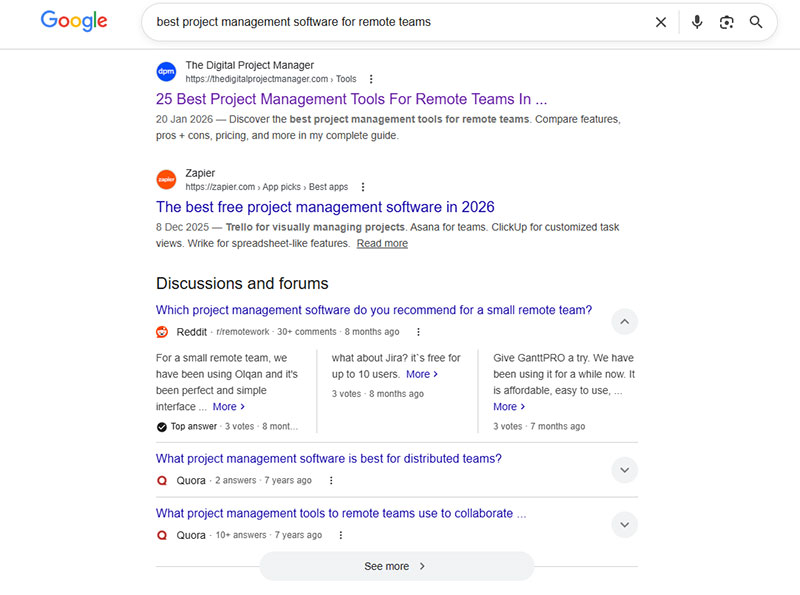
This isn’t surprising if you think about it. Someone Googling “best project management software for remote teams” already has buying intent. Your blog post or comparison page meets them right at that moment.
The catch? SEO takes time. Most companies need 6-12 months of consistent publishing before organic starts delivering meaningful pipeline. But once it compounds, the cost per lead drops significantly month over month.
For companies running on WordPress, using WordPress lead generation plugins to capture visitors who land on these pages is one of the simplest ways to convert organic traffic into actual leads.
Product-Led Growth and Free Trial Funnels
58% of B2B SaaS companies now operate a formal product-led growth (PLG) motion, according to ProductLed’s survey of 600+ companies.
And 91% of those companies plan to increase their PLG investment.
The logic is simple: let people use the product, and the product sells itself. Dropbox, Slack, Notion, Figma. All grew primarily through self-serve signups. No sales call needed to get started.
Freemium drives higher visitor conversion at a 12% median, but free trials tend to attract higher-intent users. OpenView’s 2024 report noted that 60% of SaaS companies now identify as product-led, up from 35% in 2021.
Your free trial landing page matters a lot here. Keep the form short, the value proposition clear, and the time-to-value as fast as possible.
Webinars, Gated Content, and Resource Libraries
Webinars still work. 53% of marketers say webinar content generates the most high-quality top-of-funnel leads, per Demand Gen Report data.
But “gated everything” is getting pushback. Buyers are tired of filling out 8-field forms just to download a basic PDF. The companies seeing the best results are gating only their highest-value resources (original research, templates, tools) and ungating the rest.
If you’re going to gate content, use gated content strategically. Think original benchmark reports, ROI calculators, or detailed playbooks, not repurposed blog posts behind a form wall.
Well-designed webinar registration forms that capture the right data without asking too much are what separate a high-converting webinar from one that gets abandoned at signup.
Outbound Lead Generation Strategies for Software Sales Teams
Inbound is great, but it doesn’t work alone. Especially not for enterprise software companies with high ACVs and specific target accounts. That’s where outbound comes in.
Cold Email and LinkedIn Outreach
Cold email is harder than it used to be. Belkins’ analysis of 16.5 million cold emails in 2024 found average reply rates dropped to 5.8%, down from 6.8% in 2023.
Stricter spam filters from Google and Yahoo, combined with inbox fatigue, are the main culprits. The average cold email open rate fell to about 27.7% in 2024.
But the top performers are still getting results. Built for B2B’s analysis of 10,000+ campaigns found the top 10% of campaigns hit 8-12% response rates consistently. The difference? Hyper-targeted lists, short emails (under 125 words), and relevant personalization tied to real business triggers.
LinkedIn outreach is the other big outbound channel. LinkedIn Sales Navigator gives SDRs access to detailed firmographic and job-change data, which makes targeting more precise. Sopro’s data shows LinkedIn generates 277% more leads than Facebook or X for B2B companies.
But LinkedIn has its own limitations. Connection request acceptance rates have dropped as the platform gets noisier. Most teams now use LinkedIn as a warm-up layer: connect first, follow up via email.
Account-Based Marketing for Software Companies
ABM flips the traditional funnel. Instead of casting a wide net and filtering leads down, you start with a defined list of target accounts and build personalized campaigns around them.
According to G2’s 2024 research, 93% of B2B marketers report their ABM efforts as extremely or very successful. The ABM market itself reached $1.07 billion in 2023 and is growing at a 17.9% CAGR.
Software companies using ABM pair it with tools like Demandbase, 6sense, or HubSpot to identify which accounts are actively researching their category. SiriusDecisions data shows companies using ABM see a 200% increase in pipeline efficiency.
The real trick is alignment. Sales and marketing have to agree on the account list, the messaging, and the handoff. AdRoll’s research found that 75% of B2B marketers said ABM helped them find and engage the right buyers earlier in the process.
For companies selling upmarket, ABM isn’t optional. It’s how you focus limited SDR resources on the accounts most likely to close.
Intent Data and Signal-Based Prospecting
91% of B2B technology marketers now use intent data to prioritize accounts, according to G2’s ABM statistics report.
Platforms like 6sense, Bombora, and ZoomInfo track when companies are actively searching for solutions in your category. A prospect visiting competitor websites, downloading comparison guides, or searching for “best CRM for startups” sends a signal that they’re in-market.
Other high-value signals include job changes (a new VP of Marketing might mean new tool evaluations), funding rounds (fresh capital often means software purchasing), and hiring patterns (scaling teams need new infrastructure).
Apollo.io and Clay have made signal-based prospecting more accessible, even for smaller sales teams. The key is acting fast. Responding to a new lead or intent signal within 5 minutes makes you roughly 10x more likely to make contact versus waiting an hour.
Paid Acquisition Channels Ranked by Cost-Effectiveness
Paid channels let you generate leads on demand. But in software, the cost differences between channels are dramatic.
Google Ads vs. LinkedIn Ads for Software Lead Gen
Google Ads captures people already searching for a solution. That’s bottom-of-funnel demand. Flyweel’s 2025 benchmark report puts the average Google Ads CPL at $70.11, up 5.1% from the prior year.
LinkedIn is more expensive. CPLs regularly exceed $110 per lead, and enterprise SaaS targeting can push that to $125-$300 depending on audience narrowness, per HubSpot’s 2025 CPL analysis.
But here’s what most people miss. LinkedIn reaches decision-makers who aren’t actively searching yet. It’s demand generation, not demand capture. A CMO scrolling LinkedIn may not be Googling “marketing automation software” today, but a well-targeted ad puts you on their radar for when they do.
Both channels have their place. Google Ads for capturing existing intent. LinkedIn Ads for creating future demand and supporting ABM programs.
Review Site Sponsorships and Marketplace Listings
Review sites like G2, Capterra, and TrustRadius are where software buyers go to compare options. Getting listed is free, but sponsored placements put you at the top of category pages.
These leads tend to convert well because the buyer is deep in the evaluation phase. They’re reading reviews, comparing feature sets, looking at pricing. That’s about as close to purchase intent as it gets for software.
The downside? CPLs on review sites can be steep, often $150-$400 per lead depending on the category. And volume is limited, you can’t scale review site leads the way you can with Google or LinkedIn.
Still, for companies in competitive SaaS categories, maintaining a strong G2 presence with verified reviews is worth the investment. Buyers trust peer reviews more than your marketing copy, and that trust turns into higher-quality pipeline.
Lead Scoring and Qualification Frameworks
Generating leads is half the job. Figuring out which ones are worth pursuing is the other half.
According to aggregated industry data, 80% of new leads never convert to customers. A big chunk of that waste comes from sales teams spending time on prospects who were never a good fit in the first place.
Qualification Frameworks for Software Sales
BANT (Budget, Authority, Need, Timeline) has been the default for decades. It still works for transactional software sales, but it falls short for complex enterprise deals where buying committees make decisions over months.
MEDDIC (Metrics, Economic Buyer, Decision Criteria, Decision Process, Identify Pain, Champion) is more popular in enterprise SaaS. It forces sales reps to understand the full buying process, not just whether someone has budget today.
Companies running product-led growth motions often skip traditional frameworks entirely and score based on product usage data. How many features has the user activated? Did they invite teammates? Are they hitting usage limits? Salesforce, Pipedrive, and HubSpot all support custom lead scoring models that blend behavioral and demographic signals.
Behavioral and Firmographic Scoring
Smart lead scoring combines two layers.
Behavioral signals: content downloads, pricing page visits, email engagement, product usage frequency, feature activation patterns.
Firmographic signals: company size, industry, job title, annual revenue, technology stack.
Benchmark data from SalesHive shows that average MQL-to-SQL conversion hovers around 13%. But teams with strong behavioral scoring and tight ICP coverage can push that to 30-40%.
Marketing automation platforms like Marketo, ActiveCampaign, and Pardot handle scoring rules. The real work is defining what “sales-ready” actually means in your specific context. A pricing page visit from a VP at a 500-person company? Probably worth a call. A blog visit from a student? Probably not.
Your form fields for capturing high-quality leads directly impact scoring accuracy. Ask the right qualifying questions upfront (company size, role, use case) and your scoring model has real data to work with instead of guessing.
The Marketing-to-Sales Handoff
This is where things break down at most software companies.
Research from Sopro shows that highly aligned sales and marketing teams achieve 19% faster revenue growth. But alignment requires more than a shared Slack channel.
Both teams need to agree on lead definitions (what qualifies as an MQL, SQL, and PQL), response time expectations, and feedback loops. When sales rejects a lead, marketing needs to know why. When a lead goes cold, there should be a nurture path back into the funnel.
Tools like Chilipiper automate lead routing based on scoring criteria, geography, and account ownership. That matters because speed counts. Responding to a qualified lead within 5 minutes can make it 21x more likely to convert compared to waiting an hour.
Lead Generation Tools and Tech Stack for Software Companies
The right tools don’t fix a broken strategy. But without them, even a good strategy falls apart at execution.
Software companies typically build their lead gen stack across five layers: CRM, prospecting, marketing automation, conversational tools, and analytics. The trick is keeping the stack lean enough that your team actually uses it.
CRM and Marketing Automation
HubSpot remains the most popular CRM for mid-market SaaS companies. Its free tier makes it easy to get started, and the Marketing Hub handles lead scoring, email sequences, and reporting in one place.
Salesforce is still the default for enterprise. More customizable, more complex, and significantly more expensive. Pardot (now called Account Engagement) lives inside Salesforce and handles B2B marketing automation for larger teams.
Understory’s 2025 SaaS benchmark report found that 87% of marketers using CRM felt their strategies were effective, compared to just 52% without one. That 35-point gap isn’t about the software. It’s about having centralized data.
Prospecting and Enrichment Tools
ZoomInfo provides deep company and contact data along with intent signals like tech stack changes, funding rounds, and leadership transitions. Pricing runs $15,000 to $50,000+ annually, so it’s geared toward established sales teams.
Apollo.io offers a more affordable alternative with a database of millions of contacts, built-in email sequencing, and intent data. Smaller SaaS startups often start here.
Clay sits in a different spot entirely. It pulls data from dozens of sources and lets you build custom enrichment workflows. Think of it as the “power user” tool for growth teams that want full control over their prospecting data.
Conversational and Chat-Based Tools
Drift, Intercom, and Qualified turn your website into a real-time qualification channel. Instead of making visitors fill out a contact form and wait for a follow-up, chatbots engage them immediately.
Qualified specifically focuses on enterprise software companies, connecting directly with Salesforce to route high-value visitors to live reps based on account data and buyer intent.
These tools matter because speed-to-lead is everything. A visitor on your pricing page right now is worth more than a form submission from yesterday.
Lead Generation Metrics and Benchmarks for Software Companies
You can’t improve what you don’t measure. But measuring the wrong things is just as bad.
Too many software companies obsess over lead volume while ignoring lead quality, pipeline velocity, and actual revenue attribution. Here are the numbers that actually matter.
Cost Per Lead by Channel
Sopro’s 2025 benchmark data breaks down average CPL for B2B SaaS:
- Organic/SEO: ~$31 per lead (lowest cost, highest long-term ROI)
- Multi-channel prospecting: ~$188 blended
- Google Ads: ~$70 per lead
- LinkedIn Ads: ~$110+ per lead
- Trade shows: ~$840 per lead (highest cost)
First Page Sage data puts B2B SaaS blended CPL at around $188, with paid channels averaging $310 and organic at $164.
Referrals and affiliate marketing remain the cheapest channels at roughly $25 and $73 respectively, according to Sopro.
Funnel Conversion Benchmarks
The Digital Bloom’s 2025 pipeline benchmarks (compiled from FirstPageSage, Marketjoy, and PoweredBySearch data) outline the typical B2B SaaS funnel:
The MQL-to-SQL stage is where most software companies lose the most prospects. Improving that conversion by just 5 points can lift revenue by up to 18%, according to The Digital Bloom’s analysis.
Pipeline Velocity and Deal Metrics
SaaS and technology companies generate about $1,847 in daily pipeline velocity, with average deal sizes around $12,400, 22% win rates, and 67-day sales cycles, per The Digital Bloom’s 2025 data.
That’s a solid balance between deal size and sales efficiency compared to other industries. Real Estate hits $2,456 daily but with 147-day cycles. Financial Services reaches $2,134 with 89-day cycles.
Pipeline velocity is probably the single best “north star” metric for software companies because it captures deal value, win rate, and cycle length in one formula.
Common Lead Generation Mistakes Software Companies Make
HubSpot data shows 61% of marketers say generating leads is their biggest challenge. But a lot of that difficulty is self-inflicted.
Chasing Volume Over Quality
The vanity metrics trap is real. A marketing team celebrates 500 new leads this month while sales complains that none of them are qualified.
Leads at Scale’s research found that companies with effective lead nurturing produce 50% more sales-ready leads while cutting costs by 33%. The fix isn’t more leads. It’s better leads, matched to your ideal customer profile.
Steering on downloads, page views, and raw form submissions without tying them to pipeline and revenue creates a false picture. Your conversion rate benchmarks should account for lead-to-revenue, not just lead-to-form-fill.
Ignoring Product-Qualified Leads
Only 25% of SaaS companies use product-qualified leads (PQLs) to identify high-potential free users, according to ProductLed.
Yet when PQLs are tracked, free-to-paid conversion roughly triples.
If you’re running a product-led growth motion with a free trial or freemium tier and you’re still only scoring leads based on form fills and email engagement, you’re missing the strongest buying signal you have: actual product usage.
Slow Follow-Up
Research consistently shows that 44% of sales reps never follow up after the first attempt. That’s nearly half your team giving up before the process even starts.
And speed compounds the problem. Responding within 5 minutes makes a lead 21x more likely to convert versus waiting an hour. Most software companies are nowhere near that fast, especially on evenings and weekends when prospects are still browsing.
Look, this one comes up so often it almost feels silly to mention. But I keep seeing it. A team spends thousands on ads, generates a demo request, and then nobody calls for two days. Automating lead routing with tools like Chilipiper or Calendly fixes the easy part. Building the habit of treating every inbound lead like it has a timer on it? That takes culture change.
Sales and Marketing Misalignment
Misaligned teams can cost 10% of annual revenue, according to Leads at Scale research.
The symptoms are familiar. Marketing says they’re sending plenty of leads. Sales says the leads are garbage. Nobody agrees on what “qualified” means.
Fixing this requires shared definitions (what exactly counts as an MQL, SQL, and PQL), a documented handoff process, and regular feedback loops where sales tells marketing which leads actually turned into pipeline. Without that feedback loop, marketing optimizes in the dark.
How to Build a Lead Generation Strategy From Scratch
If you’re starting from zero or rebuilding after a strategy that didn’t work, here’s the framework that gives you the best shot at building predictable pipeline.
Mapping Channels to Your Sales Motion
Your annual contract value determines which channels make sense.
Low ACV (under $5K/year): Product-led growth, content marketing, SEO, and self-serve funnels. You can’t afford to put a sales rep on every deal. Friction needs to be as low as possible. Sign up forms and free trial flows do the heavy lifting.
Mid ACV ($5K-$50K/year): A mix of inbound (content, SEO, webinars) and targeted outbound (cold email, LinkedIn). SDRs qualify leads before passing to AEs. Landing page forms that capture role, company size, and use case help scoring accuracy.
High ACV ($50K+/year): Account-based marketing with personalized outreach. Demandbase or 6sense for intent data. Enterprise sales cycles need multiple touchpoints across an entire buying committee.
The biggest mistake at this stage is copying what worked for a company with a completely different ACV and sales motion. A tactic that works for a $29/month product will not work for a $100K enterprise deal. Full stop.
Setting Up Attribution and Reporting
Set this up from day one. Not after you’ve spent six months generating leads with no idea where they came from.
Minimum viable attribution stack:
- UTM parameters on every campaign link
- CRM tracking of lead source and first touch
- Closed-loop reporting between marketing automation and CRM
For more advanced setups, tools like Dreamdata or HockeyStack handle multi-touch attribution across the full B2B buyer journey. They show you not just which channel generated the lead, but which combination of touchpoints drove the deal.
SalesHive’s 2025 analysis confirmed that organic search leads close at 14.6% while pure outbound closes at just 1.7%. You wouldn’t know that without proper attribution in place. And you’d probably be over-investing in outbound while under-investing in content.
Budget Allocation by Company Stage
SaaS companies spend a median of 14% of revenue on marketing, according to SaaS Capital. But how that budget gets split changes dramatically based on where you are.
Early-stage companies should resist the urge to spread budget across every channel. Pick two, maybe three. Master them. Get consistent pipeline flowing before adding more complexity.
Your website forms for lead generation are the one thing that matters at every stage. Whether you’re spending $500 or $500,000 a month on marketing, if your forms are broken, too long, or poorly placed, you’re leaving pipeline on the table. Start by designing lead capture forms that actually convert, then layer on the paid channels and outbound motions from there.
FAQ on Lead Generation for Software Companies
What is lead generation for software companies?
It’s the process of attracting potential buyers and converting them into prospects interested in your software product. This includes demo requests, free trial signups, and lead generation form submissions that feed your sales pipeline.
What are the best inbound channels for SaaS lead generation?
Content marketing, SEO, and product-led growth consistently deliver the highest ROI. Organic search leads close at roughly 14.6% compared to 1.7% for outbound, making content a strong compounding asset for B2B software companies.
How much does a lead cost for software companies?
B2B SaaS averages about $188 blended CPL. Paid channels run closer to $310 while organic sits around $164. LinkedIn Ads tend to exceed $110 per lead, and Google Ads average around $70.
What is a product-qualified lead?
A PQL is a free trial or freemium user who hits specific engagement thresholds inside your product. Companies tracking PQLs see roughly 3x higher conversion rates than those relying only on traditional MQL definitions.
How does account-based marketing work for software sales?
ABM targets a defined list of accounts with personalized campaigns. Tools like Demandbase and 6sense identify in-market accounts using intent data. It works best for enterprise software with high annual contract values.
What conversion rate should software companies expect?
The average B2B SaaS visitor-to-lead conversion is about 1.4%. MQL-to-SQL conversion hovers around 15-21%. Opportunity-to-close rates land between 37-39%. SaaS landing pages convert at a 3.8% median.
Which CRM is best for software lead generation?
HubSpot dominates mid-market SaaS with its free CRM tier and integrated Marketing Hub. Salesforce is the enterprise standard, offering deeper customization. Pipedrive works well for smaller sales teams that need simplicity.
How can software companies improve lead quality?
Define a clear ideal customer profile, implement lead scoring combining behavioral and firmographic signals, and use form fields that qualify prospects upfront. Tighter targeting beats higher volume every time.
What role does cold email play in software lead generation?
Cold email still works but is getting harder. Average B2B reply rates sit around 5% in 2024-2025. Top performers hit 8-12% through hyper-targeted lists, short messages under 125 words, and signal-based prospecting.
How should early-stage software companies approach lead generation?
Start with founder-led outbound and organic content. Pick two channels maximum and master them before scaling. Build attribution from day one so you know what actually drives pipeline, not just traffic.
Conclusion
Lead generation for software companies isn’t a single tactic. It’s a system that connects your go-to-market strategy, sales pipeline, and buyer journey into something that produces revenue consistently.
The channels that work depend on your annual contract value and sales motion. Low-ACV products need self-serve funnels and product-led growth. Enterprise deals need ABM, intent data from tools like 6sense or Demandbase, and SDR teams running targeted outbound sequences.
Get your lead scoring right. Build attribution from day one. Align marketing and sales on shared definitions of what “qualified” actually means.
Track cost per lead and pipeline velocity, not vanity metrics. Then iterate based on what drives closed-won deals, not just form submissions.
Start with two channels. Master them. Scale from there.