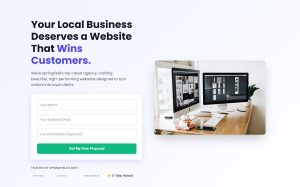








A new client doesn’t sign with an accounting firm because a landing page convinced them. They sign because someone they trust vouched for the firm, or because the firm showed…
Table of contents
Lead generation for hotels is the work of turning travel searchers and event planners into inquiries a sales team can actually follow up on, ones with enough intent behind them to become a direct booking instead of a commission-paying one.
Marketing and revenue teams don’t run this in isolation. They’re constantly weighing it against what OTAs, metasearch platforms, and global distribution systems charge per reservation, since every booking that comes in direct is one that didn’t cost a commission.
Skift Research’s 2024 Hotel Distribution Outlook projects that direct digital channels will generate 409 billion dollars in global hotel bookings by 2030, overtaking the 333 billion dollars projected for online travel agencies.
What Is Lead Generation for Hotels?
Every inquiry that lands in front of a hotel’s sales team, whether it’s a traveler filling out a contact form or a planner sending an RFP, has to be captured and sorted before anyone can act on it. That sorting and capturing is what the term actually covers, applied to room nights, meeting space, and banquet business specifically rather than generating and qualifying prospective customers in general.
A lead is not the same thing as a booking, and hotels that blur the two tend to overstate their pipeline.
A lead is a name, an email address, and a signal of intent. A confirmed reservation or signed contract is what that lead becomes once it converts, sometimes days later, sometimes never.
The segments driving those inquiries don’t all look alike.
- Leisure guest, searching for a room on a specific date range
- Corporate transient traveler, booking through a negotiated rate
- Group or event planner, often shortened to MICE (meetings, incentives, conferences, and exhibitions), submitting a request for a block of rooms or event space
Each segment moves through a different version of the same funnel, and a hotel that treats them identically usually loses the group segment first.
How the Hotel Lead Generation Funnel Works
Inquiry comes first, then qualification, then a proposal, then a contract or confirmation, and only then a booking. Skipping a stage doesn’t speed things up. It just means the hotel finds out later that the lead was never a fit.
An inquiry might be a form submission, an RFP, or just a chat message that catches someone at the right moment. Qualification is where dates, budget, and space or room availability actually get checked against each other, which is where a lot of leads quietly disappear. A proposal follows, either a straight rate quote or a group rate ladder, and then a contract gets signed or a booking gets confirmed.
Early actions like saving a room to a wishlist or signing up for a rate alert count as smaller steps toward the final booking, not the booking itself.
The general mechanics behind this sequence follow the same logic as any structured path from first contact to closed deal, just applied to room inventory instead of a generic product.
Which Channels Generate Hotel Leads
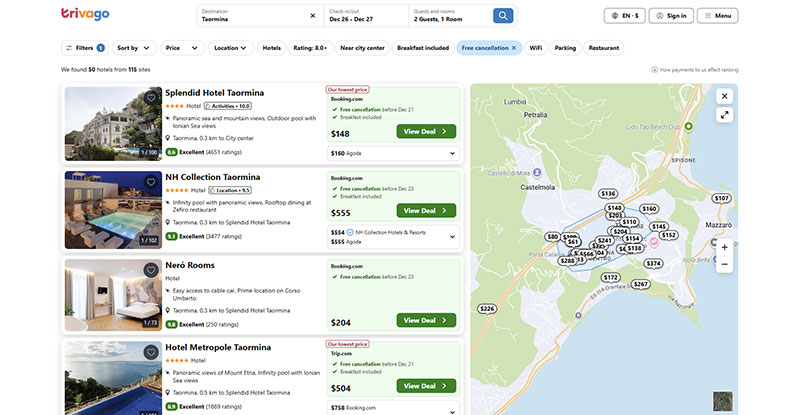
Every channel that hands a hotel a lead also decides how much control the hotel keeps over that guest’s data, and the differences are stark once you line them up.
| Channel | Example | Lead Ownership | Typical Cost Driver |
|---|---|---|---|
| Direct website | Booking engine, inquiry form | Full | Hosting, ads, staff time |
| OTA | Booking.com, Expedia | Shared or none | Commission per booking |
| Metasearch | Google Hotel Ads, Trivago | Partial | Cost per click |
| GDS | Amadeus, Sabre | None | Booking fee, agent commission |
Only the direct channel gives the hotel the guest’s email address without a third party sitting in between.
Website traffic patterns are shifting too, as travelers increasingly turn to AI-assisted search and app-based discovery for travel planning. Industry studies from 2025 and 2026 report a wide range of impacts here, depending on the metric and the query type. Some show single-digit shifts in overall visits. Others show click-through declines of 30 percent or more on informational searches where an AI Overview appears. The exact effect on any given hotel’s traffic ends up highly variable rather than a single fixed figure.
That shift makes the inquiry form on the hotel’s own site more important, not less, since a well-placed form on that site does most of the lead-capturing work once a visitor actually lands there.
Website inquiries and metasearch clicks are leads that come looking for the hotel, while corporate account outreach and travel agent relationships are leads the sales team goes out and finds instead.
How Group and MICE Lead Generation Works
Group and MICE leads arrive as a request for proposal, not a room search.
A planner submits dates and an estimated room block, plus a list of required meeting space, and the hotel comes back with availability and a rate.
RFP Sourcing Networks
The Cvent Supplier Network now lists nearly 340,000 hotels and venues worldwide, and planners sourced more than 16 billion dollars in group business through Cvent’s network in 2023 alone (Cvent, 2023).
Groups360 runs a similar marketplace built around price transparency between planners and venues.
An RFP form asking for a dozen data points at once behaves differently than a short contact box, closer to the distinction covered in a longer form broken into stages versus one that asks for everything at once.
Hilton added the Cvent Supplier Network as a lead channel and gave its hotels enhanced search placement to reach the planners already sourcing venues there.
Third-Party Meeting Planners and Destination Management Companies
Not every group lead comes through a network the hotel logs into itself.
HelmsBriscoe and similar third-party planning firms source venues on behalf of corporate clients and route the RFP to the hotel directly.
- Destination management companies referring overflow business from partner hotels
- Corporate travel managers with standing negotiated rates across multiple properties
- Independent meeting planners working on a per-event basis
A group RFP submitted through a hotel’s own site behaves differently from a general inquiry, closer to what’s covered when comparing a simple contact box against a form built specifically to qualify a sales lead.
Which Technology Captures and Manages Hotel Leads
The booking engine, the property management system, and the CRM that eventually holds the lead each do a piece of this work, and none of them do much good without the others.
Booking Engine and Property Management System
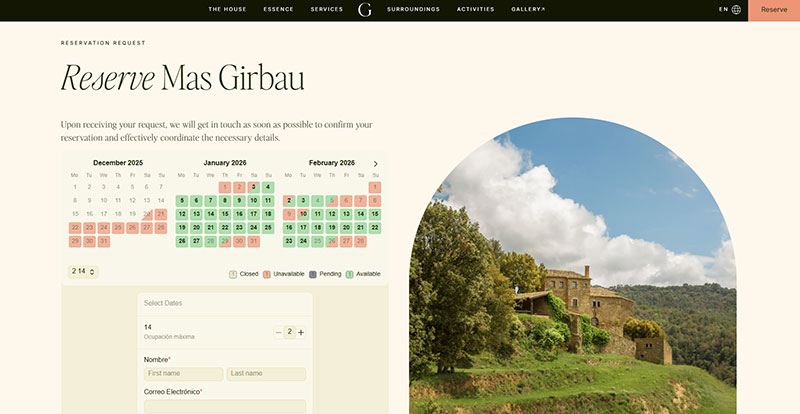
Cloudbeds and Mews combine the booking engine and the property management system into one product, so a website inquiry lands directly in the same record as room inventory.
Larger properties often run Oracle Hospitality OPERA as the property management system and connect it to a separate booking engine through SiteMinder as the channel manager.
A slow or cluttered inquiry form loses the lead before the property management system ever records it.
That’s the same problem covered in guidance on building a capture form that doesn’t lose the visitor halfway through.
Guest CRM and Chat Capture
Once a lead exists, it needs somewhere to live.
Revinate was built specifically for hotel guest data and email marketing, while larger sales teams often lean on general-purpose CRMs like HubSpot or Salesforce instead.
Chatbots like HiJiffy and Asksuite catch inquiries outside front desk hours, then hand qualified ones to the CRM automatically.
None of these tools generate leads on their own. They just keep the ones already coming in from disappearing.
Direct Lead Cost Versus OTA Commission
OTA commission rates now run between 15 and 30 percent per booking, up from roughly 10 percent a decade ago, according to Cloudbeds (2025).
A direct lead costs money too. It just spends that money differently, on a website, on ads, and on staff time instead of a percentage cut.
OTA commission runs 15 to 30 percent of the booking value (Cloudbeds, 2025), and OTAs collectively put 20 billion dollars into marketing and sales spend in 2025 (Cloudbeds, 2025) chasing bookings on their own channels.
Here’s a number that matters more than it looks like it should: 53 percent of mobile visitors abandon a page after a 3-second load delay (Google). A slow direct booking path pushes the traveler right back to the OTA app the hotel was trying to avoid paying commission on in the first place.
Hilton ran its “Stop Clicking Around” campaign, offering Hilton Honors members a discounted rate for booking direct instead of through an OTA.
Running a campaign like that well depends on a form built for a single campaign page instead of a general contact page, since the whole point is converting the visitor before they leave.
How Guest Data and Lead Scoring Turn Inquiries into Repeat Bookings
A lead that doesn’t book right away isn’t a dead lead. It’s a name that needs a reason to come back.
Stay history and room preferences, plus whatever past inquiries sit in the PMS and CRM, are what make that follow-up feel relevant instead of generic.
Budget fit against the property’s rate structure matters first. So does date flexibility, especially for group inquiries, along with the size of the room block or event space being requested. Where the lead came from counts too, since a direct RFP tends to convert better than a name pulled from a cold list.
Picking the right fields on the inquiry form in the first place makes scoring easier later, which is the point behind choosing form fields that actually separate a serious inquiry from a casual one.
Marriott Bonvoy uses stay history and stated preferences collected through its loyalty program to personalize offers sent to members after a stay.
A small incentive, like a discount code in exchange for an email signup, works on the same logic covered in offering something small upfront to get a visitor’s contact details.
The Role of Reviews and Loyalty Programs in Hotel Lead Generation

A review score isn’t just reputation. It’s a discovery channel that pulls in a lead before the hotel spends a cent on it.
Global hotel response rates to guest reviews reached 68.8 percent in 2025, with average response times down to 3.5 days, according to Shiji’s Guest Experience Benchmark Report.
TripAdvisor and Google Business Profile reviews work as a discovery channel for travelers who haven’t heard of the hotel yet. Loyalty program enrollment does something else entirely, turning a guest who already booked once into a repeat lead source.
A loyalty member who books again isn’t a new lead in the funnel sense.
They skip straight from inquiry to confirmation because the hotel already has their data on file.
Referral behavior differs too. A loyalty member with a good stay is far more likely to mention the hotel by name to a colleague than a first-time booker is.
Data Privacy Rules for Hotel Lead Capture
Every lead capture form is also a data collection form, and hotels don’t get to skip the regulations that come with that just because the form asks for a room date instead of a credit card number.
GDPR requires explicit consent before storing or emailing anyone whose form submission touches the European Economic Area, regardless of where the hotel itself is based. The CAN-SPAM Act, separately, requires a working unsubscribe link and accurate sender information on every marketing email sent to a US-based lead.
Getting the consent language right at the point of capture matters more than fixing it after the fact, which is the focus of building the consent checkbox and data notice into the form itself.
Some hotels model their own consent wording on published samples of how other businesses phrase that same checkbox.
The UK’s Information Commissioner’s Office fined British Airways 20 million pounds in 2020 over a breach of customer booking data, reduced from an initial 183 million pound notice.
The same regulator oversees hotel booking and RFP data under the same law.
Choosing Lead Generation Tools by Hotel Size and Segment
The right tool stack depends on how many properties a hotel operates and how much group business it chases, not on which platform has the longest feature list.
| Hotel Profile | Core Tools | Group Sales Tools | Typical Investment |
|---|---|---|---|
| Small independent | Cloudbeds or Mews | Rarely needed | Low, single subscription |
| Mid-size property | PMS plus Revinate or similar CRM | Direct RFP form on site | Moderate |
| Multi-property or enterprise | Oracle Hospitality OPERA, Salesforce | Cvent Supplier Network, Groups360 | High, multiple contracts |
Small Independent Hotels
A single-property hotel rarely needs a group RFP network if it has no meeting space to sell.
- Booking engine and PMS combined in one product
- Basic email tool for post-stay follow-up
- A chatbot only if front desk coverage has real gaps at night
Hotel Tech Report’s Q2 2026 survey of 283 hoteliers running properties under 50 rooms found 7 direct booking tools recommended most often at that size, a shorter list than larger properties consider.
Multi-Property and Enterprise Hotels
The same Hotel Tech Report Q2 2026 survey drew input from 542 hoteliers running properties of 100 to 499 rooms, more than any other size bracket.
An all-in-one platform means one login, one support contract, and consistent data across every property, which sounds great until one module in the stack turns out to be weak and there’s no easy way to swap just that piece out. Pricing on these platforms rarely scales down for a smaller portfolio either.
Going with separate best-of-breed tools instead fixes that problem since each piece can be replaced on its own timeline. It creates a different one: more integration work, and more places for a lead to quietly fall through a gap between systems.
Steps to Build a Hotel Lead Generation System
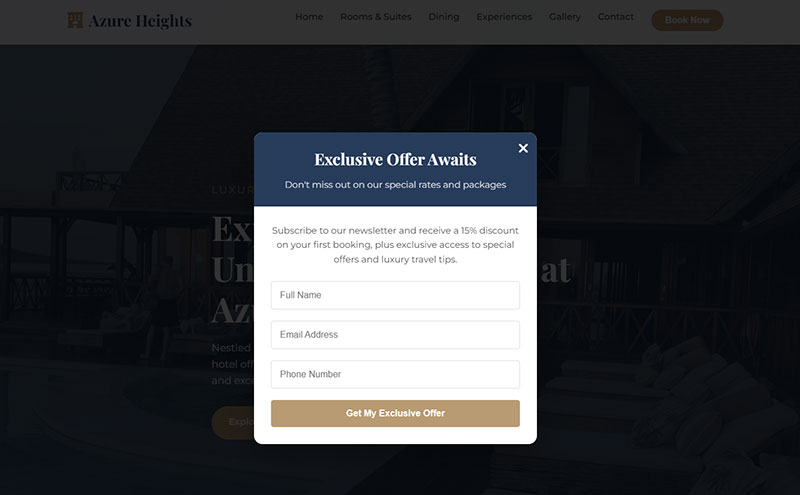
Building the system in the right order saves months of redoing work later.
- Audit every current lead source and note where each one currently sends its data
- Connect the booking engine and PMS so a website inquiry lands in one place
- Add or rebuild the inquiry and RFP forms on the site itself
- Route qualified leads into the CRM with basic scoring rules attached
- Build a short follow-up email sequence for inquiries that didn’t convert immediately
- Review response times and conversion rates weekly, not quarterly
Step three is where most of the early wins sit, since a purpose-built capture form usually outperforms a generic contact page by a wide margin.
Room Republic, after implementing Bookboost’s multi-channel CRM, recovered up to 23 percent of guest details previously locked inside OTA bookings and grew direct bookings by 55 percent.
Step six is the one hotels skip most often, even though small adjustments to an underperforming form usually surface during exactly that kind of weekly review.
When Hotel Lead Generation Does Not Work
None of this works equally well for every property, and pretending otherwise wastes budget.
This works well when the property actually has meeting or event space to sell, when the website and RFP form are fast and simple to use, and when a staff member responds to inquiries within hours instead of days.
It fails just as predictably in a few situations. A hotel with no meeting space is paying for a group RFP network subscription that does nothing. Heavy OTA demand can also swamp a modest direct budget so completely that it shows no measurable shift within a normal planning cycle. And leads that sit unanswered for days lose out regardless of which channel produced them in the first place.
A hotel deciding where to invest should size the effort to the segment it actually serves, not to the full list of tools a larger competitor happens to use.
FAQ on Lead Generation For Hotels
What Is the Difference Between Hotel Lead Generation and General Hotel Marketing?
General hotel marketing builds brand awareness across every channel without measuring conversion. Lead generation for hotels narrows to one outcome, a captured inquiry or RFP that a sales team can score and move toward a signed booking.
What Is a Good RFP-to-Contract Conversion Rate for Group Sales?
No universal benchmark exists, since it varies by market, segment, and lead source. A hotel tracking its own RFP-to-contract rate over time, split by channel such as the Cvent Supplier Network versus a direct website form, learns more than chasing an industry average.
Do Independent Hotels Need Different Lead Generation Tactics Than Branded Chains?
Independent hotels lean harder on direct website capture, reviews, and metasearch since they lack a built-in loyalty program. Branded chains such as Hilton route leads through loyalty membership and enterprise RFP contracts before an inquiry reaches the property.
What Mistakes Cause Hotel Lead Campaigns to Underperform?
Slow RFP response tops the list, since planners send the same request to multiple properties and the fastest reply usually wins. Generic contact forms, missing lead scoring, and a single follow-up email instead of a sequence waste leads already captured.
How Often Should a Hotel Refresh Its Lead Generation Strategy?
Review channel performance monthly and rebuild the full strategy at least once a year, since OTA commission structures, metasearch bidding costs, and platforms like the Cvent Supplier Network shift enough within twelve months to change which channel deserves the next dollar of budget.
What Should a Hotel Fix First in Lead Generation for Hotels?
Lead generation for hotels improves fastest when a property fixes its direct website inquiry form before touching any paid channel, since every other channel eventually routes traffic back to that same page and inherits whatever conversion rate it already has.
The build order determines how much of that traffic converts before a single ad dollar gets spent.
- Direct website inquiry and RFP forms
- Guest CRM and lead scoring rules
- Paid metasearch and campaign landing pages
Fixing the form and the scoring rules first raises the conversion rate every paid channel later depends on, trading short-term OTA volume for a leaner cost per booking.
The next decision is which metrics to watch once that order is live, covered in the core metrics worth tracking after launch.