





A new client doesn’t sign with an accounting firm because a landing page convinced them. They sign because someone they trust vouched for the firm, or because the firm showed…
Table of contents
Most agents do not lose deals because they sell badly. They lose because the pipeline runs dry.
Lead generation for insurance agents is the work of filling that pipeline with in-market buyers, then reaching them before a competitor does. It spans exclusive and shared leads, referrals, local search, and vendor platforms like EverQuote and SmartFinancial.
The stakes are real. A web lead contacted within 5 minutes is 21 times more likely to be qualified than one reached at 30 minutes.
What Is Lead Generation for Insurance Agents?
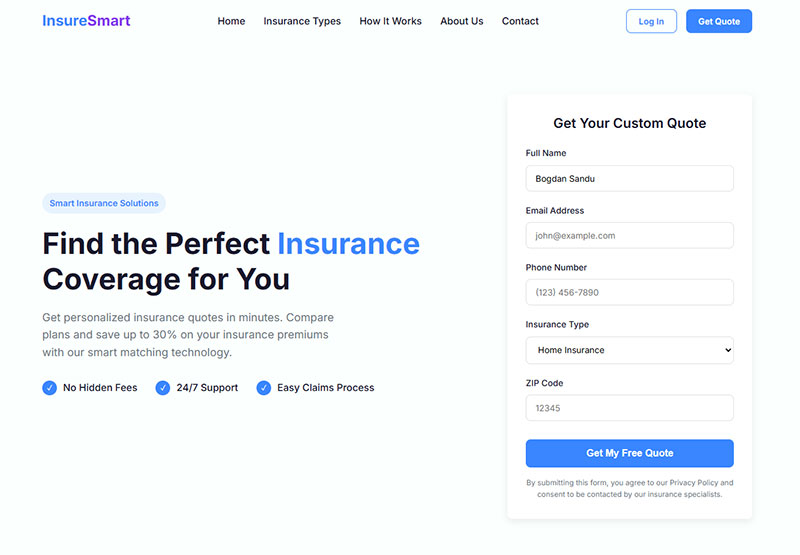
Finding, attracting, and capturing contact details from people likely to buy a policy. That feeds the insurance sales funnel with in-market buyers so agents can quote and close.
The work spans eight channels, and each one suits a different line of business.
A lead is not the same as a prospect. A lead is a raw contact who showed some interest. A prospect is a lead you have qualified. A suspect is just a name with no signal at all.
The buying journey has shifted hard toward digital, and faster than most agents realise. J.D. Power’s 2026 U.S. Insurance Shopping Study found 48% of new auto policies are now purchased digitally, up from 36% just five years earlier. Their 2025 Digital Experience Study put digital ahead of both agents (35%) and call centers (17%) as the primary purchase channel.
That does not make agents obsolete. It changes where they win. Shoppers now collect an average of 3.5 quotes, the highest in the study’s history, so the agent who is visible early and responds first captures a buyer who is actively comparing. Life, final expense, and commercial lines still run through a licensed human almost every time.
Exclusive Leads vs Shared Leads
Exclusive leads go to one agent only. Nobody else is calling that person.
A shared lead gets sold to three, four, sometimes five agents at once, which means you are racing everyone else to the phone and the person picking up has already heard the pitch twice today.
Exclusive leads typically cost 2 to 5 times more than shared leads, yet convert at several times the rate. That math usually makes exclusive cheaper per bound policy, which is the number that actually matters.
Inbound Leads vs Outbound Leads
Inbound means the buyer finds you, through a Google search, a quote form, or a referral. Outbound means you reach them first, whether that’s cold calling, direct mail, or purchased vendor lists.
Lines behave differently here. Final expense and Medicare lean outbound and purchased. Commercial insurance leans toward networking and personalized cold outreach. Auto and home split between both.
What Types of Insurance Leads Can Agents Generate?
Company leads, purchased vendor leads, self-generated leads, aged leads, and live transfers. Each carries a different cost, contact rate, and close rate.
| Lead Source | Where It Comes From | Typical Close Rate |
|---|---|---|
| Warm Referrals | Existing customers, partners, and personal referrals | 30–50%+ |
| Exclusive Real-Time Leads | Your website, paid campaigns, or exclusive lead vendors | 8–15%+ |
| Shared Web Leads | Lead aggregators and marketplaces sold to multiple buyers | 2–5% |
| Aged Leads | Previously sold or older contact databases | 0.5–1.5% |
Company Leads
Carrier-provided leads handed to captive agents. State Farm, Allstate, and Farmers route these to their own agents.
Purchased Vendor Leads
Bought from marketplaces like EverQuote, SmartFinancial, QuoteWizard, and Datalot. Volume is easy. Quality swings hard.
Agents routinely report high rates of bad contact data and recycled records on aggregator channels. Buy a small test batch, measure your own contact and bind rates, and only then decide whether to scale spend.
Self-Generated Leads
Leads you own outright: your website, your referrals, your social. Higher effort upfront, lower cost per lead over time. These are the ones nobody can resell out from under you.
Aged and Live-Transfer Leads
Aged leads are days or weeks old, sold cheap at $2 to $5 each. Contact rates drop, but agents with autodialers and tight follow-up still pull ROI.
Live transfers land a pre-screened buyer on your phone in real time. An intake agent qualified them first, so they convert well above standard web leads, typically in the 15 to 30% range against 5 to 15%.
How Much Do Insurance Leads Cost?
Anywhere from under a dollar for aged data to $300 for an IUL live transfer. Price tracks the vertical, the delivery format, and exclusivity. Auto sits cheapest. Commercial and IUL sit at the top.
| Insurance Line | Shared / Aged Lead Cost | Exclusive Real-Time Lead Cost |
|---|---|---|
| Auto Insurance | $5–$30 | $30–$60 |
| Life Insurance | $1–$3 (aged) | $20–$50 |
| Final Expense Insurance | $5–$30 | $30–$90 |
| Commercial Insurance | n/a | $25–$200 |
Why the Cheapest Lead Is Not the Cheapest Client
Per-lead price is a trap. The number that matters is cost per acquired client, which is lead cost divided by close rate.
Pay $25 per lead and close 10%, and your cost per client is $250. A $5 shared lead is not cheaper if it takes ten of them to close one deal and only three of the expensive ones.
The same lead performs differently in different hands. Take $30 exclusive web leads. An agent closing at 10% pays $300 per sale, while an agent closing at 18% pays $167. Same lead, nearly double the profit, and the difference is follow-up discipline rather than lead quality.
Real-Time vs Aged Pricing
Fresh real-time leads run $10 to $50 each. Aged leads over 90 days old drop to well under a dollar in some P&C lines, with aged auto commonly listed around $0.50 to $2.00 and aged life around $1.25 to $5.00.
Cheap, but you trade contact rate for the discount. Aged data only works with an autodialer and a genuine multi-touch cadence behind it.
Which Lead Generation Methods Work Best for Insurance Agents?
Ranked by close rate and cost, the order runs referrals, local search visibility, paid search, social media ads, vendor platforms, and cold outreach. Referrals win on quality. Paid channels win on speed.
The right order depends on your stage. A brand-new agent needs pipeline this month and starts with paid and purchased sources. An established agency layers in the compounding channels that lower cost per acquisition over years.
Referral-Based Lead Generation
Referred prospects close at 30 to 50%+ against 2 to 5% for shared web leads. The only cost is your time.
Warm intros carry built-in trust. The buyer already heard you are worth calling. Nothing kills a cold-call slump faster.
Search and Local Visibility
Insurance is bought locally, even when researched globally. People want an agent in their state who picks up when a tree hits the garage.
72% of consumers use Google to find local business information (SOCi Consumer Behavior Index). Ranking for “[city] insurance agent” puts you in front of buyers at the exact moment of intent.
Content marketing built around questions buyers actually type (“does homeowners cover water damage”) pulls organic traffic with no per-click charge.
Paid Advertising Channels
Google Ads captures high-intent searches like “car insurance near me.” Fast, but pricey.
Insurance is among the most expensive verticals in paid search, with competitive keywords running well into double digits per click and only a fraction of those clicks completing a form. Run the full funnel math before you commit budget, because raw paid-search lead cost can land in the hundreds before you even dial.
Purchased Lead Platforms
EverQuote, QuoteWizard, and SmartFinancial fill a pipeline in a day. They work best paired with your own organic and referral sources, not as your only channel.
Commercial and business lines carry the highest acquisition costs of any segment, which is survivable only because a single commercial policy dwarfs a personal auto premium. Vendor leads are a supplement, not a foundation.
How Do Insurance Agents Get Leads From Their Website?
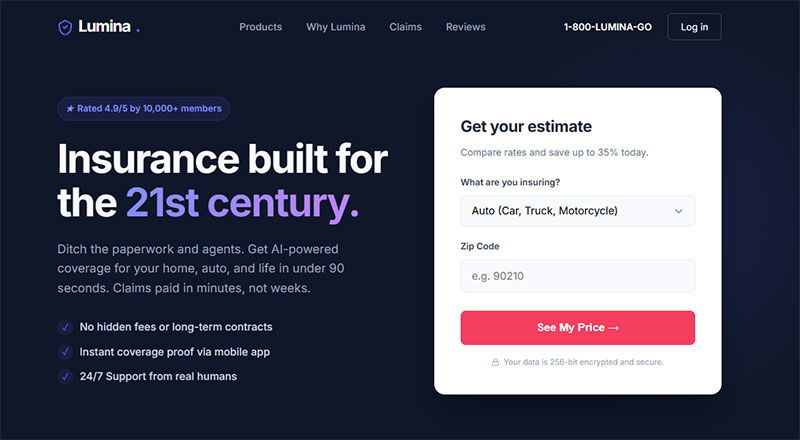
Quote request forms, line-specific landing pages, click-to-call buttons, and after-hours chat. These owned assets convert visitors into contacts without paying per click.
Your site is the one channel nobody can resell or shut off. Build it to capture, not just to sit there looking pretty.
Quote Forms and Landing Pages
Form depth tracks with close rate. Buyers who answer more specific questions arrive with higher intent, which is the trade-off against raw volume.
A dedicated landing page built around a single line of business beats a generic contact form for conversions. One page, one policy, one clear ask.
Getting the fields right is its own skill. Study proven lead generation form examples before you design your own, then keep the field count lean enough that nobody bails halfway.
Click-to-Call and Live Chat
Insurance shoppers are most likely to call during the purchase phase, when they have narrowed the field and want a human to confirm the details. A click-to-call button on mobile catches them at that moment.
Live chat and chatbots capture the after-hours traffic that would otherwise leave and never come back. Tools like Forge3, BrightFire, and ITC’s website builders bake these in.
How Does Google Help Insurance Agents Find Leads?
Through Google Business Profile rankings, local search results, reviews, and question-targeting content. Organic and local search compound over time and cost far less than paid channels per lead.
Google Business Profile Optimization
A complete profile with accurate name, address, and phone is table stakes. 42% of searchers click the Google map pack for local queries (Backlinko).
Profiles with 15 or more photos see stronger engagement across calls, clicks, and direction requests. Fill it out fully, then keep it fresh.
Ranking for Local Insurance Queries
Reviews drive both ranking and trust. 97% of consumers read reviews for local businesses (BrightLocal).
Response matters as much as volume. 88% of consumers would use a business that replies to every review, against just 47% for one that never responds. Reply to all of them. Even the cranky ones.
Google Local Services Ads, where available for insurance, put you above the organic pack with a verified badge. Worth testing once your profile and reviews are solid.
How Do Social Media Platforms Generate Insurance Leads?
Facebook lead ads, LinkedIn outreach, and Instagram targeting each fit a different line and buyer age. Facebook drives auto, life, and final expense. LinkedIn owns commercial and group benefits.
Platforms let you target by demographics, interests, and location, so an insurance agent can put a quote form in front of a qualified lead without cold calling.
Facebook and Instagram
Facebook lead ads capture contact info without the buyer leaving the app. Lookalike audiences clone your best clients and find more like them.
Facebook remains one of the more affordable paid options for consumer lines, though lead quality typically runs below LinkedIn for anything commercial. Instagram skews younger, better for renters and first-time life buyers.
LinkedIn for Commercial Lines
LinkedIn converts visitors to leads at 2.74%, nearly triple the rate of other social platforms, and generates 277% more B2B leads than Facebook and Twitter combined (Foundation Marketing).
Zein Insurance Services ran a LinkedIn outreach campaign from March to August 2024. Out of 1,045 messages sent, they hit a 12.35% reply rate.
The tradeoff is cost. LinkedIn leads often run $110 or higher, climbing steeply for enterprise targeting. Worth it when a single commercial policy dwarfs the acquisition cost.
What Role Do Referrals Play in Insurance Lead Generation?
Referrals produce the highest-quality leads in insurance, converting at several times the rate of purchased leads. A referred prospect arrives pre-trusted, which shortens the sales cycle and lifts close rates well past any paid channel.
Referral ranks second only to SEO as a top lead source, driving roughly 30% of leads across industries (Databox).
Why Referrals Convert So Well
A referred lead might cost $100 in incentive payments yet close at four times the rate of a cold lead. Trust does the selling before you pick up the phone.
The catch is a gap between willingness and action. Research consistently finds a large majority of customers are willing to refer a brand, while only a small fraction actually do it unprompted. The referrals are sitting there. Almost nobody asks.
How to Systematize Referral Requests
Timing does most of the work. Ask right after a positive service interaction, when goodwill is highest. A smooth claim, a coverage review that saved money, a fast policy change.
Then there’s the ask rate itself. The gap between customers who would give referrals and salespeople who actually request them is enormous, and building the ask into your process is what closes it. Partners help too, since realtors, mortgage brokers, and auto dealers send buyers at natural policy-triggering moments.
Track the referral source on every policy so you know which partners and clients actually produce.
How Do Insurance Agents Nurture and Convert Leads?
Speed to lead, multi-touch follow-up, and CRM automation. Contacting a web lead within 5 minutes and running a 6 to 8 touch cadence separates agencies that close from agencies that leak pipeline.
Generation without follow-up burns money. An agency losing 30% of its leads to slow response, working 200 leads a month at a $500 average premium, is leaving roughly $30,000 a month on the table.
Speed to Lead
Speed is the single most underrated factor in insurance sales. The Lead Response Management study, conducted by Dr. James Oldroyd at MIT Sloan with InsideSales.com across more than 15,000 leads and 100,000 call attempts, found that calling a lead at 5 minutes rather than 30 made teams 100 times more likely to connect and 21 times more likely to qualify that lead.
The follow-up audit published in Harvard Business Review found the average firm took 42 hours to respond and 23% never responded at all. Automating that first touch is the cheapest competitive advantage available to a small agency.
Follow-Up Cadence and Automation
The average insurance sale needs 6 to 8 touchpoints before the prospect commits. One attempt captures only a small fraction of the available conversions.
Yet half of leads are never called more than once, even though most sales require five or more attempts. Persistence is the cheapest edge available.
On channel mix, call first, text within 2 minutes, email within 5, then drip for 7 to 14 days. AgencyBloc, Radiusbob, Velocify, and HubSpot handle cadence and lead scoring so nothing slips through.
How Do Agents Measure Lead Generation ROI?
Cost per lead, cost per acquisition, close rate, and lifetime value. Tracking these by source shows which channels build the book and which quietly drain the budget.
| Metric | Formula | Why It Matters |
|---|---|---|
| Cost per Lead (CPL) | Marketing Spend ÷ Number of Leads | Measures the average cost to generate a lead and helps compare channel efficiency. |
| Cost per Acquisition (CPA) | Marketing & Sales Spend ÷ Number of Customers (or Policies Sold) | Shows the true cost of acquiring a paying customer or policyholder. |
| Close Rate | Policies Sold ÷ Total Leads × 100% | Indicates lead quality and sales effectiveness by measuring how many leads become customers. |
| Customer Lifetime Value (LTV) | Average Premium × Customer Retention Period (or total expected customer value over time) | Helps determine how much you can profitably spend to acquire a customer. |
Cost Per Acquisition Over Cost Per Lead
Cost per acquisition is the number that decides profit. Tracking it alongside contact rate and bind rate is non-negotiable.
Commercial lines carry the highest cost per lead of any segment. A high per-lead price still wins if the close rate and premium justify it, which is exactly why the per-lead number on its own tells you nothing.
Why Retention Changes the Math
Insurance profit lives in renewals, so lifetime value has to sit against acquisition cost. A client who stays five years absorbs a much higher upfront lead cost.
Multi-policy households retain dramatically better than single-policy ones. Cross-selling a second or third line protects the ROI of every lead you already paid for, and it costs a fraction of acquiring a new client.
What Compliance Rules Apply to Insurance Lead Generation?
TCPA consent rules, the Do Not Call registry, state rebating laws, and CMS marketing rules for Medicare. Violations carry real penalties, so consent tracking is not optional.
TCPA class actions regularly settle in the millions, and liability lands on the agent who made the call, not just the vendor who sold the lead.
TCPA and the One-to-One Consent Reversal
The FCC’s one-to-one consent rule was vacated on January 24, 2025 by the Eleventh Circuit in Insurance Marketing Coalition Ltd. v. FCC, No. 24-10277, three days before it was due to take effect. The court held the FCC had exceeded its statutory authority under the TCPA. The FCC has since removed the vacated language from its rules.
That reversal did not loosen the underlying standard. Consent still has to be prior, express, and written, and the buyer must have clearly agreed to hear from your organization. The Bilek v. Federal Insurance line of cases makes you potentially liable for your lead generator’s TCPA violations, so vendor consent records are your records.
Do Not Call and Opt-Out Rules
Since April 11, 2025, opt-out and internal do-not-call requests must be honored as soon as practicable and no later than ten business days after receipt.
Consumers can revoke consent in any manner that clearly conveys the request. The FCC names stop, quit, revoke, opt out, cancel, unsubscribe, and end as automatically valid, but a phrase does not have to be on that list. If a reasonable person would read it as an opt-out, it counts. The broader provision extending a revocation across message types took effect in April 2026.
Rebating is a separate question, and state Departments of Insurance limit how you reward referrals with rules that vary by state.
The practical lesson is to match every opt-out variation, not just “STOP.” Agencies have settled class actions for continuing to text after a non-standard opt-out phrase.
CMS Rules for Medicare Leads
CMS requires prior express written consent naming each company authorized to contact a beneficiary before a third-party marketing organization shares that person’s data. Broad or bundled consent is not permitted.
This one matters because it survived the litigation that killed the rest of the rule. On August 18, 2025, a federal judge in Texas vacated CMS’s fixed broker compensation caps and its contract-terms restrictions in the consolidated Americans for Beneficiary Choice v. HHS cases, but upheld the beneficiary data consent requirement. So the FCC’s one-to-one rule is gone and CMS’s version is not.
Cold calls to Medicare beneficiaries remain prohibited without prior consent, and sales calls must be recorded and retained for 10 years. Medicare Advantage carries the strictest scrutiny of any line.
How Do Agents Choose the Right Lead Generation Strategy?
Budget, line of business, and agency stage decide it. A new agent buys speed. An established agency builds compounding organic and referral pipelines that lower cost per acquisition over time.
The best-performing agencies blend inbound and outbound, because each fills a different part of the funnel and protects the business when one channel gets expensive.
New Agent vs Established Agency
A new agent on a low budget starts with purchased leads, live transfers, and paid search for immediate pipeline. An established agency has the runway to layer in SEO, content, and referral systems that compound and cut dependency on bought leads.
The sequencing matters more than the list. Speed-to-first-lead channels keep the lights on while the compounding channels take six to twelve months to produce.
Match the Channel to the Line
Final expense runs on aged-lead volume and direct mail. Commercial runs on networking and personalized outreach. Auto and home start on Google.
Life is a needs-based sale with a longer qualification window, and the market is enormous. The 2025 LIMRA and Life Happens Insurance Barometer Study found 40% of American adults, roughly 100 million people, say they need life insurance or need more than they currently hold. Only 51% own any coverage at all.
The barrier is usually price perception rather than price. Adults under 30 overestimate the cost of a $250,000 term policy by ten to twelve times, which makes education the actual sales tool in that line.
Blend Owned and Purchased Sources
Buying leads gives speed. Owning leads gives margin. Depending on one source is the fastest way to get squeezed when prices climb.
Shared auto leads that sold for $7 to $12 a few years ago now commonly run $14 to $25. Reinvest the ROI data from your best channels, and let your website plus referrals absorb the rising cost of bought leads over time.
FAQ on Lead Generation For Insurance Agents
What is the best source of insurance leads?
Referrals, by a wide margin. They close at 30 to 50%, far above shared web leads at 2 to 5%. The only cost is time. Vendor platforms and local search fill the pipeline faster but convert lower.
How much do insurance leads cost?
From under a dollar for aged data to $300 for an IUL live transfer. Shared auto sits at $5 to $30. Exclusive commercial leads reach $200, justified by much larger premiums.
Are exclusive leads worth the higher price?
Usually, yes. Exclusive leads cost 2 to 5 times more than shared leads but convert at several times the rate. That math often makes them cheaper per bound policy.
How fast should I contact a new lead?
Within 5 minutes. MIT and InsideSales research found that calling at 5 minutes rather than 30 makes you 100 times more likely to connect and 21 times more likely to qualify the lead.
How many times should I follow up?
Run 6 to 8 touchpoints per lead. Half of leads are never called more than once, yet most sales need five or more attempts. Persistence is the cheapest edge you have.
Which lead vendors do agents use?
EverQuote, SmartFinancial, QuoteWizard, and Datalot are the major marketplaces. They work best paired with your own referral and organic pipelines, not as your only channel. Test quality before scaling spend.
Do social media ads generate insurance leads?
Yes. Facebook lead ads drive auto, life, and final expense affordably. LinkedIn suits commercial lines and converts visitors at 2.74%, nearly triple other platforms, at a higher cost per lead.
How do I get leads from Google?
Optimize your Google Business Profile, gather reviews, and rank for “[city] insurance agent” queries. 42% of searchers click the local map pack. Organic search compounds and costs far less per lead than paid ads.
What compliance rules apply to buying leads?
TCPA requires prior express written consent, and you can be liable for your vendor’s violations. Honor opt-outs within ten business days, in whatever wording the consumer uses. Medicare leads need separate CMS consent naming each company.
What metric matters most for lead ROI?
Cost per acquisition beats cost per lead. It divides total spend by policies written, showing the true cost of a client. Weigh it against lifetime value, since insurance profit lives in renewals.
Conclusion
Winning at lead generation for insurance agents comes down to one habit: match the right method to your line, budget, and stage, then work every lead relentlessly.
Buying leads from QuoteWizard or Datalot buys speed. Referrals and your own website buy margin.
The agents who pull ahead track the numbers that matter. Close rate, cost per acquisition, and lifetime value tell you which channel builds the book and which one bleeds cash.
Follow-up cadence decides the rest. A lead nurtured across call, text, and email closes far more often than one left in a CRM after a single try.
Stay compliant, respect Do Not Call and CMS consent rules, and reinvest what works.
Fill the pipeline. Answer fast. Keep the clients you win.