









A new client doesn’t sign with an accounting firm because a landing page convinced them. They sign because someone they trust vouched for the firm, or because the firm showed…
Table of contents
Most new gym members can point to the specific person who talked them into showing up. A workout partner, a coworker, someone from a group chat who wouldn’t stop posting progress photos.
That’s not just a feeling; it’s the number one reason people join, according to Zenoti’s 2026 Fitness Consumer Survey of 1,393 members, which found that 67% of current U.S. gym members say they signed up because someone they knew recommended the gym.
Ads, landing pages, and CRM software exist because most gyms can’t run entirely on word of mouth. Someone still has to close the gap between the members who are already convinced and the much bigger group who has never heard of the place.
That’s the job lead generation does, whether it’s an owner posting Facebook ads between classes or an agency running the whole thing. What actually gets measured is trial signups and cost per acquired member, not how many names end up in a spreadsheet.
What Is Lead Generation for Gyms?
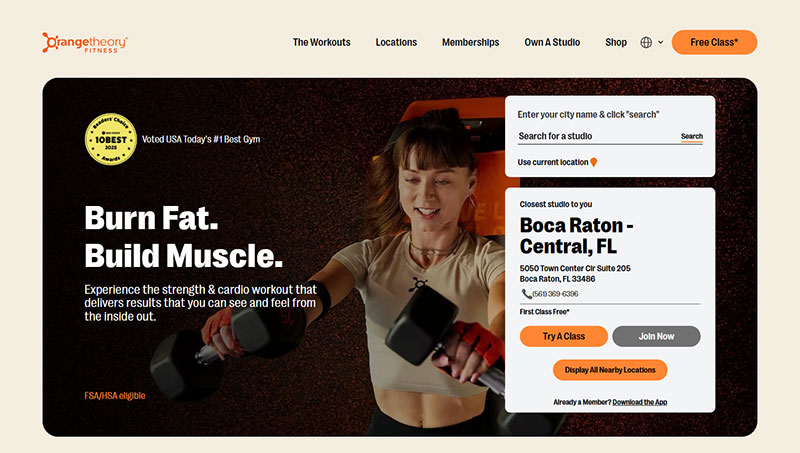
A walk-in has already shown up at your door. A lead hasn’t. They’ve only handed over a name, maybe a phone number, and some small signal of curiosity: a form filled out online, a call to the front desk, a comment on Instagram asking what a membership costs.
Understanding what lead generation actually means in general comes first. After that it’s just a matter of applying the concept to a business that sells access to a room, a schedule, and a coached experience rather than a product that ships in a box.
It sits upstream of retention. A gym can have the best coaches in the state and still run dry without a steady flow of new people walking through the door.
Two lead types show up in most gym pipelines. Trial signups are people who commit to a free class or a discounted intro period. Information requests are people asking about pricing, schedules, or programs before they’ll commit to anything at all.
That split isn’t cosmetic, and it comes down to roughly the same difference as a contact form and a lead generation form: one collects a question, the other collects someone ready to move.
None of it means much without a paying member at the end of it. That’s the whole reason gyms track trial conversion rate instead of just counting leads in a spreadsheet.
How the Gym Lead Generation Funnel Works
A gym’s funnel moves a stranger through five stages: awareness, capture, trial, conversion, and retention. Retention loops back into referral, which is what keeps the whole thing from starting over at zero every single month.
This is a fitness-specific version of what marketers call a lead generation funnel, just applied to a business where the product is a physical space and a coached experience instead of something you can buy off a shelf.
Awareness to Trial
Awareness is just whatever puts a gym on someone’s radar. Could be a paid ad. Could be a Google search that surfaces the location. Sometimes it’s nothing more than a friend mentioning the place at brunch.
Capture happens the moment that person hands over contact details, usually through a form on the gym’s website or a lead ad running on Instagram or Facebook.
- Website signup form for a free class or trial week
- Phone call logged at the front desk
- Social lead ad submitted without leaving Instagram or Facebook
Gyms that get this step right usually rely on website forms built specifically for lead generation, not some generic contact box buried in the footer that nobody checks until Monday.
Trial to Membership
Most of the funnel’s value gets decided at the trial stage.
A prospect who shows up once and never comes back is technically still a lead. It’s just not one worth much.
Conversion is the moment a trial member signs a membership agreement, and it’s the single number that tells a gym owner whether everything upstream of it is actually working. The channel, the offer, the follow-up: all of it gets judged by what happens right here.
Which Channels Generate the Most Gym Leads

No single channel carries a gym’s entire pipeline, and the mix shifts as the gym grows. A new location leans on paid ads because it has no local reputation yet. An established gym leans on referral and local seo because it already built one.
| Channel | Type | Best suited for |
|---|---|---|
| Google Ads and Google Local Services Ads | Paid, search intent | New locations needing fast visibility |
| Meta Ads and Facebook Lead Ads | Paid, social | Trial offers and seasonal promotions |
| Google Business Profile and local seo | Organic, local | Established gyms with reviews |
| Referral and walk-in traffic | Organic, community | Gyms with an active member base |
Paid channels lean toward what marketers call outbound lead generation: pushing an offer at people who weren’t already looking for it.
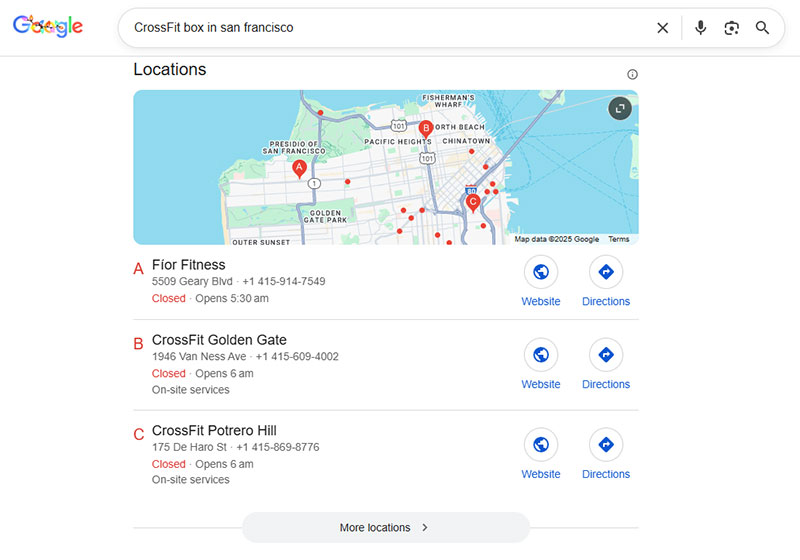
A well-optimized Google Business Profile does the opposite. It catches someone who’s already typing “gym near me” into a search bar at 6am, already halfway to a decision.
Local events and pop-up classes at parks, offices, or festivals bring in a different kind of lead entirely, one who’s trying the workout before they’ve even considered the brand. Corporate wellness partnerships with nearby employers work similarly. Nextdoor and Yelp matter for hyper-local visibility, and Instagram Reels or TikTok feed brand awareness that ends up supporting every other channel on this list.
Franchise brands such as Club Pilates and F45 lean more on Instagram and member referral than on heavy paid search, since lead generation for local businesses depends more on community presence than on a national ad budget.
What Makes a Gym Offer Convert Leads Into Members
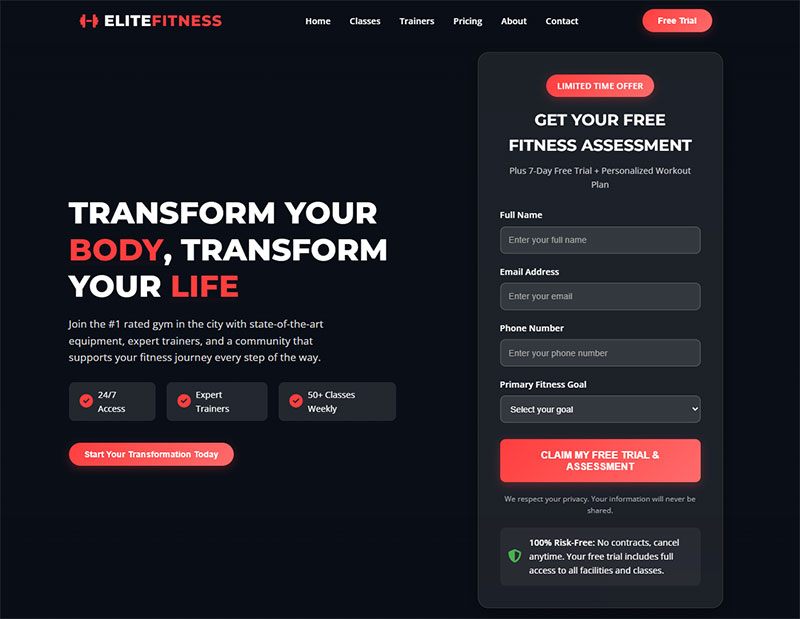
The offer decides more of the outcome than whatever channel brought the lead in.
Outside fitness, a business might trade something like a guide or a template for someone’s contact info, the classic lead magnet exchange. A gym’s version of that trade is time inside the building itself: a class, a session, a week of access.
Gymdesk’s 2026 benchmark study, drawn from 175,000 real free trials across 4,594 martial arts and combat-sports gyms, found that 73% of real free trials convert into paying memberships, and half of those signups happen within the first 10 days.
Fitness Studio 46, a boutique UK strength-training studio, builds its offer around that early window with a 30-day coached trial rather than open-access gym time.
The table below covers what’s actually out there right now, from a free trial with no card required all the way to a referral incentive that borrows trust from someone who’s already a member.
| Offer | Pros | Cons |
|---|---|---|
| Free trial, no card required | Lowest barrier to entry | Attracts price-driven leads with no commitment |
| Paid trial, $1 to $30 | Filters for genuine intent | Fewer signups than a free offer |
| No-contract intro membership | Removes fear of being locked in | Just as easy for a member to leave |
| Referral incentive | Lower cost per lead, higher trust | Depends on an existing member base |
A referral lead tends to convert faster, mostly because the trust is already borrowed from a friend or a training partner rather than earned from scratch.
How to Nurture Gym Leads After They Opt In
Capturing a lead is the easy part. Keeping that person engaged until the trial actually ends is where most gyms lose the sale.
Gymdesk’s benchmark data ties higher trial conversion to consistent, automated follow-up rather than whatever outreach an owner manages to squeeze in between classes. That gap is mostly about consistency. Not creativity.
A typical nurture sequence runs roughly in this order:
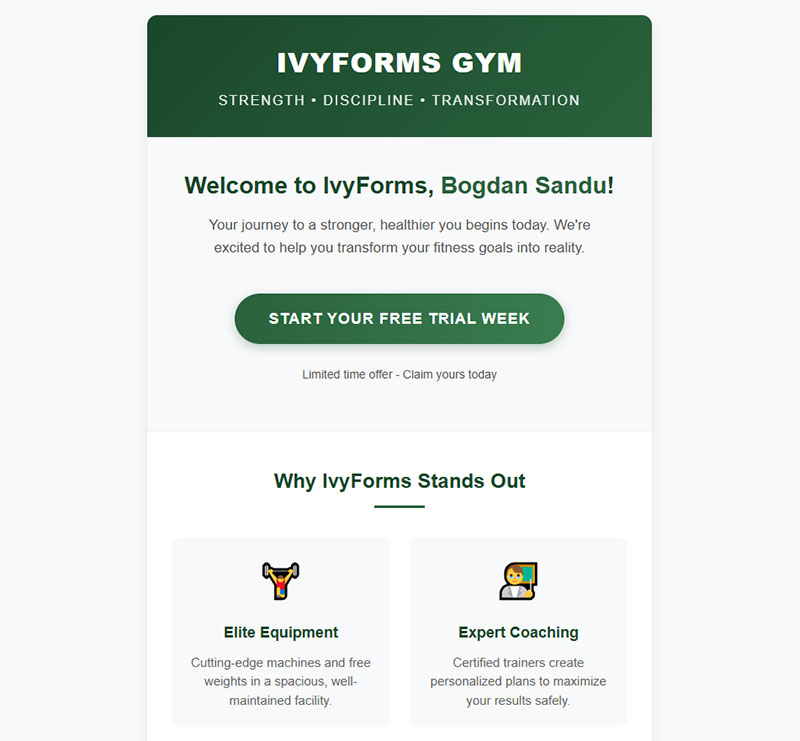
- Immediate confirmation text or email the moment someone signs up
- A welcome message explaining what to expect on day one
- A check-in message roughly 48 hours into the trial
- A conversion offer sent a few days before the trial ends
- A final follow-up on the last day if no decision has been made
Fitness Studio 46 runs a longer version of this across its full 30-day trial, layering personal check-ins on top of the email sequence instead of relying on email alone.
Gyms building this out from scratch often start from ready-made lead nurturing templates rather than writing every message from a blank page.
Re-Engaging a Cold Lead
Not every trial member converts on schedule. Some go quiet halfway through and just stop responding.
Lead scoring helps separate a lead worth chasing from one that’s genuinely lost interest, based on class attendance, email opens, and how recently they last logged in.
- A missed second visit often signals hesitation, not disinterest
- A lead who opens every email but never books a class needs a phone call, not another email
- A lead with zero engagement after 14 days rarely converts without a new offer
Choosing Gym CRM and Marketing Software
A gym CRM has to do more than store names and phone numbers. It needs to book classes, track trial status, and trigger the nurture sequence covered above, all from the same record.
Gym CRMs roughly split two ways.
| Category | Examples | What it’s built for |
|---|---|---|
| All-in-one gym platforms | Glofox, Mindbody, Zen Planner, Exercise.com, GymMaster | Booking, billing, and lead capture in one system |
| Marketing automation layered on top | GoHighLevel, HubSpot, ActiveCampaign, Klaviyo | Deeper email and sms sequencing, funnel building |
GoHighLevel, co-founded by Shaun Clark in 2018, has become common among fitness marketing agencies for the free trial automations covered earlier.
Go all-in-one and everything lives under one login, which matters more than it sounds like at month end when nobody’s reconciling data across three different systems. Lead source ties directly to billing without extra plumbing. The tradeoff shows up in marketing depth: these platforms rarely match what a dedicated automation tool can do with branching logic and sequence building. Honestly, for a single location just getting started, all-in-one is probably the safer default. There’s less that can break when everything lives in one database.
Layer marketing automation on top instead, and that’s exactly what you get: deeper sequencing, funnel building, branching logic the all-in-one tools tend to skip. You’ll pay for it in setup time, though. Somebody has to wire it into whatever booking system already runs the gym, and now there’s another login, another monthly bill, one more tool for staff to learn.
Franchises such as Snap Fitness and Jazzercise run their pipeline through a gym-specific platform rather than a generic sales CRM, since class schedules and trial billing live inside the same record.
A gym running its own WordPress site can capture the same trial requests through a dedicated WordPress lead generation plugin, then sync submissions into whichever CRM handles the follow-up.
Cost of Gym Lead Generation: Cost Per Lead and Conversion Benchmarks
Cost per lead only means something next to what that lead is actually worth. A number that looks expensive on a spreadsheet can still turn a profit against a member who sticks around for two years.
Right now, the median cost per lead for Facebook Ads in the fitness and training category runs $38.15, averaged across June 2025 to June 2026 (Superads). Average monthly gym membership dues sit at $59 (Health & Fitness Association, formerly IHRSA, 2023). And US gym and studio membership hit 81 million people in 2025, an all-time high (Health & Fitness Association, 2026).
Those three numbers together are why cost per lead alone is a bad way to judge a campaign. A $38 lead that converts poorly can end up costing more per new member than a $55 lead that converts well, which is where tracking the right lead generation KPIs starts to matter more than the sticker price on any single channel.
Fitness sits on the higher end of paid social costs compared to categories like retail or restaurants, roughly in line with conversion rate benchmarks across other service-based industries that also sell a recurring commitment instead of a one-time purchase.
Cost per acquired member is the number that actually matters. It only comes from dividing total spend by paying members gained, never by leads captured.
In-House Gym Lead Generation vs Hiring an Agency
Both routes can work. Which one makes sense depends on how much time a gym owner actually has left after running the floor all day.
In-house means someone on staff, often the owner, learns Meta Ads, writes the nurture emails, and checks the numbers every week on top of everything else they’re already doing.
Retainers for local businesses tend to cluster into two bands. Entry-level work lands around $1,000 to $3,000 a month and usually covers basic ad management with a monthly report. Move up to $3,000 to $10,000 a month and that pays for dedicated account management and custom strategy (ClicksGeek, 2026).
| Factor | In-house | Agency |
|---|---|---|
| Cost structure | Staff time plus software | Monthly retainer plus ad spend |
| Speed to launch | Slower, learning curve involved | Faster, existing playbooks |
| Best fit | Owner with marketing background | Owner focused on coaching and operations |
A Crunch Gym location in Pennsylvania hired LYFE Marketing to run its opening campaign on Google Ads. The result: 210 lead conversions from 1,105 clicks, a 19%+ conversion rate, and an average cost of $4.33 per lead, well under the paid social benchmark mentioned earlier, since local search traffic in one market behaves nothing like a national Facebook Ads average (LYFE Marketing case study).
That kind of result isn’t guaranteed anywhere else. It mostly reflects an agency that had already run similar franchise launches before and knew what worked.
If an agency’s monthly report only shows ad spend and impressions, with nothing about how many leads actually became paying members, that agency isn’t earning its retainer.
How to Track and Attribute Gym Leads by Source
A gym can run five channels at once and still have no real idea which one produced this month’s new members.
Attribution closes that gap by tagging every lead the moment it enters the system, not after it converts.
| Tracking method | Captures | Common tool |
|---|---|---|
| UTM tagging | Which ad or post drove a website visit | Google Analytics |
| Call tracking numbers | Which channel drove a phone inquiry | Dedicated call tracking software |
| CRM lead source field | Manual or automatic tag at signup | Gym CRM, set at the form level |
UTM tags show which ad drove a visit, and tracking form submissions in Google Analytics shows whether that visit actually turned into a lead.
None of it matters if the lead source field never connects back to membership billing. A lead tagged “Instagram” that never gets checked against who actually signed a contract is just a tracking exercise with no payoff at the end of it.
Three mistakes keep showing up. Crediting the last channel a lead touched instead of the one that actually brought them in first. Front desk staff logging “walk-in” for anything unclear instead of asking one more question. And the CRM never getting checked against the billing system that would confirm an actual sale.
Fixing this doesn’t take an enterprise budget. A gym CRM with a lead source field, used consistently by staff, closes most of the gap on its own.
Step-by-Step: Setting Up a Gym Lead Generation Campaign
Most failed campaigns fail before the first ad even goes live, in the build order.
Skip a step here and it usually shows up three weeks later as a pile of leads nobody followed up with.
Here’s the order that actually avoids that:
- Define the offer: free trial, paid trial, or no-contract intro membership
- Build the landing page the offer sends traffic to, separate from the main website
- Connect the CRM so every form submission lands in one place automatically
- Launch the channel: paid ads, Google Business Profile, or a referral push
- Start the nurture sequence the moment the first lead comes in, not after ten do
Step two is where most gyms lose momentum. A generic homepage rarely converts as well as a landing page built specifically for one offer.
The page needs one clear next action above the fold: a strong call to action rather than three competing buttons fighting for attention.
Orangetheory used this exact structure when opening new Colorado studios: a dedicated landing page per location, geo-targeted paid social, and a founding-member offer. The approach generated 315 new leads within the first 90 days, at an 8% lower cost per lead, with 47% converting to paid memberships (Blennd case study).
Budget for a first campaign should look lopsided, and that’s on purpose. Most of it goes toward one or two channels, not spread thin across five. A small test budget gets held back for whatever performs best by week two. And nothing gets spent on a channel the gym can’t actually staff a follow-up for yet.
A multi-location gym repeats this same build per location instead of running one campaign for the whole brand, since trial capacity and local competition differ by site.
When Gym Lead Generation Does Not Work
Sometimes the problem was never the leads.
The Health & Fitness Association’s 2025 Fitness Industry Benchmarking Report found that gyms lose about 33.6% of their membership every year. A gym pulling in a steady 50 new leads a month can still shrink if that much churn is running underneath it.
Sometimes more lead volume just won’t fix anything underneath it. Retention could be the actual leak: new signups just refilling a bucket that already has a hole in it. Or the problem sits with follow-up, an understaffed sales process where leads sit untouched for days no matter which channel brought them in.
Plenty of markets are just saturated too, every gym within driving distance fighting over the same trial-seekers. And sometimes it’s the offer itself, tuned in a way that attracts exactly the price-driven leads who bail the moment the intro period ends.
Payment failure adds a quieter version of the same problem. Gymdesk’s own benchmark data, drawn from 4,594 martial arts gyms, found the average school collects 91.7% of the dues it’s owed, with most of the uncollected balance tied to billing failures rather than members deliberately walking away.
Separately, broader payment-processing research covering 5.4 million failed transactions found that about 22% of subscription cancellations across industries are involuntary: a card that expired or got declined, not a member who actually chose to leave (Churnkey).
No amount of new lead volume fixes a billing system that quietly lets paying members fall off the books.
A gym in this position should audit retention and billing before touching the ad budget again.
FAQ on Lead Generation For Gyms
How many follow-up touches does it typically take to convert a gym lead?
Most gyms need three to five touches across a trial period: an immediate confirmation, one or two check-ins, and a conversion offer near the trial’s end. Warm referrals need fewer. Cold, ad-driven leads usually need the full sequence before they convert.
Can you generate gym leads with no ad budget?
Referral incentives, an optimized Google Business Profile, local partnerships, and steady posting on Instagram or TikTok all generate leads without paid spend. Growth is slower than with Meta Ads or Google Ads, but it works fine for a gym that already has an engaged member base doing some of the talking.
How long before a new gym lead generation campaign shows results?
Paid channels usually produce leads within the first one to two weeks. Meaningful trial-to-member conversion data takes 30 to 60 days to stabilize, since sample size and the trial window both need time to play out before the numbers mean anything.
Do personal trainers need a different lead generation approach than a gym?
Partly. A personal trainer sells one-on-one time and tends to lean more on referrals and personal branding than paid channels. A gym sells access to a space and a schedule, so its funnel leans harder on trials, tours, and membership CRM automation.
What Should You Fix First in Lead Generation for Gyms?
Lead generation for gyms improves fastest when a gym fixes follow-up speed and nurture consistency before spending more on ads. A stalled trial sequence wastes every lead a channel already paid to acquire.
Combine the $38 average cost per lead with the industry’s roughly one-in-three annual churn rate and it’s clear why acquisition alone stalls out: a gym can add leads steadily and still lose ground if new signups only offset the ones walking out the door.
Fix follow-up speed and nurture sequencing first. The offer and trial structure comes next. Channel spend and volume last, once the two before it are actually solid.
Reverse that order and a gym buys faster lead counts while locking in a leaky funnel underneath them, which trades short-term growth for a lower retained percentage per dollar spent.
The next practical step is how a gym designs its own lead capture forms, since form quality decides how many of those gains actually reach the CRM in the first place.