




Gallup’s 2024 data shows only 31% of U.S. employees feel engaged at work. Annual surveys can’t catch that kind of decline fast enough. Pulse surveys can. These short, frequent questionnaires…
Table of Contents
Most contractors lose money on leads before they even pick up the phone. Slow response times, no follow-up system, and zero tracking of what’s actually working.
Lead generation for contractors isn’t about buying more leads. It’s about building a system that brings in qualified project inquiries from homeowners and commercial clients through channels you control.
This guide breaks down exactly how to do that. You’ll find cost-per-lead benchmarks by trade, the methods that produce the highest close rates, and how to stop depending on platforms like HomeAdvisor or Thumbtack for your entire pipeline.
Whether you’re a roofer, plumber, HVAC contractor, or general contractor running remodels, the approach stays the same. Get found, respond fast, close more jobs.
What Is Lead Generation for Contractors
Lead generation for contractors is the process of attracting homeowners, property managers, and commercial clients who need construction, repair, or remodeling services, then converting that interest into booked jobs.
That’s the short version. Here’s what it actually looks like in practice.
A roofing company in Dallas runs Google Ads targeting “roof replacement near me.” A plumber in Chicago gets three estimate requests through his website form before lunch. An HVAC contractor in Phoenix picks up two referrals from a real estate agent she’s been working with for years.
All of these are lead generation. The channels differ, the contractor types differ, but the goal stays the same: fill the sales pipeline with qualified project inquiries.
Most contractors think lead generation means buying leads from HomeAdvisor or Angi. That’s one method. It’s not the only one, and it’s often not the best one either.
Contractor lead generation spans a mix of inbound and outbound channels:
- Organic search visibility through Google Business Profile and local SEO
- Paid advertising via Google Ads and Local Services Ads
- Referral networks from past clients, subcontractors, and real estate professionals
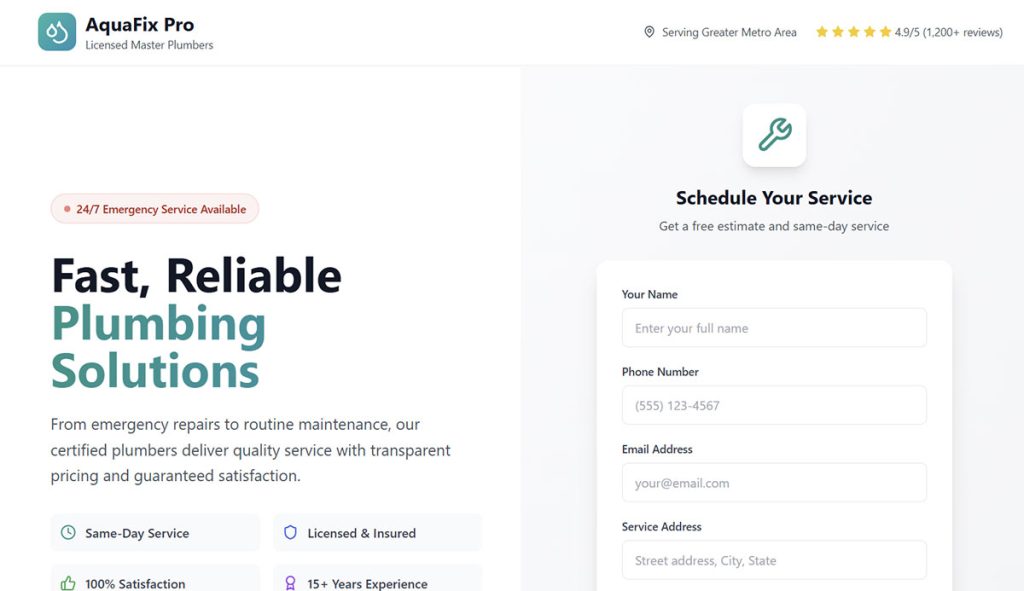
- Direct response from a well-built contractor website with estimate request forms
- Social media marketing on Facebook, Instagram, and Nextdoor
- Third-party platforms like Thumbtack, Porch, and BuildZoom
The approach that works best depends on the trade, service area, and budget. A general contractor bidding on $200,000 kitchen remodels needs a different strategy than an electrician handling $300 outlet installations.
One thing stays consistent across every trade, though. The contractors who build a system, rather than chasing one-off tactics, are the ones who stop worrying about where the next job is coming from.
Strategies Contractors Can Use For Lead Generation: Quick Rundown
| Strategy | How It Works | Key Advantage | Best For |
|---|---|---|---|
|
Local SEO + Google Business Profile
Owned $0
cost per click
|
|
Exclusive, high-intent leads
Leads come from purchase-ready searchers and are yours alone. No competing contractors receive the same inquiry. Results compound without ongoing ad spend.
|
Contractors in established service areas who want a self-sustaining pipeline of local homeowner inquiries.
Time to results: 3 to 6 months
|
|
Google Local Service Ads (LSAs)
Paid Top of Page
Google Guaranteed badge
|
|
Instant credibility at the top
Higher conversion rate than standard PPC. The “Google Guaranteed” badge pre-qualifies trust. Searchers clicking LSAs are ready to hire, not just browsing.
|
Plumbers, roofers, HVAC, and electricians in competitive metros who need fast lead volume and can respond within minutes.
Time to results: 1 to 7 days
|
|
Content Marketing + Service Pages
Owned Multi
queries captured at once
|
|
Topical authority at scale
Captures dozens of search queries simultaneously. Prospects who find you through content already trust you before the first call, raising close rates significantly.
|
Remodelers and GCs with multiple service lines who want to be the recognized local authority before prospects consider competitors.
Time to results: 4 to 8 months
|
|
Google Search Ads (PPC)
Paid Fast
immediate visibility
|
|
Full control, zero wait time
Visibility starts the day campaigns go live. Granular targeting by zip code, device, and time of day means budget goes exactly where jobs are being won.
|
Contractors launching a new service area or seasonal campaign who need fast lead flow while organic channels build momentum.
Time to results: 1 to 14 days
|
|
Referral Programs + Trade Partnerships
Relationship High
close rate channel
|
|
Trust transferred, not earned from scratch
Referred leads close at a higher rate than any paid source. Cost per acquisition is minimal and partnerships with agents or developers can unlock multi-project volume.
|
Established contractors with a strong portfolio who want to systematize word-of-mouth rather than leave it to chance.
Time to results: 1 to 3 months
|
|
Reviews + Reputation Management
Relationship 95%
of buyers check reviews first
|
|
Multiplies every other channel
A strong review profile raises conversion rates from ads, SEO, and referrals alike. A contractor with 80+ reviews converts the same traffic into far more booked jobs.
|
Every contractor at every stage. Reviews amplify all other strategies and should be treated as a foundational habit, not an optional add-on.
Time to results: Ongoing
|
|
Email Nurturing + CRM Automation
Owned 3x
more consistent job flow
|
|
No lead left behind
Contractors who respond quickly and consistently win a disproportionate share of jobs. CRM data also reveals which channels produce booked jobs, not just inquiries.
|
Growing businesses managing 20 or more leads per month who need a follow-up system without hiring additional office staff.
Time to results: 2 to 4 weeks
|
Channel type:
Owned
Paid
Relationship
Owned
Paid
Relationship
How Does Lead Generation Work for Contractors
A homeowner’s toilet starts leaking at 10 PM. They search “emergency plumber near me,” scroll Google, pick someone, and book within five minutes. That’s one lead, generated and converted fast.
Not every lead moves that way. A bathroom remodel prospect spends weeks browsing portfolios, reading Yelp reviews, asking on Nextdoor, and collecting three to five estimates before deciding.
Both scenarios run through the same pipeline.
The Contractor Sales Pipeline
| Stage | What Happens |
|---|---|
| Awareness | Prospect realizes they have a problem or want a project done |
| Inquiry | They contact you by phone, form, or platform message |
| Estimate | You visit, scope the work, and submit a bid |
| Booked job | They sign and put down a deposit |
Where the Numbers Matter
BrightLocal’s Local Consumer Review Survey found 98% of consumers use the internet to find local businesses. According to SOCi’s Consumer Behavior Index, 80% do it weekly, and 32% search daily. Your first impression happens online, long before anyone shakes hands on a job site.
Most contractors lose leads between inquiry and estimate. The data is clear on why:
- Contractors who respond within 5 minutes are 21x more likely to qualify a lead than those who wait 30 minutes (ServiceTitan)
- 63% of businesses never respond to inbound leads at all, with an average response time of 29 hours (RevenueHero, 2024)
- SEO-generated leads close at 14.6%, compared to 1.7% for shared platform leads, an 8.6x difference (Talk24)
What This Means in Practice
Get found. Respond fast. Present a professional estimate. Follow up consistently.
Most contractors handle one or two of these well and drop the ball on the rest. Closing at 40% instead of 15% comes down to fixing that gap, not finding more leads.
What Are the Best Lead Generation Methods for Contractors
Not all lead sources perform equally. A roofing lead from Google Local Services Ads and one from a shared lead service are completely different in quality, cost, and close rate.
These methods are ranked by four criteria: cost per lead, close rate, lead quality, and scalability.
How Does a Contractor Website Generate Leads
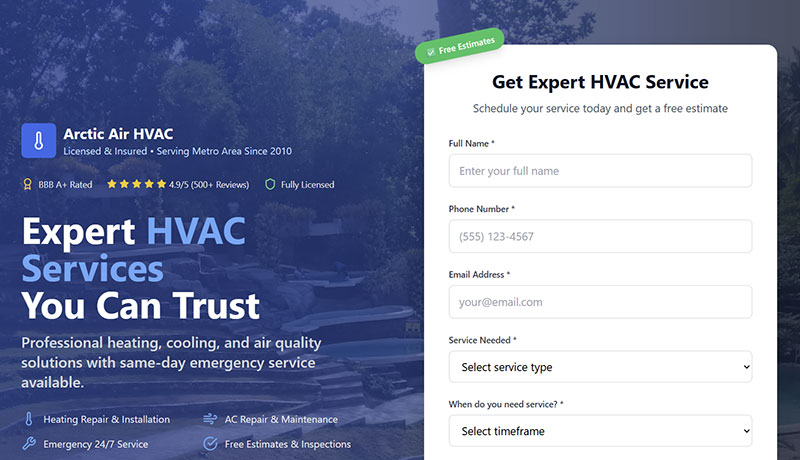
Your website is the only lead generation asset you fully own. Every other channel (Google Ads, Angi, Facebook) can change its rules or pricing overnight. Your site stays yours.
The home improvement industry averages a 7.2% landing page conversion rate, according to Landingi. But most contractor sites don’t come close because they’re built to look good, not convert.
What high-converting contractor sites have in common:
- Service-specific landing pages (one per service, not a generic “services” page)
- Service area pages targeting each city or neighborhood
- Portfolio and before/after project galleries
- A clear lead generation form asking for project type, timeline, address, and phone number
- Click-to-call buttons visible on mobile at all times
HubSpot data shows that companies with 10-15 landing pages see 55% more conversions than those with fewer than 10. For contractors, that means building separate pages for each service you offer, not stuffing everything onto one page.
A contractor website doesn’t need to be beautiful. It needs to be functional. An ugly WordPress site with a sticky phone number will beat a $15,000 custom build that buries the CTA below the fold.
If your site runs on WordPress, WordPress lead generation plugins can handle estimate request forms, appointment booking, and follow-up automation without needing a developer.
How Does Local SEO Generate Leads for Contractors
Google’s local map pack shows up for almost every contractor-related search. “Roofer near me,” “plumber in [city],” “HVAC repair [zip code].” If you’re not in that three-pack, you’re invisible to a large portion of potential customers.
Google Business Profile is the foundation. Complete it with accurate service categories, service area, business hours, photos of completed work, and a steady flow of customer reviews.
According to Google, businesses with complete profiles are 2.7x more likely to be considered reputable and 70% more likely to attract location visits.
Reviews matter more than most contractors expect. BrightLocal’s research found that 81% of consumers use Google to find local business reviews, and 88% say they would use a business that responds to all its reviews. Anything below 4.0 stars with fewer than 20 reviews makes prospects hesitate.
Local SEO takes 3-6 months to produce results. But once you’re ranking, leads are essentially free and close at higher rates because prospects already trust you based on proximity and reviews.
How Does Pay-Per-Click Advertising Work for Contractor Leads
Google Ads puts you at the top of search results immediately. No waiting for SEO to kick in.
Two main PPC options for contractors:
| Ad Type | How You Pay | Average Cost Per Lead |
|---|---|---|
| Google Local Services Ads | Per lead (not per click) | HVAC: $52, Plumbing: $69, Roofing: $71 |
| Standard Google Ads | Per click, regardless of conversion | Varies widely by trade and market |
Data from The Media Captain shows those LSA cost-per-lead averages across their client base. Roofing and construction run higher, with LocaliQ’s 2025 benchmark report showing roofing at $228 and construction at $165 through standard Google Ads.
LSAs also come with a “Google Guaranteed” badge, which increases trust and click-through rates significantly. Consumers prefer clicking LSAs over standard Google Ads by nearly 3:1 (29% vs 11%), according to The Media Captain.
The biggest PPC mistake contractors make: sending traffic to their homepage. A service-specific landing page form with a clear CTA will consistently outperform a homepage. Optimizing that landing page from 10% to 20% conversion rate cuts cost per lead in half with zero increase in ad spend.
How Do Referral Programs Generate Contractor Leads
Referral leads close at significantly higher rates than cold leads from paid channels. A prospect who heard about you from their neighbor or real estate agent already has baseline trust that no ad can replicate. Word of mouth influences 73% of roofing customers when selecting a contractor, according to Comrade Digital.
Best referral sources for contractors:
- Past customers (a $50 gift card or discount on future work motivates repeat referrals)
- Real estate agents needing reliable contractors for pre-sale repairs
- Insurance adjusters handling property damage claims
- Subcontractors and complementary trades (roofers, HVAC techs, plumbers)
- Property managers responsible for maintenance across multiple units
The downside is unpredictability. You can’t control volume. Some months you get five referrals, some months zero. That’s why referrals work best as one layer in a broader system, not the whole strategy.
Contractors who create feedback forms and send them after every completed job do two things at once: collect testimonials for their website and create a natural opening to ask for referrals while the client is still happy.
How Does Social Media Marketing Generate Contractor Leads
Nobody scrolls Instagram looking for a plumber. But they do stop on a dramatic before-and-after kitchen remodel.
Facebook Ads remain the strongest paid social channel for contractors. You can target homeowners within a specific radius, filter by household income, and target people who recently moved. Statista’s 2024 report shows 71% of U.S. adults use Facebook, making it the largest platform for reaching homeowners aged 30-65, the core demographic for most residential contractors.
Nextdoor is underrated. It functions more like a neighborhood referral network than social media. Contractors who respond actively to service requests on Nextdoor report strong close rates because leads are hyper-local and come with implicit social proof from neighbors.
Instagram works well for trades with strong visual appeal: remodelers, landscapers, painters, custom home builders. Plumbers and electricians have a harder time, though some succeed with educational content and project time-lapses.
Consistency beats perfection. Posting a quick job-site photo with your phone three times a week outperforms a professionally produced video posted once a quarter.
How Do Lead Generation Services Work for Contractors
Third-party lead services connect contractors with homeowners who submit project requests through the platform. The main players are HomeAdvisor (now Angi), Thumbtack, Porch, Networx, Bark, and BuildZoom.
Two models:
| Model | Cost Per Lead | Close Rate | Notes |
|---|---|---|---|
| Shared leads | $15-$50 | Low | Sold to 3-5 contractors simultaneously |
| Exclusive leads | $50-$150+ | Higher | Only one contractor receives the lead |
The experience with these platforms is mixed. Talk24 data shows shared platform leads close at just 1.7%, compared to 14.6% for SEO-generated leads. Angi’s Trustpilot reviews show that 70% of leads don’t answer or aren’t qualified.
The difference between contractors who get results and those who don’t usually comes down to response speed. Contractors using CRM tools like Jobber, ServiceTitan, or HouseCall Pro to respond instantly and automate follow-ups consistently outperform those who call back “when they get a chance.”
If you use lead generation services, treat them as one channel in a broader mix. Relying entirely on purchased leads puts your business at the mercy of the platform’s pricing and algorithm changes. Building your own website forms for lead generation gives you a channel no platform can take away.
How Do Contractors Qualify Leads Before Estimating
Not every inquiry deserves a site visit.
Sending estimates to unqualified prospects wastes hours and drives down your bid win rate. The industry average sits at just 17-25% for general contractors, according to For Construction Pros and Four BT. Contractors who qualify rigorously before estimating consistently outperform that average.
The goal is simple: filter fast, protect your time, and focus on prospects that actually match your construction sales pipeline.
What Questions Should Contractors Ask to Qualify a Lead
Run through these before scheduling an estimate:
| Question | What You’re Screening For |
|---|---|
| What type of project is it? | Fit with your specialty (renovation, new build, commercial) |
| Is the location within your service area? | Travel cost and feasibility |
| What’s the timeline? | Urgency signals serious buyers |
| Are you the decision maker? | Avoid wasted visits when a GC or manager holds final sign-off |
| Do you have a budget range? | Scope alignment before you invest time |
| Have permits been considered? | Project readiness and complexity |
A prospect who can’t answer most of these isn’t ready. Move on, or schedule a short phone call before committing to a site visit.
What is Lead Scoring for Contractors
Lead scoring assigns a value to each incoming inquiry based on how well it matches your target project profile.
Score higher for:
- Urgent timeline
- Large job size
- Referral source
- Location within your service zone
- Clear decision-making authority
Score lower for:
- Vague scope
- Low budget signals
- Cold traffic from directories like Angi or Thumbtack with no prior contact
A HubSpot study found that implementing lead scoring boosted conversion rates from 7.2% to 12.8% in 90 days, with a 43% increase in sales-accepted leads. Even a basic scoring system tracked in your CRM cuts the time your team wastes chasing bad-fit prospects.
What Does a Contractor Lead Pipeline Look Like
A contractor sales pipeline is a structured sequence of stages that moves a prospect from first contact to signed contract. Each stage has a clear action and an exit condition.
Without defined stages, leads pile up in a single bucket and nothing gets followed up consistently.
What Are the Stages of a Contractor Sales Pipeline
| Stage | Status | Next Action |
|---|---|---|
| New Lead | Inquiry received, not yet contacted | Call or text within 5 minutes |
| Contacted | First outreach made | Qualify and schedule estimate |
| Estimate Scheduled | Site visit or virtual consult booked | Prep scope, confirm day before |
| Estimate Sent | Proposal delivered | Set a follow-up date immediately |
| Follow-Up | Awaiting decision | Active nurturing, check in every 2-3 days |
| Negotiation | Scope or price discussion underway | Address objections, adjust if needed |
| Closed Won | Contract signed | Collect deposit, schedule start date |
| Closed Lost | Prospect chose another contractor | Log reason, add to re-engagement list |
“Estimate Sent” without a follow-up date is just a bid floating in the wind with no accountability.
How Long Should Each Stage Take in a Contractor Pipeline
This varies by project type. As a general benchmark:
- Residential jobs: 1 to 3 weeks from inquiry to signed contract
- Commercial leads: weeks to months, depending on project complexity and approval chains
Only 3% of prospects are ready to buy at any given moment, according to sales research. That means most leads need consistent follow-up before they convert, not just one call and a proposal.
Set aging alerts in your CRM. If a lead hasn’t moved in 7 days, something broke in the process. Contractors using tools like Jobber or ServiceTitan to automate follow-up reminders report significantly fewer leads slipping through the cracks compared to those tracking jobs in spreadsheets or memory.
How Should Contractors Follow Up With Leads
Most contractors send a bid and wait.
That’s the single biggest reason deals go cold. According to ZoomInfo, 60% of customers say no four times before saying yes, yet 92% of salespeople give up after the fourth call. That gap is where contractors who follow up consistently win jobs from those who don’t.
A structured follow-up sequence is what separates contractors winning 30% of bids from those winning 60%.
What is a Follow-Up Sequence for Contractors
A follow-up sequence is a timed series of contacts across phone, email, and text, triggered after a specific pipeline action like submitting an estimate.
Basic sequence after sending a bid:
| Day | Channel | Action |
|---|---|---|
| Day 1 | Phone | Call to confirm they received the estimate |
| Day 2 | Text | Quick check-in, offer to answer questions |
| Day 4 | Send a project photo or relevant example of past work | |
| Day 7 | Phone | Ask directly if they have questions or concerns |
| Day 14 | Email or phone | Final outreach before marking the lead inactive |
Automate what you can through your CRM. Manual follow-ups get skipped when you’re busy on a job site.
Research from ZoomInfo shows 95% of all converted leads are reached by the sixth call attempt. And HubSpot data confirms that reps using three or more touchpoints see a 28% higher conversion rate from inquiry to qualified lead than those relying on a single outreach.
How Many Times Should a Contractor Follow Up on a Bid
At least five times before writing a lead off.
Most contractors stop after one or two attempts. According to sales data compiled by Growth List, 48% of salespeople never make a single follow-up attempt after the first contact, and 44% give up after just one try.
A few things to keep in mind:
- Following up too aggressively with residential homeowners can feel pushy. Space contacts 2-3 days apart, vary your channel each time.
- For commercial contacts, persistence is expected. Decision cycles are longer, and staying visible matters.
- Each follow-up should add something: a reference project, a timeline update, an answer to a likely objection. “Just checking in” is easy to ignore.
What Happens to Leads That Go Cold
A cold lead is not a dead lead.
Budgets free up. Projects get reapproved. Contractors fall through on competing bids. ZoomInfo data shows that at any given time, 56% of prospects are not ready to buy yet, but that doesn’t mean they won’t be in 30 or 90 days.
Re-engagement tactics that actually work:
- Seasonal outreach: “Spring is our busiest booking window, reaching out to see if your project is back on the table.”
- Project delay check-in: A simple “wanted to see if anything has changed on your end” can restart a stalled conversation.
- Referral ask: If the timing isn’t right for them, ask if they know anyone who might need the work done. Turns a dead lead into a potential referral source.
Build a re-engagement list in your CRM and touch it once a month. It costs nothing and occasionally revives a job you had already written off.
What CRM Software Do Contractors Use for Lead Management
Group 1 of 2
Group 2 of 2
A spreadsheet stops working the moment you have more than 15 active prospects.
CRM software built for contractors brings bid tracking, automated follow-ups, mobile access, and pipeline visibility into one place. The construction CRM market grew 18% between 2023 and 2024, with over 67% of large-scale contractors now using CRM in their workflows, according to Global Growth Insights. Businesses using CRM see a 29% increase in sales and a 34% improvement in sales productivity on average, according to research compiled by SLT Creative.
Ranking criteria: contractor-specific features, bid tracking, field-accessible mobile app, automation, integration with estimating tools like Buildertrend or Procore.
Followup CRM
Built specifically for contractors.
Strong pipeline management, automated follow-up sequences, and a clean interface that doesn’t require a dedicated salesperson to run. Used heavily by roofing contractors and remodelers. Holds a 4.5/5 rating from over 227 users, according to TrueReview.
Pipeline CRM
Excellent bid tracking with a mobile app built for field use.
You can pull up a prospect’s full history on-site during a walk-through. Customizable pipeline stages make it adaptable to any trade.
JobNimbus
Combines project management with CRM functions.
Popular in roofing and siding. Supports photo documentation through CompanyCam integration, which helps document site conditions during the estimate process.
ServiceTitan
Geared toward HVAC, plumbing, and electrical contractors.
Dispatch, invoicing, and lead tracking in one platform. Heavier setup than other options, but the depth is worth it for larger field service teams. Its call booking workflow guides reps through collecting info from callers and creating customer records automatically, so no lead slips through without a record.
HubSpot (Free Tier)
A general-purpose CRM with no contractor-specific templates out of the box.
Works for contractors who already have a dedicated salesperson managing the pipeline. The free version handles contact management and basic deal stage tracking well enough to get started. HubSpot holds a 4.5/5 rating from over 4,100 reviews across industries.
One thing all five have in common: they replace manual tracking with automated follow-up reminders and structured pipelines. Research from CoConstruct found that CRM automation reduced customer follow-up time by 27% for residential contractors. That time adds up fast when you’re running multiple active bids at once.
How Do Contractors Track Lead Conversion Rates
Tracking your contractor lead pipeline without measuring outcomes is just busywork.
Conversion data tells you where inquiries drop off and which lead sources are worth your time. According to the State of Home Improvement Industry 2024 report, 63% of contractors only follow up once or twice after sending a quote before marking the lead as lost. That’s where the jobs go.
What KPIs Should Contractors Track in Lead Management
| KPI | What It Measures | Benchmark |
|---|---|---|
| Lead-to-estimate rate | % of inquiries that result in a scheduled estimate | Track monthly, flag drops immediately |
| Estimate-to-close ratio | % of proposals that turn into signed contracts | 30-50% is a healthy residential target |
| Lead response time | Speed of first contact after an inquiry | Under 5 minutes is the goal |
| Cost per lead by source | What each inquiry costs from Google LSAs vs. referrals vs. Angi | Compare quarterly by channel |
| Average deal size | Typical contract value | Track by service type separately |
| Sales cycle length | Days from first contact to signed contract | Residential: 1-3 weeks typical |
Review these monthly at minimum. A drop in your estimate-to-close ratio often signals pricing drift or a change in lead quality, not a sales problem.
How to Calculate Contractor Bid Win Rate
Win rate = (closed won / total bids submitted) x 100.
If you submitted 40 bids last quarter and won 14, your win rate is 35%.
Most experienced residential contractors target 30 to 50%. Industry data from For Construction Pros puts the average general contractor win rate at around 17%, which means there’s significant room to improve through better qualification and follow-up alone.
Tracking win rate by lead source reveals which channels bring serious buyers. According to HubSpot data, 66.5% of sales reps cite customer referrals as the channel producing the highest quality leads, which aligns with why referral leads close at 2 to 3 times the rate of cold directory leads.
How Do Contractors Avoid Losing Leads
Most lost leads don’t go to a competitor because the competitor was cheaper.
They go because the competitor responded faster, followed up more consistently, or made the process feel easier. Forbes reports that only 27% of leads get a response at all, meaning the bar is low and easy to clear.
Why Do Contractors Lose Leads After Sending a Bid
The post-bid drop-off is the most common failure point in contractor prospect management.
Homeowners get busy, compare multiple bids at once, and go with whoever reaches back out first. The State of Home Improvement Industry 2024 found that while 57% of contractors reach out four or more times to new leads, only 14% do the same after sending a quote. That’s where deals get lost.
Other common reasons bids go cold:
- The proposal was too vague, leaving the prospect uncertain about scope
- The price wasn’t justified with any explanation of value
- There was no clear next step outlined at the end of the estimate
That’s a process problem, not a pricing problem.
What Is Lead Response Time and Why Does It Matter for Contractors
Contractors who respond to an inquiry within 5 minutes are 21 times more likely to qualify that lead than those who wait 30 minutes. According to Harvard Business Review, businesses that respond within an hour are nearly 7 times more likely to have meaningful conversations with decision-makers.
Most contractors wait hours, or until the next morning.
This is where using a lead capture form on your website pays off. An automated acknowledgment goes out instantly, buying you time to follow up personally within the hour.
Two habits that close more gaps than anything else:
- Set up a CRM notification the moment a new inquiry comes in
- If you can’t call within an hour, send a text immediately and call as soon as you’re free
That single system change has more impact on your sales pipeline management results than any ad spend adjustment you could make.
FAQ on Lead Generation For Contractors
What is the average cost per lead for contractors?
Cost per lead varies by trade. Plumbing leads average $20-$60, HVAC leads run $35-$100, roofing leads cost $45-$150, and remodeling leads sit at $75-$200+. Google Local Services Ads typically deliver cheaper leads than standard Google Ads or third-party platforms like HomeAdvisor.
What is the best lead generation method for small contractors?
Google Business Profile combined with a well-built contractor website. These two cost almost nothing to maintain, generate high-quality inbound leads, and don’t depend on paid platforms. Add a referral program and you’ve got a strong foundation without a big budget.
Are lead generation services like HomeAdvisor worth it?
Depends on your follow-up speed. Contractors using CRM tools like Jobber or ServiceTitan to respond within minutes report decent ROI. Those who call back hours later waste money on shared leads that competitors already closed. Treat these platforms as one channel, not your whole strategy.
How fast should contractors respond to new leads?
Within five minutes. ServiceTitan data shows contractors who respond in under 5 minutes are 21x more likely to qualify the lead. After 30 minutes, your chances drop significantly. Speed to lead is the biggest factor in conversion rates across every trade.
What is a good lead conversion rate for contractors?
Industry benchmarks range from 15% to 40% depending on the trade and lead source. Referral leads close at the highest rates (up to 50%). Shared leads from third-party platforms close lowest, often below 15%. Your follow-up system determines where you land.
Do contractors need a website to generate leads?
Yes. A contractor website with contact forms, click-to-call buttons, and service area pages converts visitors into estimate requests. Even a simple WordPress site with a sticky phone number outperforms having no web presence at all.
How does local SEO help contractors get more leads?
Local SEO puts your business in Google’s map pack for searches like “plumber near me” or “roofer in [city].” A complete Google Business Profile with 20+ reviews and accurate service categories drives consistent, free leads once you rank. Results take 3-6 months.
What CRM tools work best for contractor lead management?
ServiceTitan, Jobber, HouseCall Pro, and JobNimbus are the most used CRMs in the contracting industry. They handle lead tracking, automated follow-ups, estimate scheduling, and call tracking. The right pick depends on your trade, team size, and budget.
Should contractors use Facebook Ads for lead generation?
Facebook Ads work well for residential contractors, especially remodelers, painters, and landscapers. You can target homeowners by location, income, and move-in date. Pair ads with a dedicated landing page and a simple lead capture form for best results.
How do contractors track which lead sources are working?
Use call tracking tools like CallRail or WhatConverts to assign unique phone numbers per channel. Add UTM parameters to ad URLs. Log every lead source in your CRM. Without tracking, you’re guessing where to spend your contractor marketing budget.
Conclusion
Lead generation for contractors comes down to building a repeatable system, not chasing random tactics. The contractors who win are the ones who combine a strong Google Business Profile, a converting website with proper form conversion practices, and a CRM like JobNimbus or HouseCall Pro that keeps follow-ups from slipping through the cracks.
Pick two or three channels. Track your cost per lead and close rate for each one. Cut what doesn’t work, double down on what does.
Referrals, Local Services Ads, and local search rankings consistently deliver the highest-quality leads across trades like roofing, HVAC, plumbing, and remodeling.
Stop guessing. Start measuring. The data will tell you exactly where your next job is coming from.