






A form is usually the last thing standing between a visitor and whatever you actually want them to do: buy something, sign up, ask a question. Optimizing that form means…
Table of contents
Most lead generation strategies burn through ad budget before delivering a single qualified contact. Gated content flips that equation by letting prospects come to you, willingly trading their email for something they actually want.
The problem is that not all gated formats perform equally. An ebook that works for a SaaS company might fall flat in ecommerce. A webinar that fills seats in B2B could get zero registrations in B2C.
This article breaks down real gated content examples across formats like white papers, case studies, templates, online courses, and product demos. You’ll see what companies like HubSpot, Salesforce, and Gartner are doing, and how to apply those models to your own lead capture strategy using landing pages, forms, and email automation.
What Is Gated Content
Gated content is any digital resource that visitors can only access after submitting their contact information through a lead capture form. Ebooks, white papers, webinars, case studies, templates, and online courses all fall into this category.
The trade-off is simple. You give something valuable, and the visitor gives you their name and email address.
This content sits behind what marketers call a “gate,” which is usually a short form on a dedicated landing page. The visitor fills it out, clicks submit, and gets access to the resource through a download link, redirect, or email delivery.
Businesses from HubSpot to Gartner use this model. So do solo consultants running WordPress sites with a single PDF guide.
The concept works because it filters casual browsers from genuinely interested prospects. Someone willing to hand over their work email for your industry report is more likely to become a paying customer than someone who bounced after reading two paragraphs of a blog post.
But here’s what a lot of people get wrong. Gated content is not the same as a paywall. No money changes hands. The “currency” is contact information, not dollars. The New York Times has a paywall. HubSpot’s State of Marketing report has a gate. Different mechanisms, different goals.
Gated content focuses on lead generation and audience segmentation. Ungated content focuses on traffic, brand visibility, and SEO value. Most websites need both.
How Does Gated Content Work
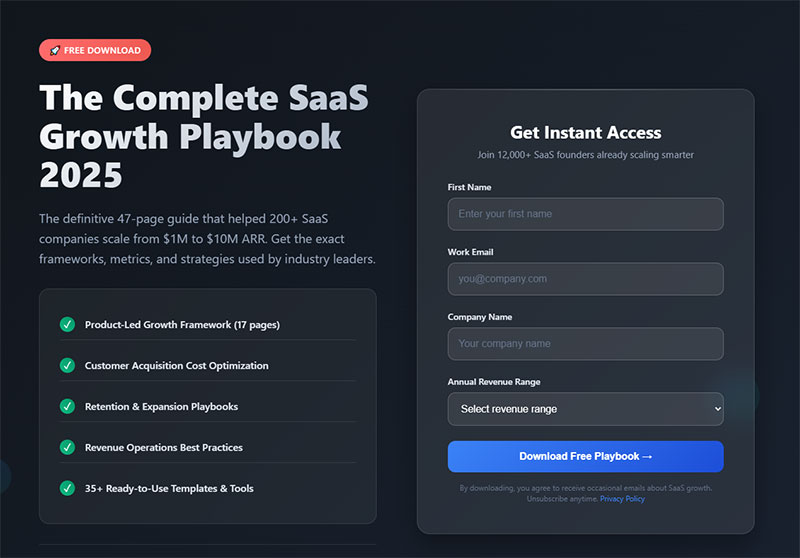
A visitor lands on your page, sees a compelling offer, and fills out a form to access it. That’s the core mechanic.
First, create a high-value resource. Then build a landing page form that describes the resource and includes a data capture form.
The Form Exchange
Research from Unbounce shows the median landing page conversion rate sits at 6.6% across industries. High-value gated offers can convert up to 11% of visitors, compared to just 2% for standard landing pages.
At minimum, ask for name and email. B2B companies often collect job title, company size, and industry for lead scoring. The key is balance.
Field Count Impact:
- Forms with 3 fields convert at 25%+
- Adding a 4th field drops conversions by nearly 50%
- Forms with 5 fields recover to 21%+ conversion
- HubSpot data shows each additional field beyond 5 decreases conversion by 4.1%
According to Formstack research, increasing from 3 to 7 fields reduces conversion by 19.6%. Phone numbers tank conversion by 57%. Budget questions drop it by 41%.
Every extra form field you add reduces your completion rate.
Delivery Methods
After submission, delivery happens one of three ways:
- Instant redirect to a thank-you page with download link
- Form submission confirmation message with embedded resource
- Automated email delivery through Mailchimp, ConvertKit, or ActiveCampaign
Most marketers prefer email delivery because it confirms the address works and starts nurturing immediately. However, only 62% of users who fill out a form actually consume the gated content they requested, according to 2025 research from Amra and Elma.
Backend Integration
Lead data flows into a CRM or marketing automation platform. Salesforce, HubSpot, Marketo. The contact gets tagged, scored, and dropped into the right drip campaign based on what they downloaded.
Marketo’s 2024 analysis shows B2B companies with data-rich lead scoring achieve a 35% higher Sales Acceptance Rate. Leads from gated content produce 31% more sales-qualified leads than those from social media.
If you’re running a WordPress site, WordPress lead generation plugins handle most of this without custom code. OptinMonster can gate specific blog posts using inline campaigns that lock content until the visitor opts in.
Hybrid Approach Performance
By 2025, 76% of B2B marketers employ a hybrid approach, mixing free and gated content according to industry research. This strategy builds trust before asking for details.
Progressive profiling (capturing minimum info initially, then gathering more through follow-up) achieves 72% higher form completion rates than comprehensive one-time forms, according to HubSpot Research 2024.
Quick Optimization Wins:
Research from ContentMarketingInstitute shows delayed gating (allowing 30-50% preview before requiring a form) increases conversion by 35-45% compared to hard gates. Engagement-based gating (form appears after 3+ blog visits or 5+ minutes dwell time) increases lead quality by 58%, per Forrester 2024.
What Are the Benefits of Gated Content
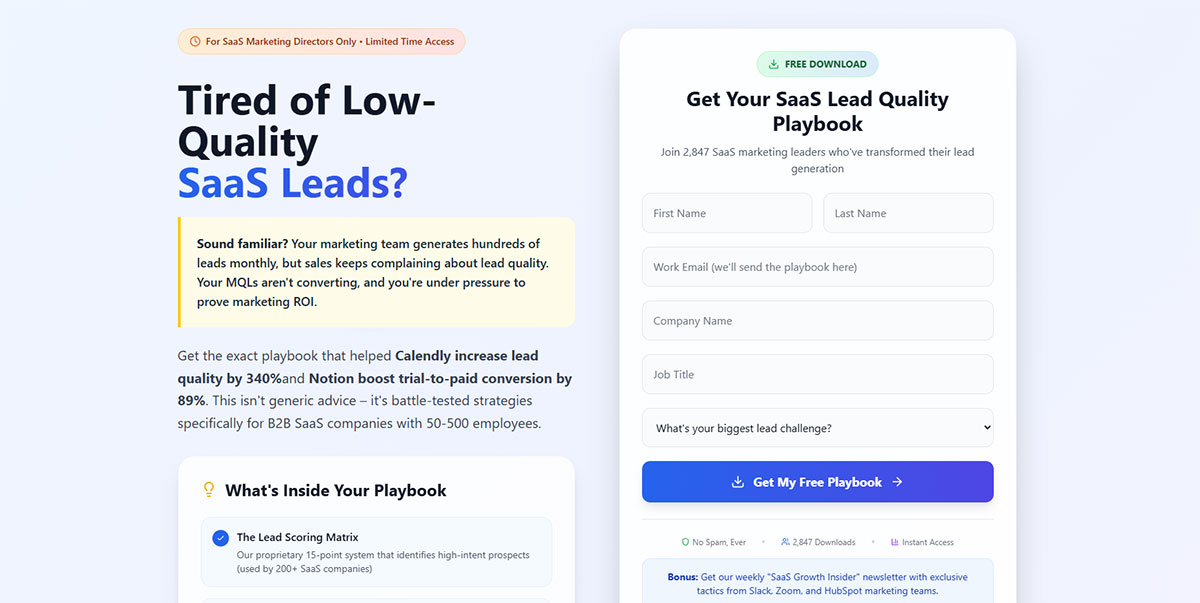
Gated content does one thing extremely well. It turns anonymous traffic into identifiable leads.
The Lead Generation Case
According to Content Marketing Institute, 91% of marketers say lead generation is their most important goal. Walker Sands research shows 44% of B2B organizations gate content, with 62% citing lead qualification as the main reason.
Semrush’s 2023 State of Content Marketing Report found that 17% of marketers said gated content was their single best-performing content type.
Strategically gated content converts up to 41% more visitors into leads compared to ungated content, according to DesignRush 2025 data. The difference? Clear value proposition.
Segmentation Intelligence
Beyond raw lead volume, gating gives you audience segmentation data you can’t get elsewhere.
When someone downloads your “Advanced Cyber Threat Detection” white paper versus your “Intro to Email Marketing” ebook, you know exactly where they sit in expertise and interest. That information shapes every follow-up.
Core Benefits:
- Email list building with active opt-ins (average ROI: $36-42 per $1 spent)
- Lead qualification through progressive profiling
- Content marketing ROI measurement (direct pipeline tracking)
- Marketing qualified lead identification
- Sales enablement with warm contacts
Email Building Power
Email marketing generates an average ROI of 3,600-4,200%, according to 2024 Litmus research. Professional marketers report 760% revenue increase from email list building and campaigns.
For every dollar spent on email marketing, businesses make $36-42 in return. Some industries see even higher returns:
- Retail/ecommerce: $45 per $1 spent
- Marketing/PR: Above average 4,200%
- B2B services: Strong performance across segments
Email outperforms social media posts by 13% and social media ads by 11% for direct sales, per Marigold’s 2024 Consumer Trends Index.
Lead Quality Impact
Research from 2025 shows leads from gated content produce 31% more sales-qualified leads than those from social media. Companies that excel at lead nurturing generate 50% more sales-ready leads at 33% lower cost.
Thought leadership content creates measurable results:
- 75% of decision-makers say compelling thought leadership prompted them to research a service they weren’t considering
- 60% of B2B buyers will pay a premium to work with firms producing good thought leadership
- 90% of decision-makers are more receptive to agencies producing high-quality, insight-rich content
All statistics from LinkedIn/Edelman 2024 study.
The Psychological Edge
Content that requires a step to access feels more valuable. People assign more weight to something they had to “earn” than freely available content.
Same reason a webinar with limited slots gets more registrations than the same talk posted on YouTube.
Content Performance Benchmark
According to Content Marketing Institute’s 2024 B2B report:
- 87% of B2B marketers successfully used content marketing to generate leads
- 76% achieved their goal of generating leads through content marketing
- 52% said lead quality provided the most insight into content performance
Content marketing produces 3x more leads at 62% lower cost than traditional methods, per DesignRush data.
The Critical Qualifier
Gated content only delivers these benefits if the resource behind the form is genuinely useful.
Gate a mediocre PDF and you’ll collect emails from people who will never open another message. That does more damage than collecting no leads at all.
Only 62% of users who fill out a form actually consume the gated content they requested, according to 2025 research. The consumption gap indicates friction after form submission.
ROI Measurement Framework
Calculate email list value:
- Average email subscriber value: $0.11-0.12 per campaign
- Top 10% of email campaigns: $0.95 per send
- B2B average deal size from email leads: varies by industry
- Email conversion rate: 15.22% average (vs 2-5% social media)
According to 2024 HubSpot data, 41% of marketers say email is their most effective channel, putting it ahead of both social media (16%) and paid search (16%).
What Are the Types of Gated Content
Gated content comes in more formats than most people realize. The right choice depends on your audience, your industry, and where prospects sit in the content marketing funnel.
Some formats work best at the top to capture early interest. Others target prospects actively comparing solutions.
Common Categories:
- Downloadable resources: ebooks, white papers, industry research reports, checklists
- Educational content: online courses, training videos, certification programs
- Interactive content: assessments, quizzes, calculators, tools
- Live and recorded events: webinars, workshops, product demos
- Templates and tools: spreadsheets, slide decks, planning frameworks
- Premium access: newsletter archives, community memberships, exclusive reports
Format Performance Profiles
Templates and tools convert at higher rates because perceived value is immediate and concrete. White papers convert lower but attract senior decision-makers. Webinars sit between.
What matters most is matching format to intent. Someone searching “email marketing checklist” wants a quick, practical tool. Someone searching “B2B marketing trends 2026” wants depth and data. The gate should feel proportional to what’s behind it.
Ebooks
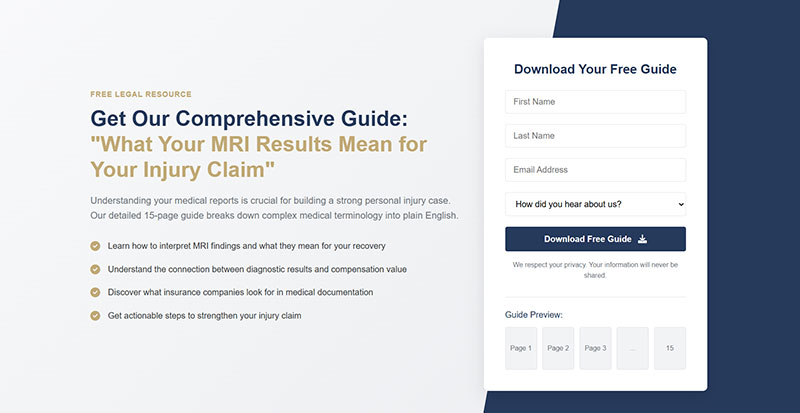
Ebooks are the workhorse of gated content strategies.
According to 2024 research, ebooks saw a 34.5% increase in usage among B2B marketers. They represent 39.5% of demand generation content formats. In 2020, 55% of small businesses reported ebooks had the highest conversion rate of all short-form written content.
HubSpot alone offers dozens of free ebooks covering everything from SEO to sales enablement, each sitting behind a short sign-up form.
They work best in the consideration stage when prospects already know they have a problem and want a structured guide. Typical length runs 15 to 50 pages. Long enough to justify the gate, short enough to actually get read.
Most companies deliver ebooks as PDF downloads through automated email. Strong ebook landing pages include table of contents preview, 2-3 key takeaways, and social proof like download counts or testimonials.
White Papers
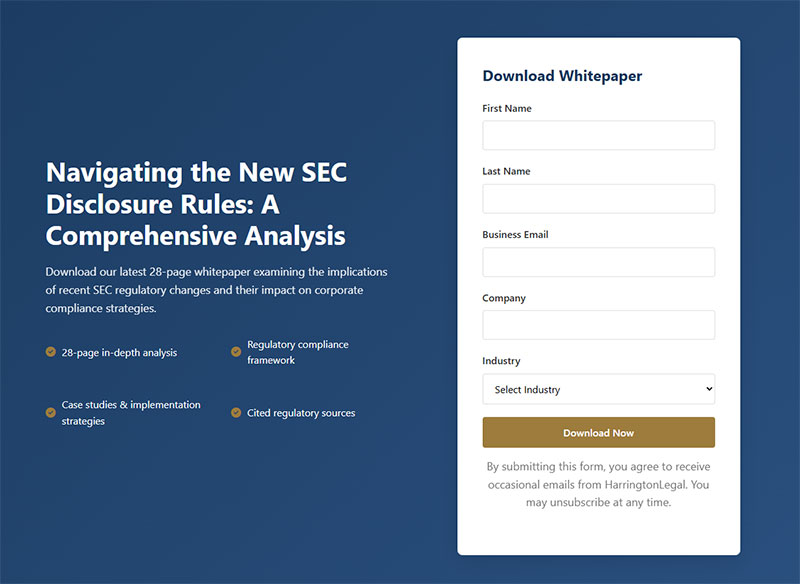
White papers are technical, data-heavy, and persuasive. They go deeper than ebooks and typically target senior professionals or decision-makers who need evidence before committing budget.
Forrester Research, McKinsey & Company, and Gartner built entire business models around gated white papers. In sectors like cybersecurity, SaaS, and financial services, a well-researched white paper can generate thousands of qualified leads per quarter.
The key difference from ebooks is tone. White papers read closer to academic or industry publications. They cite sources, present original data, and propose specific solutions.
If your audience includes C-suite executives or procurement teams, this is the format that earns their attention and their email address.
Webinars
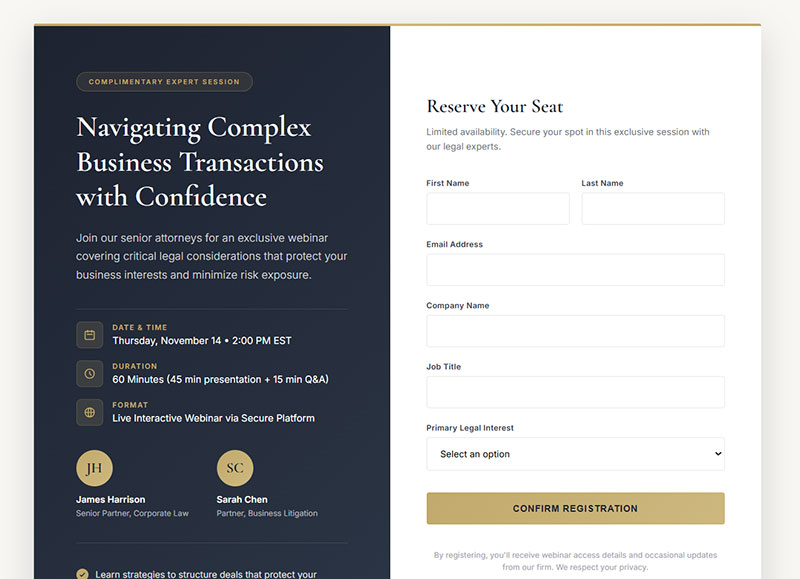
According to Content Marketing Institute 2024 data, 56% of B2B content marketers use webinars. They offer something no downloadable PDF can: real-time interaction.
Lead Generation Performance:
- 73% of B2B marketers and sales leaders consider webinars the most effective method for generating high-quality leads
- 89% of marketers say webinars outperform other channels in creating qualified leads
- Between 20-40% of webinar attendees become qualified leads
- 15% of attendees purchase the product or service
- Average cost per lead: $72 (vs $811 for trade shows)
Research from ON24 shows 62% of attendees express interest in sales demos after watching. Live webinars account for 91.3% of leads compared to just 9.7% from on-demand options.
The format gives you two gating opportunities. First, live registration through a webinar registration form where attendees provide details to reserve a spot. Second, on-demand replay, which you can gate again for people who missed the live session.
Attendance Benchmarks:
- Average webinar attracts 307 sign-ups with 58% attendance rate
- 40-50% of registrants attend live sessions
- Average engagement: 57 minutes watch time
- 44% average attendance rate maintained across industries
Pat Flynn at Smart Passive Income used this model effectively, running live webinars on podcasting that doubled as both lead generation and product launch events. The scarcity of live slots plus Q&A access makes people more willing to share contact information compared to static downloads.
Pro tip: use your webinar registration form templates to ask one qualifying question beyond standard name and email. Something like “What’s your biggest challenge with X right now?” gives your sales team immediate context for follow-up.
Case Studies

Case studies sit in the middle-to-bottom of the funnel. Someone downloading a case study is usually past awareness stage and actively evaluating whether your product or service actually delivers results.
B2B Performance Data:
- 78% of B2B marketers incorporate case studies and customer stories into campaigns
- 75% of B2B marketers use case studies/customer stories
- 62% of B2B decision-makers rely on case studies to make informed buying decisions
- Videos tied with case studies (53%) as content producing best results for B2B marketers
According to Content Marketing Institute 2024 research, case studies rank among the most effective content types for B2B marketing.
Salesforce gates many of their customer success stories, requiring a form fill before you can read how Company X increased revenue by 34% using their platform. The format works because it combines storytelling with hard numbers, two things that resonate with both emotional and analytical buyers.
Keep case studies focused. One client, one problem, one solution, one measurable outcome.
If you’re generating B2B leads, case studies that feature companies similar to your target prospects in size and industry will outperform generic success stories every time.
Templates and Tools
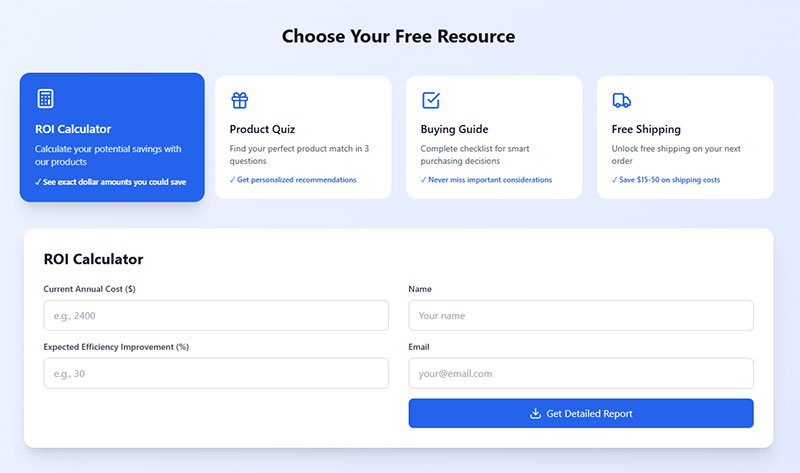
Templates convert well because they save time immediately. No reading required. Download, open, use.
HubSpot offers free ebook templates, email templates, and content calendar spreadsheets. Semrush provides SEO audit checklists. These resources sit behind short forms and consistently rank among their highest-converting lead magnets.
Why They Work:
Spreadsheets, slide decks, planning frameworks, calculators. B2B audiences love these because value is tangible and obvious. A budget calculator or project timeline template doesn’t need a persuasive landing page to get downloads. The utility speaks for itself.
Interactive content generates 2x more conversions than passive content, according to Demand Metric research.
If you’re building these for WordPress, tools with conditional logic in your form builder let you customize which template version gets delivered based on visitor’s form responses. That small touch of personalization increases perceived value and reduces unsubscribe rates down the line.
Content Format ROI:
According to 2024 HubSpot data, the top marketing channels with biggest ROI were:
- Websites/blogs/SEO (16%)
- Social media shopping tools (16%)
- Paid social media content (14%)
- Email marketing (14%)
- Content marketing (14%)
Content marketing produces 3x more leads at 62% lower cost than traditional outbound methods.
FAQ on Gated Content Examples
What is gated content in marketing?
Gated content is any digital resource hidden behind a lead capture form. Visitors submit their name, email, or other contact details to access it. Ebooks, white papers, webinars, and templates are the most common formats used for B2B and B2C lead generation.
What are the best examples of gated content?
HubSpot’s free ebook templates, Gartner’s industry research reports, and Salesforce’s customer case studies are strong real-world examples. Webinars, online courses like Yoast SEO’s free training, and interactive quizzes like Neil Patel’s SEO analyzer also perform consistently well.
What is the difference between gated and ungated content?
Gated content requires contact information before access and focuses on lead generation. Ungated content is freely available and drives organic traffic, brand visibility, and SEO value. Most content marketing strategies use both to balance audience growth with lead capture.
When should you gate your content?
Gate content when it offers substantial value that justifies the exchange, like original research, detailed templates, or certification courses. Avoid gating blog posts or awareness-stage material. Content in the consideration and decision stages of the buyer journey converts best behind a form.
Does gated content hurt SEO?
Yes, partially. Search engines cannot crawl text inside downloadable PDFs or locked pages. The landing page itself can rank, but the gated resource won’t generate organic traffic directly. Pair gated assets with ungated blog posts targeting the same keywords to cover both goals.
How do you create a gated content landing page?
Build a dedicated page with a strong headline, 2-3 key takeaways, social proof, and a short form. Keep form fields minimal to reduce friction. Tools like OptinMonster, Unbounce, and Leadpages make this straightforward without custom development work.
What types of forms work best for gated content?
Short inline forms with 2-4 fields convert highest. Multi-step forms work well for longer resources where you need more qualifying data. Popup forms triggered by scroll depth or exit intent also capture leads effectively on blog pages.
How many form fields should a gated content form have?
Two to four fields is the standard for most B2B lead generation campaigns. Name and email at minimum. Adding job title or company size helps with lead scoring but increases abandonment. Test your completion rates and cut fields that don’t directly inform your sales process.
What industries benefit most from gated content?
SaaS, financial services, cybersecurity, healthcare, and B2B technology companies see the strongest results. These industries have longer sales cycles where nurturing leads through email automation and targeted content moves prospects toward a purchase decision more effectively than direct advertising.
How do you measure gated content performance?
Track conversion rate on the landing page, cost per lead, email open rates from the follow-up sequence, and downstream pipeline attribution. Google Analytics and CRM platforms like Salesforce or HubSpot connect form submissions to marketing qualified leads and eventual revenue.
Conclusion
The gated content examples covered here show that format selection matters as much as the content itself. Ebooks, white papers, webinars, case studies, templates, product demos, and interactive assessments each serve a different stage of the buyer journey.
Your gate is only as strong as the resource behind it. A well-built landing page form with minimal fields, clear value messaging, and automated email delivery through platforms like ActiveCampaign or ConvertKit will outperform a cluttered page every time.
Start with one format. Test your conversion rate benchmarks against industry averages. Refine your form design based on actual completion data.
Then expand. Add a second format targeting a different funnel stage. Build a content library that covers awareness through decision, mixing ungated blog posts with gated resources that feed your lead nurturing sequence.
The companies that do this well, from HubSpot to McKinsey, treat gated content as a system. Not a one-off tactic. Build yours the same way.