




A form is usually the last thing standing between a visitor and whatever you actually want them to do: buy something, sign up, ask a question. Optimizing that form means…
Table of contents
A homeowner with a leaking pipe or a dead HVAC unit doesn’t spend weeks researching. They call two or three companies, pick whoever answers, and move on with their day.
That single behavior shapes almost everything about how contractors get work. Lead generation for contractors is the process behind it: turning that homeowner’s search into a qualified inquiry for a specific licensed trade, inside a fixed service radius a crew can actually reach.
Roofers, plumbers, electricians, and remodelers all operate this way, and they judge the process by cost per lead and close rate, not by how much traffic a page pulls in.
Homeowners compare three to four contractor estimates on average before hiring, according to Modernize homeowner research. That number alone explains why showing up first tends to matter more than showing up cheapest.
What Is Lead Generation for Contractors?
Picture two homeowners typing a search into Google at the same moment: one wants a roof replaced, the other needs a leaking faucet fixed before Friday. Getting in front of both of them, with enough qualification built in that a crew never wastes a day driving to a job that was never real, is what this whole discipline is built around.
It matches local demand for a specific job, a new roof, a burst pipe, a kitchen remodel, a rewiring job, to a contractor who actually has the crew and license to take it on.
The mechanics borrow from the wider discipline covered under what is lead generation, but everything here is tied to a service radius. A software company can sell to anyone with a credit card. A plumber can only work where the truck can actually drive.
The channel mix contractors actually use looks less like a funnel and more like a handful of things running at once:
- Pay-per-lead platforms like Angi, Thumbtack, and HomeAdvisor
- Google Local Services Ads and paid search
- Organic local search and Google Business Profile visibility
- Referral programs and word of mouth
None of this is a single tool, and it isn’t a one-time ad campaign either.
A contractor running one Facebook boost for a week hasn’t built lead generation. They’ve run an ad, and that’s a different thing entirely. The difference is a system that keeps producing inquiries month after month, priced and tracked closely enough that someone can actually tell whether it’s working.
What Makes a Contractor Lead Qualified?
Two leads can cost a contractor the exact same $60, and one of them is worth booking while the other is a waste of a callback. The difference comes down to whether it matches a workable budget, a realistic timeline, and a scope the contractor actually performs.
Most contractors miss that an unqualified lead can cost exactly as much as a qualified one.
What actually gets checked, when it gets checked at all:
- Homeowner status, not a renter or a property manager without approval authority
- Stated project budget that fits the job type
- Timeline (immediate need versus researching for next year)
- Service area match
Most of this gets captured at the point of intake, through the fields on the form itself. Choosing the right questions is covered in best form fields for capturing high-quality leads, and it matters more than most contractors assume.
Marketplace platforms don’t apply this evenly. Google Local Services Ads verifies license and insurance before a lead can even reach a contractor, which is a real filter. Angi and Thumbtack, on the other hand, lean lighter on upfront screening, and that looseness is a big part of why their shared leads convert at a lower rate.
The gap between a raw inquiry and a signed job is exactly what qualification closes, or fails to close.
Exclusive Leads vs Shared Leads for Contractors
Exclusive leads go to one contractor only.
Shared leads get sold to several contractors at once, and whoever calls first usually wins the job. That’s really the whole distinction, and it explains most of the pricing gap below.
Shared leads from marketplaces like Angi, HomeAdvisor, and CraftJack typically run $20 to $75 each, but the same inquiry can land with five to twelve competing contractors within minutes.
Exclusive leads, whether bought directly or generated through a contractor’s own site, tend to run higher per unit. They also close at a meaningfully better rate, mostly because there’s no race to be first to pick up the phone.
| Type | Typical Cost | Trade-off |
|---|---|---|
| Exclusive lead | $100 to $300 | Higher upfront cost, no competing calls |
| Shared lead | $20 to $75 | Cheaper per lead, split with 5 to 12 contractors |
Exclusive leads make the most sense when losing a bidding war would actually cost something. There’s no competing call landing on the same homeowner ten minutes later, and the close rate per lead purchased runs noticeably higher because of it. That combination fits high-ticket remodels and full roof replacements especially well, jobs where a slower response still wins if the estimate is right. The catch: they cost more per lead, and the same budget buys fewer of them.
Shared leads work differently. They’re cheaper per unit, which makes them a reasonable way to test a brand new service area without committing much, and volume is usually easier to come by since the big marketplaces have scale on their side. But the moment four or more contractors are calling the same homeowner, the close rate falls off a cliff, and the whole thing turns into who dialed fastest.
How Contractor Lead Generation Works
An inquiry moves from channel to capture to qualification to follow-up, and it starts somewhere specific, a Google search, a neighbor’s referral, a Facebook ad, before it ever gets funneled into an intake point.
The channel mix generally splits into two directions. Inbound vs outbound lead generation maps closely onto how contractors actually get work, inbound covering search, referrals, and reviews, outbound covering cold outreach and door-to-door canvassing.
Most residential contractors lean inbound. Homeowners rarely respond well to being cold-called about a roof they didn’t know needed replacing, and it’s easy to see why.
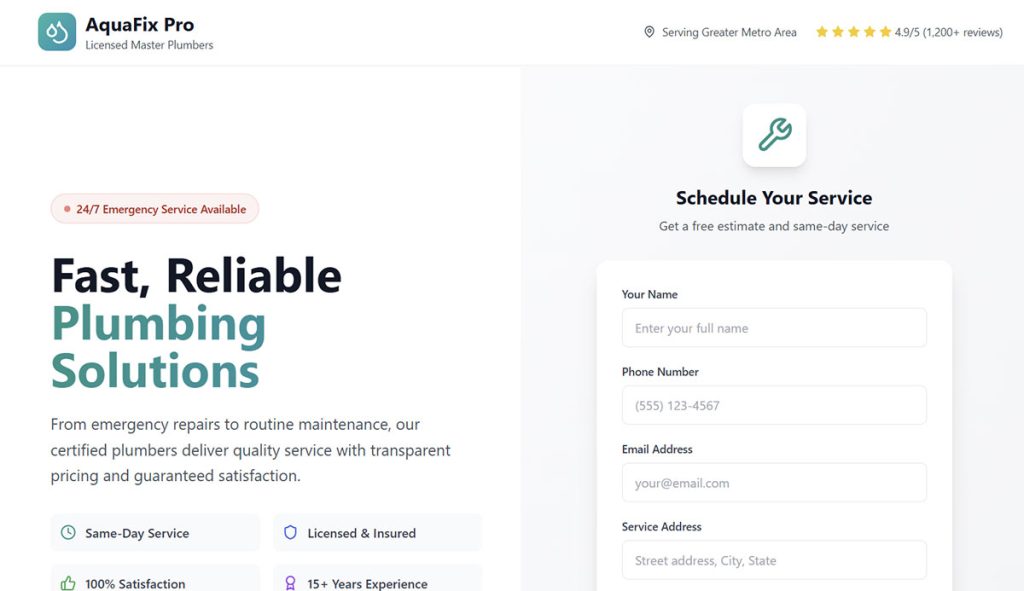
Website intake still matters even when most volume comes from marketplaces. Learning how to use website forms for lead generation gives a contractor a channel they own outright, with no per-lead fee and no shared competition.
Aesthetics Digital’s case study on Summit Roofing shows what a combined system can produce. Local SEO plus targeted PPC and optimized landing pages pushed monthly leads up 100 percent within six months, without raising ad spend.
Service Area Targeting and Lead Volume
Service area radius controls both how many leads a contractor gets and what each one costs.
Urban markets bring more homeowners submitting requests, sure, but also more contractors bidding on those same requests, and that competition is what pushes cost per lead higher.
Rural service areas run cheaper per lead, often in the $45 to $80 range, but the geographic spread thins out volume and stretches drive time between jobs.
A tighter radius built around a contractor’s actual crew capacity usually beats a wide one that pulls in leads too far away to serve at a profit.
What Determines the Cost of a Contractor Lead?
The same homeowner inquiry can cost ten times more or less depending purely on where it came from. Channel, trade, service area, and how tightly a lead gets qualified before it reaches the contractor, all of that moves the number.
A few figures worth anchoring to:
- Google Search Ads in the construction and contracting category average $165.67 per lead (LocaliQ / WordStream, 2025)
- Google Local Services Ads average $53 per lead across home services (SearchLight Digital, 2026)
- Facebook and Meta home-services leads average $30.57 per lead (LocaliQ / WordStream, 2025)
- Home-services cost per lead rose 10.51 percent year over year, increasing for 69 percent of advertisers (LocaliQ / WordStream, 2025)
High-ticket trades can absorb a higher cost per lead than low-ticket ones. A $150 lead is expensive for a $200 gutter cleaning job and cheap for a $15,000 roof replacement, which is the kind of math that gets lost when contractors compare cost per lead across trades like it means the same thing everywhere.
Cost per lead on its own is also the wrong number to chase. Cost per booked job (cost per lead divided by close rate) is what actually decides whether a channel is profitable, and that’s the bridge into conversion rate.
What Drives Lead Conversion Rate for Contractors?
Conversion rate for contractors (lead to signed job) ranges from under 3 percent on cold paid-search clicks to nearly 50 percent on high-intent phone calls. There’s no single benchmark that means much on its own, because the lead type changes what “good” looks like. Checking a fuller set of conversion rate benchmarks by industry makes that spread easier to judge against a specific channel.
Response time is the biggest lever a contractor controls once the lead actually arrives.
Leads contacted within five minutes are roughly 21 times more likely to qualify than leads contacted 30 minutes later, and firms that wait 24 hours or longer to respond are roughly 60 times less likely to qualify a lead than those that respond within the first hour (MIT/InsideSales.com Lead Response Management Study; Harvard Business Review, “The Short Life of Online Sales Leads”).
What moves the number most: how fast the first response goes out (ideally under five minutes), how well the upstream qualification was done so the sales team isn’t chasing dead ends, and how consistent the follow-up sequence is after that first call.
Conversion rate is just one line on a bigger scoreboard. Tracking it alongside the full set of lead generation KPIs to track keeps a contractor from optimizing one metric while another quietly falls apart.
Best Lead Generation Methods by Contractor Trade
Whether a trade sells emergency work or planned projects changes which method actually pays off.
Plumbing and HVAC lean on speed. Remodeling and roofing lean on trust and a longer research phase before anyone picks up the phone.
| Method | Typical Cost | Best Fit |
|---|---|---|
| Google Local Services Ads | $45 to $80 per lead | Emergency trades: HVAC, plumbing |
| Local SEO and Google Business Profile | Low ongoing cost, slower ramp | Planned trades: roofing, remodeling |
| Marketplace platforms (Angi, HomeAdvisor) | $20 to $75 per shared lead | New contractors building initial volume |
| Referral and review-driven leads | Near-zero cost per lead | Established contractors with a customer base |
Trade-specific pricing shows the split clearly. HVAC leads run roughly $45 to $80 per lead in major metros, spiking past $100 during emergency AC calls in summer, while plumbing runs closer to $35 to $65 per lead (SearchLight Digital, 2026).
Roofing sits on the higher end of paid channels given the size of the average job. Deeper coverage of that specific channel mix is in lead generation for roofing.
Plumbers deal with a different problem entirely: most calls are urgent and same-day, and that urgency changes which channels are worth the spend. That distinction is broken down in lead generation for plumbers.
General contractors and remodelers work on higher-ticket, longer-consideration projects, and they generally get more mileage from referral programs and a strong portfolio than from pay-per-lead marketplaces alone.
Buying Leads vs Building Your Own Lead Generation System
Buying leads means paying a platform or ad channel for inquiries as they show up, with zero ownership over the channel itself.
Building a system is the opposite bet: put money into a contractor’s own website, local search visibility, and referral pipeline until it starts producing inquiries with no per-lead fee attached. It takes longer to pay off, obviously.
Angi’s blended customer acquisition cost runs close to $2,500 per booked job, while a comparable job booked through SEO costs an established contractor closer to $290 to $310 (PushLeads, 2025 to 2026 contractor analysis).
| Dimension | Buying Leads | Building Your Own |
|---|---|---|
| Time to first lead | Days | Three to six months |
| Ongoing cost structure | Per-lead fee, indefinitely | Upfront build cost, then low marginal cost |
| Control over messaging | Limited to platform templates | Full control |
A newer contractor with no reviews and no organic visibility is usually better off buying leads first, mainly to generate cash flow and build a customer base worth referencing later.
An established contractor with steady volume, though, is often better off shifting budget toward its own channel. The cost curve favors lead generation strategies that compound instead of resetting to zero every month.
Contractor Lead Generation Platforms Compared
The major platforms differ on exclusivity, verification, and what actually happens when a lead turns out to be junk.
| Platform | Lead Type | Verification |
|---|---|---|
| Google Local Services Ads | Pay-per-lead, exclusive contact | License, insurance, background check |
| Angi | Mostly shared | Basic business verification |
| HomeAdvisor | Mostly shared | Basic business verification |
| Thumbtack | Bid-based, shared | Basic business verification |
| CraftJack | Shared | Basic business verification |
Google retired the “Google Guaranteed” badge and its money-back guarantee in November 2025, folding it into a single “Google Verified” badge alongside “Google Screened” and “License Verified by Google.” While the guarantee was active, it capped consumer refunds at $2,000 per customer, lifetime, and only covered dissatisfaction with completed work, not responsiveness or price. The underlying verification (background checks, license, insurance) hasn’t changed and is still required for the current Google Verified badge.
Marketplace platforms without an equivalent verification badge mostly compete on volume and price rather than the trust signal Google is selling.
When Contractor Lead Generation Does Not Work
It fails before it ever touches marketing, when licensing or crew capacity can’t keep up with the volume being bought.
It fails again when a service area gets priced by competitors willing to lose money for market share, pushing cost per lead above what the job type can actually support.
A few specific conditions where the whole thing breaks down:
- A one or two person crew buying volume meant for a ten person operation
- Trades with long, relationship-driven sales cycles forced onto instant-lead platforms built for urgent calls
- Service areas already saturated with contractors bidding the same shared leads down to unprofitable margins
- No licensing or insurance in place, which disqualifies a contractor from Google Verified (formerly Google Guaranteed) and most marketplace platforms outright
Referral and reputation-driven growth often beats every paid channel for contractors with a small, loyal customer base and no interest in scaling headcount.
Paying for leads only makes sense when there’s idle capacity that a paid channel can actually fill.
How to Set Up a Contractor Lead Generation System
Setup runs in a fixed order, and skipping a step usually shows up later as wasted ad spend or leads nobody ever follows up on.
- Claim and fully complete the Google Business Profile, including service area, photos, and licensing details
- Apply for Google Local Services Ads and pass the background, license, and insurance verification
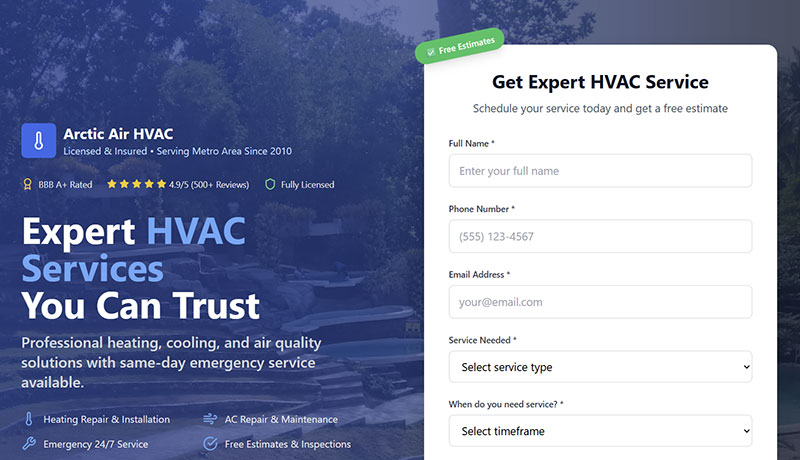
- Build an owned intake point, typically through lead capture forms placed on the contractor’s own website
- Add basic marketplace accounts (Angi, HomeAdvisor) if extra volume is needed while the owned channel ramps
- Connect the intake point to a CRM or scheduling tool so no inquiry sits unanswered overnight
Most contractor websites run on WordPress, and picking from established WordPress lead generation plugins is usually faster than building intake forms from scratch anyway.
Hook Agency’s case study on Northface Construction shows what a properly sequenced setup can do. Sustained SEO and website work drove a 65 percent increase in monthly qualified leads and an 83 percent increase in first-page keyword rankings year-over-year, alongside Google Ads optimization that cut their cost per lead from the $300 to $400 range down to under $150.
What breaks most often is that last step. A contractor builds the site and the ads, then ends up answering leads whenever there’s a spare minute between jobs, which in practice means most leads wait far longer than they should.
How to Follow Up With Contractor Leads to Close More Jobs
Follow-up decides more outcomes than lead source or ad spend ever will, and it’s the part almost nobody budgets time for.
62 percent of calls to small service businesses go unanswered, and 85 percent of those callers never call back, a widely cited benchmark in home-services call-handling research.
A missed call from a paid lead is just money spent for nothing.
A cadence that actually works tends to include:
- Immediate text acknowledgment within a minute of the inquiry
- A live call attempt within five to fifteen minutes
- A second and third attempt spaced across the same day
- An automated email or text sequence for anyone who doesn’t answer on the first three tries
CRM and Scheduling Tools for Lead Follow-Up
Tools contractors commonly connect to their intake point:
- Jobber, for scheduling and dispatch
- ServiceTitan, for larger operations tracking sales pipeline alongside field service
- Housecall Pro, for booking and automated reminders
Rescue Air, a Dallas HVAC company, connected Hatch’s automated follow-up software to its existing ServiceTitan setup after identifying estimate follow-up as a persistent weak point. They used it to automatically re-engage customers once a technician’s manual follow-up window had already passed.
Beyond scheduling, the sequence itself needs actual structure, not ad-hoc texting from whoever has a free minute. Working from lead nurturing templates keeps the cadence consistent across every technician handling estimates, not just the one who happens to be organized about it.
FAQ on Lead Generation For Contractors
How much should a contractor budget monthly for lead generation?
The U.S. Small Business Administration recommends businesses under $5 million in revenue allocate 7 to 8 percent of gross revenue to marketing. Emergency trades like HVAC and plumbing often sit at the higher end.
Do lead generation companies work for new or small contractors?
Marketplace platforms like Angi and Thumbtack work best for a new contractor still building reviews and case history. Shared leads cost less upfront, which matters when cash flow is tight and referral volume hasn’t built up yet.
Is SEO or paid ads faster for getting contractor leads?
Paid ads, especially Google Local Services Ads, produce inquiries within days. Local SEO typically needs three to six months to rank, but it keeps generating leads afterward without an ongoing cost per lead attached.
What mistakes cause contractors to lose leads after getting them?
Slow response time is the biggest one. Most homeowners call the next contractor within minutes of being ignored. Weak qualification, vague estimates, and skipping a follow-up sequence after a missed call all add to the loss.
How long does it take to see results from a new lead source?
Paid channels like Google Local Services Ads and Angi start producing calls within a week. Organic channels, including local SEO and referral programs, generally take three to six months before volume becomes reliable.
Can contractors get leads without paying a platform?
Yes, through organic channels: a Google Business Profile, local SEO, referral programs, and reviews. These leads carry no per-lead fee, though they take longer to ramp than paid platforms like Google Local Services Ads or Angi.
What Should You Fix First in Lead Generation for Contractors?
Speed to first response is the fix that matters most. A fast callback turns an average channel into a productive one faster than switching platforms or raising ad spend ever will.
The sequence that actually works: fix response time before adding new channels, tighten lead qualification before increasing volume, and diversify beyond one platform before scaling ad spend.
Chasing speed first comes with a trade-off. Cost per lead tends to rise temporarily, since staffing and follow-up software cost money before faster answers ever convert into a higher close rate.
Once response and qualification are solid, the weakest remaining link is usually the intake form itself, not the channel feeding it. That next step is covered in how to increase form conversions, which picks up exactly where a fixed follow-up sequence stops paying off on its own.