






A new client doesn’t sign with an accounting firm because a landing page convinced them. They sign because someone they trust vouched for the firm, or because the firm showed…
Table of contents
A hailstorm rolls through a county in Texas on a Tuesday afternoon, and by the weekend, roofing companies within thirty miles are getting flooded with calls. That’s the demand side of this business in its purest form: storm damage, insurance deadlines, and homeowners who suddenly need someone to fix a roof they weren’t thinking about two days earlier. Lead generation is what turns that raw demand, or the slower, non-storm version of it, into an actual booked job.
Residential and commercial contractors run this across paid search, marketplaces, referral networks, and old-fashioned door-to-door canvassing. The channels differ, but the thing everyone’s actually measuring is the same: cost per booked job, not clicks, not form fills.
Non-catastrophic wind and hail claims climbed from 17 percent to 25 percent of all US residential insurance claims between 2022 and 2024, according to Verisk’s 2025 US Roof Report, a shift that pushed roofing demand higher independent of major named storms.
What Is Lead Generation for Roofing?
The mechanics get complicated fast once you put roofing next to other trades. It sits inside the broader field of lead generation, sure, but a plumber and a roofer aren’t playing the same game.
Job sizes run into the thousands of dollars. Demand spikes hard right after a storm blows through. And insurance timelines put a clock on the whole thing that most other trades never have to deal with.
That combination is what separates it from lead generation for contractors in trades like plumbing or electrical, where ticket sizes stay smaller and urgency rarely traces back to one specific weather event.
Across markets, the output looks pretty similar no matter who’s running it. A homeowner submits a request with contact details and a description of the problem. Somebody books an appointment for an inspection or estimate. And if the numbers work out, that turns into a signed contract for repair, replacement, or restoration.
Contractors who never build anything like this end up depending on whoever knocks on the most doors after a storm. It works, sometimes. It just doesn’t scale.
Lead Generation Channels for Roofing Contractors
Contractors pull leads from a mix of paid channels, organic search, and relationship-based sources like referrals, and no single one of these covers the full range of demand by itself.
| Channel | Typical Cost Tier | Exclusivity | Response Window Needed |
|---|---|---|---|
| Google Local Services Ads | Low to mid | Exclusive | Minutes |
| Google Ads (search) | High | Exclusive | Minutes |
| Angi / HomeAdvisor / Thumbtack | Low | Shared, 2 to 5 contractors | Minutes |
| Referral programs | Low | Exclusive | Hours |
| Direct mail and canvassing | Mid | Exclusive | Days |
Search-based channels count as inbound demand. Door knocking and cold outreach land on the outbound side of the inbound versus outbound lead generation split, and most roofers, in practice, run both at the same time.
Marketplace leads come from platforms like Angi, HomeAdvisor Pro, Thumbtack, CraftJack, Modernize, and Networx, and they get sold to more than one contractor at once.
Owned-channel leads come from a contractor’s own Google Business Profile, website, and paid campaigns, usually captured through an on-site request form. Contractors running their own site often lean on WordPress lead generation plugins to build and manage those intake forms without hiring a developer.
Facebook Ads Manager and Nextdoor round out the paid and community side, and both work decently well for retargeting a specific zip code right after a storm passes through.
Exclusive Roofing Leads vs. Shared Roofing Leads
Exclusivity is about who else gets the same contact information. It has nothing to do with how good the lead actually is.
An exclusive lead goes to one contractor. A shared lead gets sold to several contractors at the same time, and whoever picks up the phone first usually wins the job.
Exclusive leads cost more up front, but they close at meaningfully higher rates since there’s no bidding race for the homeowner’s attention, and most of them come out of Google Local Services Ads, direct SEO, or referral programs. Shared leads run cheaper, mostly out of Angi and Thumbtack-style marketplaces, but they demand a fast call or text just to beat whoever else got the same contact info.
2026 roofing industry benchmark data puts exclusive roofing leads at a roughly 35 to 40 percent close rate, compared with 5 to 15 percent for shared platform leads.
That gap is why a $200 exclusive lead often produces more signed jobs than five $40 shared leads, even though the shared leads look cheaper on paper.
How Much Do Roofing Leads Cost?
Cost per lead swings hard depending on channel, market, and exclusivity, and roofing sits at an odd extreme compared to other home services.
Google Ads is the expensive end of it. LocaliQ’s 2025 analysis of 3,211 home service ad campaigns found roofing’s average cost per lead on Google Ads at $228.15, the highest of any home service category, against $90.92 across all home services combined, less than half the roofing figure. Part of the reason: roofing search ads convert at just 3.70 percent on average, among the lowest of any home service category, which drags the cost-per-lead math the wrong direction.

Cost per lead, on its own, is the wrong number to manage. Cost per booked job, sometimes called cost per acquisition, is what actually decides profit once contact rates and close rates get factored in. Watching lead generation KPIs beyond raw lead volume, things like contact rate, appointment rate, and close rate by source, is what makes that math visible instead of guessed at.
Roofing’s numbers don’t map onto other trades cleanly either. Comparing performance against general conversion rate benchmarks can mislead a roofing contractor who hasn’t adjusted for a bigger job size and a longer sales cycle.
How Roofing Leads Are Qualified
Not every homeowner who fills out a form is close to buying a roof. Qualification is the filter that separates a live opportunity from someone comparison shopping six months out.
A few things tend to matter more than the rest: whether the person actually owns the home (renters can’t authorize the work), how old the roof is (15 years or older usually signals real interest), whether a storm or insurance claim is already in motion (this speeds everything up), and whether budget or financing came up on its own.
Capturing that information at the point of contact matters more than trying to dig it out later over the phone. This is where form field choices for capturing high-quality leads make a real difference. A form that asks about roof age and storm damage upfront filters out low-intent traffic before a rep ever picks up the phone.
An unqualified lead at the same price as a qualified one is still a bad purchase, plain and simple. Once the criteria are set, the number worth watching next is how many qualified leads actually turn into a booked estimate, and that tends to move more with how fast someone follows up than with which channel the lead came from.
Storm Season and Seasonal Demand for Roofing Leads
Hail and wind events drive most of the year-over-year swings in lead volume. A single severe storm can generate more qualified leads in a week than three months of steady organic traffic.
Verisk’s 2025 US Roof Report found average residential roof replacement costs reached $17,631, a 33 percent jump over the prior four-year average. The same report counted 16 states with severe hail impacting more than 20 percent of roofs, up from 12 states the year before.
Kansas, Texas, Oklahoma, Arkansas, and Nebraska see this pattern most consistently, and it’s why national lead marketplaces price leads higher there during active weather months.
Outside storm season, demand shifts toward routine replacement and maintenance work, and channels like Google Business Profile and referral programs carry a bigger share of volume during those quieter stretches. Insurance claim windows also compress the sales cycle once a storm actually hits, since homeowners typically have a limited number of days to file before an adjuster shows up.
Trust Signals That Convert Homeowners Into Roofing Leads
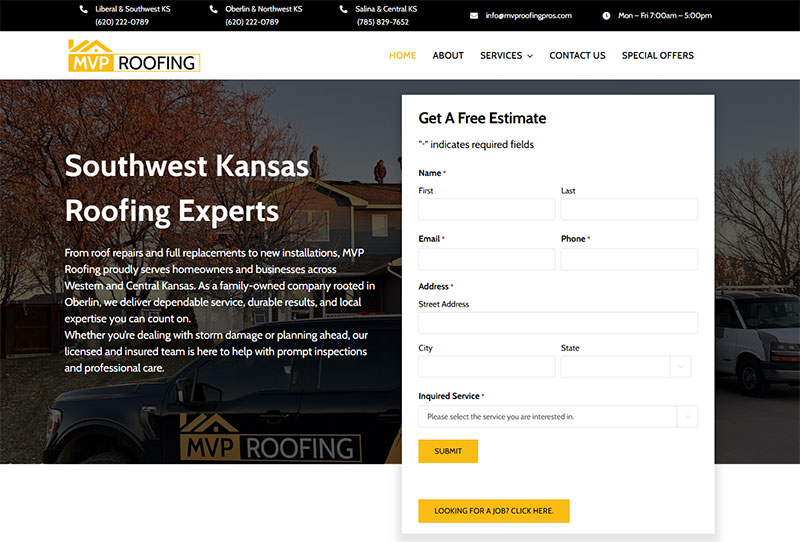
Roofing carries more perceived risk than most home services. A bad install doesn’t show up right away. It shows up as a leak eight months later, which is exactly why certifications and reviews matter before a sales call ever happens.
| Signal | Issued By | What It Confirms |
|---|---|---|
| Master Elite | GAF | Top tier of manufacturer-vetted contractors |
| Preferred Contractor | Owens Corning | Manufacturer training and warranty eligibility |
| SELECT ShingleMaster | CertainTeed | Installation standards and extended warranties |
| Accreditation | Better Business Bureau | Complaint history and business legitimacy |
Only about 2 percent of roofing contractors nationwide hold GAF’s Master Elite designation, per GAF’s own program requirements. BlueBuilt Roofing & Siding, an Atlanta-area contractor, markets that Master Elite status alongside an A+ BBB rating as its main trust signal to homeowners comparing bids.
Review platforms matter just as much as manufacturer badges, maybe more. BrightLocal’s 2025 Local Consumer Review Survey found only 42 percent of consumers now trust online reviews as much as a personal recommendation, down from 79 percent in 2020. That drop means the volume and recency of reviews on Google and Yelp carry more weight than a handful of five-star ratings sitting there from years ago.
The National Roofing Contractors Association offers a separate layer of credibility, mostly relevant on the commercial side, where procurement teams check membership before shortlisting a vendor.
Tools for Managing Roofing Leads
A lead is only worth what a contractor does with it after it shows up. Software’s job here splits a few ways: keep track of the lead, get an accurate read on the roof before a crew ever climbs a ladder, and figure out which channel actually paid for the call that came in.
| Tool | Primary Job | Best For |
|---|---|---|
| AccuLynx | Roofing-specific CRM and production tracking | Established roofing companies |
| JobNimbus | Lead tracking and job pipeline | Smaller crews and multi-trade contractors |
| ServiceTitan | Full operations platform with call center | Large, multi-crew operations |
| CallRail | Call tracking and source attribution | Any contractor running paid ads |
Leak Busters Roofing raised its average close rate from 40 percent to 60 percent after adopting JobNimbus, according to JobNimbus’s own published customer story. eRoof, a Minnesota roofing company, used AccuLynx to expand its operations and increase profits, according to an AccuLynx customer story.
Measurement tools solve a narrower problem: getting an accurate roof size before anyone shows up with a ladder. EagleView’s aerial measurements were confirmed at 98.77 percent accuracy against independent benchmark measurements in a 2025 study validated by CompassData. Hover does something similar from ground-level photos, and some contractors actually prefer that for in-person sales presentations.
Call tracking closes the loop on all of it. Without something like CallRail tagging each call to its source, a contractor running Google Ads, Nextdoor, and direct mail at the same time has no real way to know which one actually paid for itself.
Buying Roofing Leads vs. Generating Your Own
This decision comes down to time horizon more than cost.
Buying leads gets you appointments within days of turning on a campaign, but it requires ongoing spend and leaves nothing behind once that spend stops. It fits new companies without a review history or website authority yet, mostly because there’s no faster way to get moving.
Building your own system works differently. It takes months to produce meaningful organic and referral volume, but that volume compounds. Reviews stack up, rankings improve, referrals start repeating on their own, and it ends up fitting established local brands willing to invest before seeing a return.
Google itself sets the expectation here. Its own guidance puts the typical timeline for SEO to show results at four months to a year after a business starts working with an agency or consultant. That rules out organic search as a fix for a contractor who needs jobs booked next week.
Most established roofing companies run both models at once. Purchased leads smooth over the slow stretches while owned channels mature in the background.
How to Build a Roofing Lead Generation System
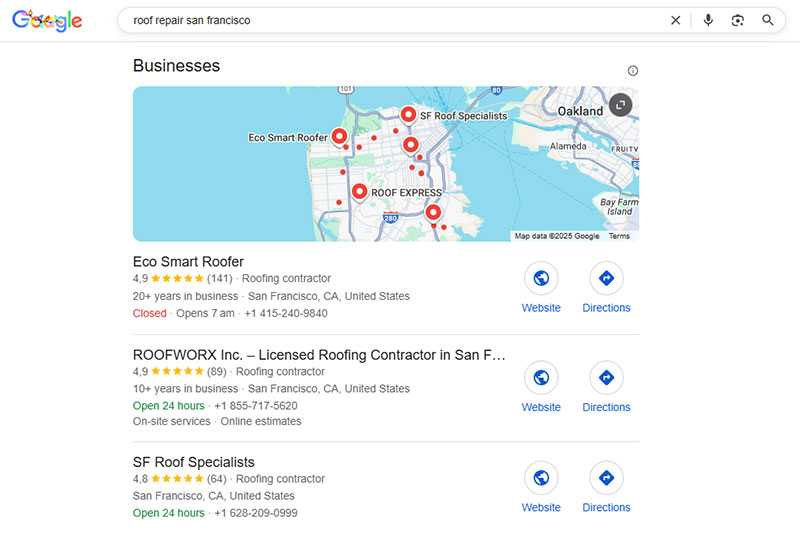
The build order matters more than any individual tactic. Running paid traffic before tracking is in place just burns budget on leads nobody can trace back to a source.
- Claim and fully complete a Google Business Profile, including service areas, photos, and licensing details
- Set up call tracking so every phone number and form submission ties back to its source
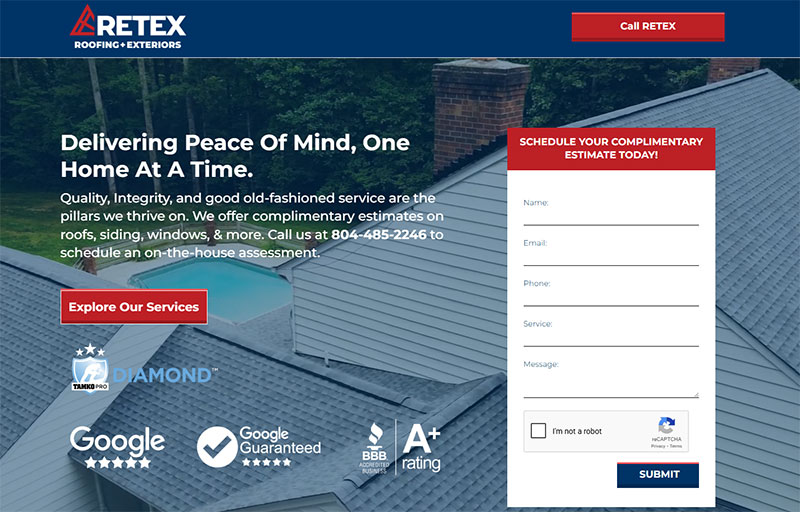
- Build a request-an-estimate form on the website that captures roof age, storm history, and homeowner status upfront
- Turn on one paid channel, either Google Local Services Ads or Google Ads, and let it run a full budget cycle before judging results
- Layer in a referral incentive for past customers once the first channel is stable
- Automate review requests after every completed job to keep review volume current
Step three is where most websites lose leads before a rep ever sees them. A short, well-structured intake form converts better than a long one, and the guidance in how to create lead capture forms covers field order, length, and which fields are actually worth asking for on a roofing estimate request.
Landing page structure matters just as much as the form sitting on it. Pairing that form with the layout principles in landing page form best practices keeps the page focused on one action instead of competing calls to action.
Google’s own verification process for Local Services Ads includes background checks on the business owner and every field worker who enters a customer’s home, so budget extra time for that step if it hasn’t been done before.
When Roofing Lead Generation Does Not Work
Lead generation fails for structural reasons more often than strategic ones, and a handful of conditions show up again and again.
Low storm and replacement demand is the first one. Markets with older but stable roofing stock and few weather events just never generate enough volume to justify aggressive ad spend.
No answering capacity is the second, and it’s a quiet killer. CallRail’s small business benchmark data puts the average missed call rate for home service businesses at 14 percent, and a paid lead that rings through to voicemail has already lost most of its value before anyone calls back.
Then there’s oversaturated shared marketplaces. In dense metro areas, the same shared lead can reach five or six contractors at once, which pushes close rates low enough that the math stops working.
And cash flow mismatch rounds it out. Lead spend that runs ahead of the sales cycle length drains working capital before the jobs it paid for actually close.
None of this means lead generation is broken as a concept. It means the system around it, staffing, market selection, cash flow planning, isn’t ready to support it yet.
FAQ on Lead Generation For Roofing
Are marketplace leads like Angi or HomeAdvisor worth the cost for roofers?
Mostly as supplemental volume, not as a main channel. Shared leads compete with two to five other contractors at once, so speed to contact ends up mattering more than price. They suit new roofers who don’t have review history or website traffic built up yet.
What is a good roofing lead conversion rate to expect?
Honestly, a blended average misleads more than it helps here. Exclusive leads close far better than shared marketplace leads, and both numbers swing hard depending on response speed and how tightly leads get qualified before a rep ever picks up the phone.
How many roofing leads does a contractor need per month to hit revenue goals?
It depends on average job value and close rate, not some fixed monthly number people like to quote. A contractor closing 20 percent of qualified leads needs five qualified leads for every booked job, then multiplies that by however many jobs the revenue goal actually requires.
How fast should a new roofing lead be followed up on?
Fast. Speed decides most of the outcome. Contractors who call within five minutes convert dramatically better than those who wait even thirty minutes, since homeowners often submit several requests at once and book with whoever answers first.
Can SEO alone generate enough roofing leads without paid ads?
Rarely, and not right away. Organic search builds compounding, lower-cost volume over months, but it struggles to cover a storm spike or a slow week for a brand-new business. Most established roofing companies pair it with at least one paid channel instead of relying on it alone.
Do referrals convert better than purchased roofing leads?
Generally, yes, and it’s not close. A referral arrives already vouched for by someone the homeowner trusts, which shortens the sales cycle and raises close rate compared with a cold marketplace lead. The tradeoff is that referrals scale a lot slower than paid channels do.
Where This Leaves Roofing Contractors
Lead generation for roofing isn’t one channel carrying the whole load. It’s several channels stacked together, each covering a gap the others leave open.
Paid search and Local Services Ads bring leads in fast, but at a price that punishes anyone without call tracking already running. Marketplaces fill the volume gap cheap, though the close rate explains exactly why they’re cheap. Referrals and organic search take months to build. Then they keep paying out long after the ad budget gets pulled.
None of it works without qualification and fast follow-up. A $200 exclusive lead sitting in a voicemail for six hours is worth less than a $40 shared lead someone actually called back in two minutes. Speed and screening decide more of the outcome than which platform the lead came from in the first place.
Storm activity isn’t going to level off anytime soon. Verisk’s own numbers already show non-catastrophic claims climbing year over year, and nothing about that trend points to a slowdown. The contractors with tracking, intake forms, and a review pipeline already in place before the next hailstorm hits will book more jobs than the ones scrambling to answer phones after it.
Buying leads and building an owned system aren’t rival strategies. Most roofers who’ve stuck around a while run both, because leaning on just one usually costs something, either speed or margin, depending on which one gets skipped.