





Most independent coaches never sit through a single sales training. They figure out client acquisition the hard way, usually right after a slow month makes it obvious that referrals and…
Table of contents
No brand recognition to lean on. No dedicated salesperson. Usually not even a real marketing budget, just whatever’s left after payroll and hosting. That’s the environment startup lead generation runs in, and it’s why a customer acquisition process built to fit a funded incumbent doesn’t transfer over cleanly.
Founders typically handle this themselves before a first sales hire exists. They pick one channel, test it against a defined ideal customer profile, and resist the urge to spread a thin budget across five untested options at once.
That instinct to focus is backed by where the industry has been putting its attention. Lead generation has become a bigger priority over the past three years for 73% of marketers at small and midsize B2B companies, according to Marketing Week’s 2025 State of B2B Marketing research.
What that shift really points to is the qualification step, not raw traffic, as the thing that decides whether a startup’s early pipeline turns into paying customers.
What Is Lead Generation for Startups?
There’s no brand trust to lean on, the budget usually fits on one spreadsheet tab, and the founder is often still closing deals personally. That’s the backdrop that makes playbooks written for companies with a marketing department already in place mostly useless here.
The core mechanics of capturing buyer interest don’t change with company size, and the underlying process behind how leads get captured in the first place is worth understanding before layering startup constraints on top of it.
What it depends on is narrower than most founders expect: a defined ideal customer profile, without which the whole effort is aimed at nobody in particular, and one channel that reaches that profile directly rather than five channels run half-heartedly.
Founders often mix this up with brand-building work meant to create category awareness rather than direct leads.
Where lead generation ends and demand generation begins matters for deciding where a founder’s limited hours go in month one.
The output that matters is a qualified pipeline, not raw traffic or a newsletter subscriber count. Anything else is a vanity metric wearing a business case, which is a nice way of saying it looks good in a deck and does nothing for revenue.
Superhuman is a good example of what this looks like in practice. Its early team ran onboarding calls with new users one at a time instead of building a self-serve funnel, trading scale for signal while the product itself was still being defined.
How the Startup Lead Generation Funnel Works
Strip away the terminology, and what’s left is attention, then proof of fit, then converting intent into a signed deal.
Marketers have mapped roughly this same path for over a century under the AIDA model, which breaks buyer attention into attention, interest, desire, and action.
A full breakdown of how each funnel stage is typically structured covers the version most SaaS teams start copying before they build their own.
Top of Funnel
This stage runs on organic traffic, paid ads, and content marketing, basically whatever gets a stranger to notice the company exists in the first place.
- Blog content and SEO-driven organic traffic
- Paid ads on Google Ads or Meta Ads Manager
- Cold outreach and cold email sequences
Volume here is cheap to inflate and easy to mistake for progress.
Middle of Funnel
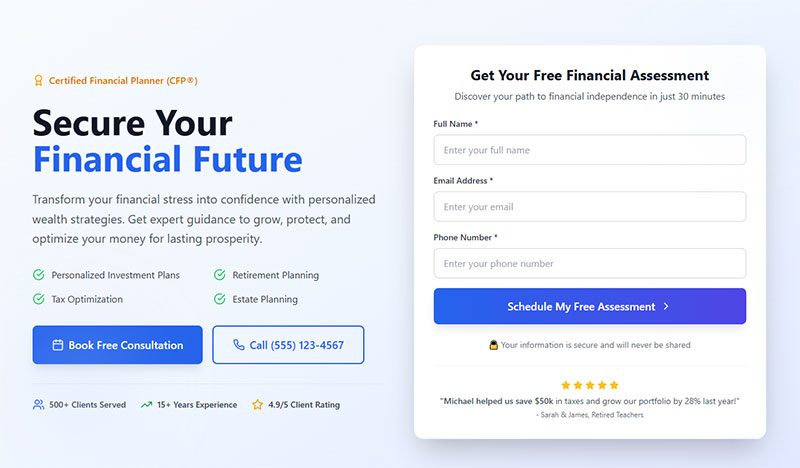
What actually moves someone forward is a landing page that answers their specific objection, a case study, or a demo that shows the product solving their exact problem.
Slack’s early middle-of-funnel work happened almost entirely inside the product itself. Invited teammates saw the tool already working before any sales conversation started.
Most volume disappears at this stage, not at the top or the bottom.
Bottom of Funnel
By this point a lead has moved from marketing-qualified to sales-qualified: intent has been confirmed, not just interest.
Pipeline velocity, how fast deals move through this final stretch, tends to depend more on deal size and number of stakeholders than on anything the marketing team controls.
A slow bottom of funnel usually means the sales conversation started before the lead was actually ready for it.
How to Qualify a Lead as a Startup
Not every visitor who fills out a form is worth chasing.
Qualification is the filter that decides who gets a founder’s limited selling hours and who gets a nurture sequence instead.
Ideal Customer Profile
An ideal customer profile that only covers firmographics, company size, industry, the tech stack already in use, isn’t specific enough on its own. It needs a behavioral piece too: what the visitor actually did before filling out the form.
And it needs some kind of proxy for budget, whether that’s a plan tier they picked, a self-reported range, or just a field asking directly. Skip any one of those and the profile stops predicting who actually buys.
The fields placed on the form itself are usually the fastest way to test an ICP guess against reality, and choosing the fields that actually predict a good customer changes what a team learns from every single submission.
Lead Scoring
HubSpot’s own scoring documentation weighs page visits and email opens alongside firmographic fit, rather than treating firmographic data as the whole score.
A workable starting score usually blends three inputs, though not in equal measure. Firmographic match to the ICP carries real weight early on. Engagement, page visits, email opens, content downloads, adds a signal over time. And explicit intent, someone requesting a demo or lingering on the pricing page, tends to matter more than either of the other two once it shows up.
Building a form that captures score-relevant data without turning into a wall of fields is mostly an interface decision, and the layout choices that keep a capture form short but still useful cover exactly that tradeoff.
MQL vs SQL Criteria
A marketing-qualified lead has shown interest through engagement, but nothing that confirms actual intent to buy yet. A sales-qualified lead is further along: budget, timeline, and enough authority behind them to actually move a deal forward have all been confirmed.
The classic version of this test is BANT, a qualification framework built around budget, authority, need, and timeline that IBM’s sales teams codified decades ago and that still shows up in most modern scoring models.
Skipping qualification entirely means chasing every lead equally, which wastes the sales cycle on people who were never going to buy.
Which Lead Generation Channel Fits a Startup
The right channel depends on stage, not preference.
| Channel | Cost | Speed to Result | Skill Required |
|---|---|---|---|
| Inbound (content, SEO) | Low cash, high time | Slow, compounds later | Writing, SEO basics |
| Outbound (cold email, cold outreach) | Low cash, high effort | Fast | Copywriting, persistence |
| Referral / warm introduction | Very low | Fast once base exists | Product worth referring |
| Paid ads | High cash | Fast | Budget and targeting skill |
Referral-sourced leads convert to marketing-qualified status at roughly 56%, nearly double the average channel, according to First Page Sage’s 2026 benchmark dataset.
Dropbox is the reference case for why this works so well. It grew its early user base largely by rewarding both the referrer and the new signup with extra storage, instead of running paid ads.
The split between reaching people who are already looking and reaching people who aren’t shapes almost everything downstream, including how a team should weigh inbound and outbound approaches against each other before picking one to start with.
Content-driven channels usually route through a gated resource of some kind, and what actually qualifies as a lead magnet is broader than most founders assume, well beyond the standard ebook.
A handful of channels only really exist for early-stage companies and won’t show up in a general marketing guide.
- Product Hunt: a single launch day that can produce a startup’s first wave of signups
- Crunchbase: outbound teams use it to find recently funded companies worth prospecting
- Wellfound: works well for B2B tools selling to other startups, since the user base is startup teams themselves
- Y Combinator: batch Slack groups function as a built-in warm-referral network for YC-backed companies
Which Tools Startups Need to Run Lead Generation
Software doesn’t fix a missing ICP, but the right stack removes a lot of manual busywork once one exists.
| Category | Purpose | Example Tools |
|---|---|---|
| CRM | Track every lead through the pipeline | HubSpot, Salesforce |
| Data enrichment | Fill in firmographic and contact detail gaps | Clearbit, ZoomInfo, Apollo.io, Clay |
| Outreach engagement | Run and track cold email sequences | Lemlist, Reply.io, Outreach.io |
| Analytics | Measure what’s actually converting | Google Analytics, Mixpanel, Segment |
CRM
A CRM is the single place every lead lives once it stops being anonymous traffic.
HubSpot’s free tier and Salesforce both handle this job, though Salesforce tends to make more sense once a team has a dedicated sales hire to configure it.
Most of these tools plug directly into whatever’s already capturing leads on the website, whether that’s a native form or one of the many lead-focused plugins built specifically for WordPress.
Data Enrichment
Clearbit fills in company size and industry from just an email domain, which sounds small until you’re doing that lookup by hand a hundred times a week. ZoomInfo and Apollo.io double as prospecting databases for outbound. Clay is a bit different: it layers personalization data on top of a contact list before an email sequence goes out.
Skipping this step manually means someone is Googling company details one lead at a time, which doesn’t scale past a handful of leads a week.
Outreach Engagement
These tools mostly replace a spreadsheet of follow-up dates and a lot of copy-pasted emails, which is a more accurate description than any feature list they publish.
Lemlist, Reply.io, and Outreach.io all automate sequencing, and LinkedIn Sales Navigator adds a second outbound surface beyond email.
Most outbound SDR playbooks in use today trace back to the Predictable Revenue methodology, the outbound prospecting system Aaron Ross built while running sales development at Salesforce.
Analytics
Without tracking, a team is guessing which channel actually produced a customer.
Google Analytics handles top-of-funnel traffic, while Mixpanel and Segment track behavior inside the product itself, closer to the middle and bottom of the funnel.
Tracking where a form loses people requires the form to be built with tracking in mind from the start, and setting one up correctly the first time saves a lot of rework later.
How Much Lead Generation Costs a Startup
Cost varies enormously by channel and industry, which is exactly why a single “average CAC” figure is close to useless on its own.
- $86 to $1,143: the spread in average B2B customer acquisition cost across 29 verticals, from ecommerce to higher education (First Page Sage, 2026)
- 16 months: the median CAC payback period for B2B SaaS companies on 2025 full-year data, with top-quartile companies recovering costs in 6 months or less (Aleph x Benchmarkit, 2026)
- $50 to $300: the typical cost to acquire a customer through referrals, depending on industry, still the cheapest channel available across most 2025-2026 acquisition cost analyses
That referral figure lines up with the channel comparison above. Cheap and fast, but it only works once a startup already has customers happy enough to refer someone.
A payback period stretching past 18 months usually means either the sales cycle is too long for the deal size, or churn rate is quietly eating customer lifetime value before the acquisition cost gets recovered.
Tracking cost per lead alongside payback period only works if the same numbers get checked every month, and a running list of the specific figures worth watching keeps that consistent across a team.
Founder-Led Sales, First SDR Hire, or Agency
Someone has to run lead generation day to day. For most startups that comes down to keeping it with the founder, hiring a first SDR, or handing pieces of it to an agency.
Founder-Led Sales
Founder-led sales holds up until the founder is personally closing nearly all new business and losing a meaningful chunk of the workweek to it.
Superhuman kept sales in the founder’s hands well past its first wave of paying customers, routing new deals through his own onboarding calls rather than handing them off early.
Sales advisors researching this transition commonly cite a specific benchmark: land the first 10 paying clients before bringing in outside sales help, since that’s usually the point where a product proves it’s sellable rather than just interesting.
First SDR Hire
A few signals tend to show up around the same time when it’s actually time to hire. Lead volume outgrows what the founder can personally follow up with. The sales process picks up enough repeatable structure that someone else could run it without reinventing it from scratch. And seed funding or early revenue covers the salary without derailing runway.
The risk of hiring too early shows up in the numbers. 69% of B2B sales reps missed quota in 2024, according to Ebsta’s B2B Sales Benchmark Report, and a rep dropped into an undocumented process is more likely to end up in that group.
Agency
An agency is faster to start than hiring and training someone from scratch, and it usually shows up with existing playbooks and outbound infrastructure already built. There’s no long-term salary commitment either if the engagement doesn’t work out.
The downsides are real too, though. An agency won’t build the ICP for a founder who hasn’t defined one yet, that part still has to come from inside the company. Less institutional knowledge sticks around after the contract ends than most founders expect. And quality varies enormously between agencies claiming the exact same specialty, so a referral from someone who’s actually used one is worth more than a sales deck.
An agency is a rental of process, not a replacement for a founder’s own understanding of who the product is actually for.
How Long It Takes a Startup to Get Its First Paying Customer From Lead Generation
There’s no universal number here, but there are ranges worth anchoring to.
The median B2B SaaS sales cycle runs 84 days from first contact to close, based on Optifai’s 2026 Pipeline Study of 939 B2B SaaS companies using stage-level CRM data.
| Deal Size | Typical Cycle | Main Driver |
|---|---|---|
| SMB (under $15K ACV) | 14 to 30 days | Single decision-maker |
| Mid-market ($15K to $100K) | 30 to 90 days | Small buying committee |
| Enterprise (over $100K) | 90 to 180+ days | Procurement and multiple stakeholders |
A founder closing one deal manually can beat these numbers easily. Building a channel that produces a second, third, and tenth customer on a similar timeline is the harder milestone.
Comparing a startup’s own numbers against broader conversion rate benchmarks across industries is more useful than comparing against a single average, since deal size changes the whole picture.
How to Set Up Lead Generation From Zero
The order matters more than any individual tactic chosen.
- Define the ideal customer profile before touching any channel
- Pick one channel and commit to it for at least a few weeks
- Build the qualification criteria that will sort incoming leads
- Launch outreach, content, or ads, whichever matches the chosen channel
- Instrument tracking so the data is trustworthy before scaling anything
Building the actual capture mechanism at step four usually comes down to a landing page with a form on it, and the layout and field choices that keep that page converting matter more than most founders expect going in.
For B2B specifically, the mechanics of generating B2B leads through website forms differ enough from consumer lead capture that copying a B2C template rarely works well.
The most common mistake early on is running three channels in week one, before any single one has produced enough data to actually judge.
Cold outreach is a good example of why patience matters here. The average B2B cold email reply rate fell to 5.8% in 2024, down from 8.5% in 2019, according to Belkins’ 2025 study of 16.5 million emails across 93 business domains.
A channel performing below that average after one week isn’t necessarily broken. It usually just hasn’t run long enough to mean anything yet.
Buffer’s early growth came almost entirely from one channel run consistently: guest posts on other people’s blogs, written and pitched by the founders themselves for months before any other channel got serious attention.
Why Lead Generation Fails for Startups
Most failures trace back to the same handful of root causes, not a long list of tactical mistakes.
Wrong ICP
No market need is the single largest cause of startup failure overall, cited in 42% of cases in CB Insights’ original startup post-mortem analysis, a pattern that has held up as the company’s post-mortem database has grown into the hundreds since.
A wrong ICP is the lead generation version of that same problem: chasing leads that reply and even take meetings but never convert, because the product was never built for them in the first place.
Basecamp avoided this by turning away enterprise inquiries that didn’t fit its small-team positioning, even when those inquiries came with bigger budgets attached.
A form that reads like a generic inquiry box instead of a filter built around a specific buyer is usually the visible symptom, and the practical difference between the two comes down to what the form is actually designed to screen for.
Premature Scaling
Startup Genome’s original analysis of over 3,200 high-growth technology startups found that 70% showed signs of premature scaling along at least one dimension.
In lead generation specifically, that tends to look like hiring an SDR before founder-led sales has produced a repeatable process to hand off, or running paid ads at volume before the funnel underneath them actually converts anything. Sometimes it’s simpler than that: three more channels get added before the first one has even been proven out.
Startups that scale properly, per the same Startup Genome research, grow roughly 20 times faster than the ones that scale prematurely.
Channel Mismatch
A channel mismatch happens when the channel fits the founder’s comfort zone rather than where the buyer actually spends attention.
A founder who’s a strong writer will default to content marketing even when the buyer never reads blogs. A technical founder builds outbound automation instead of picking up the phone, even though a phone call would close faster. And budget goes to paid ads because it’s measurable, not because the audience actually responds to ads.
The fix isn’t more effort on the same channel. It’s testing where the actual buyer already looks for solutions like this one.
When Formal Lead Generation Does Not Apply to a Startup
Building a repeatable channel is the wrong move at certain stages, not a step every startup should rush toward.
A startup still changing its core offer week to week gets more out of manual, one-on-one outreach than a built channel while it’s pre-product-market fit. The channel would just be optimizing for a product that won’t exist in its current form much longer anyway.
Team size matters too. Two founders generally can’t run a channel and personally close deals at the same time without one of the two suffering for it.
And a market with too few reachable buyers doesn’t justify the setup cost of a repeatable channel in the first place, since there’s a ceiling on volume that no amount of optimization will lift.
Airbnb’s founders spent their early months manually photographing listings and personally messaging hosts, the kind of work that doesn’t scale and wasn’t meant to.
What replaces a formal channel at this stage is simple: founders talking directly to prospective customers, one at a time, until the product and the message stop changing every week.
FAQ on Lead Generation For Startups
How is lead generation different from demand generation?
Demand generation builds broad awareness without collecting contact details. Lead generation converts that awareness into a trackable prospect through a form or a call. One fills the top of the funnel; the other captures a name once interest turns warm.
What is a good funnel conversion rate for a B2B startup?
B2B SaaS landing pages convert at a median of 3.8%, per Unbounce’s Conversion Benchmark Report, which covers more than 57 million conversions. A startup below that isn’t necessarily failing. Deal size and traffic quality change the target more than the channel does.
Is content marketing or SEO worth it before a startup has traffic?
Content and SEO compound slowly. They need existing organic traffic or months of runway before they pay off. Before that traffic exists, outbound and referral programs tend to produce faster results. Content becomes worth the investment once a startup can actually sustain the wait for compounding returns.
What’s the best free CRM for a startup?
HubSpot’s free tier remains the most common starting CRM for early-stage teams, covering contact records, deal tracking, and basic email sequences without a paid plan. It suits founder-led sales well. Teams needing custom reporting or automation usually outgrow it within the first year.
What’s a healthy CAC payback period for a seed-stage company?
SMB-focused startups typically recover CAC within 5 to 11 months, according to OpenView Partners’ SaaS Benchmarks Report, while companies selling into mid-market or enterprise accounts run longer. A seed-stage company selling small deals should treat anything past a year as a warning sign.
How many leads does a startup need to reach product-market fit?
There’s no fixed lead count tied to product-market fit. The real signal is repeat usage and organic referrals, not volume. A startup with 20 highly engaged leads that convert and stick around is closer to PMF than one with 500 that never come back.
Can a startup generate leads with no budget at all?
Zero-budget lead generation is possible through cold outreach, organic content, and community participation, though it costs founder time instead of cash. Referral programs and warm introductions from early customers tend to produce the highest-quality leads without any ad spend at all.
What Should You Fix First in Lead Generation For Startups?
Lead generation for startups gets fixed first at the qualification step, not the channel or the tool stack, because a startup chasing the wrong ideal customer profile wastes any channel’s output no matter how well that channel performs.
Auditing an underperforming effort follows a fixed order, and skipping ahead wastes the fix on the wrong layer. Ideal customer profile accuracy gets checked first, then message-to-channel fit, and only once both hold up does cost and payback tracking become the useful thing to look at.
Founder-dependent lead generation hits a ceiling between $500,000 and $2,000,000 in annual recurring revenue, and startups that don’t systematize past that point grow 2.3 times slower, per 2026 research from Data Mania on the founder-led sales ceiling.
Once the profile is confirmed, the next fix sits in the capture form itself, and the specific tactics that lift conversion once qualification is already solid pick up from there.